


In this guide
Quick Verdict
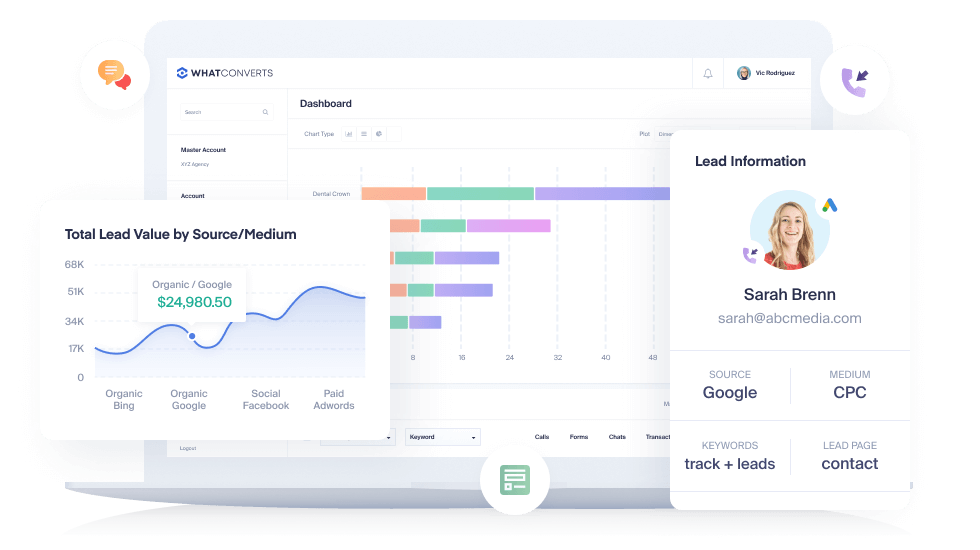
A useful WhatConverts review has to look beyond the polished first impression. In 2026, the real test is how its strengths, limits, pricing signals, and daily workflow hold together. Looking for tracking leads from your marketing campaigns? WhatConverts brings you a complete lead tracking and reporting software, including full-featured call tracking & lead analytics. The official site repeatedly points to Lead Tracking for Marketing Agencies and Clients, Latest Updates, How to Price PPC Management Services (and Defend Your Fees with Proof). The page titles also reinforce the product’s main positioning instead of burying it behind vague marketing language.
Disclosure: Stack99 earns a commission if you buy through links on this page. It costs you nothing extra and never changes our assessment.
The most useful way to review WhatConverts in 2026 is to judge whether the official pages maps cleanly to a real working problem. If the fit is direct, the tool usually makes more sense than a longer feature spreadsheet ever will.
If you want to inspect the product while you read, start with WhatConverts here.
Product Facts And Overview
The official pages keep pointing back to themes like:
- Lead Tracking for Marketing Agencies and Clients
- Latest Updates
- How to Price PPC Management Services (and Defend Your Fees with Proof)
- What Is Lead Management, and Why Should Marketers Care?
That is helpful because a strong review should start with what the vendor itself makes easiest to verify. Buyers can learn faster when the product’s public positioning is specific instead of bloated.
What WhatConverts Seems To Do Best
The strongest read from the source pages is that WhatConverts is built to reduce friction around a defined workflow, not simply to collect feature badges. That gives the product a better chance of feeling useful in real work instead of sounding impressive only in a pitch.
Pros And Cons
What we liked
- Clearer workflow positioning than many generic SaaS landing pages
- Easier to evaluate through official sources than tools that hide the real use case
- Likely strongest when the buyer already knows the operational problem to solve
- Good fit when the product shape matches the team’s actual working model
What to watch
- Some official pages are clearer on product direction than on granular pricing detail
- Buyers with broader needs may still want to compare adjacent tools
- A focused product can look weaker if the team is solving a much wider systems problem
Feature Review
The official material suggests that WhatConverts is best judged through workflow quality, operational clarity, and how directly the feature set supports the main use case. That is more valuable than trying to rank every visible module in isolation.
If you want to compare that against your own environment, open WhatConverts here and map the official feature story to one live workflow your team already runs.
If you want one more direct fit check, review WhatConverts here and compare the official product direction to the exact problem your team needs to solve.
Pricing Breakdown
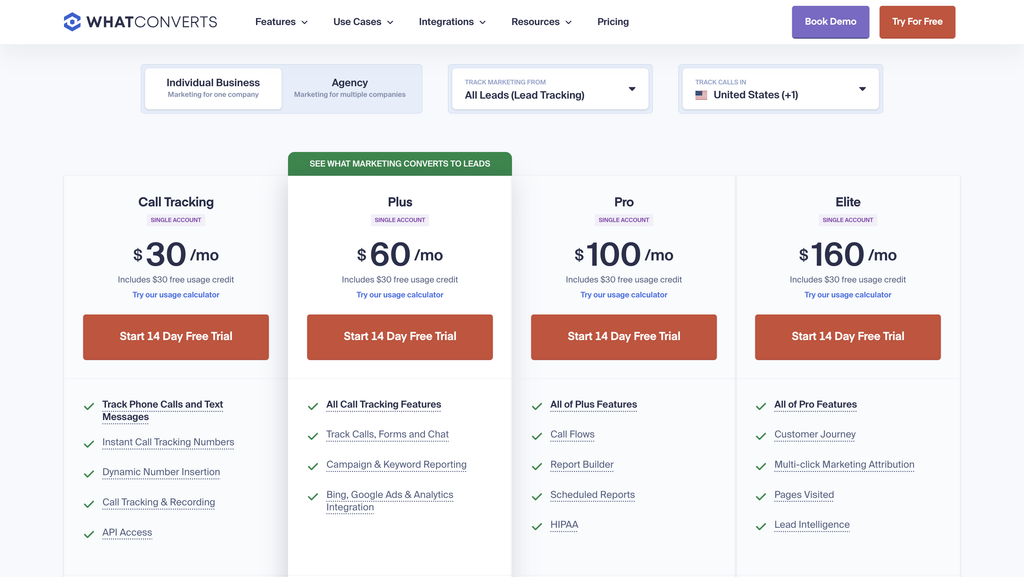
The official pages reviewed do not present a simple public pricing table, so the safer reading is to treat pricing as plan- or conversation-dependent.
The safer move is to use only the pricing details visible on the official pages and treat any missing details as something to verify directly before a purchase decision.
Who Should Use WhatConverts
WhatConverts looks strongest for teams that already know the operational problem they want to solve and want a tool with a clearer official workflow than a stitched-together alternative stack usually provides.
It is less compelling when the buyer is still shopping at a very broad category level or expects the product to solve adjacent problems it is not clearly built around.
Final Review Verdict
WhatConverts is worth serious attention in 2026 when the official workflow, visible product direction, and team need line up tightly. That is where focused software tends to outperform generic software shopping habits.
If that sounds like your situation, try WhatConverts here and judge the product through one real task rather than a broad checklist.
FAQ
Is WhatConverts Worth Evaluating In 2026?
Yes, especially when the official pages is already close to the workflow your team needs to improve.
Should I Trust Third-Party Summaries Over The Product Site?
No. The official pages should stay primary for product direction, pricing signals, and visible feature claims.
What Matters Most In This Review?
Workflow fit matters most because that usually determines whether the product feels valuable after the trial stage.
When Does WhatConverts Look Weakest?
It looks weakest when the buyer’s requirements are broader than the official use case the product clearly emphasizes.
What Is The Best Next Step?
Use one real workflow, test the official path, and decide whether the product removes meaningful friction.
Decision Baseline
A sensible full product review starts with a baseline: what happens if the team changes nothing? For WhatConverts, that means documenting the time, handoffs, and uncertainty in the current process before judging a demo. This keeps the evaluation focused on day-to-day product fit. Without a baseline, even a polished trial can feel productive while leaving the original bottleneck untouched.
A Better Trial Question
Instead of asking whether WhatConverts looks easy during a tour, ask whether a colleague could repeat the same useful outcome next week without rebuilding the process. That question exposes the balance between strengths and limitations quickly. It also stops the evaluation from rewarding attractive screens that do not improve the work behind them. A repeatable result is a much stronger buying signal than a smooth first click.
The First Week Test
During the first week with WhatConverts, keep the scope deliberately narrow. Pick one recurring task, identify the person responsible for it, and agree on what a better result should look like. For this full product review, the useful evidence is whether the product improves and whether the complete package earns its place in the stack. If the team cannot describe that change plainly, it is too early to expand the rollout.
Adoption Reality
Software adoption rarely fails because nobody can find the buttons. It fails when the new routine asks people to do extra work without giving them a visible payoff. WhatConverts should therefore be assessed inside the normal working day, with realistic inputs and the same constraints the team already faces. That is where small points of friction appear, and where a convincing full product review earns trust.
What To Measure
Useful measurements do not need to become a giant analytics project. Track one speed measure, one quality measure, and one adoption signal while testing WhatConverts. Together, those indicators reveal whether day-to-day product fit is improving or merely moving elsewhere. The numbers should be simple enough for the team to review weekly; otherwise, measurement itself becomes another layer of work.
The Handoff Check
Look closely at the moment work enters and leaves WhatConverts. A tool can perform its central task well and still create trouble if people must clean data, chase approvals, or re-enter results afterward. For this angle, a strong outcome means the balance between strengths and limitations remains convincing across the whole handoff, not only inside the product. This check often reveals costs that pricing pages cannot show.
Team Ownership
Give the evaluation an owner, but do not let one enthusiastic user become the only source of evidence. The owner should collect feedback from the people who supply inputs, perform the work, and depend on the output. That broader view helps the team judge WhatConverts against whether the complete package earns its place in the stack. It also reduces the chance of approving a workflow that works beautifully for one person and awkwardly for everyone else.
Where Complexity Hides
Complexity often appears after the happy-path demo: permissions, exceptions, historical data, reporting, and changes in responsibility. Test at least one awkward but common scenario before deciding on WhatConverts. The goal is not to break the tool for sport. It is to learn whether day-to-day product fit still holds when real work stops behaving like a neat sample project.
A Fair Evaluation Window
A trial should be long enough to repeat the target workflow, but short enough to preserve urgency. Set a decision date before opening WhatConverts, then collect evidence around the same use case until that date. This makes the full product review easier to compare with the team’s original process. Endless trials feel safe, yet they often produce less clarity because nobody agrees on when the test is complete.
Evidence Over Enthusiasm
Enthusiasm is useful during discovery, but evidence should decide the purchase. Save examples of completed work, note the steps that disappeared, and record any new tasks introduced by WhatConverts. Those observations make the balance between strengths and limitations concrete. They also give reviewers something more useful than competing opinions when the final decision reaches budget owners or operational leaders.
The Exit-Cost Question
Before committing, consider how easily the team can retrieve its data, preserve essential outputs, and continue working if priorities change. This is not pessimism; it is ordinary operational hygiene. A credible WhatConverts decision should support whether the complete package earns its place in the stack without creating unnecessary dependence. Clear ownership and export expectations make adoption safer, especially when the workflow will become important over time.
Training Without Theater
Training works best when it follows the team’s actual sequence of work. A short session built around one real task in WhatConverts is usually more useful than a long tour of every menu. It reinforces day-to-day product fit and gives new users a reference they can repeat immediately. Record the agreed process in plain language so the workflow does not live only in one person’s memory.
The Honest Limitation Test
Every product has a boundary, and finding it early improves the decision. Ask which part of the intended workflow WhatConverts does not handle cleanly, then decide whether that gap is rare, manageable, or fundamental. This keeps the balance between strengths and limitations balanced rather than promotional. A known limitation with a simple workaround is often safer than an impressive promise the team cannot verify.
When To Expand
Expansion should follow proof, not excitement. Once the first workflow in WhatConverts runs reliably, consider the next use case only if it shares people, data, or process with what already works. That sequence protects whether the complete package earns its place in the stack and avoids turning a focused rollout into an uncontrolled platform project. Small wins compound when the team can explain why each new step belongs.
A Practical Decision Record
Write down the final reasons for choosing or rejecting WhatConverts: the workflow tested, the evidence collected, the limitations accepted, and the owner of the next step. This short record makes the full product review useful after the decision meeting. It prevents the team from reopening the same debate later without new evidence, and it gives future reviewers a clear account of what was actually verified.
The Buyer Takeaway
The strongest conclusion is rarely that WhatConverts has the longest list of capabilities. It is that the product improves a specific routine in a way the team can see, repeat, and support. Judge the final choice through day-to-day product fit, the balance between strengths and limitations, and whether the complete package earns its place in the stack. If those three signals align, the decision has a practical foundation rather than depending on marketing momentum.
Questions For The Final Review
Before closing the review of WhatConverts, ask three plain questions. Did the test improve the chosen workflow? Can the team repeat the result without special help? Are the remaining limitations acceptable at the expected cost? These questions bring the full product review back to observable work. A confident yes to all three is meaningful; a vague answer is a reason to test again before committing.
A Sensible Next Step
The next step does not need to be a company-wide rollout. Use WhatConverts with the smallest group that can complete the target workflow from beginning to end, then review the evidence with the people affected by the change. This protects the team from premature expansion while giving the complete package a fair test to earn its place in the stack. Progress should follow a verified result, not a deadline created by the sales process.
More on WhatConverts
Hand-picked guides to help you choose the right tool — no fluff.
 TutorialsWhatConverts Beginner's Guide 2026A clean start-here walkthrough with no jargon.
 Advanced GuidesWhatConverts Advanced Guide 2026Deeper workflows once the basics are in place.
 FeaturesPayoneer Workforce Management Top Features 2026The standout features and whether they justify the price.
 TutorialsPeople Beginner's Guide 2026A clean start-here walkthrough with no jargon.