


In this guide
Quick Take
Apollo.io is worth reviewing in 2026 when the buyer wants to understand how the product behaves in an actual working environment instead of only reading broad category claims. A useful review has to answer a harder question than “does this tool have features?” It has to answer whether the workflow behind the tool is tight enough to justify bringing it into a real team process.
Disclosure: Stack99 earns a commission if you buy through links on this page. It costs you nothing extra and never changes our assessment.
That is why the smartest way to read this review is through one live business problem. If the official workflow behind Apollo.io maps to a job your team already struggles with, the product becomes much easier to evaluate without guesswork.
If you want to inspect the live product while you read, start with Apollo.io here.
What Makes Apollo.io Interesting Right Now
What stands out about Apollo.io in 2026 is not just the category it belongs to. It is the way the product tries to frame the work around a repeatable operating model. That matters because businesses do not buy software to admire feature menus. They buy it to make recurring work less chaotic, more visible, and easier to repeat with confidence.
A strong review should therefore focus on the product’s real working shape: where it helps, where it can disappoint, and what kind of team will actually feel the upside after the first week.
Where The Product Helps Most
The strongest products usually earn trust by improving a task that already happens often. When a tool helps a repeated workflow move faster or with less friction, the value becomes visible quickly. That is the real lens for judging Apollo.io. If the product removes complexity around a repeated team activity, then the feature set matters because it supports a meaningful outcome instead of existing as shelf decoration.
If you want to pressure-test that yourself, open Apollo.io here and compare the product to one workflow your team already runs every week.
Where Buyers Should Stay Skeptical
No review is honest if it reads like pure promotion. A buyer should stay skeptical wherever the product fit looks broader in marketing language than it feels in actual use. The biggest risks are usually workflow mismatch, overbuying, or assuming that a well-positioned product will solve adjacent problems it was never really built to own.
That does not make the product weak. It simply means the best fit tends to be narrower and more specific than a fast first impression might suggest.
Pricing And Rollout Reality
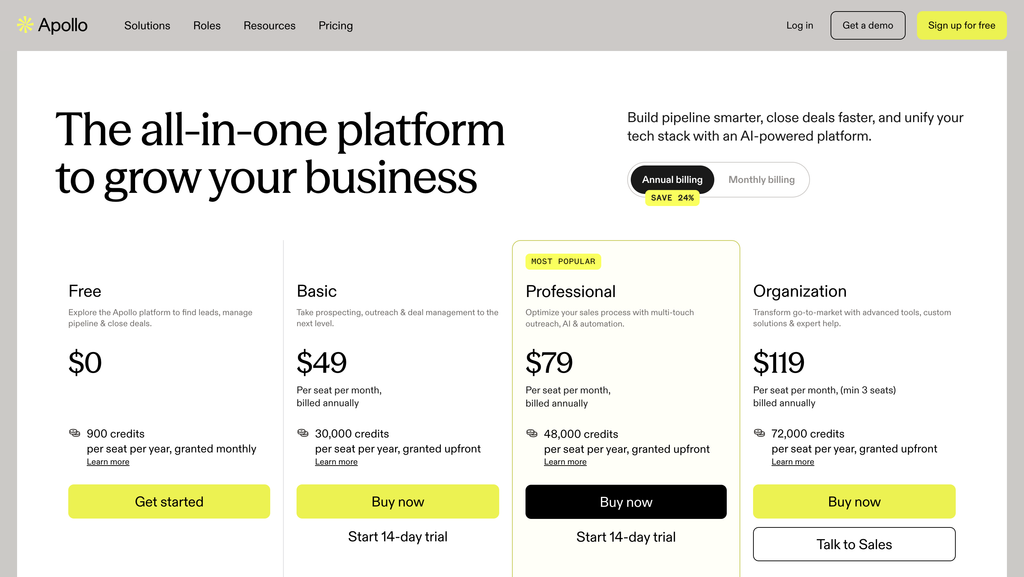
The pricing question only becomes useful when it is attached to real operating value. A smaller headline number can still be expensive if the workflow remains messy. A higher number can still be reasonable if the product reduces manual effort, coordination drag, or extra tool sprawl across a recurring process.
The rollout question matters just as much. Most teams learn more by testing one narrow use case than by trying to model the entire future on day one.
If you want another direct fit check, review Apollo.io here and compare the product’s path against the internal process you most want to improve.
Who Should Use Apollo.io
Apollo.io looks strongest for teams that already understand the problem they are trying to solve and want a product that adds more structure to that work without creating unnecessary operational noise. It is less convincing for buyers who still need a much broader platform or who are only loosely exploring the category.
That difference matters because the right software feels clearer after a few repeated uses, while the wrong software keeps needing explanation.
Verdict
Apollo.io earns a serious look in 2026 when the team wants a clearer, more dependable workflow and is willing to evaluate the product through a real operating task rather than through generic feature shopping. That is where a focused review becomes genuinely useful.
If that sounds like your situation, try Apollo.io here and judge the product through one live workflow before you decide.
FAQ
What Should I Pay Attention To First?
Pay attention to whether the product improves a repeated workflow your team already owns, because that reveals fit faster than a feature checklist.
Is Apollo.io Best Judged By Features Alone?
No. The stronger test is whether the workflow, rollout pattern, and day-to-day usability make practical sense for the team using it.
When Does The Product Feel Less Compelling?
It feels less compelling when the team needs broader coverage than the product is really designed to provide or when the business problem is still not clearly defined.
What Is The Best Review Method?
Use one real use case, compare the product against the current process, and decide whether the difference feels meaningful enough to matter after repeated use.
Field Note
In a review article like this, the safest way to judge Apollo.io is to stay close to one repeated workflow and ask whether the tool improves clarity, consistency, and follow-through under real operating conditions. That kind of grounded evaluation tends to produce better decisions than broad category assumptions because it reveals whether the product can reduce friction in work the team already owns.
More on Apollo.io
Hand-picked guides to help you choose the right tool — no fluff.
 Case StudiesApollo.io Case Study 2026What actually happened when teams rolled it out.
 FeaturesApollo.io Top Features 2026The standout features and whether they justify the price.
 IntegrationsCallHippo Integrations Guide 2026What it connects to and how well each link holds up.
 Use CasesWho Is Carepatron Best For? Use Cases & Fit (2026)Who gets the most out of it — and who should skip it.