


Lead generation agencies, appointment-setting teams and outbound shops running several client ICPs at once.
Who sends, who owns the data, and what the quote looks like, because none of the three is published.
In this guide
- Who This Post Is For
- Why SmartReach AI Fits Agencies
- One Platform Instead Of Tool Sprawl
- Data Plus Outreach In One Motion
- Research That Scales Across Client ICPs
- Infrastructure You Probably Already Pay For
- Buyer Intent And Research Layers
- Pricing In Agency Context
- Real-World Agency Example
- Alternatives Agencies Might Compare
Who This Post Is For :
Lead generation agencies, appointment-setting teams and outbound shops running campaigns for more than one client. Everything below comes from SmartReach AI’s own pages, read on 17 October 2026, and from the structure of the platform rather than from a demo account.
Disclosure: Stack99 earns a commission if you buy through links on this page. It costs you nothing extra and never changes our assessment.
One thing to settle immediately, because older write-ups of this product say otherwise. The vendor no longer publishes a plan ladder, a token price or any figure at all. Every button on the site reads “Book A Meeting”, and the pricing URL returns a 404. Budget accordingly.
What has replaced it is a six-product platform aimed squarely at outbound teams, and agencies are named as a target buyer on each of those product pages rather than mentioned once in passing.
If you want to check the platform while you read, start with SmartReach AI here.

Why SmartReach AI Fits Agencies :
Agencies carry a problem in-house teams do not: every new client arrives with a different ideal customer profile, and the targeting work starts from scratch. A data tool tuned to one ICP becomes a liability when you sign the fourth account.
SmartReach addresses that directly. Its SmartData page describes the agency case as needing “signal-based targeting across many client ICPs, without rebuilding their data stack for each account”. Phrasing like that is not accidental. Someone at the company has sat in an agency operations meeting.
Six products sit on one intelligence layer:
- SmartData, signal-based prospect data and ICP targeting.
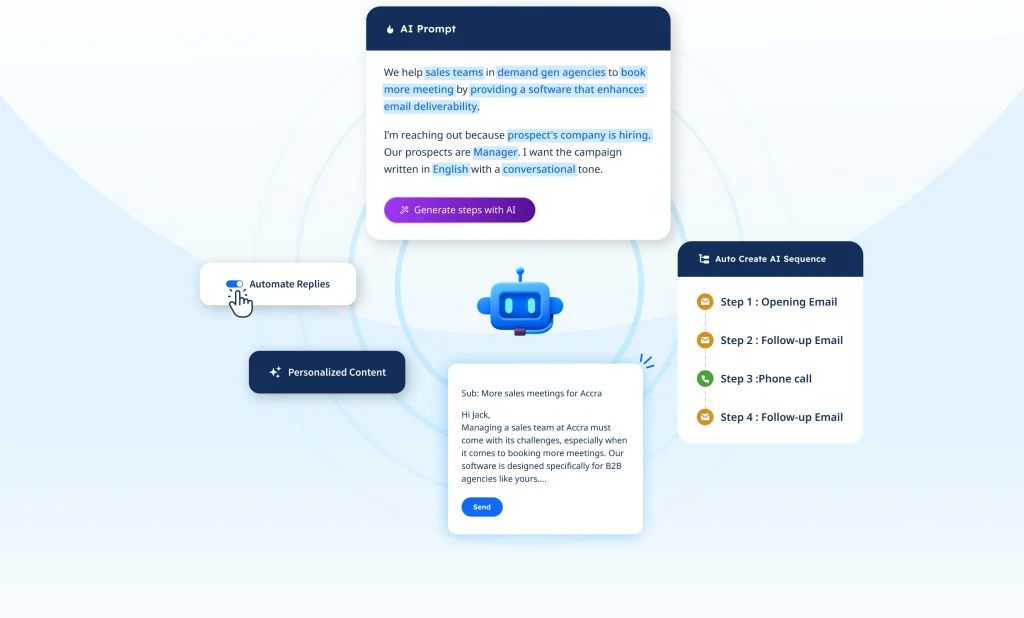
- SmartAgent, plain-language research run across every record on a list.
- SmartMail, cold email built from that research.
- SmartLink, LinkedIn connection requests, drips, profile visits, follows and likes.
- SmartDesign, B2B website design aimed at the traffic outbound creates.
- SmartConvert, chat and booking flows for visitors who arrive from a campaign.
The last two are unusual in an outbound product and tell you something about how SmartReach sees the job. A reply is not a meeting. A prospect clicks through, lands on a site, and decides there whether to book. Agencies selling meetings rather than sends will recognise the argument.
One Platform Instead Of Tool Sprawl
Consolidation is the pitch, and it needs reading carefully, because SmartReach consolidates less than the word usually implies.
The intelligence consolidates. Targeting, signals, research and message construction live in one place, and the output of each feeds the next. SmartReach is explicit that replies feed back into its dataset so winning angles compound and weak ones get retired.
Execution does not consolidate. SmartMail says it plainly: “SmartMail is not a replacement sender.” Campaigns launch through Instantly, Manyreach or Reply.io. SmartLink runs on HeyReach infrastructure. Your agency keeps those subscriptions, keeps managing inbox warm-up and domain health, and adds SmartReach on top.
That is a narrower claim than an all-in-one suite, and a more credible one. Deliverability is a specialist discipline with its own vendors, and a company that admits it does not do that job is easier to trust on the job it does claim.
Model the cost that way. SmartReach is a line on top of your sending stack, not a replacement for it.
Data Plus Outreach In One Motion
SmartData’s positioning against the incumbents is the clearest sentence on the site: “Apollo finds contacts. ZoomInfo provides data. SmartData tells you which of those contacts deserve your attention first.”
The signals it tracks are listed rather than hinted at. Funding events and hiring velocity. Executive and leadership changes. Technology added or removed. Competitor following activity. Social and relationship signals. Market expansion. Custom business conditions specific to a given sale.
For an agency the last item carries the most weight. A client selling warehouse robotics cares about a different trigger than one selling compliance software, and a platform that lets you define the condition per account is doing agency work rather than generic prospecting.
There is a second, quieter line in the SmartData FAQ that agencies should read twice. SmartReach says that if your team already handles outbound, it can provide the target list, signals, research and qualification logic while your team runs the outreach. Read as a commercial offer, that is a data-and-research engagement rather than a software subscription, and it is the shape most agencies would actually want.
Research That Scales Across Client ICPs
SmartAgent is the product with no obvious equivalent elsewhere, and it is the one worth testing first.
You ask a question in plain language. “Does this company have an internal SDR team?” SmartAgent researches the answer from public sources for every company or person on the list, then returns it as a structured field you can filter, segment and personalise against. The examples shown on the page are fields such as first_time_ceo, closest_competitor, hiring_sdrs and public_pricing.
Consider what that replaces in an agency. Custom qualification research is normally a junior researcher with twelve browser tabs, and it is the step that quietly destroys margin on a retainer. Asking one question across 1,200 records and getting a column back changes the unit economics of a campaign brief.
Three questions to put to the vendor before you rely on it. How are answers sourced and how often are they wrong. Whether a researched field refreshes or ages. And whether the cost scales per record, per question or per client, since none of that is published.
Infrastructure You Probably Already Pay For
Four third-party platforms are named on SmartReach’s own pages as the rails it runs on: Instantly, Manyreach and Reply.io for email, HeyReach for LinkedIn.
Most outbound agencies already run at least one of those, which cuts both ways. Adoption is cheaper because your sending stack does not change and your deliverability work carries over. Lock-in is also lighter, since the thing you would be buying is intelligence rather than a migration.
Two operational questions follow. Does SmartReach connect to one sending account or to the several your agency runs per client, and does LinkedIn sequencing through HeyReach respect per-account limits when you are driving many client profiles at once. Account safety is where LinkedIn automation fails for agencies, and HeyReach handling cadence is reassuring rather than conclusive.
On the governance side, SmartReach publishes Terms of Service, a Privacy Policy, a DPA, a Cookie Policy and a Data Dictionary. A published DPA matters when you are processing a client’s prospect data on their behalf, and the Data Dictionary is the document your own data team will ask for.
Buyer Intent And Research Layers
SmartReach frames targeting as three separate questions answered by three products. SmartData asks who fits. SmartAgent asks what else you should know. SmartSonar, the signal layer, asks why now.
Splitting them is more useful than it looks, because agencies usually lose campaigns on the third question rather than the first. Fit is easy. Timing is the hard part, and a client who says “these are good accounts but nobody is buying” is describing a timing failure.
Underneath all of it sits the number SmartReach repeats on every page: more than 100 million outbound data points, used to decide which hooks, subject lines, lengths, tones and calls to action earn replies. Treat it as a vendor claim. No third party audits it, and the figure appears only on SmartReach’s own site.
The claim is at least testable in a trial. Run two campaigns for the same client, one shaped by the platform and one by your best copywriter, and compare reply rates on matched lists. Any agency can run that test in a fortnight.
Pricing In Agency Context :
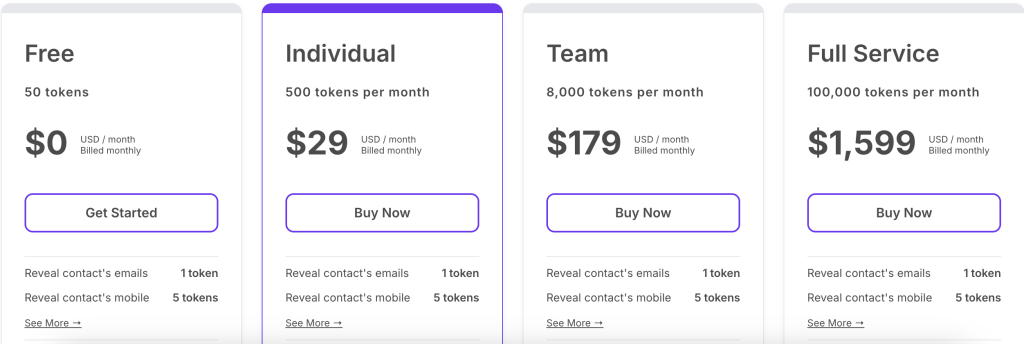
Here is the honest position as of 17 October 2026. SmartReach AI publishes no prices.
There is no pricing page. The address you would guess returns a 404. No plan names, no seat rates, no token bundles and no minimums appear on any product page. Every call to action routes to a booking form, with a fifteen-minute meeting offered in several of the FAQ answers.
| Plan | Price | What you get |
|---|---|---|
| Any plan | Custom | No published figure of any kind on 17 October 2026. Every route is a booked call. |
| Discovery call | Free | A fifteen-minute meeting is offered in the FAQ answers on several product pages. |
| Sending stack | Separate | Instantly, Manyreach or Reply.io for email and HeyReach for LinkedIn are billed by those vendors, not by SmartReach. |
What should an agency do with that? Walk into the call with your own numbers. Know how many records a typical client list holds, how many research questions you would ask per campaign, how many client ICPs run at once, and what your current data and research spend is per account. A vendor without a published price will anchor on what you say first.
Ask three things in writing: whether pricing is per seat, per record or per engagement, whether client accounts are separable for billing and data, and what happens to researched fields if you leave.
To compare the economics yourself, start with SmartReach AI here and take one live client campaign into the conversation rather than a hypothetical one.
Real-World Agency Example :
SmartReach publishes four case studies, and the most relevant one to agencies is an agency-shaped engagement rather than an agency client.
- Meridian Studio, an architecture firm. Claimed: 3.4 times more booked conversations, a 62% reply rate on signal-timed sends, and no generic compliment lines.
- Northwind Labs, deep technology with long cycles. Claimed: 41% shorter time to first call, 2.1 times more meetings booked per rep, five research dimensions per account.
- Atelier Noir, luxury fashion. Claimed: a 67-word winning message across three coordinated channels.
- Veridian Estates, real estate entering a new region. Claimed: two channels on one intelligence layer, owners sorted into a high-priority tier by signal strength.
Treat every one of those figures as a vendor claim. None carries a named person, a logo, a dated contract or any third-party corroboration, and the company names are not traceable to identifiable businesses from the pages themselves. Ask for a reference you can call before any of it enters a client pitch.
The structure of the studies is more informative than the numbers. Each one pairs a narrow vertical with a specific trigger, which is the motion an agency would run anyway. A 62% reply rate is implausible as a norm. A workflow that starts from a reason to call rather than a filter is not.
Alternatives Agencies Might Compare :
SmartReach positions itself against three categories on its own pages, which makes the comparison set easy to draw.
- Contact databases. Apollo and ZoomInfo are named. SmartReach argues they answer who matches a filter, while it answers who has a reason to buy now.
- Sending platforms. Instantly and Smartlead are named as deliverability tools rather than rivals, since SmartMail sends through that class of product instead of replacing it.
- LinkedIn tooling. Sales Navigator is framed as the layer that finds people, with SmartLink handling researched multi-step outreach through HeyReach.
Which means the real question for an agency is not SmartReach versus Apollo. It is whether a research and signal layer on top of the stack you already run earns more meetings than spending the same money on another seat, another list or another SDR.
Agencies already strong at copy and weak at targeting have the clearest case. Agencies with a researcher on staff and a working signal process have the weakest, since they would be paying for work they already do.
Verdict :
SmartReach AI is built for the way agencies actually work, and it is sold in a way agencies should approach carefully.
The product logic holds up. Signal-based targeting across many client ICPs, plain-language research turned into filterable fields, and messages shaped by outbound outcome data are all real answers to problems that cost agency margin every month. Naming the sending platforms it rides on, rather than pretending to replace them, is a point in its favour.
The commercial side is the opposite. No published price, no published seat model, vendor case studies with unverifiable names, and a 100 million data point claim nobody outside the company can check. None of that makes the product bad. All of it means the discovery call carries more weight than usual.
Our advice to an agency owner is narrow. Take one client, one ICP and one research question into the conversation. Ask what that costs. Compare the answer against the hours your team currently spends on the same work.
Agencies already running Instantly or HeyReach have the cheapest possible trial here, because nothing in the sending stack has to change. Start with SmartReach AI here and point it at a list you have already worked, so you can compare against a known result rather than a fresh one.
To test that against your own delivery model, start with SmartReach AI here and bring a live campaign rather than a hypothetical one.
Pricing coverage lives in our SmartReach AI pricing guide, which documents the plan structure the vendor published previously. Note that those figures no longer appear on the vendor’s site and should be confirmed before you rely on them.
FAQ :
Is SmartReach AI good for agencies?
It is built with agencies in mind. Lead generation agencies are named as a target audience on the SmartData, SmartMail and SmartLink pages, and SmartData specifically addresses running signal-based targeting across many client ICPs without rebuilding a data stack per account.
How much does SmartReach AI cost?
No price is published anywhere on smartreachai.com as of 17 October 2026. The pricing URL returns a 404 and every call to action routes to a booking form. Earlier published plan and token figures no longer appear on the site.
Does SmartReach AI send my emails?
No. SmartMail states that it is not a replacement sender and launches sequences through Instantly, Manyreach or Reply.io. SmartLink runs LinkedIn sequences on HeyReach infrastructure. Those subscriptions sit outside anything SmartReach bills you for.
What makes SmartReach AI different for agency teams?
SmartAgent is the clearest differentiator. Ask a plain-language question such as whether a company runs an internal SDR team, and the answer is researched for every record on the list and returned as a structured field you can filter and personalise against.
What should agencies watch closely before buying?
Three things. Whether pricing scales per seat, per record or per engagement. Whether client accounts stay separable for billing and data. And whether researched fields remain yours if the contract ends.
Can SmartReach do the research while my team runs outreach?
SmartReach says so in the SmartData FAQ: if your team already handles outbound, it can supply the target list, signals, research and qualification logic while you run the campaigns. Confirm the commercial terms of that arrangement directly, since none are published.
Before You Choose, Compare These
Hand-picked guides to help you choose the right tool — no fluff.
 PricingSmartReach AI Pricing 2026Real tier prices and what each plan actually includes.
 TutorialsWebCatalog Beginner's Guide 2026A clean start-here walkthrough with no jargon.
 ComparisonsZonka Feedback vs Alternatives 2026The strongest competitors compared side by side.
 ComparisonsFreshchat vs Alternatives 2026The strongest competitors compared side by side.