



In this guide
Why These Features Matter
The best WebCatalog features are not automatically the ones with the loudest names. In 2026, the useful capabilities are those that change everyday execution when they work together. Turn websites into desktop apps with WebCatalog. Organize them in customizable spaces, stay signed in to multiple accounts, launch everything from a personalized home screen, and discover curated apps for Mac and Windows. The official site repeatedly points to A home for your apps and accounts, Install from a catalog of 50,000+ apps, An operating system for your web apps. The page titles also reinforce the product’s main positioning instead of burying it behind vague marketing language.
Disclosure: Stack99 earns a commission if you buy through links on this page. It costs you nothing extra and never changes our assessment.
If you want to inspect the product while you read, start with WebCatalog here.
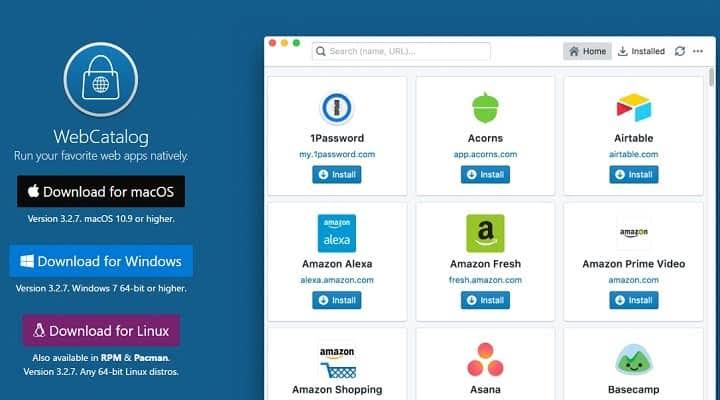
A home for your apps and accounts
For WebCatalog, a home for your apps and accounts deserves its position only if it changes the way real work moves. The first-ranked capability earns attention when it shortens the distance between an input and a useful result. A buyer should test it with normal work, including an imperfect example, rather than a polished demo asset.
For buyers in 2026, the practical question is whether a home for your apps and accounts supports the product’s main operating model. If the result is easier to produce and easier for a colleague to repeat, the feature has practical weight. If it only looks impressive during setup, it shouldn’t carry the buying decision.
Install from a catalog of 50,000+ apps
For WebCatalog, installing from a catalog of 50,000+ apps deserves its position only if it changes the way real work moves. The second feature matters for continuity. Look at what happens before and after the capability is used: who supplies the input, who receives the output, and whether either person inherits extra cleanup.
For buyers in 2026, the practical question is whether install from a catalog of 50,000+ apps supports the product’s main operating model. That handoff test is especially useful in 2026 because teams are already juggling crowded stacks. A feature that removes a step is usually worth more than one that creates another dashboard to check.
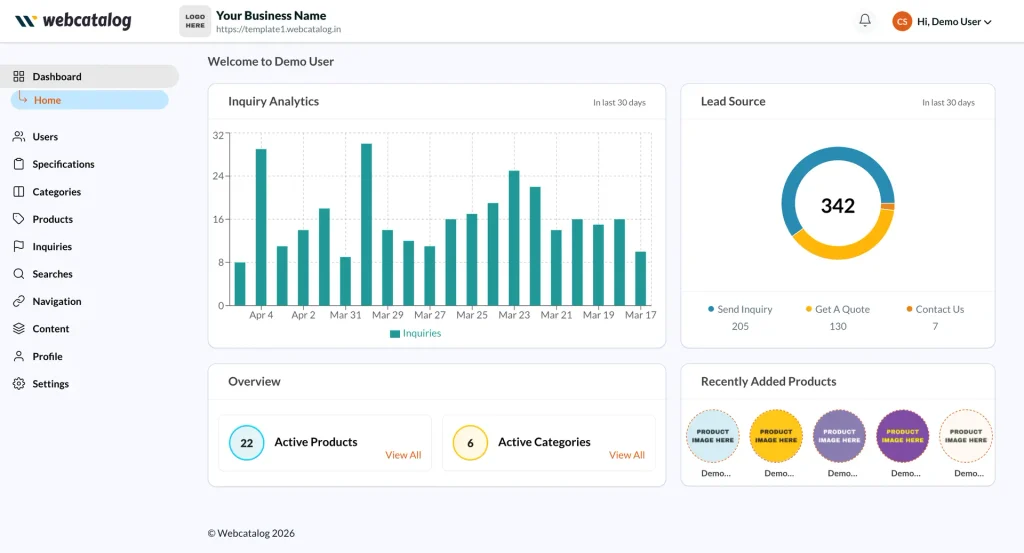
An operating system for your web apps
For WebCatalog, an operating system for your web apps deserves its position only if it changes the way real work moves. The third-ranked capability should be judged under repetition. Run the same kind of task more than once and note whether the process becomes calmer or simply familiar.
For buyers in 2026, the practical question is whether an operating system for your web apps supports the product’s main operating model. Real value appears when consistency improves without forcing the team into rigid workarounds. That is a stronger signal than novelty, and it gives reviewers evidence they can discuss without relying on marketing language.
A space for every role you play
For WebCatalog, a space for every role you play deserves its position only if it changes the way real work moves. The fourth feature is a good place to examine control. Check permissions, exceptions, visibility, and what happens when the usual workflow changes halfway through.
For buyers in 2026, the practical question is whether a space for every role you play supports the product’s main operating model. A capability can be fast on the happy path and still be awkward in daily operations. Buyers should confirm that the feature supports ordinary edge cases before treating it as a reason to upgrade.
One space, deployed to your whole team
For WebCatalog, one space, deployed to your whole team deserves its position only if it changes the way real work moves. The fifth capability completes the picture by showing how well the product supports review, learning, or expansion after the initial task is done.
For buyers in 2026, the practical question is whether one space, deployed to your whole team, supports the product’s main operating model. It doesn’t need to be the flashiest item on the page. It needs to make the overall workflow easier to understand, improve, or scale without undoing the gains created by the earlier features.
What Makes These Features Valuable Together
The real advantage is not any one feature in isolation. It is how the product’s strongest capabilities reinforce the same working model. That usually leads to better adoption and less operational friction.
If you want to compare that against your team’s current process, open WebCatalog here and judge whether the top features map to work you already do every week.
If you want a second feature-focused check, review WebCatalog here and compare the official product themes against the work that creates the most drag today.
Verdict
The top features in WebCatalog matter most when they make the core workflow calmer, faster, and easier to scale. That is the lens buyers should use in 2026 rather than chasing the longest feature list.
If that sounds relevant, try WebCatalog here and evaluate the product through one high-value workflow.
FAQ
What Is The Best Feature In WebCatalog?
The best feature is usually the one that most directly improves the repeated workflow your team cares about most.
Should I Judge WebCatalog By Feature Count Alone?
No. The right question is whether the strongest features improve real execution, not whether the list is longer than a competitor’s.
When Do These Features Matter Most?
They matter most when the product’s operating model is already close to the work your team needs to improve.
What Is The Best Way To Test These Features?
Use one real process and see whether the core features reduce time, confusion, or manual effort.
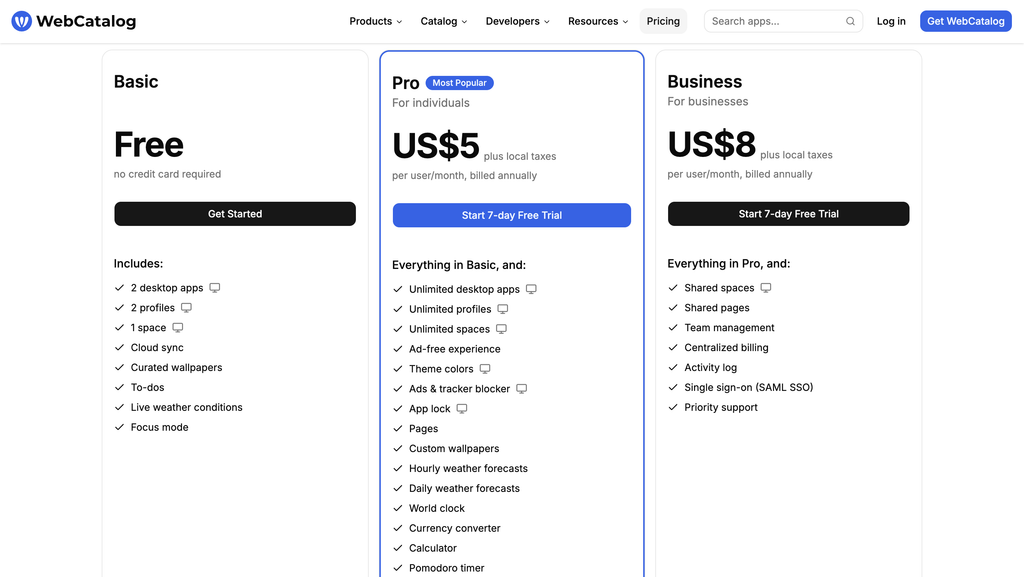
Decision Baseline
A sensible top features ranked and compared starts with a baseline: what happens if the team changes nothing? For WebCatalog, that means documenting the time, handoffs, and uncertainty in the current process before judging a demo. This keeps the evaluation focused on how the leading capabilities work together. Without a baseline, even a polished trial can feel productive while leaving the original bottleneck untouched.
A Better Trial Question
Instead of asking whether WebCatalog looks easy during a tour, ask whether a colleague could repeat the same useful outcome next week without rebuilding the process. That question exposes which features change everyday execution quickly. It also stops the evaluation from rewarding attractive screens that do not improve the work behind them. A repeatable result is a much stronger buying signal than a smooth first click.
The First Week Test
During the first week with WebCatalog, keep the scope deliberately narrow. Pick one recurring task, identify the person responsible for it, and agree on what a better result should look like. For this top features ranked and compared, the useful evidence is whether the product improves the practical value behind the feature names. If the team cannot describe that change plainly, it is too early to expand the rollout.
Adoption Reality
Software adoption rarely fails because nobody can find the buttons. It fails when the new routine asks people to do extra work without giving them a visible payoff. WebCatalog should therefore be assessed inside the normal working day, with realistic inputs and the same constraints the team already faces. That is where small points of friction appear, and where a convincing top features ranked and compared earns trust.
What To Measure
Useful measurements do not need to become a giant analytics project. Track one speed measure, one quality measure, and one adoption signal while testing WebCatalog. Together, those indicators reveal whether how the leading capabilities work together is improving or merely moving elsewhere. The numbers should be simple enough for the team to review weekly; otherwise, measurement itself becomes another layer of work.
The Handoff Check
Look closely at the moment work enters and leaves WebCatalog. A tool can perform its central task well and still create trouble if people must clean data, chase approvals, or re-enter results afterward. For this angle, a strong outcome means which features that change everyday execution remain convincing across the whole handoff, not only inside the product. This check often reveals costs that pricing pages cannot show.
More on WebCatalog
Hand-picked guides to help you choose the right tool — no fluff.
 IntegrationsWebCatalog Integrations Guide 2026What it connects to and how well each link holds up.
 TutorialsWebCatalog Beginner's Guide 2026A clean start-here walkthrough with no jargon.
 IntegrationsKeeper Security Integrations Guide 2026What it connects to and how well each link holds up.
 IntegrationsKinetic Innovative Staffing Integrations Guide 2026What it connects to and how well each link holds up.