


- What The Official Pages Show About Connectivity
- Where Keeper Security Fits In A Real Stack
- Popular Workflow Patterns
- Setup Approach
In this guide
Why Integrations Matter Here :
Keeper Security sits close to the middle of your security stack: it is where passwords, credentials, and other secrets live, so how well it connects to the rest of your tools matters as much as the vault itself. Before you commit, it is worth mapping how Keeper will sit alongside the systems your team signs into every day. This guide looks at Keeper Security’s connectivity from that angle, covering what to check, in what order, and where the setup effort usually goes.
Disclosure: Stack99 earns a commission if you buy through links on this page. It costs you nothing extra and never changes our assessment.
The integration question matters because products rarely work in isolation. The real value often appears only after the tool connects cleanly to the rest of the stack.
If you want to inspect the product while you read, start with Keeper Security here.
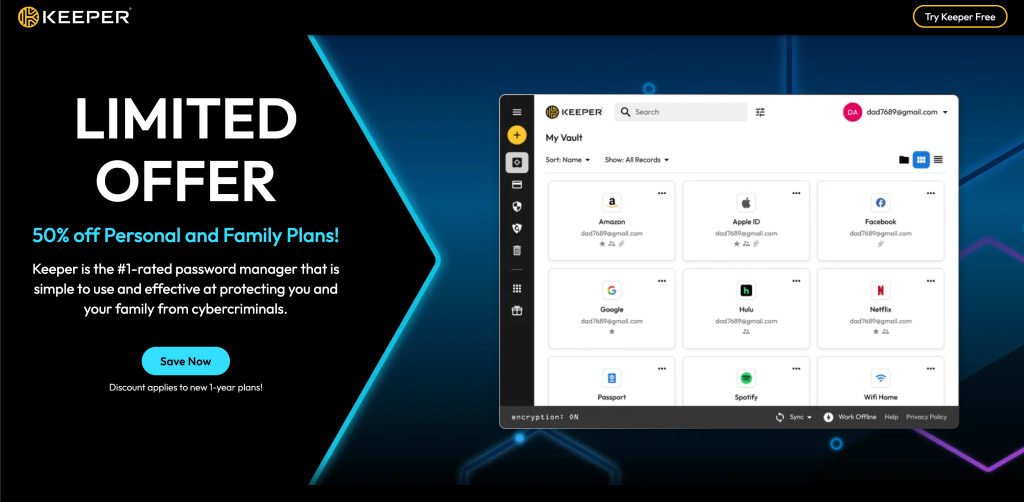
What The Official Pages Show About Connectivity :
The official pages keeps pointing toward:
- Connected apps
- Workflow automation
- API or data flow
- Reporting
That is a good sign because strong integration-fit products usually make it obvious how they are supposed to sit inside the broader workflow.
Where Keeper Security Fits In A Real Stack :
The best way to think about Keeper Security integrations in 2026 is not as a random list of apps. It is as a data and workflow bridge between the product’s core use case and the rest of the business process.
Popular Workflow Patterns :
Typical integration value shows up in patterns like:
- Moving information from source systems into the product.
- Triggering next steps after work is completed.
- Feeding reporting or analytics downstream.
- Reducing repeated manual handoffs between tools.
Setup Approach :
The safest setup is to begin with the one integration path that carries the highest recurring operational value. Do not wire everything at once. Start with the connection that removes the most manual work first.
If you want to test that directly, open Keeper Security here and compare the official workflow to the systems your team already depends on daily.
If you want another stack-fit check, review Keeper Security here and compare the integration story against the handoff that creates the most daily friction.
Automation And API Considerations :
When a product has workflow automation, scheduling, API access, or stack-level extensibility, those usually matter more than a giant app marketplace list. The real question is whether the product makes the team’s handoffs calmer and more repeatable.
Troubleshooting Lens :
The most useful troubleshooting question is simple: where does the workflow currently break? If the integration story does not reduce that breakage, then the connection may look impressive without actually being valuable.
Buyer Lens :
The most reliable way to evaluate Keeper Security in 2026 is to compare the official pages against one live workflow your team already runs. That usually reveals product fit faster than a broad feature spreadsheet.
Operational Note :
Keeper Security is easiest to judge by the repeated work around it, not just the trial experience. If the product reduces recurring friction, the value tends to become much clearer over time. That is why the safest evaluation path is usually one repeated live task instead of a broad artificial test.
Final Buying Note :
In 2026, the smartest way to evaluate Keeper Security is still to use the official product pages, compare them against one real workflow, and decide whether the product reduces friction in a way your team will actually feel every week. That kind of grounded evaluation usually tells you more than another generic comparison spreadsheet.
Verdict :
Keeper Security integrations make the most sense in 2026 when they reduce handoff friction, keep information moving, and make the workflow easier to repeat across tools.
If that sounds relevant, try Keeper Security here and evaluate the product against one integration path your team already uses every day.
FAQ :
Why Are Integrations Important For Keeper Security?
Because the product’s real value often depends on how cleanly it connects to the rest of the working stack.
Should I Connect Everything At Once?
No. Start with the highest-value workflow first and expand only after that path is stable.
What Matters More Than The Number Of Integrations?
Workflow usefulness matters more than the raw count of logos or app names.
How Should I Evaluate The Integration Fit?
Use one real handoff or repeated process and judge whether the product makes that process smoother.
When Does The Integration Story Look Weak?
It looks weak when connections exist on paper but do not reduce real manual work or workflow breakage.
More on Keeper Security
Hand-picked guides to help you choose the right tool — no fluff.
 Use CasesWho Is Keeper Security Best For? Use Cases & Fit (2026)Who gets the most out of it — and who should skip it.
 PricingKeeper Security Pricing 2026Real tier prices and what each plan actually includes.
 Use CasesQuillBot for Students 2026A practical look at where it fits your stack.
 ReviewsRank Prompt Review 2026Hands-on verdict with the pros, cons and who it fits best.