


In this guide
Pricing Overview
The headline number never tells the whole Outgrow pricing story. A sound 2026 cost analysis must connect the official price path to usage, workload, and the friction it may replace. Outgrow is a tool for creating quizzes, assessments, surveys, polls, contests, chatbots, product recommendations & calculators that generate leads & traffic. The official site repeatedly points to Boost Your Marketing With, Use Outgrow’s simple, no-code tools to acquire qualified leads. Outgrow's Quiz Maker and Calculator builder are known for. The page titles also reinforce the product’s main positioning instead of burying it behind vague marketing language.
Disclosure: Stack99 earns a commission if you buy through links on this page. It costs you nothing extra and never changes our assessment.
The most important thing to understand about Outgrow pricing in 2026 is that the product value is tied to how the workflow is consumed, not only to a flat subscription label.
| Plan | Price | What you get |
|---|---|---|
| Free Forms/Surveys | Free | Basic forms and surveys with limited content pieces and leads |
| Freelancer | $14/mo | Entry plan for solo users, billed annually; core content types |
| Freelancer Pro | $25/mo | More content pieces and features for individual marketers |
| Essentials | $95/mo | Small-team plan with higher lead limits and more formats |
| Business | $600/mo | Full feature set, higher limits, advanced integrations |
| Enterprise | Custom | Custom plans via sales for large teams and agencies |
If you want to inspect the official pricing path while you read, start with Outgrow here.

What The Official Pages Emphasize
The official product and pricing pages repeatedly point toward:
- Boost Your Marketing With
- Use Outgrow’s simple, no-code tools to acquire qualified leads.
- Outgrow’s Quiz Maker and Calculator builder are known for
- Optimized templates
Outgrow’s official pricing page shows separate monthly and annual rates, with lower effective monthly pricing on annual billing. It also offers enterprise, agency, and custom plans through sales.
Pricing Tiers And Cost Shape

Outgrow says its trial provides Business-plan access for seven days without requiring a credit card. Lead limits vary by plan, and customers who exceed them can upgrade or discuss a lead add-on. Custom build services start from $250 per content piece on the live page.
If you want to inspect the source pricing flow yourself, check Outgrow here and compare the visible pricing logic against how your team would actually use the product.
Hidden Costs And Gotchas
The real hidden cost is usually not the visible plan number. It is mismatched usage. If a team buys Outgrow before the workflow is ready, the tool can feel more expensive than it should. If the team buys too late, the manual work around the tool can cost more than the subscription.

ROI Example
A realistic ROI question for Outgrow is whether the product reduces enough manual friction, delay, or tool sprawl to justify the official cost path. That could mean faster execution, fewer side tools, cleaner operations, or less time spent coordinating work outside the product.
Cost Comparison
Broader alternatives may look cheaper at a glance, but that often happens because they push more operating effort back onto the team. Outgrow becomes easier to justify when it removes enough friction that the working cost of “cheaper” tools starts to look less attractive.
If you want to test that the practical way, open Outgrow here and compare the official pricing path against the workflow cost you already carry today.

Best Value Path
The best value path is usually the one that matches your real workload, team size, or operating pattern instead of the one with the flashiest feature headline. Buyers often get more value from the right entry point than from a bigger plan they barely use.
Discounts Or Billing Notes
If the official pages clearly show discounts, annual billing, usage-based logic, or sales-led pricing, those signals should shape the buying decision. If they do not, the safer move is to treat the official pricing journey as conversation-dependent rather than assume details that are not published.
FAQ
Is Outgrow Expensive In 2026?
That depends on the workflow. The better question is whether the official pricing path replaces enough manual cost or tool sprawl to justify itself.
Does Outgrow Have Public Pricing?
Only the pricing details visible on the official pages should be treated as reliable. Anything else should be validated before a buying decision.
What Matters More Than The Headline Price?
Operational fit usually matters more than the smallest number because tool mismatch can create hidden process cost fast.
How Should I Compare Outgrow To Alternatives?
Compare the official pricing path against the real workflow cost your team already pays in time, complexity, and extra tools.
What Is The Best First Step?
Use the official pricing page and one real use case, not a generic spreadsheet, to decide whether the product value is strong enough.
Verdict
Outgrow pricing in 2026 makes the most sense when you judge it against workflow cost rather than against a shallow list of plan names. If the product removes enough friction, the pricing story usually becomes easier to justify.
If you want to evaluate that directly, try Outgrow here and map the official pricing path against one real team workflow before you decide.

Decision Baseline
A sensible pricing and cost analysis starts with a baseline: what happens if the team changes nothing? For Outgrow, that means documenting the time, handoffs, and uncertainty in the current process before judging a demo. This keeps the evaluation focused on total operating cost rather than the headline price. Without a baseline, even a polished trial can feel productive while leaving the original bottleneck untouched.
A Better Trial Question
Instead of asking whether Outgrow looks easy during a tour, ask whether a colleague could repeat the same useful outcome next week without rebuilding the process. That question exposes the usage pattern that makes a plan worthwhile quickly. It also stops the evaluation from rewarding attractive screens that do not improve the work behind them. A repeatable result is a much stronger buying signal than a smooth first click.
The First Week Test
During the first week with Outgrow, keep the scope deliberately narrow. Pick one recurring task, identify the person responsible for it, and agree on what a better result should look like. For this pricing and cost analysis, the useful evidence is whether the product improves where value can be lost through poor plan fit. If the team cannot describe that change plainly, it is too early to expand the rollout.
Adoption Reality
Software adoption rarely fails because nobody can find the buttons. It fails when the new routine asks people to do extra work without giving them a visible payoff. Outgrow should therefore be assessed inside the normal working day, with realistic inputs and the same constraints the team already faces. That is where small points of friction appear, and where a convincing pricing and cost analysis earns trust.
What To Measure
Useful measurements do not need to become a giant analytics project. Track one speed measure, one quality measure, and one adoption signal while testing Outgrow. Together, those indicators reveal whether total operating cost rather than the headline price is improving or merely moving elsewhere. The numbers should be simple enough for the team to review weekly; otherwise, measurement itself becomes another layer of work.
The Handoff Check
Look closely at the moment work enters and leaves Outgrow. A tool can perform its central task well and still create trouble if people must clean data, chase approvals, or re-enter results afterward. For this angle, a strong outcome means the usage pattern that makes a plan worthwhile remains convincing across the whole handoff, not only inside the product. This check often reveals costs that pricing pages cannot show.
Team Ownership
Give the evaluation an owner, but do not let one enthusiastic user become the only source of evidence. The owner should collect feedback from the people who supply inputs, perform the work, and depend on the output. That broader view helps the team judge Outgrow against where value can be lost through poor plan fit. It also reduces the chance of approving a workflow that works beautifully for one person and awkwardly for everyone else.
Where Complexity Hides
Complexity often appears after the happy-path demo: permissions, exceptions, historical data, reporting, and changes in responsibility. Test at least one awkward but common scenario before deciding on Outgrow. The goal is not to break the tool for sport. It is to learn whether total operating cost rather than the headline price still holds when real work stops behaving like a neat sample project.
A Fair Evaluation Window
A trial should be long enough to repeat the target workflow, but short enough to preserve urgency. Set a decision date before opening Outgrow, then collect evidence around the same use case until that date. This makes the pricing and cost analysis easier to compare with the team’s original process. Endless trials feel safe, yet they often produce less clarity because nobody agrees on when the test is complete.
Evidence Over Enthusiasm
Enthusiasm is useful during discovery, but evidence should decide the purchase. Save examples of completed work, note the steps that disappeared, and record any new tasks introduced by Outgrow. Those observations make the usage pattern that makes a plan worthwhile concrete. They also give reviewers something more useful than competing opinions when the final decision reaches budget owners or operational leaders.
The Exit-Cost Question
Before committing, consider how easily the team can retrieve its data, preserve essential outputs, and continue working if priorities change. This is not pessimism; it is ordinary operational hygiene. A credible Outgrow decision should support where value can be lost through poor plan fit without creating unnecessary dependence. Clear ownership and export expectations make adoption safer, especially when the workflow will become important over time.
Training Without Theater
Training works best when it follows the team’s actual sequence of work. A short session built around one real task in Outgrow is usually more useful than a long tour of every menu. It reinforces total operating cost rather than the headline price and gives new users a reference they can repeat immediately. Record the agreed process in plain language so the workflow does not live only in one person’s memory.
More on Outgrow
Hand-picked guides to help you choose the right tool — no fluff.
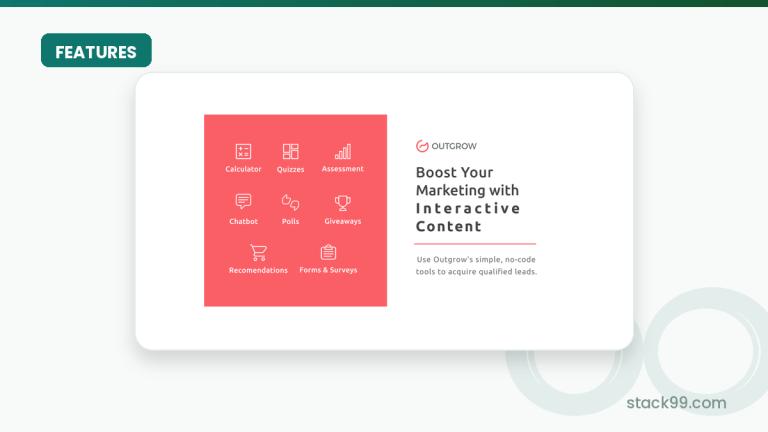 FeaturesOutgrow Top Features 2026The standout features and whether they justify the price.
 ReviewsOutgrow Review 2026Hands-on verdict with the pros, cons and who it fits best.
 IntegrationsTrainual Integrations Guide 2026What it connects to and how well each link holds up.
 Advanced GuidesVolza Advanced Guide 2026Deeper workflows once the basics are in place.