


In this guide
- Why Features Matter
- Feature 1: Variety Of Interactive Content Types
- Feature 2: Formula Logic And Conditional Messaging
- Feature 3: Charts, Graphs, and Real-Time Results
- Feature 4: Embeds Layouts And Branding Control
- Feature 5: Integrations, Analytics, and Team Workflows
- Features Coming Soon
- What Is Unique Versus Competitors
- Verdict
- FAQ
Why Features Matter
Outgrow is one of those products where the feature set is the whole story. The official site is not selling generic “engagement.” It is selling interactive content creation that helps marketers turn passive visitors into quiz takers, calculator users, lead submissions, and segmented prospects.
Disclosure: Stack99 earns a commission if you buy through links on this page. It costs you nothing extra and never changes our assessment.
That is why a feature-focused post makes perfect sense here. If Outgrow’s core features are strong, the product is compelling. If the features are shallow, then the shiny conversion language falls apart.
The official features page makes the pitch very clear: Outgrow helps you build calculators, quizzes, assessments, polls, chatbots, surveys, forms, ecommerce recommendations, and more. The pricing page backs that up with a tier structure based on content types, content pieces, leads, layout access, charts, branding, logic, analytics, and integrations.
So let’s get straight to it. These are the Outgrow features that matter most in 2026.
If you want to browse the platform while you read, start with Outgrow here.
Feature 1: Variety Of Interactive Content Types
This is the obvious headliner, but it deserves the top spot because it is the biggest reason people choose Outgrow in the first place.
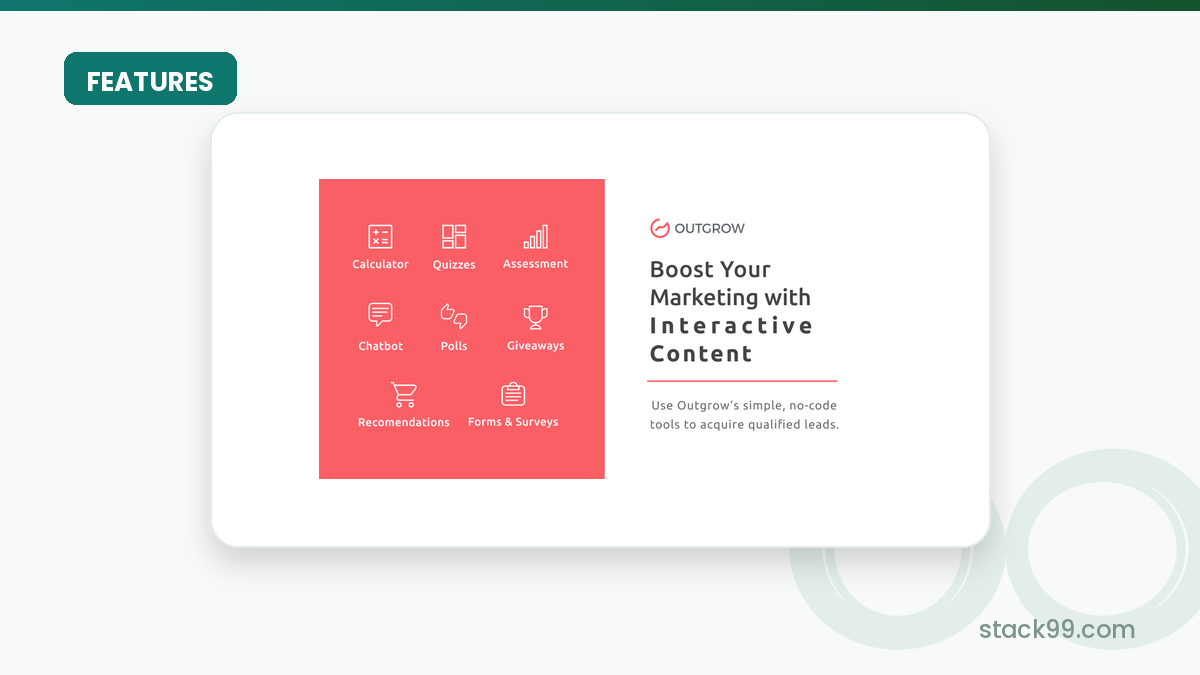
The official features and pricing pages show support for content types such as:
- Outcome quizzes.
- Assessments.
- Polls.
- Calculators.
- E-commerce recommendations.
- Chatbots.
- Forms and surveys.
- Giveaways.
- Landing pages on higher tiers.
That matters because different brands need different conversion mechanics. A B2B SaaS company might want a calculator or assessment. An e-commerce brand might want a recommendation quiz. A publisher might want polls or personality-style engagement. A lead-generation team might want forms tied to segmentation.
Outgrow does not force those teams into one format. That flexibility is a real strength.
Feature 2: Formula Logic And Conditional Messaging
This is where Outgrow starts looking more serious than a basic quiz tool.
The official features page talks about complex formulas, nested if statements, percentages, discounts, and conditional messaging. The pricing page also mentions logic jump, outcome mapping, personalized pages, conditional CTA options, and conditional messaging access depending on the plan.
That combination is powerful because it lets marketers build experiences that do more than entertain. They can actually calculate, recommend, qualify, and route users toward different outcomes.
This feature stack is especially useful for:
- ROI calculators.
- Pricing or savings tools.
- Product recommendation flows.
- Lead qualification assessments.
- Industry-specific quizzes with different CTA paths.
Real talk: this is the difference between “cute interactive content” and “interactive content that can actually drive pipeline.”
If you want to test those logic-heavy experiences, start with Outgrow here and compare a basic lead form with a conditional quiz or calculator.
Feature 3: Charts, Graphs, and Real-Time Results
Outgrow’s features page makes a strong case for visual output. It highlights line charts, pie charts, tables, bar charts, and radar or polar charts. It also emphasizes real-time results and multiple results.
That is a big deal because dynamic output is what makes interactive content feel worthwhile. If a visitor enters information and only gets a boring static result, the experience feels thin. If the tool produces meaningful calculations, personalized results, or visual insights, the experience becomes more memorable and more persuasive.
This feature is especially useful in:
- Financial calculators.
- Savings tools.
- Marketing estimators.
- Benchmarking quizzes.
- Assessments with multi-part results.
It is one of the clearest places where Outgrow separates itself from simpler tools that only handle lightweight question flows.
Feature 4: Embeds Layouts And Branding Control
Many interactive content tools overlook a practical truth: marketers need these assets to fit into real websites, campaigns, and brand systems.
Outgrow’s official pages do a nice job here. The features page highlights multiple embed formats such as full screen, iframe embed, popup, and chatbot-style embeds. The pricing page also talks about layouts, templates, custom branding, custom domain options on higher tiers, and control over things like logos, theme colors, and fonts, depending on plan level.
That gives buyers a lot of flexibility in how they deploy experiences.
Why this matters:
- A blog team may want an embedded calculator.
- A demand-gen team may want a full-page campaign asset.
- An e-commerce team may want a recommendation flow.
- A brand team may care deeply about design consistency.
Outgrow does not just help you build the asset. It gives you several ways to deploy it without sending the whole experience off-brand.
Feature 5: Integrations, Analytics, and Team Workflows
This is probably the most underrated part of the product.
The official features page highlights end-to-end analytics, while the pricing page lists access to integrations, Zapier-style connectivity, data export, segmentation, analytics and tracking, and team or agency-account support depending on plan.
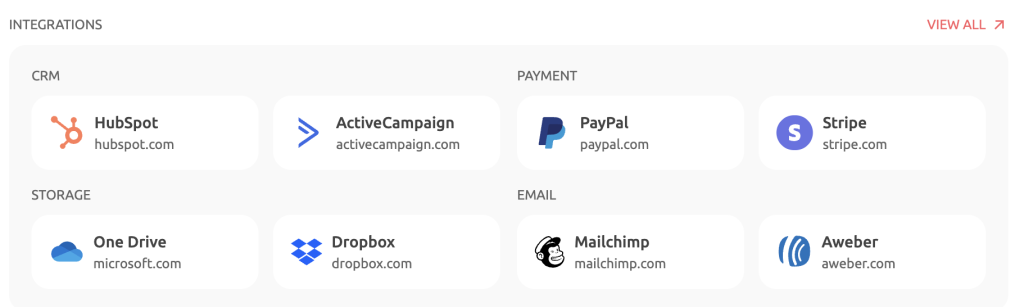
The features page also shows integrations with tools like Mailchimp, Marketo, HubSpot, GetResponse, Emma, MailerLite, Pardot, Salesforce, ActiveCampaign, and Drip.
That matters because interactive content only becomes truly valuable when the data goes somewhere useful.
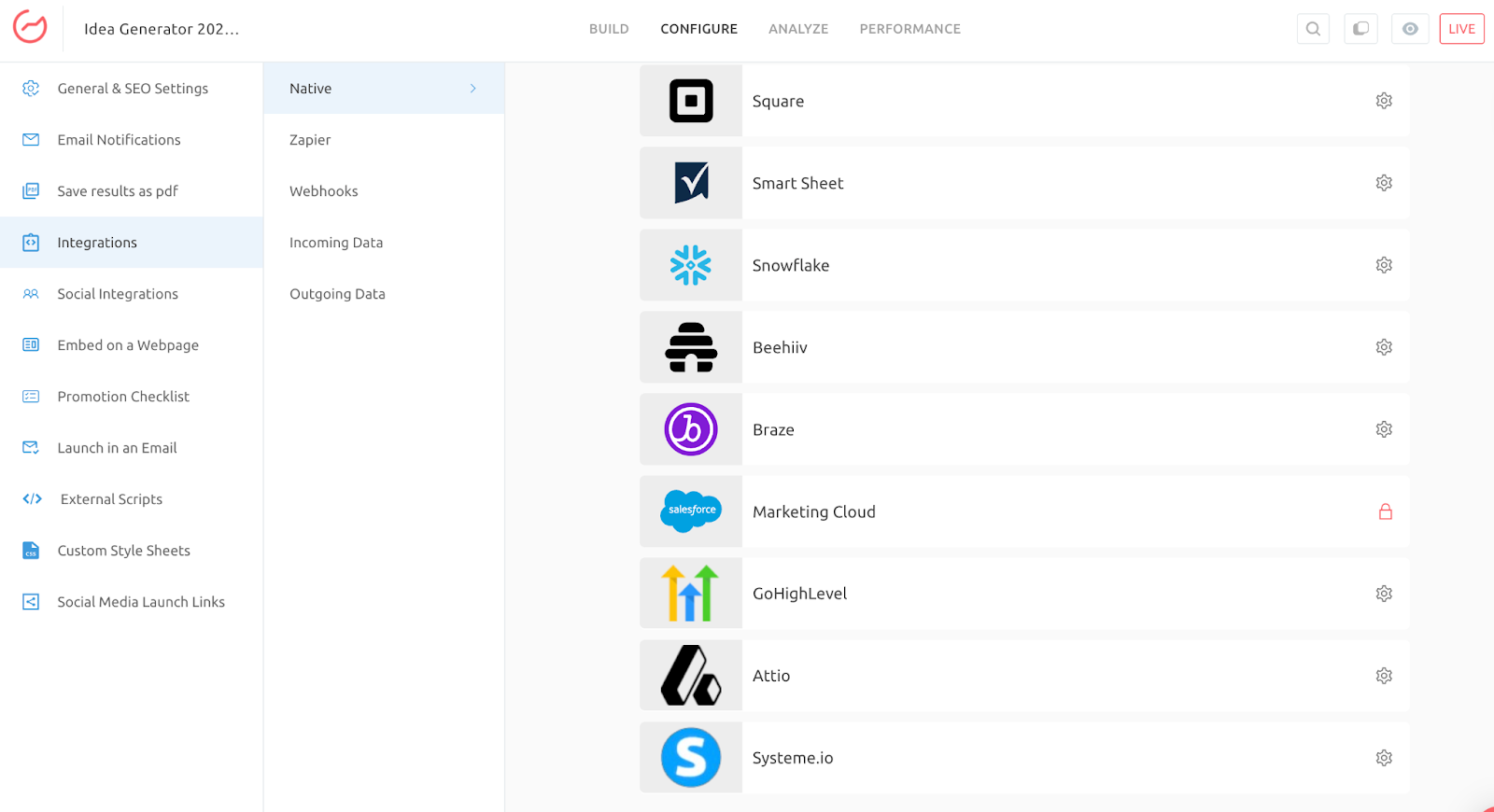
This feature set helps teams:
- Route leads into email platforms.
- Segment users by answers and outcomes.
- Export lead and response data.
- Track traffic and engagement.
- Collaborate across team members or agency environments.
In other words, Outgrow is not just a front-end experience builder. It is trying to be a revenue-friendly interactive content engine.
If you want to see how that could fit your funnel, start with Outgrow here and map one interactive asset to one real CRM or email workflow.
Features Coming Soon
This is the honest part: the official pages I reviewed focus heavily on current capabilities, pricing access levels, and existing builder functionality. They do not publicly lay out a detailed “coming soon” roadmap in a way I would trust enough to repeat as fact.
So rather than inventing a roadmap, the safer takeaway is this:
- Outgrow publicly emphasizes current builder depth.
- It clearly segments capabilities by plan.
- It already covers a wide range of interactive formats and deployment models.
That is enough for a buyer to evaluate the platform without pretending there is a public roadmap when there is not.
What Is Unique Versus Competitors
Outgrow’s uniqueness is not one single flashy feature. It is the combination of:
- Many interactive content formats.
- Strong formula and logic tools.
- Rich results display with charts and personalization.
- Several embed and branding options.
- Serious integrations and analytics.
Plenty of competitors can do simple quizzes. Some can do forms. A few can do calculators. Fewer combine calculators, quizzes, surveys, chatbots, recommendation engines, logic jumps, visual results, embeds, analytics, and team workflows in one platform.
That is why Outgrow feels strongest for marketers who do not want separate tools for every interactive format.
It also helps that the official pricing page ties many of those capabilities to plan differences in a way buyers can actually understand. You can see when content types expand, when branding gets stronger, when charts become available, and when team or integration depth improves. That makes feature evaluation much more concrete than the usual “everything is powerful” marketing language.
Verdict
Outgrow’s top features in 2026 are genuinely strong. The best ones are the breadth of interactive content types, formula and logic depth, real-time and visual result handling, flexible embeds and branding controls, and the integrations plus analytics layer that makes the output usable in real marketing systems.
The product looks especially attractive for marketers who want interactive content that can actually support lead generation, qualification, segmentation, and conversion instead of just generating clicks and compliments.
If that sounds like your use case, start with Outgrow here and evaluate one real campaign idea with the platform’s builder instead of judging it only by the homepage.
FAQ
What is Outgrow best known for?
Outgrow is best known for helping marketers build interactive content such as quizzes, calculators, assessments, polls, chatbots, surveys, and recommendation experiences.
What are Outgrow’s strongest features?
Its strongest features are content variety, formula and logic capabilities, dynamic results with charts, flexible embedding and branding options, and integrations plus analytics.
Is Outgrow only for quizzes?
No. The official site shows support for calculators, assessments, polls, chatbots, surveys, ecommerce recommendations, giveaways, landing pages, and more depending on the plan.
Is Outgrow good for lead generation?
Yes. The official pricing and features pages position it very clearly around interactive content that can capture leads, segment responses, and connect with marketing systems.
More on Outgrow
Hand-picked guides to help you choose the right tool — no fluff.
 ReviewsOutgrow Review 2026Hands-on verdict with the pros, cons and who it fits best.
 ComparisonsOutgrow vs Alternatives 2026The strongest competitors compared side by side.
 FeaturesBrand24 Top Features 2026The standout features and whether they justify the price.
 IntegrationsElevenLabs Integrations Guide 2026What it connects to and how well each link holds up.