


In this guide
Pricing Overview :
Navan is a combined business travel booking and expense management platform that lets employees book flights, hotels, and rides inside company policy while finance tracks spend in one place. It’s aimed at growing companies that want to replace separate travel agencies and expense tools with a single system. Expense management starts at $15 per user/month, with travel booking layered on top.
Disclosure: Stack99 earns a commission if you buy through links on this page. It costs you nothing extra and never changes our assessment.
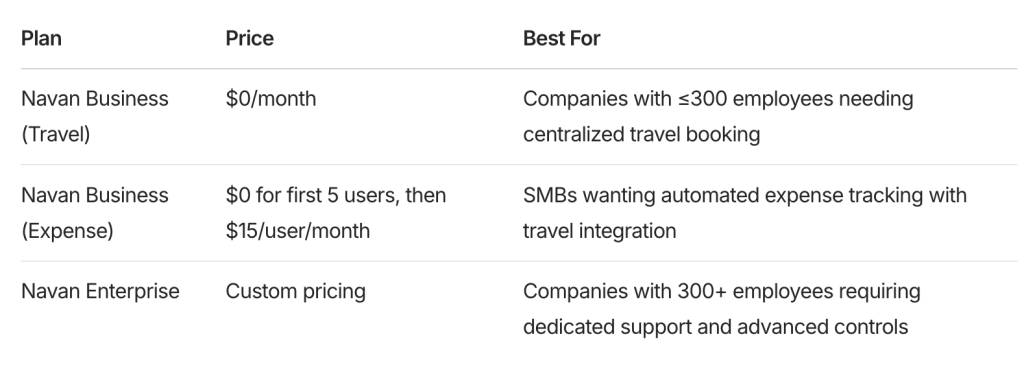
| Plan | Price | What you get |
|---|---|---|
| Business — Travel | Free | Booking, policy and approval workflows, 24/7 support |
| Business — Expense | $15/mo | Per user; free for the first 5 users, then $15/user/mo |
| Enterprise | Custom | For larger orgs; dedicated support, quote-based |
The Business plan is self-serve: travel booking carries no software fee, and expense management is free for the first five users before the $15 per-user rate applies. Enterprise pricing is set by quote. Confirm the live figure on the official pricing page before you commit.
The most important thing to understand about Navan pricing in 2026 is that the product value is tied to how the workflow is consumed, not only to a flat subscription label.
If you want to inspect the official pricing path while you read, start with Navan here.
What The Official Pages Emphasize :
The official product and pricing pages repeatedly point toward:
- Pricing model
- Usage shape
- Plan complexity
- Operational cost
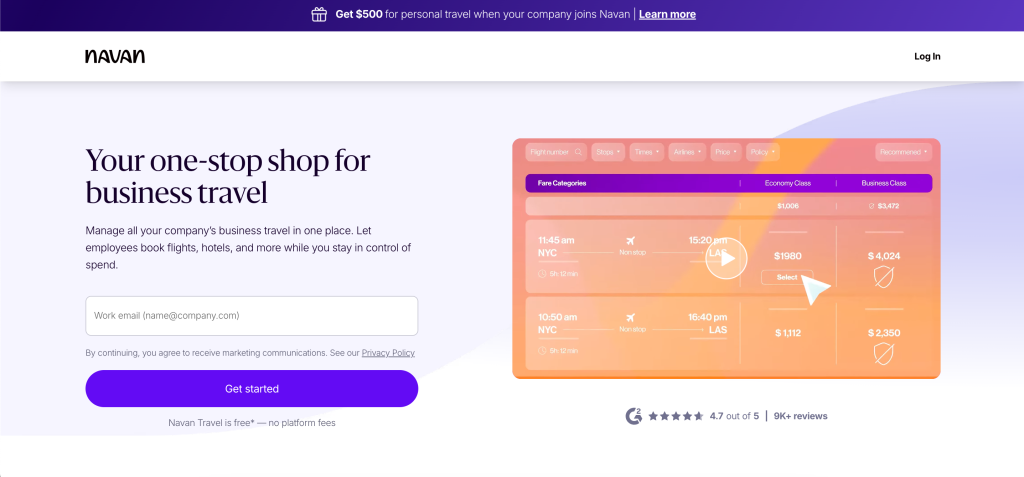
The official pricing page publishes the Business plan openly: travel booking is free, expense management is free for the first five users and then $15 per user per month, with Enterprise pricing available by quote.
Pricing Tiers And Cost Shape :
Navan publishes its Business plan pricing openly, so the practical read is to match the free travel tier and the $15 per-user expense rate to your team size. The table above shows the current entry points; only Enterprise is quote-based.
If you want to inspect the source pricing flow yourself, check Navan here and compare the visible pricing logic against how your team would actually use the product.
Hidden Costs And Gotchas :
The real hidden cost is usually not the visible plan number. It is mismatched usage. If a team buys Navan before the workflow is ready, the tool can feel more expensive than it should. If the team buys too late, the manual workaround around the tool can cost more than the subscription.
ROI Example :
A realistic ROI question for Navan is whether the product reduces enough manual friction, delay, or tool sprawl to justify the official cost path. That could mean faster execution, fewer side tools, cleaner operations, or less time spent coordinating work outside the product.
Cost Comparison :
Broader alternatives may look cheaper at a glance, but that often happens because they push more operating effort back onto the team. Navan becomes easier to justify when it removes enough friction that the working cost of “cheaper” tools starts to look less attractive.
If you want to test that the practical way, open Navan here and compare the official pricing path against the workflow cost you already carry today.
Best Value Path :
The best value path is usually the one that matches your real workload, team size, or operating pattern instead of the one with the flashiest feature headline. Buyers often get more value from the right entry point than from a bigger plan they barely use.
Discounts Or Billing Notes :
Navan’s Business plan is self-serve: travel is free and expense management is free for the first five users, then $15 per user per month. Only the Enterprise plan is quote-based.
Buyer Lens :
The most reliable way to evaluate Navan in 2026 is to compare the official pages against one live workflow your team already runs. That usually reveals product fit faster than a broad feature spreadsheet.
Operational Note :
Navan is easiest to judge when you look at the repeated work around it, not just the trial experience. If the product reduces recurring friction, the value tends to become much clearer over time. That is why the safest evaluation path is usually one repeated live task instead of a broad artificial test.
Final Buying Note :
In 2026, the smartest way to evaluate Navan is still to use the official product pages, compare them against one real workflow, and decide whether the product reduces friction in a way your team will actually feel every week. That kind of grounded evaluation usually tells you more than another generic comparison spreadsheet.
Verdict :
Navan pricing in 2026 makes the most sense when you judge it against workflow cost rather than against a shallow list of plan names. If the product removes enough friction, the pricing story usually becomes easier to justify.
If you want to evaluate that directly, try Navan here and map the official pricing path against one real team workflow before you decide.
FAQ :
Is Navan Expensive In 2026?
That depends on the workflow. The better question is whether the official pricing path replaces enough manual cost or tool sprawl to justify itself.
Does Navan Have Public Pricing?
Yes. Navan publishes its Business plan pricing: free travel booking and expense management free for the first five users, then $15 per user per month. Enterprise pricing is quote-based.
What Matters More Than The Headline Price?
Operational fit usually matters more than the smallest number because tool mismatch can create hidden process cost fast.
How Should I Compare Navan To Alternatives?
Compare the official pricing path against the real workflow cost your team already pays in time, complexity, and extra tools.
What Is The Best First Step?
Use the official pricing page and one real use case, not a generic spreadsheet, to decide whether the product value is strong enough.
More on Navan
Hand-picked guides to help you choose the right tool — no fluff.
 AlternativesNavan Alternatives 2026Credible alternatives and when each one wins.
 ReviewsNavan Review 2026Hands-on verdict with the pros, cons and who it fits best.
 PricingThorData Pricing 2026Real tier prices and what each plan actually includes.
 AlternativesUltahost Alternatives 2026Credible alternatives and when each one wins.