


In this guide
Quick Verdict :
Navan is built for companies that want business travel and expense management to feel like one connected system instead of two separate headaches. The official site positions it as an AI-powered business travel and expense platform, and that framing is accurate. It is really about reducing friction for travelers, making policy easier for finance teams, and giving operators one place to manage the mess.
Disclosure: Stack99 earns a commission if you buy through links on this page. It costs you nothing extra and never changes our assessment.
If your team books flights, hotels, trains, and car rentals, then files expenses afterward, Navan is absolutely in the right conversation. If you want to explore it right away, get started with Navan here.

What Navan Is Good At :
Navan’s biggest strength is that it tries to merge the travel and expense experience into one workflow. That sounds obvious until you have lived through the old system of booking on one tool, submitting expenses somewhere else, and then waiting for finance to fix the mismatch.
The official site makes the product’s direction clear:
- Business travel booking.
- Expense management.
- AI-powered assistance.
- Virtual card and payment workflows.
- Reporting and policy control.
- Role-specific experiences for travelers, finance teams, and travel managers.
That makes Navan appealing to companies that want fewer tools and fewer handoffs.
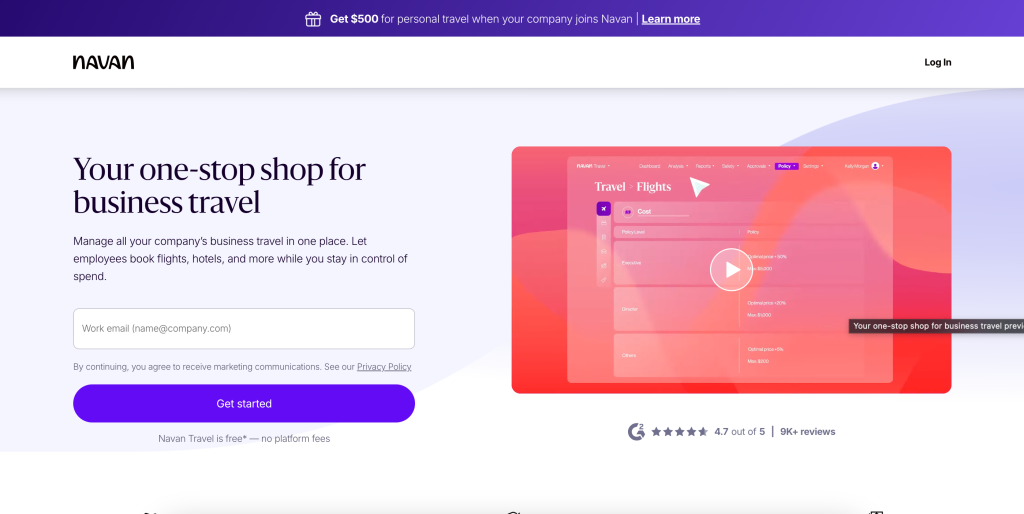
Travel Experience :
Navan’s travel side is meant to feel easy for frequent travelers. The product supports flights, hotels, car rentals, and trains. The site also highlights self-serve changes, 24/7 travel support agents, and Navan Rewards.
For the traveler, that matters because travel is not just about finding a fare. It is about dealing with changes, upgrades, loyalty preferences, and the inevitable moment when plans move around at the worst possible time.
Navan’s AI travel assistant, Navan Edge, is designed for exactly that. The official copy describes it as handling flights, hotels, and restaurants while getting travelers perks and offering 24/7 human support in chat. That is a strong value proposition if your company has a lot of road warriors.

Expense Management :
This is where Navan becomes more than a travel app.
The expense side is built around centralized spend, automated categorization, real-time visibility, reimbursements, ERP integration, and policy controls. The official site says Navan Expense automates categorization, reports, reimbursements, and helps optimize savings with AI-powered insights.
That matters for finance teams because a modern expense stack should do more than collect receipts. It should reduce the amount of human cleanup after the transaction happens.
For finance and accounting teams, Navan highlights:
- AI automatically categorizes and reconciles expenses.
- Full visibility into expenses in real time.
- ERP integration.
- Automatic policy flagging.
- Corporate and business card support.
If your team spends too much time chasing receipts and fixing line items, this part of Navan will probably resonate fast.
Pricing And Plan Structure :
Navan is refreshingly clear on pricing for the business tier.
The official pricing page says:
- Navan Business is for companies up to 300 employees.
- Travel features are free.
- Navan Expense is free for the first 5 monthly expensing users.
- After that, Navan Expense is $15 per user per month.
- There is no limit to how many trips you can book with Navan Travel as long as your company has 300 or fewer employees.
- If your company has more than 300 employees, you should request a demo.
Navan Enterprise is the “let’s talk” tier, which adds the full suite of travel and expense features, unlimited travelers and expensing users, global program coverage, designated account support, custom implementation, negotiated rates, and enterprise support.
That is a sensible structure. Smaller companies get a useful entry point. Larger companies get a sales-led rollout.

Who Navan Is Best For :
Navan is best for teams that have enough travel volume to feel pain, but not so much complexity that they want five disconnected systems and a stack of manual controls.
It is especially strong for:
- Companies with regular business travel.
- Finance teams that want better visibility.
- Travel managers who need policy guardrails.
- Businesses with recurring reimbursement headaches.
- Growing teams that want travel and expense in one place.
The official site even segments the product by traveler type, finance and accounting, travel managers, and executives. That is a strong sign the platform is built with operational reality in mind instead of a one-size-fits-all dashboard.
What I Like :
There is a lot to like here.
First, the travel booking experience is clearly designed for actual travelers, not just finance admins.
Second, the expense automation is strong enough to matter. AI categorization and reconciliation are not small features. They are the difference between “expense software” and “expense relief.”
Third, the pricing model is straightforward for smaller companies. Free travel for companies up to 300 employees is a nice entry point, and the expense per-user model is easy to understand.
Fourth, the platform supports the broader stack with HRIS and ERP integrations, which helps it fit into existing systems instead of fighting them.
If you want the platform that keeps travel and spend in one place, get started with Navan here.
What I Would Watch :
Navan is strong, but it is not for every team.
- If you only travel a handful of times a year, the platform may be more than you need.
- If your organization is tiny and has no finance process yet, you may not get full value immediately.
- If you want a pure self-serve tool with no account conversation, the enterprise path may feel heavier than you want.
That is not a flaw. It is just the reality of software built for operational teams.
Practical Use Case :
Imagine a 120-person company with sales teams in three regions and a finance team that keeps getting stuck on reimbursements. In the old workflow, travelers book elsewhere, upload receipts later, and wait for finance to clean up the story.
With Navan, the company can:
- Book trips in one place.
- Apply policy rules automatically.
- Track expenses in real time.
- Reimburse faster.
- Give finance cleaner records to work from.
That is why Navan is good. It does not just help with booking. It reduces the administrative drag around business travel.
Alternatives To Consider :
If Navan feels like too much platform, the obvious alternatives are simpler travel tools or generic expense tools. Those can work if your needs are basic.
The tradeoff is that you often end up with:
- One tool for travel.
- One tool for expense.
- One spreadsheet for policy exceptions.
- One accounting export process that nobody enjoys.
Navan is trying to collapse that stack. If your team is ready for that, it is a strong candidate.
Implementation Notes :
The real success factor with Navan is not just choosing the platform. It is rolling it out in a way that people actually use.
I would start with three steps:
- Define who books travel and who approves exceptions.
- Decide how expense users are counted before finance opens the floodgates.
- Make sure the finance team knows which reports they want before the first month closes.
That sounds basic, but it is exactly how teams avoid the “we bought the tool and nobody changed behavior” problem.
I also like that Navan gives travelers and finance different views of the same system. That keeps policy enforcement from feeling like a random set of rules nobody understands.
If you want to see the platform before you commit, get started with Navan here and compare it against the way your team already books and expensed.
What A Good Navan Setup Feels Like :
A good setup feels boring in the best possible way.
- Travelers know where to book.
- Finance knows what gets auto-categorized.
- Travel managers know where policy lives.
- Executives get a cleaner picture of spend.
That is the outcome worth paying for. It is not glamour. It is operational calm.
Value In Real Numbers :
The reason Navan is interesting is that the pricing model is easy to understand in a way many travel and expense platforms are not.
If your company has 300 or fewer employees, the travel portion is free and the expense portion is free for the first five monthly expensing users. After that, it is $15 per user per month. That means a growing team can model the cost very quickly before ever talking to sales.
For example, a 40-person company with eight regular expense users would not be guessing at the basic structure. It would know that the first five users are covered in the business tier and that the next three add a straightforward recurring cost. That simplicity matters because budget conversations get much easier when the product is not hiding the math.
The other value is indirect. If the platform cuts even a modest amount of admin time from travel booking, expense cleanup, reimbursement follow-up, and policy checking, the product can pay for itself without dramatic hero numbers.
That is usually how this category works. The savings are less about a giant software miracle and more about removing dozens of tiny frustrations every week.
If you want to test that model, get started with Navan here and compare it against the actual hours your team spends today.
Who Should Skip It :
Navan is not the right buy for every team, and that is worth saying plainly.
Skip it if:
- Your team travels rarely.
- You do not have a defined expense process yet.
- You want the simplest possible self-serve tool.
- You are not ready to manage policy or reimbursement rules at all.
Those teams can still benefit from a simpler solution or even a temporary manual setup. Navan shines when there is enough volume that travel and expense are already becoming operational work.
Buyer Checklist :
Before you commit, I would ask five questions:
- Do travelers need to book flights, hotels, car rentals, and trains in one system?
- Does finance want real-time expense visibility instead of monthly cleanup?
- Are you ready to define who counts as an expense user?
- Is your company at or under the 300-employee business tier, or are you ready for the enterprise conversation?
- Would you rather have one connected platform than a patchwork of travel and expense tools?
If most of those answers are yes, Navan is probably doing something valuable for you. If most are no, you may not feel the platform’s strengths yet.
One more thing is worth saying: Navan is not trying to be a novelty app. It is trying to be infrastructure for travel and spend. That is why the platform feels more useful the more organized your company becomes. The cleaner your process, the more the automation pays off.
Final Verdict :
Navan is a good fit when you want business travel and expense management to behave like one workflow. The product is especially compelling for companies up to 300 employees because the pricing is public, the travel side is free, and the expense side starts free for the first five users.
If you want a system that makes travel easier for employees and accounting easier for finance, get started with Navan here and use the business tier as your starting point.

FAQ :
Is Navan only for large companies?
No. The official pricing page specifically covers Navan Business for companies up to 300 employees, so smaller teams are absolutely part of the audience.
Does Navan support more than flights?
Yes. The site says travelers can book flights, hotels, car rentals, and trains.
What happens when a company grows past 300 employees?
The pricing page says you should request a demo and move into the enterprise conversation.
Is Navan just for travel?
No. The product is also built for expense management, reimbursements, card usage, policy automation, and ERP integration.
Is the expense feature free?
For Navan Business, the first five monthly expensing users are free. After that, it is $15 per user per month.
More on Navan
Hand-picked guides to help you choose the right tool — no fluff.
 ComparisonsNavan vs Alternatives 2026The strongest competitors compared side by side.
 Use CasesWho Is Navan Best For? Use Cases & Fit (2026)Who gets the most out of it – and who should skip it.
 FeaturesSwitcher Studio Top Features 2026The standout features and whether they justify the price.
 IntegrationsThorData Integrations Guide 2026What it connects to and how well each link holds up.