


- Why This Post Matters
- What The Official Pages Keep Pointing To
- Product Fit In 2026
- Pricing And Data Notes
In this guide
Why This Post Matters :
WebCatalog is a desktop app that turns web services like Gmail, Notion, and Slack into standalone applications, each running in its own window with separate accounts and clutter-free navigation. It’s aimed at people who juggle many browser tabs and multiple logins for the same service and want them organized as distinct apps across macOS, Windows, and Linux. A free tier covers a limited number of apps and workspaces, with paid plans unlocking unlimited use.
Disclosure: Stack99 earns a commission if you buy through links on this page. It costs you nothing extra and never changes our assessment.
The official material suggests that WebCatalog is best understood through its working model, pricing signals, and how clearly the product explains its own use case in 2026.
If you want to inspect the product while you read, start with WebCatalog here.
What The Official Pages Keep Pointing To :
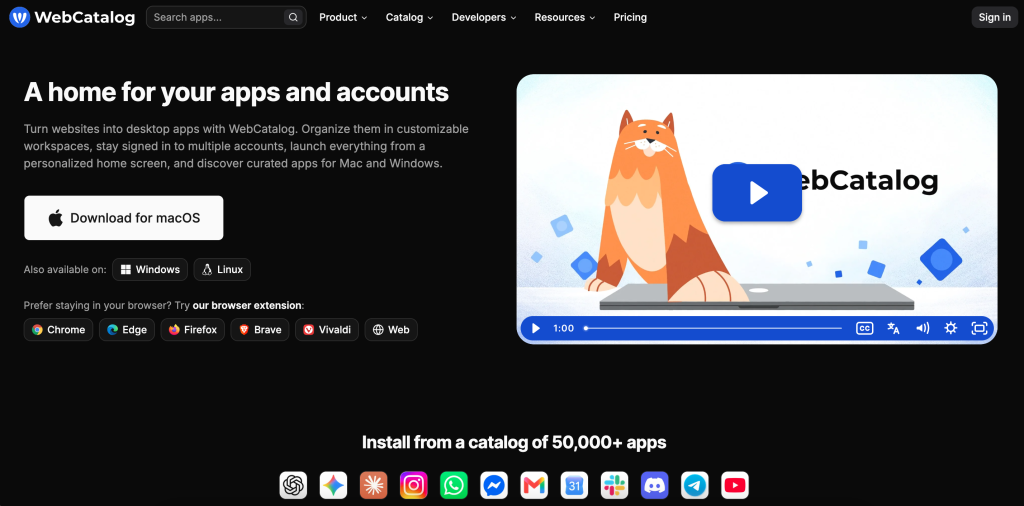
- A home for your apps and accounts
- Install from a catalog of 50,000+ apps
- An operating system for your web apps
- A workspace for every role you play
Product Fit In 2026 :
The strongest reading from the official pages is that WebCatalog is best evaluated through real workflow fit rather than generic feature shopping. Teams get more value when the product shape already matches the kind of work they need to do.
If you want to pressure-test that fit early, check WebCatalog here and compare the official workflow language against your team’s current process.
Pricing And Data Notes :
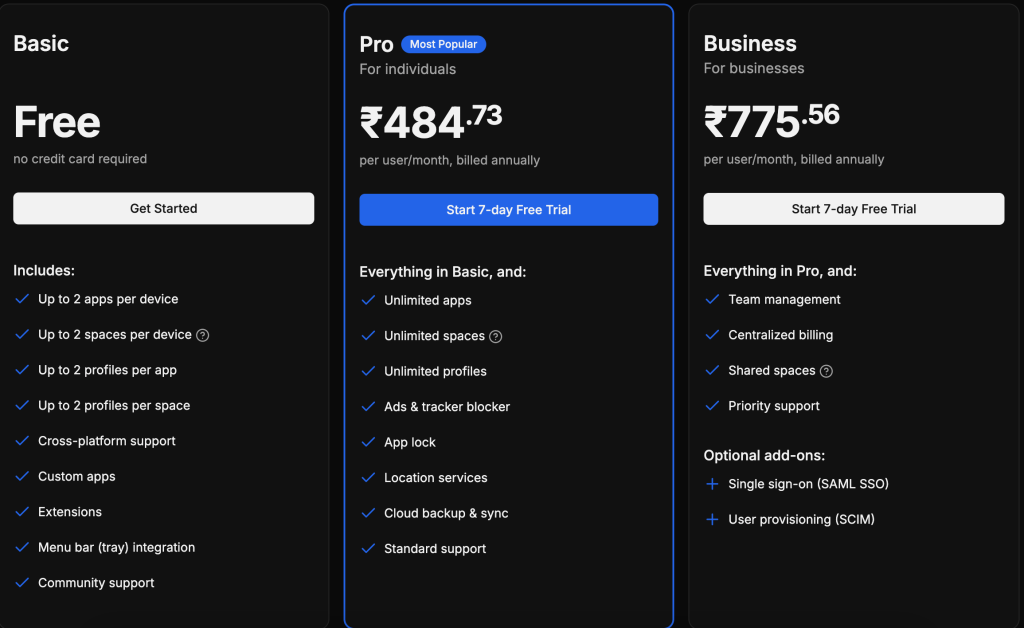
Official pricing references visible on the pages reviewed include $1, $7, $12, $0, $500,, $96.
The important part is to use only the pricing, feature, and workflow details that are visible on the official pages instead of filling in gaps with assumptions.
What Buyers Should Watch :
Buyers should pay attention to product fit, daily operational friction, expansion paths, and whether the workflow shown on the official pages matches the work the team actually needs to run.
If you want to evaluate that directly, open WebCatalog here and compare it against one real business workflow.
Practical Recommendation :
The safest recommendation is to adopt WebCatalog when its strongest official use case matches the problem you need solved right now. If your use case is broader or different, an adjacent alternative may still make more sense.
Final Buying Note :
In 2026, the smartest way to evaluate WebCatalog is still to use the official product pages, compare them against one real workflow, and decide whether the product reduces friction in a way your team will actually feel every week. That kind of grounded evaluation tends to beat generic feature shopping.
Verdict :
WebCatalog in 2026 looks strongest when buyers evaluate it through official workflow fit instead of through generic software comparison habits.
If you want to pressure-test that fit, try WebCatalog here and compare one real team workflow against the product’s official path.
FAQ :
Why Is WebCatalog Worth Evaluating In 2026?
Because the official product pages make a clearer workflow case than a lot of tools in the same space, which helps buyers decide faster.
Should I Rely On Third-Party Pricing Summaries?
No. Use the official pages only and treat anything missing as something to verify before a purchase.
What Is The Best Way To Test WebCatalog?
Use one real workflow, compare it against the official setup path, and judge whether the product removes friction.
Does WebCatalog Look Better For Focused Or Broad Use Cases?
That depends on the product angle, but focused use cases are usually the clearest starting point.
When Should I Move Forward?
Move forward when the official workflow, visible pricing logic, and team fit all line up well enough to replace a messier current process.
More on WebCatalog
Hand-picked guides to help you choose the right tool — no fluff.
 Case StudiesWebCatalog Case Study 2026What actually happened when teams rolled it out.
 FeaturesWebCatalog Top Features 2026The standout features and whether they justify the price.
 Case StudiesApollo.io Case Study 2026What actually happened when teams rolled it out.
 IntegrationsInboxAlly Integrations Guide 2026What it connects to and how well each link holds up.