


In this guide
When To Consider Alternatives
Kaspr is a strong B2B contact-data tool, but it is not the only option worth looking at in 2026. If your team wants deeper enterprise coverage, broader outbound tooling, or a different pricing model, it makes sense to compare the market before committing to one workflow.
Disclosure: Stack99 earns a commission if you buy through links on this page. It costs you nothing extra and never changes our assessment.
The best alternatives are usually the ones that match how your team actually sells. Some buyers want a browser-first enrichment flow. Others want a bigger all-in-one outbound stack. Others want enterprise-grade data coverage even if the price is higher.
If you want to keep Kaspr in the comparison while you read, start with Kaspr here.
Alternative 1: Apollo
Apollo is usually the first comparison point for teams that want more than a simple data tool. Buyers often evaluate it as a broader outbound and CRM-connected platform rather than a narrow enrichment utility.

That makes Apollo worth checking if you want contact discovery, sequencing, and sales workflow depth in one place. It is not always the lightest option, but it can be the stronger choice when your team wants a larger operating surface.
Alternative 2: Lusha
Lusha is a common alternative for teams that want quick prospecting and browser-based contact capture. It tends to appeal to buyers who care about speed and simplicity more than deep operating complexity.

If Kaspr feels a little too narrow for your use case, Lusha is a reasonable comparison because it sits in a similar contact-data category while still giving buyers a different workflow feel.
Alternative 3: Cognism
Cognism is the more enterprise-leaning comparison on many buyers’ lists. Teams often look at it when they want stronger data coverage, more serious sales operations support, or a vendor that feels built for larger outbound motions.
Cheapest it is not, though it ranks among the most relevant comparisons when data quality and account coverage matter more than entry-level convenience.
What To Keep In Mind
The official pricing page currently shows a Free plan with:
- $0 per month.
- 15 B2B email credits.
That makes the free tier useful as a workflow sampler, not just a throwaway signup hook.
For a founder, recruiter, or small outbound rep, that free plan is enough to test:
- Whether the browser workflow feels natural.
- Whether the contact data is useful for your market.
- Whether the general operating style fits your team.
That is valuable, because a lot of data tools make it hard to evaluate real usefulness before money is involved.
Alternative 4: ZoomInfo
ZoomInfo is the heavyweight benchmark in this space. It is not always the smallest-team fit, but many buyers compare Kaspr to ZoomInfo when they are deciding whether they need a lighter prospecting tool or a far broader enterprise data platform.

If your team is moving toward larger sales operations, more layered reporting, and more account-level research, ZoomInfo is usually part of the conversation.
Alternative 5: LeadIQ
LeadIQ is worth comparing when workflow speed matters. Buyers often look at it for capture convenience, prospecting efficiency, and a smoother path from discovery to outreach.
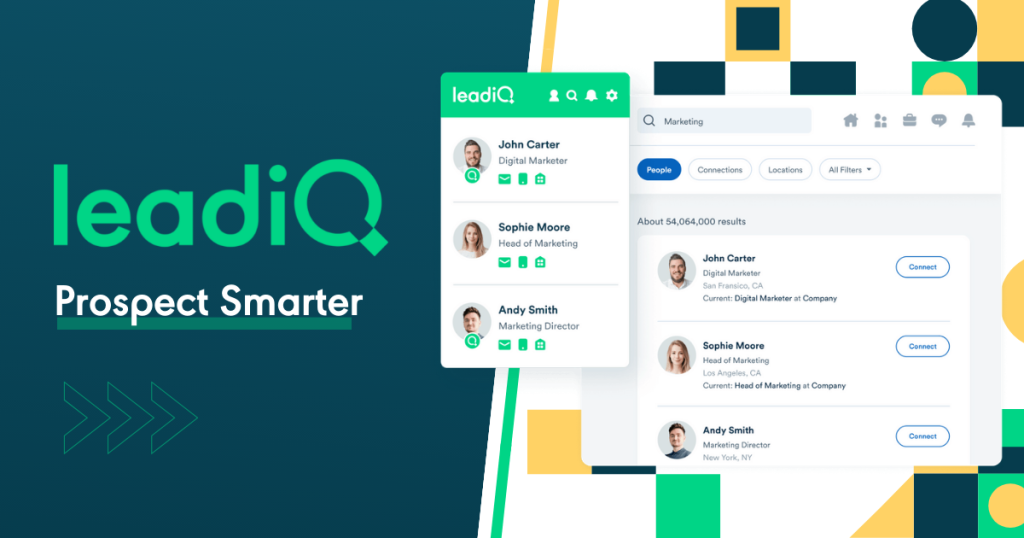
It can be a better fit than Kaspr if your team values operational flow over raw credit packaging.
Price Side By Side
Five alternatives, five different billing units. Comparing them needs a common basis, so every figure below is the entry paid tier at monthly billing in US dollars, read from each vendor’s own pricing page on 10 October 2026.
| Plan | Price | What you get |
|---|---|---|
| Kaspr Starter | $65/user/mo | Unlimited B2B emails, 100 phone credits, 5 direct email credits per user a month. Up to 12,000 exports a year. |
| Kaspr Business | $99/user/mo | 200 phone and 200 direct email credits per user a month. Up to 30,000 exports a year. |
| Apollo Basic | $65/seat/mo | 2,500 credits per seat a month. $49 on annual terms with the same effective allowance. |
| Lusha Starter | $49.90/mo | One seat. Credit volume is set by a slider; figures here are at the 40,800 credits a year position. |
| LeadIQ Pro | $15/mo | Five users included at the 2,400 credits a year slider position, billed annually. |
| Cognism, ZoomInfo | Custom | Neither publishes a figure. Both route to sales. |
Headline order is misleading on its own. LeadIQ looks cheapest by a wide margin, and it is, at the smallest credit rung on its slider. Move the slider and the number climbs. Kaspr and Apollo Basic land on the same $65 monthly figure, which makes them the cleanest pair to compare.
What A Phone Number Costs
Mobile numbers are the expensive part of every product in this category, and each vendor meters them differently. Kaspr is unusual in publishing a separate phone allowance rather than a single pooled credit.
- Kaspr Starter: 100 phone credits per user a month at $65, which is $0.65 a number if you use every one.
- Kaspr Business: 200 phone credits per user a month at $99, which is $0.495 a number.
- Apollo Basic: 2,500 pooled credits a month at $65, spent across emails, mobiles and enrichment rather than ring-fenced for phones.
- Lusha Starter: 4,800 credits a year at $49.90 a month, which works out at 400 credits a month for $598.80 a year.
- Cognism: one credit reveals one contact, with an allocation attached to each of its five included seats. No rate published.
Doubling from Starter to Business on Kaspr costs $34 a user and doubles the phone allowance while multiplying direct email credits by forty, from 5 to 200. That second jump is the one that justifies the upgrade for most teams, not the phone numbers.
Pooled credits cut both ways. Apollo lets a team that mostly needs emails spend nothing on mobiles, which suits list building. Ring-fenced phone credits suit teams that dial every day and want a predictable monthly allowance they cannot accidentally burn on enrichment.
Comparison Matrix
| Plan | Price | What you get |
|---|---|---|
| Free tier available | Free | Kaspr, Apollo, Lusha and LeadIQ all run one. The other two do not. |
| Seats on the entry paid tier | 1seat | Kaspr, Apollo and Lusha price per seat. LeadIQ Pro bundles five users; Cognism bundles five seats. |
| Published self-serve price | 4of 6 | Kaspr, Apollo, Lusha and LeadIQ publish. Cognism and ZoomInfo quote. |
| Billing default on the page | monthly | Kaspr alone defaults to monthly. Apollo, Lusha and LeadIQ all open on annual. |
| API on the entry paid tier | limited | Kaspr Starter gives limited API access, full access on Business. Lusha puts the API on Pro, not Starter. |
One row deserves attention. Kaspr’s pricing page is the only one of the four self-serve pages that opens on monthly billing. Every other page shows you a discounted annual figure first, which makes Kaspr look more expensive than it is in a quick scan against rivals.
The Quote Only Tier
Two of the five alternatives publish no price at all. Cognism lists a Standard and a Pro package, each with five seats included, and explains its credit model without attaching a number to it. ZoomInfo’s pricing page carries a form and no figures anywhere on it.
Practical consequence: you cannot build a budget that includes either until you have spoken to sales. Teams that need a number this week are choosing between Kaspr, Apollo, Lusha and LeadIQ whether they intended a shortlist that size or not.
Cognism does publish one useful structural detail. Credits reveal, enrich or export a contact at one credit per revealed contact, with no charge for viewing, and CRM enrichment sells as an add-on rather than sitting inside the base package.
Annual Discounts Compared
Three of the alternatives advertise an annual saving. Checking each against its own monthly figures gives a mixed picture.
- Apollo advertises 24%. Basic delivers 24.6% at $49 against $65, Professional delivers 20.2% at $79 against $99, Organization delivers 20.1% at $119 against $149. The badge describes the best case.
- Lusha advertises 25% and delivers it on all three tiers: $37.45 against $49.90, $52.45 against $69.90, $299.95 against $399.90.
- LeadIQ advertises 25% with annual billing preselected.
- Kaspr advertises nothing, because its page renders no billing toggle at all. Annual rates exist in the page markup but are not shown, so no annual Kaspr figure appears here.
Apollo’s credit allowances are worth checking alongside the discount. Basic grants 30,000 credits per seat per year on annual billing and 2,500 per seat per month on monthly, which is the same 30,000 over twelve months. You pay less for identical volume, so the discount is real rather than a repackaging.
When Kaspr Still Makes Sense
Kaspr remains the better buy in three situations, and the comparison above is what makes them visible.
Dial-heavy teams come first. A ring-fenced allowance of 100 or 200 phone credits per user a month is easier to manage than a pooled balance that enrichment jobs can drain without anyone noticing. At $0.495 a number on Business, Kaspr is also simply cheap for phones.
LinkedIn-first prospecting comes second. Kaspr gates Sales Navigator support to Starter and LinkedIn Recruiter Lite support to Business, which is a narrower and more specific workflow than the broad database search Apollo and ZoomInfo lead with.
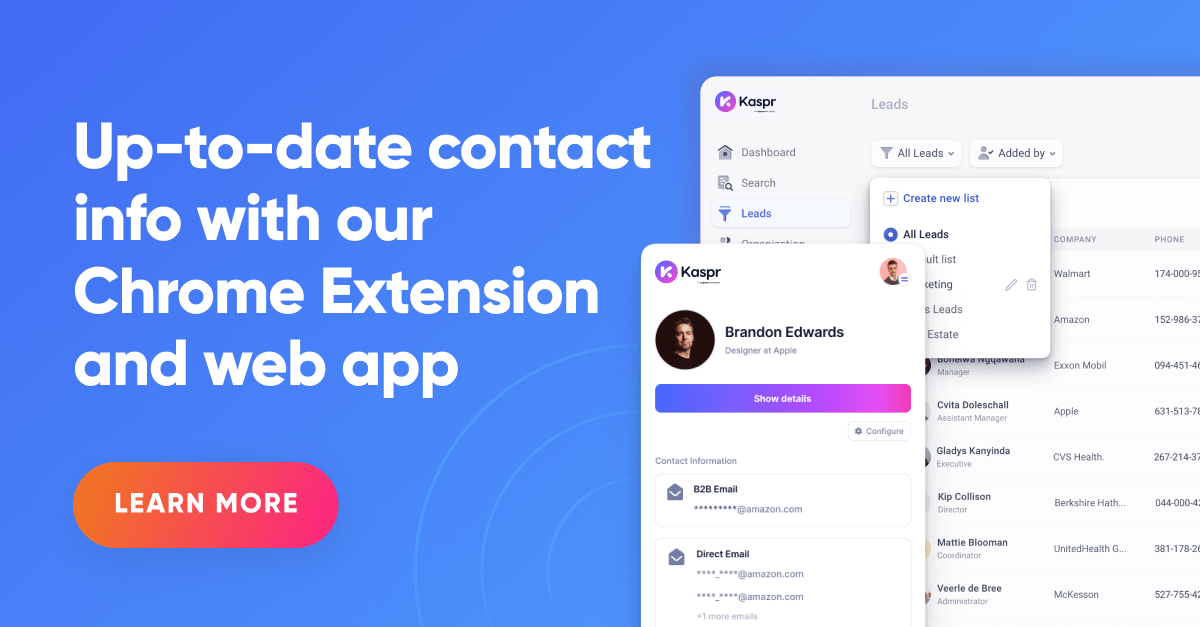
Budget certainty comes third. Monthly billing with no annual lock, a published price and a free tier covering 15 B2B emails, 5 phone and 5 direct email credits a month lets a team test the data quality before committing anything. You can check the current Kaspr plans here and compare them against the figures above.
Verdict
Kaspr is not the cheapest option in this group and does not try to be. LeadIQ undercuts everyone at the bottom of its slider, and Apollo matches Kaspr’s $65 while bundling sequences, deal management and a deliverability suite that Kaspr does not sell.
What Kaspr does better than any of the five is phone credits with a clear monthly ceiling, sold without an annual commitment. Teams whose core activity is dialling decision-makers found on LinkedIn get a product shaped around that and a bill they can predict. Teams that want one platform for data, sequencing and pipeline will find Apollo the stronger buy at the same monthly price.
Anyone evaluating Cognism or ZoomInfo should start the sales conversation early, because neither will give you a number quickly, and both are positioned well above the self-serve tiers compared here. Our Kaspr pricing breakdown covers Kaspr’s own tiers in full detail.
FAQ
Which Kaspr alternative is cheapest?
That would be LeadIQ Pro, $15 a month with five users included, at the smallest position on its credit slider and billed annually. Move the slider up and the price rises, so the figure only holds at low volume.
Does Apollo cost less than Kaspr?
They match on monthly billing. They match exactly: Apollo Basic and Kaspr Starter are each $65 per seat per month. Apollo drops to $49 on annual terms; Kaspr publishes no annual rate on its page.
Do any alternatives have a free plan?
Apollo, Lusha and LeadIQ all do, alongside Kaspr. Apollo Free grants 75 credits per seat per month, Lusha Free grants 40 credits a month on one seat, LeadIQ Free gives one user and 50 credits. Neither Cognism nor ZoomInfo offers one.
Why can I not find Cognism or ZoomInfo prices?
Neither publishes one. Cognism describes its Standard and Pro packages and its credit model without a figure, and ZoomInfo’s pricing page collects your details through a form instead.
Which alternative gives the most seats for the money?
Five come bundled with both LeadIQ Pro and Cognism, against one seat on Kaspr Starter, Apollo Basic and Lusha Starter. Lusha adds two free seats on Pro and five on Premium.
One limitation on the figures above. Lusha and LeadIQ both price from a credit slider, so their quoted rates hold only at the slider position named in each case. Kaspr’s annual rates were deliberately left out because its page renders no billing toggle, and Cognism and ZoomInfo publish nothing to quote. No estimate has been substituted for any of them.
Before You Choose, Compare These
Hand-picked guides to help you choose the right tool, no fluff.
 PricingKaspr Pricing 2026Real tier prices and what each plan actually includes.
 PricingFlatpay Pricing 2026Real tier prices and what each plan actually includes.
 PricingFreshdesk by Freshworks Pricing 2026Real tier prices and what each plan actually includes.
 TutorialsGamma Beginner's Guide 2026A clean start-here walkthrough with no jargon.