



In this guide
Why This Post Matters :
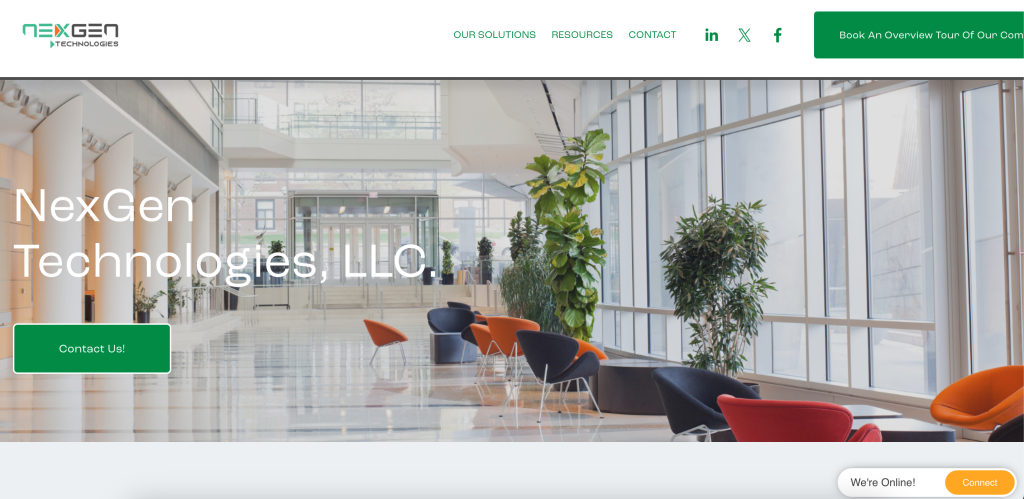
NexGen Technologies, LLC is the Boca Raton company behind NexGen Virtual Office, also branded NexGen Virtual Workplace. It sells a persistent virtual office: your team occupies rooms on a rendered floor plan, each person carries a status ring, and you reach a colleague by hovering over their office and knocking rather than by sending a message and waiting. That distinction is the whole case study, because it is the thing customers report changing.
Disclosure: Stack99 earns a commission if you buy through links on this page. It costs you nothing extra and never changes our assessment.
This piece works from evidence that can be checked: the customer testimonials NexGen publishes on its own site, the capability answers in its FAQ, and the pricing arithmetic on its public plans. No customer here is named beyond what the vendor itself publishes, and no outcome figure appears that we could not trace to a source.
If you want to inspect the platform while you read, start with NexGen here.
What The Official Pages Keep Pointing To :
Three customer quotes sit on the NexGen homepage, each attributed to a G2 review. They are worth reading closely, because all three describe a different benefit and together they map the product’s real audience.
- A call centre manager, mid-market. Describes gaining full visibility into agent availability across remote and hybrid teams, with frontline agents able to see instantly which senior agents are free to help during a live customer interaction.
- An e-commerce marketing company, mid-market. Frames the value as cost reduction, specifically office infrastructure and manpower.
- A small business owner. Points at the feeling of being in an office with colleagues, the ease of connecting, and affordability.
NexGen also displays a G2 award badge reading “Video Conferencing Fastest Implementation, Small Business” for Spring 2025. G2 blocks our crawler, so we could not verify the badge or the aggregate rating at source. Check it on G2 directly before you weight it.
The escalation scenario in the first quote is the one with operational substance. An agent stuck mid-call needs a supervisor now, not after a Slack message is read. NexGen’s answer is presence: status rings showing open to meet, on a break, or do not disturb, and a one-click knock with no link, invite or calendar entry.
Product Fit In 2026 :
The documented evidence points at one profile more strongly than any other: a contact centre or support operation with remote or hybrid agents, where escalation speed is measurable and a slow answer costs a customer.
NexGen sells a dedicated Contact Centers edition for exactly this, adding live KPI data rendered into the interface and support for multiple dialers on top of the standard workplace. The premium is a flat $5 per seat per month at every billing term.
Capacity supports that reading. A single floor holds up to 170 offices, users and floors are both unlimited on a subscription, and layouts can span campuses, regional offices and local sites viewable from one screen. Floors can be configured as individual offices, training rooms or boardrooms.
The weaker fit is an asynchronous team. Engineers across four time zones doing deep work gain nothing from a floor plan, and NexGen itself anticipates the objection with a “Will my team feel watched?” question on its homepage. Cameras are optional and each organisation sets the policy, which softens that concern without removing it.
To pressure-test the fit against your own escalation path, open NexGen here and compare it with how a question reaches a supervisor today.
Pricing And Data Notes :
NexGen does publish prices, and they are structured as three separate products rather than a feature ladder. Each carries monthly, quarterly and yearly terms.
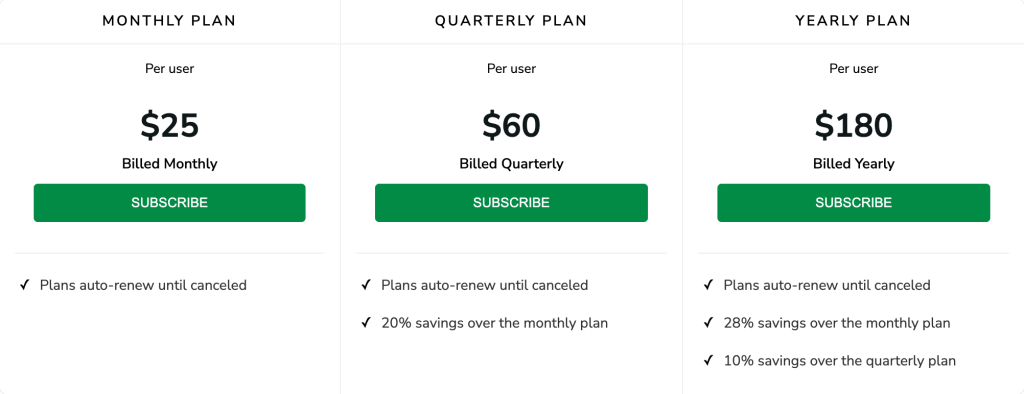
Virtual Workplace costs $25 per user monthly, $20 on quarterly billing at $60 a quarter, and $15 on the yearly term at $180 a year. Contact Centers runs $30, $75 a quarter and $240 a year per seat. The Webex-powered line is separate again, with a Basic tier at $49.95 a year and two paid Meet tiers at $14.95 monthly or $144 a year.
Every discount claim checks out against arithmetic. The yearly workplace term at $180 against $300 paid monthly is the stated 40% saving. Quarterly at $60 against $75 is the stated 20%. On the contact centre side, $240 a year against $360 paid monthly is 33.3%, matching the “~33%” on the card.
Two things carry no published price: White Glove Setup, which covers done-for-you implementation with a dedicated onboarding specialist, and Enterprise, which begins at 1,000 seats. We have left both out rather than estimate them.
One cost note deserves flagging. The Webex Basic tier at $49.95 a year caps meetings at 40 minutes and 100 attendees. Cisco documents those same two limits on its free Webex plan, so the fee buys the NexGen layer rather than extra meeting capacity. The Meet tiers lift the caps to 24 hours and 200 attendees.
What Buyers Should Watch :
The dialer question is first and it is unresolved. NexGen says multiple dialers are supported and names none of them publicly. For a product sold into contact centres, that single answer decides whether the Contact Centers edition works at all. Ask before anything else.
Security language needs the same care. NexGen states that chat conversations are fully encrypted and compliant with HIPAA standards. That phrasing is narrower than a signed business associate agreement, which the company does not mention publicly despite listing medical and healthcare among its named use cases. A covered entity should request one in writing.
Commitment terms are the third gap. The yearly plan is the heavily discounted one, and nothing published explains what happens if headcount falls mid-term, whether seats can be released, or how a prepaid year is treated on cancellation. No refund window appears anywhere. Seasonal staffing makes this material.
There is also no published uptime commitment or service-level agreement. The phrase “100% scalability” appears on every pricing card without a definition attached.
If you want to put those questions directly, reach NexGen here and treat them as a checklist for the discovery call.

Practical Recommendation :
Run the numbers on your own headcount before the demo. Twenty contact centre seats on the yearly term is $4,800 a year against $3,600 for the plain workplace, so the contact centre layer costs $1,200 annually for live KPI visibility and dialer support. Thirty workplace users cost $5,400 yearly against $9,000 paid monthly.
Quarterly billing is the sensible first commitment. At $20 a user it captures 20% of the available saving while keeping a three-month exit, which suits a team still testing whether a persistent office changes behaviour. Nobody can tell you in advance whether your people will keep the tab open, and that single behaviour decides whether the spend returns anything.
Start with one team rather than the whole company. The escalation benefit described by NexGen’s own customers shows up inside a working group, not across an org chart, and a single floor gives you 170 offices to play with before capacity is a question.
Final Buying Note :
Everything runs in the browser with no install, screen sharing allows several people to share at once, a Locked Door feature reproduces a closed office door, and sessions have no time limit. Those are real answers from the vendor FAQ rather than marketing claims, and they lower the cost of running a pilot close to zero beyond the subscription itself.
Weigh that against the gaps. The published record is thin precisely where a contact centre buyer needs detail, and the three customer quotes, while specific, are vendor-selected. Treat the discovery call as the place where the dialer list, the business associate agreement and the cancellation terms get written down.
Verdict :
The documented case for NexGen is narrow and reasonably strong inside that boundary. Live, interruption-driven teams where escalation speed is measurable get something a chat tool does not provide, and the pricing is honest and cheap enough that a pilot is a small decision. The contact centre edition at $20 a seat a month on the yearly term is the configuration the evidence supports best.
Outside that profile the case weakens quickly, and the unanswered questions around dialers, compliance paperwork and commitment terms are the ones to settle first.
To test it against one real escalation workflow, try NexGen here.
FAQ :
What Does NexGen Technologies LLC Actually Sell?
A persistent virtual office platform, branded NexGen Virtual Office or NexGen Virtual Workplace. Teams occupy rooms on a floor plan with live presence status, and reach each other by knocking rather than scheduling.
What Do Its Published Customer Reviews Say?
Three G2 quotes appear on the homepage. A mid-market call centre manager cites visibility into agent availability and faster escalation. An e-commerce company cites reduced office infrastructure and manpower cost. A small business owner cites the sense of being in an office and the price.
How Much Does It Cost?
Virtual Workplace is $25 per user monthly, $20 quarterly or $15 on the yearly term. Contact Centers adds a flat $5 a seat a month at every term. Virtual Webex is priced separately from $49.95 a year.
How Large A Team Does It Support?
Users and floors are unlimited, with up to 170 offices on a single floor. Enterprise pricing begins at 1,000 seats.
What Should I Confirm Before Buying?
Which dialers the Contact Centers edition supports, whether a business associate agreement is available if you handle health data, and what the cancellation and seat-release terms are on a prepaid year. None of the three is answered on the public site.
Before You Choose, Compare These
Hand-picked guides to help you choose the right tool — no fluff.
 Case StudiesAircall Inc. Case Study 2026What actually happened when teams rolled it out.
 Case StudiesBolt for Business Case Study 2026What actually happened when teams rolled it out.
 PricingBreezy HR Pricing 2026Real tier prices and what each plan actually includes.
 PricingCalilio Pricing 2026Real tier prices and what each plan actually includes.