


In this guide
Start With The Cost Question That Actually Matters :
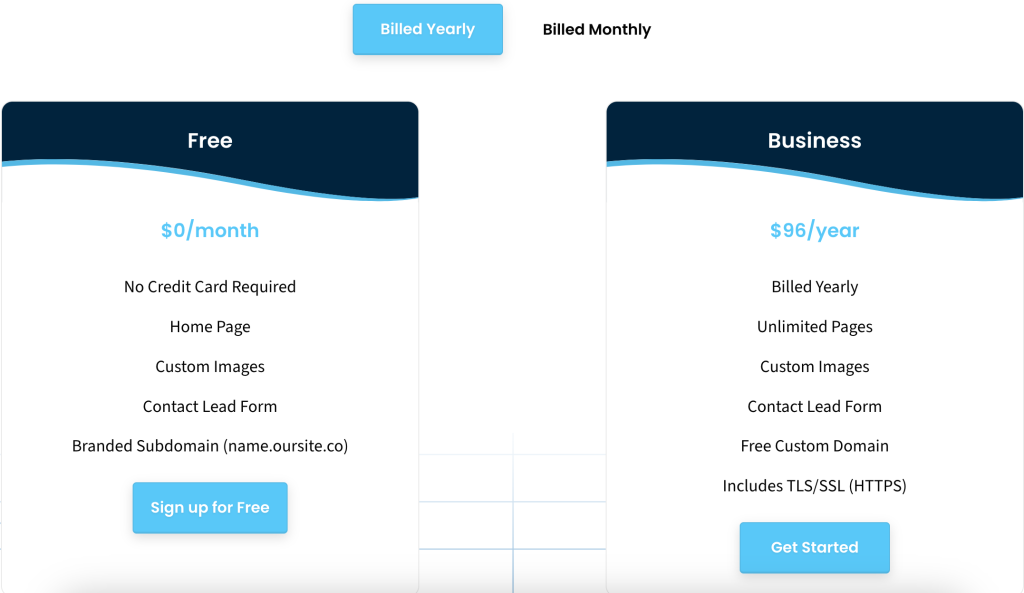
SitesGPT.com keeps pricing simple in 2026: a free plan at $0 and one paid Business plan at $8/month (billed annually, $96/year). The more useful question beyond the monthly number is what process the business is trying to improve, how often that process happens, and what the current way of handling it already costs in time and coordination.
Disclosure: Stack99 earns a commission if you buy through links on this page. It costs you nothing extra and never changes our assessment.
| Plan | Price | What you get |
|---|---|---|
| Free | Free | Home page, custom images, contact form, branded subdomain |
| Business | $8/mo | Unlimited pages, free custom domain, TLS/SSL; billed annually ($96/yr) |
With only two tiers — free, and $8/month for unlimited pages, a custom domain, and SSL — the main decision is whether the paid plan’s features are worth it for your workflow, so smart buyers measure it against the value it delivers rather than the label alone.
If you want to inspect the official product path while you read, start with SitesGPT.com here.

What Buyers Need To Verify First :
Before worrying about the smallest price point, buyers should verify what level of usage, team involvement, or workflow depth they actually need. A product can feel expensive when the team buys ahead of its own readiness. It can also feel cheap at first and then become costly when the team realizes the lower entry point does not support the process it actually needs to run.
Where Overspending Usually Happens :
Overspending is usually caused by mismatch, not just by price. Teams overspend when they buy a plan that is too broad for the current stage, adopt the product without a clear owner, or expect the tool to solve a wider problem than it was meant to solve. Those mistakes create waste even when the visible subscription number looks reasonable.
A Better Way To Compare Cost :
A better cost comparison asks whether SitesGPT.com reduces recurring friction around a meaningful workflow. If the product makes a repeated process calmer, faster, or easier to govern, the price becomes easier to justify. If the workflow stays messy, even a smaller price can still be a bad bargain.
If you want to test that directly, open SitesGPT.com here and compare the product against the business task where the current process already feels too expensive in effort or attention.
How To Judge Plan Fit :
The safest plan-fit method is to start with the operating reality, not the feature fantasy. Look at how many people need to touch the workflow, how often the workflow happens, and how much failure in that process currently costs. Those answers usually reveal the right level of investment faster than a shiny plan grid does.
Billing And Budget Perspective :
Budget discipline does not mean choosing the smallest visible number. It means choosing the option that creates the best ongoing trade between product cost and operational relief. Sometimes the better move is to stay narrow at first, let the workflow prove itself, and expand only when the value is clearly visible.
If you want one more direct cost-fit check, review SitesGPT.com here and compare the product’s likely usage against the repeated workflow your team most wants to stabilize.
Verdict :
SitesGPT.com pricing makes the most sense in 2026 when it is judged against repeated workflow value rather than against a bare headline price. That approach keeps the decision grounded and reduces the chance of buying the wrong plan for the wrong reason.
If you want to evaluate that carefully, try SitesGPT.com here and map the product cost against one real business process before you decide.
FAQ :
What Is The Most Important Pricing Question?
The most important question is whether the product reduces enough recurring friction to justify the cost in the team’s real workflow.
Why Do Teams Overspend On Software Like This?
They usually overspend by buying the wrong fit, buying too early, or expecting the product to solve a broader problem than it was designed to own.
Is The Cheapest Plan Always The Safest Choice?
No. A cheaper plan can still cost more if it fails to support the workflow the business actually needs.
What Is The Best Way To Judge Value?
Use one repeated business process and compare how much time, effort, or coordination the product could realistically remove from that process.
More on SitesGPT.com
Hand-picked guides to help you choose the right tool — no fluff.
 ComparisonsSitesGPT.com vs Alternatives 2026The strongest competitors compared side by side.
 Use CasesWho Is SitesGPT.com Best For? Use Cases & Fit (2026)Who gets the most out of it — and who should skip it.
 PricingBLACKBOX AI Pricing 2026Real tier prices and what each plan actually includes.
 Case StudiesFreshteam Case Study 2026What actually happened when teams rolled it out.