


In this guide
- Why Buyers Start Looking For Alternatives
- What The Official Pages Show
- Alternative Path 1: Stay In The Same Category
- Alternative Path 2: Choose A Broader Platform
- Alternative Path 3: Choose A Lighter Or Manual Stack
- What Buyers Usually Miss In Alternative Comparisons
- When To Stay With Process Street
- When To Choose An Alternative
- Why The Comparison Needs More Than Features
- When The Alternative Is Actually Better
Why Buyers Start Looking For Alternatives :
When buyers search for Process Street alternatives, they are usually not asking a shallow question. They are asking whether the official product lane is too narrow, too broad, too expensive operationally, or simply misaligned with the workflow they need to run. The public pages for Process Street on Saturday, August 1, 2026 give enough directional context to make that comparison more honest than most software roundups ever do.
Disclosure: Stack99 earns a commission if you buy through links on this page. It costs you nothing extra and never changes our assessment.
If you want to inspect the source product first, start with Process Street here.
What The Official Pages Show :
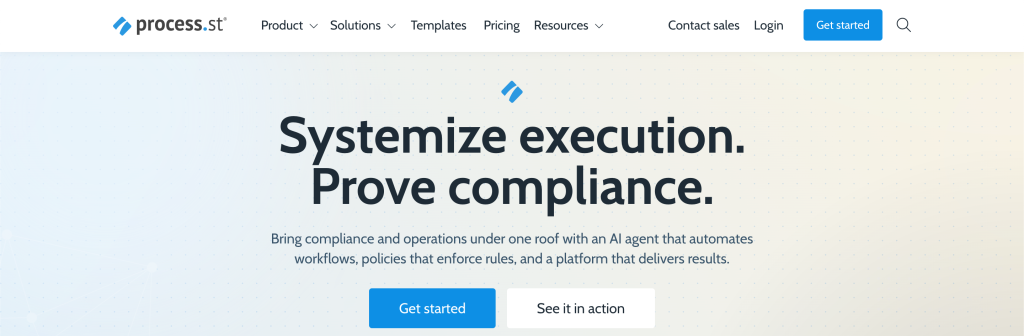
The official story keeps pointing back to ideas like:
- Talk to a process expert
- Systemize execution. Prove compliance.
- Guarantee compliance, automate tasks, rest easy
- Trusted by 1m+ users to standardize and prove their processes
- The compliance operations platform
That matters because the best alternative is not always a direct competitor. Sometimes the better choice is a broader platform. Sometimes it is a lighter tool. Sometimes it is a more category-specific solution. The right answer depends on whether Process Street is too focused, not focused enough, or simply built around a different working model than the one your team needs.
Alternative Path 1: Stay In The Same Category
The first path is a tool that solves the same core problem but does it through a different workflow. This is usually the cleanest comparison because the team already believes the category makes sense. At that point, the question becomes which product offers clearer execution, better adoption, or stronger economics.
Alternative Path 2: Choose A Broader Platform
Some teams move up a layer instead of sideways. They want a product that covers adjacent work in addition to the main use case. This can reduce tool count, but it can also introduce more process complexity. If the broader platform makes the recurring workflow slower or harder to learn, it may not be a real improvement.
Alternative Path 3: Choose A Lighter Or Manual Stack
This is the most common fallback for early-stage teams or cautious buyers. It keeps commitment low, but it often pushes more operational effort back onto the team. A manual or lighter stack is only a better alternative when the team genuinely does not need the structure or depth that Process Street is trying to provide.
If you want a second alternatives check, compare Process Street here and weigh the official product lane against the category you are actually shopping in.
What Buyers Usually Miss In Alternative Comparisons :
What buyers usually miss is the cost of mismatch. A tool can look cheaper and still create more drag. A broader platform can look safer and still weaken the exact workflow that matters most. The smarter comparison is always: which option creates the least repeated friction for the task that is already slowing us down?
When To Stay With Process Street :
Stay with Process Street when the official pages already maps closely to the problem you need to solve and the main concern is rollout timing, internal buy-in, or pricing clarity rather than product fit itself.
When To Choose An Alternative :
Choose an alternative when the category is right, but the product lane is not. That could mean your team needs more breadth, less complexity, a different pricing structure, or a workflow that is more naturally aligned to the way the business already operates.
If you want to pressure-test that directly, open Process Street here and compare it to the workflow that currently creates the most drag. Then use Process Street here one more time and ask whether you are shopping for this exact lane or for a neighboring category.
Why The Comparison Needs More Than Features :
This comparison needs more than feature counting because the real decision is about operational fit. Which option gives the team a more dependable workflow? Which one is easier to repeat without creating more management overhead? Which one removes repeated friction instead of simply moving it? Those are the real comparison questions.
When The Alternative Is Actually Better :
The alternative is actually better only when it improves the recurring workflow that matters most. If it is broader but heavier, or lighter but too manual, the switch may look attractive while still weakening day-to-day execution. That is why the comparison should stay grounded in a single, repeated, live process.
The Final Process Test :
The final process test is whether the team can run the core workflow more calmly, more consistently, and with less supervision after the switch. That is the standard an alternative should meet before it earns the move.
Verdict :
The best alternative to Process Street is the one that better matches your operating problem, not the one with the loudest comparison page. Process Street still makes sense when its official workflow fits tightly. Alternatives win when your requirements drift beyond that center.
If you want to make that decision carefully, try Process Street here and judge the product against one live workflow rather than a vague list of feature names.
FAQ :
Why Do Buyers Look For Process Street Alternatives?
Usually because they want a different workflow shape, a broader product lane, or a pricing model that fits their stage better.
Is The Best Alternative Always A Direct Competitor?
No. Sometimes the best move is a broader stack or a lighter approach rather than a like-for-like substitute.
Should I Switch Based On Price Alone?
No. Workflow cost matters more than the smallest visible subscription number.
When Should I Stay With Process Street?
Stay when the product’s official use case still matches the real problem, and the main issue is rollout, not fit.
What Is The Safest Way To Compare Alternatives?
Use one live workflow and compare which option removes the most friction with the least extra complexity.
More on Process Street
Hand-picked guides to help you choose the right tool — no fluff.
 Use CasesWho Is Process Street Best For? Use Cases & Fit (2026)Who gets the most out of it — and who should skip it.
 Case StudiesProcess Street Case Study 2026What actually happened when teams rolled it out.
 Case StudiesBuddy Punch Case Study 2026What actually happened when teams rolled it out.
 AlternativesCalilio Alternatives 2026Credible alternatives and when each one wins.