


In this guide
Why This Comparison Matters :
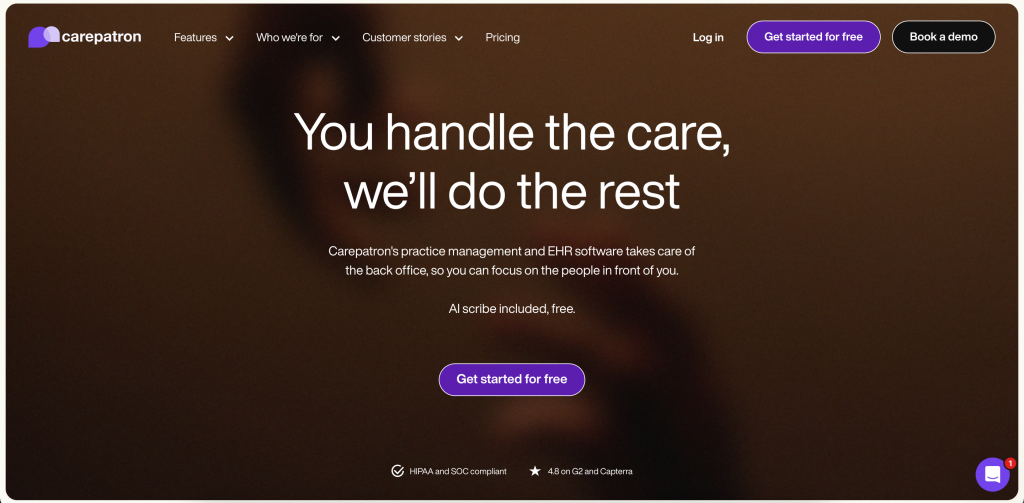
Carepatron is practice management software for healthcare and wellness providers, bundling scheduling, telehealth, clinical notes, client records, and billing into one workspace. It’s aimed at solo practitioners and small clinics — therapists, coaches, and allied health teams — who want an all-in-one alternative to stitching together separate booking and EHR tools. There’s a free plan for individuals getting started, with paid tiers from $31/month per user adding more storage, automation, and team features.
Disclosure: Stack99 earns a commission if you buy through links on this page. It costs you nothing extra and never changes our assessment.
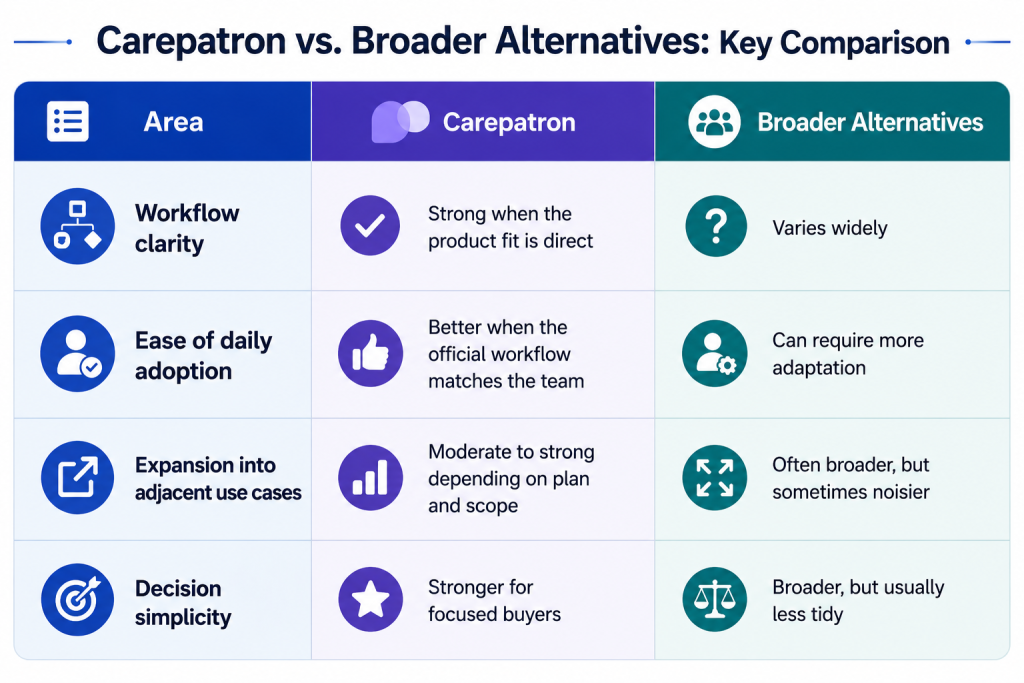
Businesses comparing Carepatron in 2026 are usually deciding between a focused product workflow and a broader set of alternatives that may solve adjacent needs in different ways. That is why a direct comparison matters more than a generic feature list.
If you want to inspect the source product while you read, start with Carepatron here.
Quick Comparison Table :
Product A Deep Dive: Carepatron
The official source material gives Carepatron a fairly specific identity. It keeps coming back to ideas such as:
- You handle care, we’ll do the rest
- From first booking to final payment, all in one place
That matters because strong products are usually easier to buy when the workflow is obvious. Teams can tell faster whether the tool fits the way they already work or whether it would force a strange new process on top of the business.
If you want to compare that against your own workflow, check Carepatron here and look at how the official pages maps to the work your team already runs.
Product B Deep Dive: The Alternative Path
The alternative path is rarely a single named competitor. In practice, buyers often compare Carepatron against a mix of broader tools, adjacent point solutions, or a partially manual stack. Those alternatives can look simpler at the start, but they often shift work back onto the team.
The real tradeoff is not only features. It is operational shape. A broader tool may offer more surface area, while Carepatron may offer a more focused working model. That is the tension buyers need to evaluate honestly.
Feature Matrix :
Pricing Comparison :
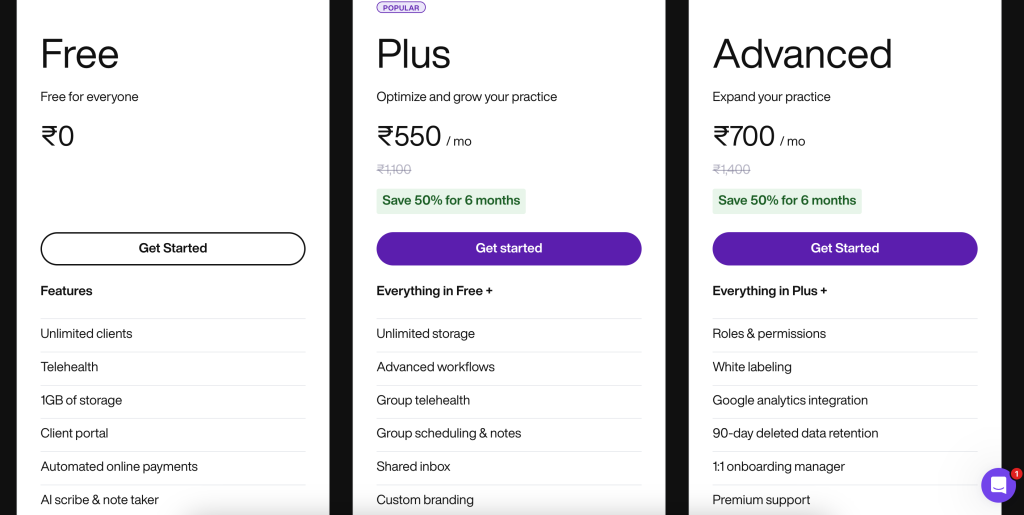
The official pages reviewed do not present a simple public pricing table, so the safer reading is to treat pricing as plan- or conversation-dependent.
The smarter pricing question is not “which number looks smaller?” It is “which option creates less operational waste after the first month?” That is where a focused product can outperform a broader but less aligned alternative.
If you want to test the source product against that standard, open Carepatron here and compare it against the exact workflow your team already runs.
Use Case Recommendations :
Choose Carepatron If –
- You want a product with a clearer official workflow.
- You care about smoother day-to-day adoption.
- You want a more focused operating model instead of a sprawling stack.
Choose Alternatives If –
- Your team needs much broader platform coverage.
- You are solving a wider systems problem than Carepatron is built for.
- You are still validating the category and want to keep the first step lighter.
The Real Tradeoff :
The real tradeoff is focus versus breadth. Carepatron looks strongest when the official pages lines up cleanly with the problem you are trying to solve. Alternatives look stronger when your team is solving a wider, messier problem that spills beyond a single workflow.
That distinction sounds simple, but it is where most buying mistakes happen. Teams compare tools as if they are direct clones and then discover later that the products were designed around different operating assumptions.
Final Buying Note :
In 2026, the smartest way to evaluate Carepatron is still to use the official product pages, compare them against one real workflow, and decide whether the product reduces friction in a way your team will actually feel every week. That kind of grounded evaluation tends to beat generic feature shopping.
Verdict :
Carepatron is a strong choice in 2026 when you want the working model shown on the official product pages and you want less day-to-day friction than a stitched-together alternative stack usually creates. Alternatives still matter, but they are better when your needs are broader than the product’s sharpest use case.
If that sounds like your lane, try Carepatron here and compare one real workflow against the broader alternatives before you decide.
FAQ :
What Is The Main Reason To Compare Carepatron In 2026?
The main reason is that buyers are usually choosing between a focused workflow and a broader alternative set, not between two identical tools.
Does Carepatron Have An Advantage Over Broader Alternatives?
Yes, when the team wants a more direct product fit and a cleaner day-to-day workflow instead of extra platform sprawl.
Is Pricing The Only Decision Factor?
No. Operational friction, product fit, and adoption quality usually matter more than the smallest headline number.
When Should I Choose An Alternative Instead?
Choose an alternative when the practice is larger or specialty-specific. Carepatron suits solo practitioners and small clinics wanting one all-in-one tool; a dedicated EHR usually fits better past that point.
What Is The Best Way To Evaluate Carepatron?
Use one real workflow, compare it against your current process, and judge whether the focused product shape saves more time than a broader alternative.
More on Carepatron
Hand-picked guides to help you choose the right tool — no fluff.
 Use CasesWho Is Carepatron Best For? Use Cases & Fit (2026)Who gets the most out of it — and who should skip it.
 FeaturesCarepatron Top Features 2026The standout features and whether they justify the price.
 Case StudiesCatalister Case Study 2026What actually happened when teams rolled it out.
 ReviewsDeel Review 2026Hands-on verdict with the pros, cons and who it fits best.