

Kinetic Innovative Staffing makes the most sense for startups that need team capacity but do not want to build an expensive local hiring stack too early. The official site says Kinetic is a leading offshoring solution provider based in Australia and that it has helped thousands of businesses and startups since 2013. That startup angle is not buried. It is part of the core pitch.
The value proposition is also pretty direct: remote staffing that is cost-efficient, simple, and easier to understand than a lot of traditional outsourcing sales talk.
That makes this post especially relevant for:
- Founders watching burn carefully.
- Startups that need support staff without local salary overhead.
- Small teams building operations before they can hire a full internal department.
- Businesses that want offshore staffing with payroll and HR support handled for them.
If that sounds close to your situation, start with Kinetic here.

Why Kinetic Fits Startups So Well
Startups usually do not struggle because they hate hiring. They struggle because early hiring is expensive, slow, and risky when revenue still needs room to breathe.
Kinetic’s official site understands that. The about page says the company focuses on operational efficiency and helping businesses increase flexibility with offshore staffing. The pricing page reinforces that with clear wage comparisons and a simple process. That combination matters for startups because they do not need more complexity. They need a staffing model they can understand quickly.
The startup fit comes from a few specific things:
- Clear cost-saving context.
- A straightforward selection process.
- Ongoing payroll and HR support after placement.
- Remote staffing aligned to onshore operations.
- A diverse talent pool across different roles.
That is a better startup story than generic outsourcing language because it directly addresses the combination of budget pressure and operational growth.
Top Features For Startups
Kinetic is a service business, so its “features” are really operating advantages. The official pages make several of them pretty clear.
Cost-Efficiency With Transparent Comparisons
The pricing page is unusually helpful because it shows example annual wage ranges and local-salary savings. For example, it lists:
- Customer service representatives at AUD 26,700 average versus AUD 70,000 local, showing 62% savings.
- Data entry specialists at AUD 24,900 average versus AUD 63,000 local, showing 60% savings.
- Technical support staff at AUD 30,300 average versus AUD 85,980 local, showing 65% savings.
- Virtual assistants at AUD 30,000 average versus AUD 68,250 local, showing 56% savings.
That is exactly the type of practical pricing context startups need.
Simple Hiring Process
The official page outlines a simple four-step process:
- Briefing.
- Shortlisting.
- Selection.
- Post-appointment support.
It also says shortlisting usually happens within a week. That kind of clarity is useful when a startup needs help quickly instead of getting lost in a bloated talent-acquisition process.
Post-Appointment Support
This is an underrated strength. Kinetic says the hired staff will report to the client while Kinetic handles paperwork, timekeeping, payroll, and HR support. That reduces a lot of admin pressure for small teams.
Real-World Startup Example
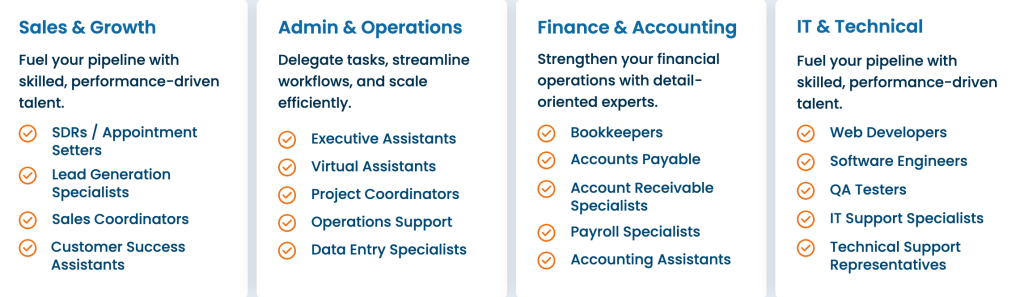
Imagine a small SaaS startup with two founders, a part-time marketer, and a growing support inbox. They do not need a giant local hiring sprint. They need dependable help in areas like customer service, data entry, technical support, or admin operations.
That is the type of company Kinetic’s model seems well suited for.
Instead of carrying the full local wage burden right away, the startup can use a simpler remote staffing model and get:
- Faster capacity relief.
- Lower labor costs.
- Less payroll admin.
- Easier operational scaling.
That is not magic. It is just a more practical staffing structure for certain stages of company growth.
If you want to compare that model against your own hiring pressure, start with Kinetic here and look at one role that is already slowing your team down.

Pricing In Context
Kinetic’s pricing page is one of its strongest startup-selling tools because it frames the service around savings, not mystery quotes alone.
The official examples show that several common operational roles can be hired at materially lower annual cost than their local equivalents. That does not automatically mean every startup should offshore immediately, but it does give founders a clearer basis for comparison than most staffing vendors provide publicly.
For a startup, that pricing context matters because one wrong local hire can lock in too much fixed cost too early. A more flexible offshore staffing model can preserve runway while still improving delivery capacity.
The other thing the pricing page gets right is tone. It emphasizes transparent transactions, no hidden charges, and open communication throughout the process. Startups need that kind of clarity because vague hiring economics are hard to defend when cash discipline matters.

Alternatives Startups Might Consider
A startup looking at Kinetic is usually choosing between several broad paths:
- Hiring locally.
- Using freelancers.
- Working with a broader outsourcing agency.
- Delaying the hire and overloading the core team.
Kinetic looks strongest when the startup wants more stability than freelancers provide but still needs more cost discipline than local full-time hiring often allows.
That is the middle ground where the service seems most practical.
It is also where the post-appointment support becomes more valuable. A freelancer can help with tasks, but a staffing partner that also handles payroll and HR support gives a startup a more stable operating arrangement once the role is meant to last.
Setup Steps For A Startup
If I were using Kinetic in a startup environment, I would approach it like this:
Step 1: Define One Role Clearly
Do not begin with “we need help.” Begin with one role and one operating problem.
Step 2: Match The Role To A Measurable Bottleneck
Choose work that is repetitive, operational, or slowing the founders down.
Step 3: Use The Shortlisting Process Seriously
The official site makes the selection process sound straightforward. That only works well if the brief is specific.
Step 4: Build A Clean Onboarding Plan
Even though Kinetic handles payroll and HR support, the startup still needs an internal onboarding rhythm so the new team member can become useful quickly.
Step 5: Measure The Role Against Time Saved
The easiest way to judge success is to track whether founders and core operators get meaningful time back within the first few months.
Where Startups Get The Most Value
The biggest wins usually show up where founders are spending too much time on work that should not require founder attention anymore.
That often means:
- Customer support.
- Back-office coordination.
- Admin work.
- Data handling.
- Basic technical support.
If Kinetic removes that pressure without forcing a heavy hiring overhead, the model becomes much easier to justify.
That is why startup buyers should not judge it only by the salary comparison tables. They should judge it by whether the service creates more execution room for the core team without adding management chaos.
If you want to evaluate that kind of tradeoff directly, start with Kinetic here and compare one overloaded role against the cost of waiting too long to hire.
That wider operational relief is usually what turns a staffing decision from “nice to have” into a real growth lever for an early-stage team.
For a startup, that kind of leverage often matters more than theory.
It shows up in calmer operations, better founder focus, and faster execution across the week.
Verdict
Kinetic Innovative Staffing looks like a strong fit for startups in 2026 because the official site combines three things founders care about a lot: cost efficiency, hiring simplicity, and reduced post-hire administrative burden. The wage comparison tables are concrete, the process is easy to follow, and the post-appointment support model is well suited to teams that do not want to become payroll experts overnight.
It is not the right fit for every role or every company stage. But for startups that need offshore support staff aligned to onshore operations, start with Kinetic here and compare one urgent operational role against your current local hiring path.
FAQ
Is Kinetic Innovative Staffing good for startups?
Yes. The official site explicitly says it helps businesses and startups with cost-efficient offshore staffing aligned to onshore operations.
What kinds of roles does Kinetic show pricing for?
The pricing page includes examples such as customer service representatives, data entry specialists, legal assistants, technical support staff, and virtual assistants.
How does the Kinetic process work?
The official pricing page describes a four-step flow: briefing, shortlisting, selection, and post-appointment support.
Why would a startup choose Kinetic instead of local hiring?
The official wage comparisons suggest meaningful cost savings, and the post-appointment support model reduces payroll and HR overhead for small teams.