


Netlify is a strong fit for startups that want to ship quickly without building a giant DevOps habit…
Netlify is not automatically the perfect answer for every startup.
In this guide
Who This Post Is For
Netlify is a strong fit for startups that want to ship quickly without building a giant DevOps habit before they even know whether the product will stick. The official site sells a clear story: create with AI or code, deploy instantly on production infrastructure, preview every change, and add app features like functions, storage, and AI Gateway as you grow.
Disclosure: Stack99 earns a commission if you buy through links on this page. It costs you nothing extra and never changes our assessment.
That makes Netlify especially relevant for:
- Early product teams.
- Developer-led startups.
- SaaS teams shipping fast iterations.
- Marketing and product teams that need preview workflows.
- Founders who do not want infrastructure to become the main character of the company.
For startups, that value proposition matters. You need a platform that removes friction, not one that turns every deployment into a career in cloud administration.
If that sounds like your stage, start with Netlify here.

Why Netlify Fits Startups So Well
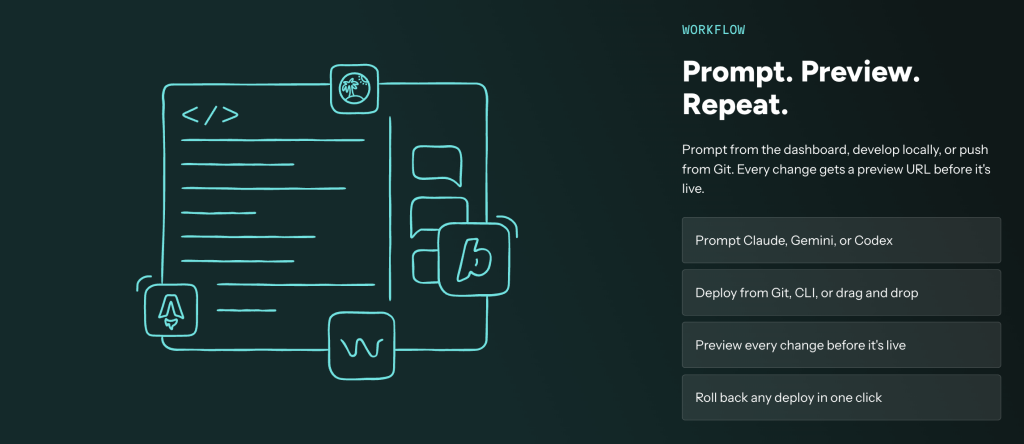
Netlify’s official pages is unusually startup-friendly because it keeps the path from idea to production short. The homepage repeatedly emphasizes:
- AI or code-based starts.
- Instant deployment.
- Preview URLs before release.
- Built-in app capabilities.
- Global production infrastructure.
That is a useful startup combination because early teams usually do not need the most complex platform possible. They need one that lets them move.

A few reasons this works well for startups:
- Preview URLs reduce friction between product, design, and marketing.
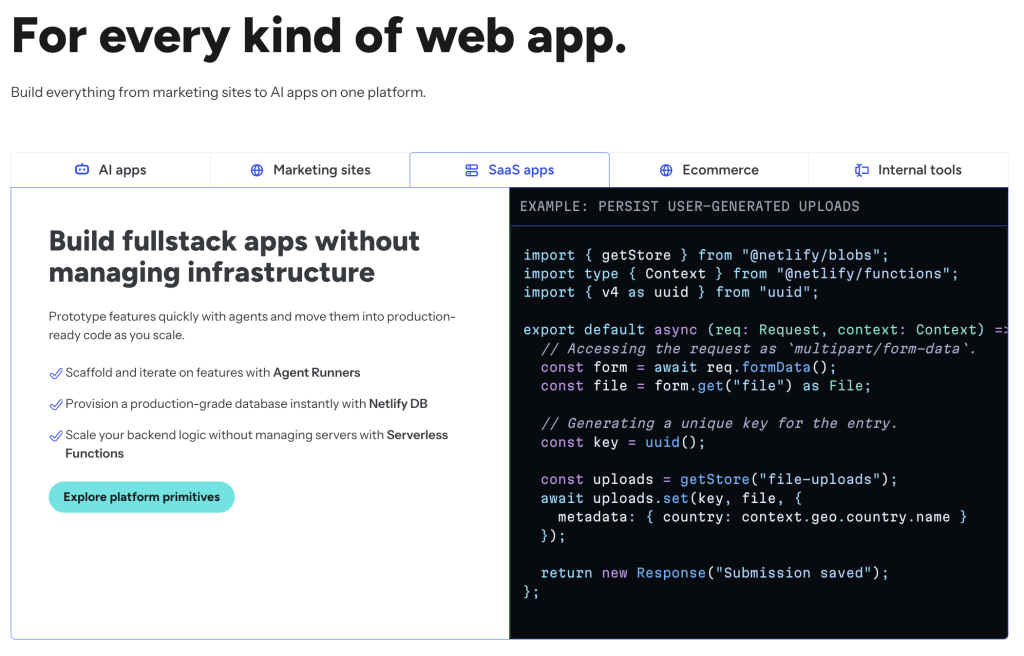
- Serverless functions and storage let teams add backend capability without a giant platform shift.
- Global delivery helps teams ship polished experiences early.
- The platform grows from simple hosting into a more complete app environment.
It is the kind of stack that helps a startup stay fast while leaving room for ambition later.
The Best Startup Features
Deploy Previews
This is one of Netlify’s biggest startup strengths. The official site makes previews central to the workflow, and that is exactly right. Startups constantly need quick internal review loops before something goes live.
Preview URLs help teams:
- Test changes quickly.
- Review new pages without breaking production.
- Share work with non-technical teammates.
- Move faster on launch cycles.
That does not sound flashy, but it saves an incredible amount of back-and-forth.
Functions, Storage, And Identity
Netlify is not just a static hosting tool anymore. The homepage highlights serverless functions, integrated storage, identity, and more. For a startup, that matters because it lets you add practical app features without immediately jumping to a more complex infrastructure setup.
AI Gateway And Modern App Support
Netlify’s current official messaging includes AI Gateway and AI app workflows. That gives startups building AI-assisted products a more modern story than “host the frontend and figure the rest out somewhere else.”
Global Delivery
Early startups still need their product to feel fast and credible. Netlify’s production infrastructure and edge-focused delivery help young products feel more polished before the team is large enough to manage performance as a full specialty.
A Real Startup Use Case
Imagine a six-person startup with:
- One or two developers.
- A product lead.
- A designer.
- A founder who still cares about landing pages, signups, and launch timing.
That team does not want a platform fight. It wants to:
- Launch the marketing site.
- Ship product updates quickly.
- Share preview builds with everyone.
- Add a few backend and AI features.
- Keep momentum without babysitting infrastructure.
That is exactly where Netlify looks strong. It lowers the cost of shipping and reviewing work without forcing the startup to abandon quality.
If you want to test that fit, start with Netlify here and run one real startup workflow through previews, a production deploy, and one function-backed feature.
Pricing In Startup Context
Netlify’s pricing page is fairly startup-friendly because it includes free and lower-tier options before teams grow into larger credit and usage needs.
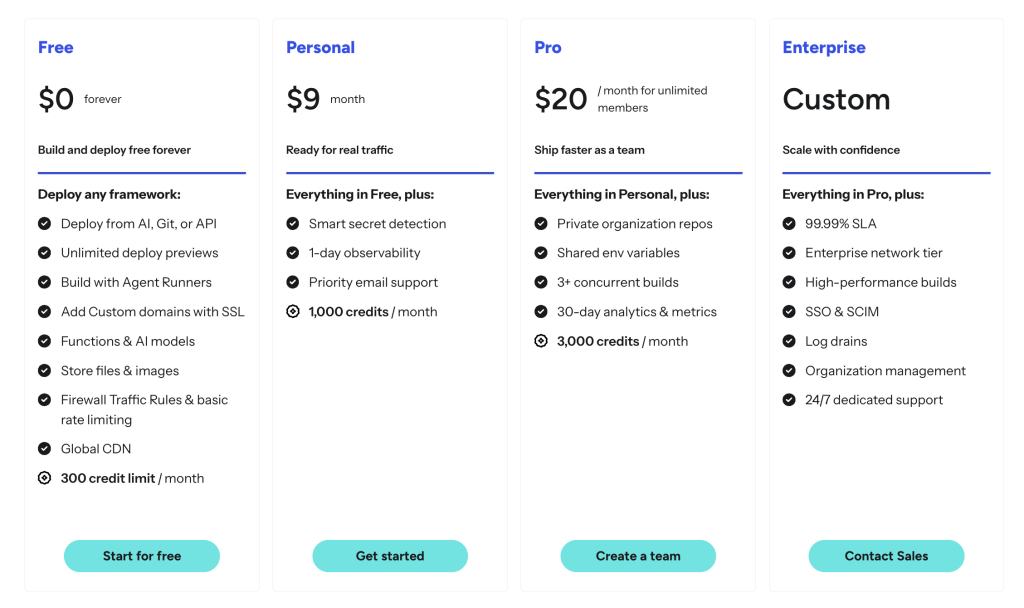
The official page shows:
- Free.
- Personal.
- Pro.
- Enterprise.
It also includes monthly credits and additional usage credits, which means startup teams should think about the pricing not only as plan labels, but as a usage pattern.
For startups, that usually means:
- The free path is good for prototypes and early testing.
- Personal or Pro becomes more relevant once the product has real usage and team workflows.
- Enterprise is for a much later stage.
The good news is that the platform scales sensibly. The thing to watch is that startups should understand their usage rather than assuming the lowest headline plan will always fit forever.
Alternative Tools For Startup Teams
Startups looking at Netlify usually compare it with Vercel, Cloudflare Pages, or traditional cloud setups. Those are all valid comparisons.
What tends to make Netlify attractive is the balance:
- More workflow-oriented than a raw cloud setup.
- More productized than piecing together services manually.
- Flexible enough for modern web and AI app paths.
- Friendly to preview-based collaboration.
That is why it is especially easy to recommend for startups that want to stay focused on shipping product and learning from users.
If you want to test that product-first workflow for yourself, start with Netlify here and compare one startup release cycle against your current deployment process.
Set Up Steps For Startups
Step 1: Start With One Real Project
Do not test Netlify on a toy example if your goal is real evaluation. Use your actual site or app.
Step 2: Use Preview URLs Early
This is one of the easiest ways to feel the workflow advantage.
Step 3: Add One Platform Feature Beyond Hosting
Try one function, one identity flow, or one storage-connected use case. That is where the platform starts feeling more valuable.
Step 4: Watch Usage As You Scale
Understand what the product uses before you suddenly care about credits under pressure.
What Startup Teams Usually Notice First
The first thing most startup teams notice about Netlify is not some deep infrastructure feature. It is that previews and deployment feel easier immediately. That matters because quick operational wins are how platforms earn trust inside small teams. If a product can make launches smoother in week one, it has a much better chance of becoming part of the default workflow.
For early teams, that kind of immediate usefulness matters more than a giant feature list they may not touch for months.
Why Startups Stick With Netlify
The reason startups often stay with Netlify is not just that it gets them live quickly. It is that the platform continues to make sense after the first launch. A lot of startup tooling is good at the beginning and awkward later. Netlify’s official stack gives teams room to add previews, functions, storage, identity, and AI features without immediately forcing a complete platform reset.
That matters because early teams hate replatforming. If a startup can keep one familiar workflow while the product and team mature, that is real value.
Netlify also fits the startup reality that product, design, and marketing often need to see work before it ships. Preview-driven collaboration is not a luxury for young teams. It is a speed advantage.
Where Netlify Is Not The Best Fit
Netlify is not automatically the perfect answer for every startup.
If your team already wants a much deeper cloud infrastructure model from day one, another platform may feel more aligned. If your product stack is already heavily committed elsewhere, Netlify may be less compelling as a central platform.
But for startups that want a fast, clean path from idea to live experience, Netlify remains one of the easiest recommendations precisely because it reduces operational drag instead of adding more of it.
Verdict
Netlify is a very good fit for startups in 2026 because it reduces the friction between building, reviewing, and shipping. The official platform story around previews, production deployment, functions, storage, identity, and AI tooling makes it more than a simple hosting service without making it feel like infrastructure homework.
That balance is exactly why startup teams keep liking it. It helps them move fast while still giving them room to grow.
If your team wants that kind of platform, start with Netlify here and judge it by how much smoother your next release cycle feels.
FAQ
Is Netlify good for startups in 2026?
Yes. It is especially strong for startups that want fast deployment, preview-based collaboration, and a platform that can grow beyond simple hosting.
What startup teams benefit most from Netlify?
Developer-led startups, SaaS teams, and product teams that need fast review and release cycles tend to benefit the most.
Does Netlify work for AI startups, too?
Yes. The official platform now highlights AI app support and AI Gateway, which makes it relevant for AI-oriented startup workflows.
Should startups start with the free plan?
Usually yes for early testing, but teams should watch usage and move up when real product traffic and collaboration needs grow.
More on Netlify
Hand-picked guides to help you choose the right tool — no fluff.
 IntegrationsNetlify Integrations Guide 2026What it connects to and how well each link holds up.
 ComparisonsNetlify vs Alternatives 2026The strongest competitors compared side by side.
 Case StudiesBright Data Case Study 2026What actually happened when teams rolled it out.
 AlternativesJibble Alternatives 2026Credible alternatives and when each one wins.