


In this guide
Pricing Overview :
Freshcaller is Freshworks’ cloud-based phone and call-center system, letting teams buy numbers, route calls and run support or sales lines entirely from the browser with no hardware. It suits small and mid-sized teams that already use Freshdesk or Freshsales and want calling tied into the same records, though call minutes are billed separately from the seat price. Paid plans start around $15 per agent per month, with a limited free tier.
Disclosure: Stack99 earns a commission if you buy through links on this page. It costs you nothing extra and never changes our assessment.
| Plan | Price | What you get |
|---|---|---|
| Free | Free | Buy numbers, inbound caller ID, call notes, basic metrics; pay per minute |
| Growth | $15/mo | Per agent; 2,000 incoming minutes, call recording, queues, reports |
| Pro | $39/mo | Per agent; 3,000 minutes, advanced metrics, power dialer, IVR, call barging |
| Enterprise | $69/mo | Per agent; 5,000 minutes, speech IVR, voicebot, omnichannel routing |
The most important thing to understand about Freshcaller pricing in 2026 is that the product value is tied to how the workflow is consumed, not only to a flat subscription label.
If you want to inspect the official pricing path while you read, start with Freshcaller here.
What The Official Pages Emphasize :
The official product and pricing pages repeatedly point toward:
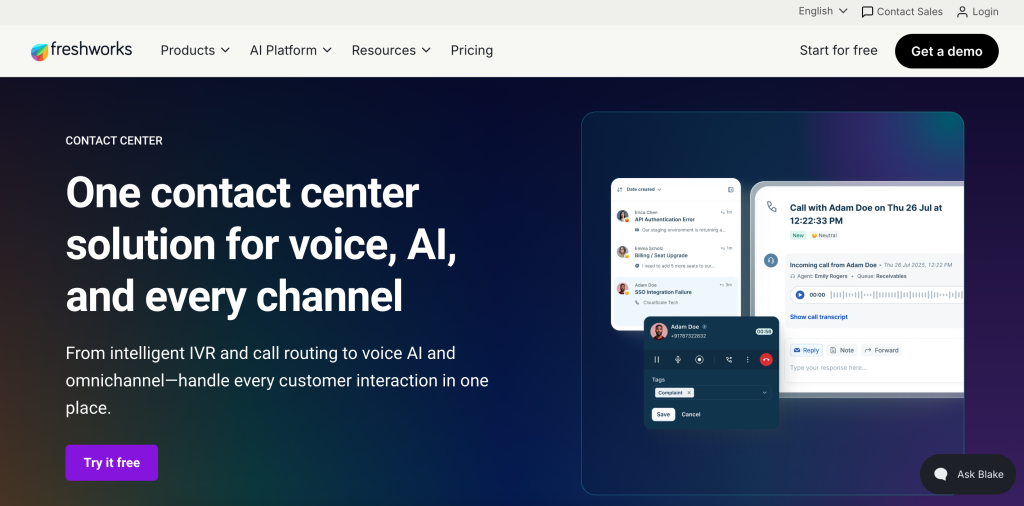
- One contact center solution for voice, AI, and every channel
- No missed calls, lower wait times, and always available support
- Intuitive and scalable
- Conversations made easy
The official pricing page lists a free tier and three published paid tiers priced per agent, so pricing can be read directly rather than treated as conversation-dependent.
Pricing Tiers And Cost Shape :
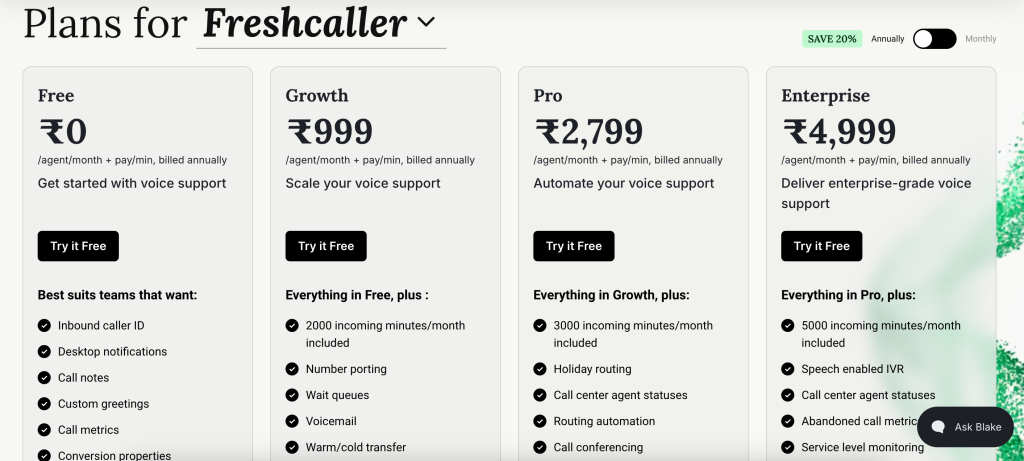
Freshcaller pricing separates cleanly into a free tier and three published paid tiers priced per agent per month, each with a monthly allowance of incoming minutes, plus per-minute charges beyond that allowance.
If you want to inspect the source pricing flow yourself, check Freshcaller here and compare the visible pricing logic against how your team would actually use the product.
Hidden Costs And Gotchas :
The real hidden cost is usually not the visible plan number. It is mismatched usage. If a team buys Freshcaller before the workflow is ready, the tool can feel more expensive than it should. If the team buys too late, the manual work around the tool can cost more than the subscription.
ROI Example :
A realistic ROI question for Freshcaller is whether the product reduces enough manual friction, delay, or tool sprawl to justify the official cost path. That could mean faster execution, fewer side tools, cleaner operations, or less time spent coordinating work outside the product.
Cost Comparison :
Broader alternatives may look cheaper at a glance, but that often happens because they push more operating effort back onto the team. Freshcaller becomes easier to justify when it removes enough friction that the working cost of “cheaper” tools starts to look less attractive.
If you want to test that the practical way, open Freshcaller here and compare the official pricing path against the workflow cost you already carry today.
Best Value Path :
The best value path is usually the one that matches your real workload, team size, or operating pattern instead of the one with the flashiest feature headline. Buyers often get more value from the right entry point than from a bigger plan they barely use.
Discounts Or Billing Notes :
Freshcaller publishes its per-agent prices directly and shows a 20% saving for annual billing, with call minutes billed separately from the seat price, so the decision is which published tier fits rather than a sales conversation.
Final Buying Note :
In 2026, the smartest way to evaluate Freshcaller is still to use the official product pages, compare them against one real workflow, and decide whether the product reduces friction in a way your team will actually feel every week. That kind of grounded evaluation tends to beat generic feature shopping.

Verdict :
Freshcaller pricing in 2026 makes the most sense when you judge it against workflow cost rather than against a shallow list of plan names. If the product removes enough friction, the pricing story usually becomes easier to justify.
If you want to evaluate that directly, try Freshcaller here and map the official pricing path against one real team workflow before you decide.
FAQ :
Is Freshcaller Expensive In 2026?
That depends on the workflow. The better question is whether the official pricing path replaces enough manual cost or tool sprawl to justify itself.
Does Freshcaller Have Public Pricing?
Yes. Freshcaller publishes per-agent pricing on its pricing page: a free tier, then Growth at $15, Pro at $39 and Enterprise at $69 per agent/month billed annually, with call minutes charged separately.
What Matters More Than The Headline Price?
Operational fit usually matters more than the smallest number because tool mismatch can create hidden process cost fast.
How Should I Compare Freshcaller To Alternatives?
Compare the official pricing path against the real workflow cost your team already pays in time, complexity, and extra tools.
What Is The Best First Step?
Use the official pricing page and one real use case, not a generic spreadsheet, to decide whether the product value is strong enough.
Before You Choose, Compare These
Hand-picked guides to help you choose the right tool — no fluff.
 ComparisonsFreshcaller vs Alternatives 2026The strongest competitors compared side by side.
 Use CasesWho Is Freshcaller Best For? Use Cases & Fit (2026)Who gets the most out of it — and who should skip it.
 IntegrationsWebCatalog Integrations Guide 2026What it connects to and how well each link holds up.
 ReviewsFreshsales Review 2026Hands-on verdict with the pros, cons and who it fits best.