


This Playroll case study is written in a useful way, not the fake way. That means I am not going to…
The cleanest Playroll implementation starts with one narrow global hiring motion instead of trying to…
I am not going to invent outcome numbers here. The smarter way to evaluate a Playroll case study is to…
In this guide
Company And Challenge :
This Playroll case study is written in a useful way, not the fake way. That means I am not going to invent a multinational customer, pretend payroll errors vanished overnight, or slap a made-up ROI percentage on a workflow just because that makes software writing look more dramatic.
Disclosure: Stack99 earns a commission if you buy through links on this page. It costs you nothing extra and never changes our assessment.
The real reason teams look at Playroll in 2026 is simpler: global hiring gets messy fast.
The official Playroll site positions the platform around:
- Employer of Record.
- Contractor Management.
- Global Entity Setup.
- Global Payroll Services.
- Payroll Analytics.
- Benefits.
- Immigration Support.
That is a serious operational surface area. So the most realistic case study is a growing company that wants to hire internationally without turning HR, finance, and compliance into a weekly fire drill.
If you want to inspect the official platform while you read, start with Playroll here.
Problem Before The Product :
Before a platform like Playroll, global hiring usually breaks in familiar places:
- Different countries mean different employment rules.
- Contractor and employee workflows get mixed together.
- Payroll and compliance handoffs happen across too many tools.
- HR and finance lose time re-checking the same information.
- Expansion decisions get delayed because nobody wants to own the risk.
That is exactly the kind of problem Playroll’s official positioning is built for.
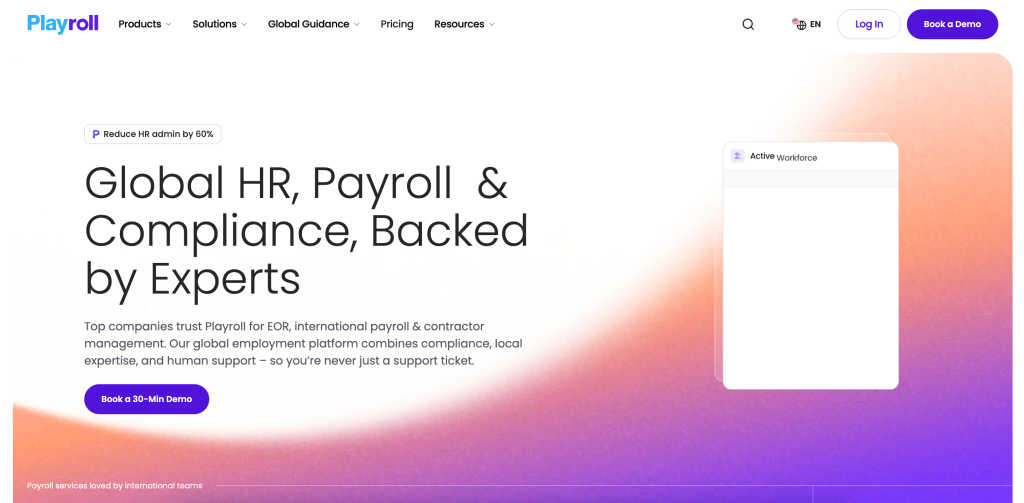
The homepage emphasizes:
- Hiring employees abroad compliantly.
- Hiring and paying global contractors.
- Built-in payroll with entity setup.
- Payroll analytics and multi-country payroll support.
- Guidance across 180+ countries.
This matters because global hiring pain is usually not one bug. It is an operational drag spread across many small steps.
Implementation Process :
The cleanest Playroll implementation starts with one narrow global hiring motion instead of trying to re-architect the whole workforce stack in one go.
In a realistic case-study workflow, the team would:
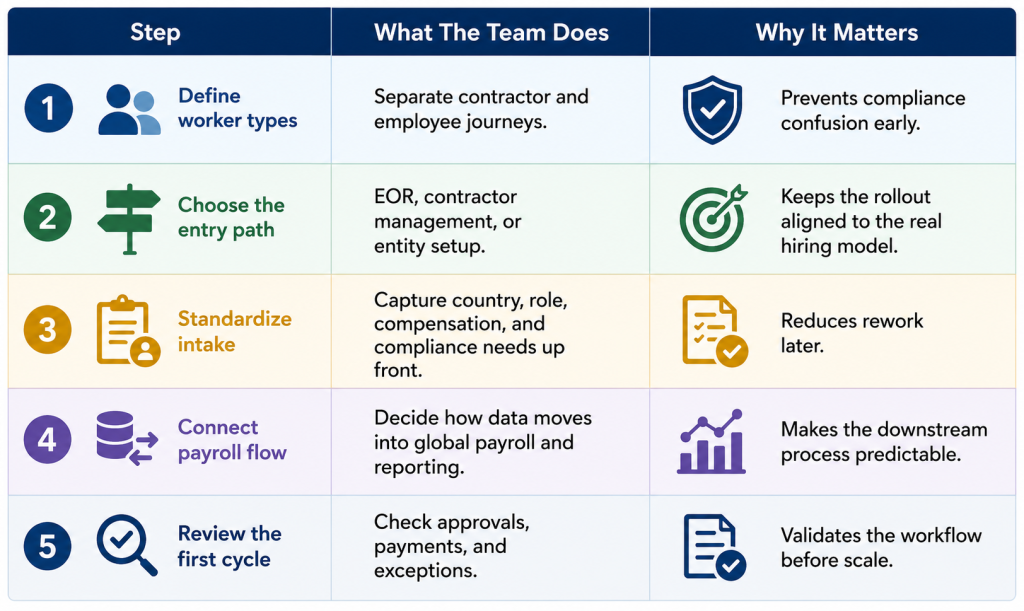
That is the right implementation lens because Playroll is strongest when it creates predictable structure around global workforce movement.
Results And Metrics :
I am not going to invent outcome numbers here. The smarter way to evaluate a Playroll case study is to define the metrics the team should actually watch.
The most useful ones are:
- Time to onboard a contractor or employee in a new country.
- Number of payroll or compliance handoff issues.
- Time spent reconciling cross-border worker records.
- Speed of moving from hiring decision to compliant setup.
- Reduction in fragmented vendor or spreadsheet workflows.
For many teams, the first win is not explosive growth. It is calmer operations.
That may sound less exciting than software marketing likes, but calm is valuable when you are dealing with payroll, taxes, labor law, and global worker classifications.
Playroll’s official site makes the value proposition clear enough:
- Broader country coverage.
- Contractor and employee pathways.
- Payroll and analytics support.
- Compliance guidance.
If those pieces reduce friction in the actual hiring process, the platform is doing the job that matters.
If that sounds close to your situation, open Playroll here and compare the first-country rollout against the way your team handles it today.
That is worth underlining because a lot of global-employment software gets evaluated as if the only valid outcome is dramatic scale. In reality, one of the best outcomes is simply making the first few international hires feel less risky, less slow, and less dependent on heroic manual coordination.
Important Features That Drove The Difference :
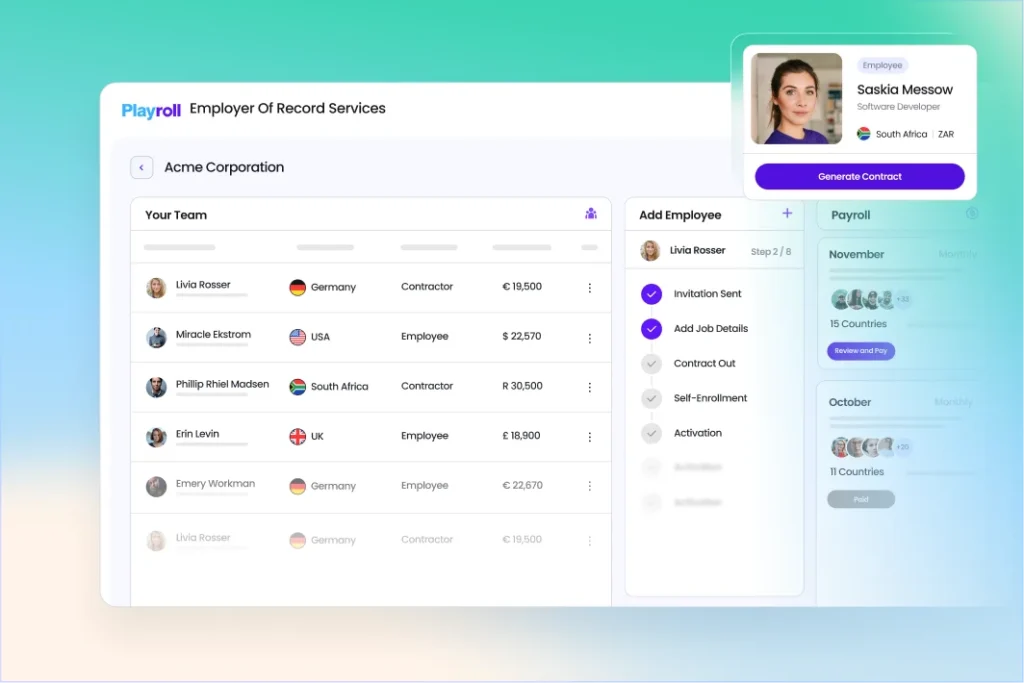
Employer Of Record –
The official Playroll site treats EOR as a core product, which makes sense for teams that want compliant international employment without setting up an entity first.
That is useful because it shortens the path between “we found the right person” and “we can actually hire them.”
Contractor Management –
Contractor management is another big piece of the case-study story.
Official Playroll pricing and compare pages publicly show:
- Contractor Management at
$35per month per contractor. - Flat-fee positioning.
That gives teams a cleaner model when they want global contractor coverage without building a separate workaround.
Global Payroll And Analytics –
Playroll’s homepage also emphasizes Global Payroll Services and Payroll Analytics. That matters because global hiring does not end at onboarding. The real operational burden often starts once several countries, currencies, and worker types have to be tracked in a way finance can trust.
Benefits And Immigration Support –
The official site’s inclusion of global benefits and immigration support is another clue that Playroll is trying to support the employment lifecycle more broadly than simple payout tooling.
Lessons Learned :
The main lesson is that global hiring platforms work best when the team knows which problem it is actually solving first.
If the challenge is:
- One contractor abroad,
- One compliant employee hire,
- One country’s expansion,
Then the rollout can stay focused and useful.
If the team treats the platform like a giant fix-everything button, the process usually gets noisier instead of cleaner.
The second lesson is that worker-type separation matters a lot. Contractor management and EOR may live on the same platform, but they should not be handled as if they are the same operational process.
The third lesson is that ownership matters. Someone still needs to own the workflow across HR, finance, and compliance. The software can structure the process, but it does not remove the need for operational responsibility.
If your team is still juggling these steps manually, open Playroll here and compare one real worker journey from approval to payroll before expanding the evaluation.
ROI Calculation :
The cleanest ROI model for Playroll compares platform cost against operational drag and expansion delay.
Here is a simple framework:
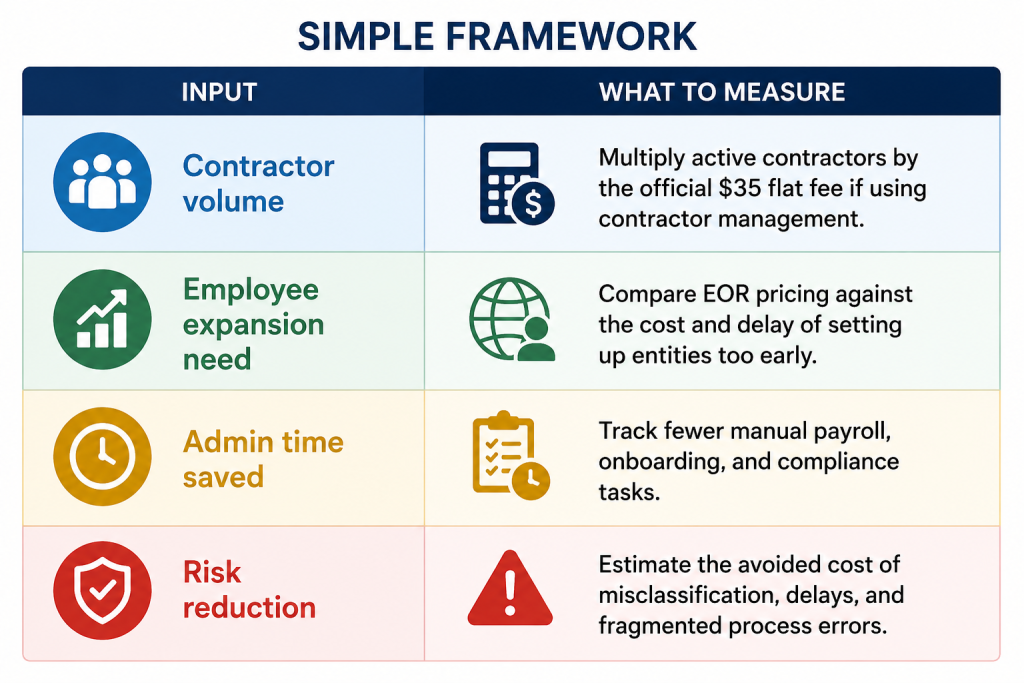
Playroll’s own official comparison materials also show EOR pricing starting from $399 per month per employee on at least some official comparison pages. That gives buyers a public anchor for early planning, even if the final pricing path depends on the exact use case.
That kind of pricing is only worth it when the alternative is materially worse:
- Slower Hiring.
- More Risk.
- More Vendor Sprawl.
- More Manual Reconciliation.
If those are real costs in your business, the ROI argument gets much easier.
There is also a timing angle that matters. Sometimes the platform is not mainly about buying efficiency today. It is buying readiness for the next country, the next contractor group, or the next phase of global expansion. That makes the ROI feel softer at first, but often much clearer once the team avoids a messy workaround later.
How To Replicate This Workflow :
If you want to reproduce the same kind of result, keep the rollout practical:
- Start with one country or one worker type.
- Decide whether the right first motion is contractor management or EOR.
- Map the approval path between HR, finance, and legal before the first live hire.
- Run one complete cycle from onboarding to payroll.
- Review the exceptions before scaling to more countries.
That is the right pace because global employment systems rarely fail from a lack of features. They fail from unclear handoffs.
If you want to test the fit that way, start with Playroll here and compare one real international hiring workflow against the way you manage it today.
Where The Workflow Usually Improves First :
The first visible improvement is usually not payroll itself. It is workflow clarity.
Teams start to feel the gain when:
- Worker classification is clearer.
- Country-specific setup no longer lives in scattered notes.
- Finance and HR stop re-checking the same details repeatedly.
- Hiring managers have a clearer sense of what happens next.
That kind of clarity is easy to underestimate until the team has to expand quickly. Then it becomes obvious why a platform like Playroll can matter even before the organization reaches a huge scale.
Expert Verdict :
Playroll is a strong fit in 2026 for teams that need structure around international hiring, contractor management, payroll, and compliance without turning every expansion step into a custom project.
Its real strength is not hype. It is operational consolidation.
The official site makes that story clear through:
- EOR.
- Contractor Management.
- Global Payroll Services.
- Payroll Analytics.
- Benefits.
- Immigration support.
That breadth is exactly what makes the platform relevant to growing global teams.
FAQ :
What Is Playroll Best For In 2026?
Playroll is best for teams hiring and paying workers globally who need cleaner contractor, EOR, payroll, and compliance workflows.
Does Playroll Publish Public Pricing?
Yes, at least in part. Official Playroll pages publicly show contractor management at $35 per contractor per month, and official comparison materials also show EOR pricing starting from $399 per employee per month in certain contexts.
Is Playroll Only For Large Companies?
No. The official site presents use cases for startups, small businesses, and enterprise teams, especially around global expansion and compliant hiring.
What Should I Measure In A Playroll Case Study?
Measure onboarding speed, handoff quality, payroll/process accuracy, and whether the platform reduces the operational drag of global hiring.
Is Playroll Mainly A Payroll Tool?
Not really. The official site positions it as a broader global HR, payroll, and compliance platform.
More on Playroll
Hand-picked guides to help you choose the right tool — no fluff.
 ReviewsPlayroll Review 2026Hands-on verdict with the pros, cons and who it fits best.
 Advanced GuidesPlayroll Advanced Guide 2026Deeper workflows once the basics are in place.
 Advanced GuidesVektorOS Advanced Guide 2026Deeper workflows once the basics are in place.
 ReviewsTresorit Review 2026Hands-on verdict with the pros, cons and who it fits best.