


This VektorOS case study has to be handled honestly because the official public site is very concise.
The smartest VektorOS rollout would start with one tightly defined prospect segment and one clear…
I am not going to invent exact win rates or pipeline numbers here. The more useful approach is to define…
In this guide
Company And Challenge :
This VektorOS case study has to be handled honestly because the official public site is very concise. The homepage message is direct: it is an AI-powered command center that finds real decision-makers, reaches out automatically, and fills your pipeline faster than any tool you have used before.
Disclosure: Stack99 earns a commission if you buy through links on this page. It costs you nothing extra and never changes our assessment.
That is a bold promise. It also tells us exactly what kind of case study makes sense.
The realistic use case is a small outbound team that has enough sales motion to need automation, but not enough patience to keep juggling spreadsheets, manual prospecting, and disconnected outreach workflows forever.
This is not the kind of product that should be explained through fake enterprise metrics. It should be explained through the process:
- How does lead targeting change?
- How does outreach change?
- How does pipeline management feel after automation?
If you want to inspect the official product while you read, start with VektorOS here.
Problem Before The Product :
Before a product like VektorOS, most lean outbound teams hit the same sequence of pain:
- They spend too much time finding the right contact.
- They still rely on too much manual follow-up.
- They move leads between tools that were never really designed to work together.
- They generate activity but not enough pipeline clarity.
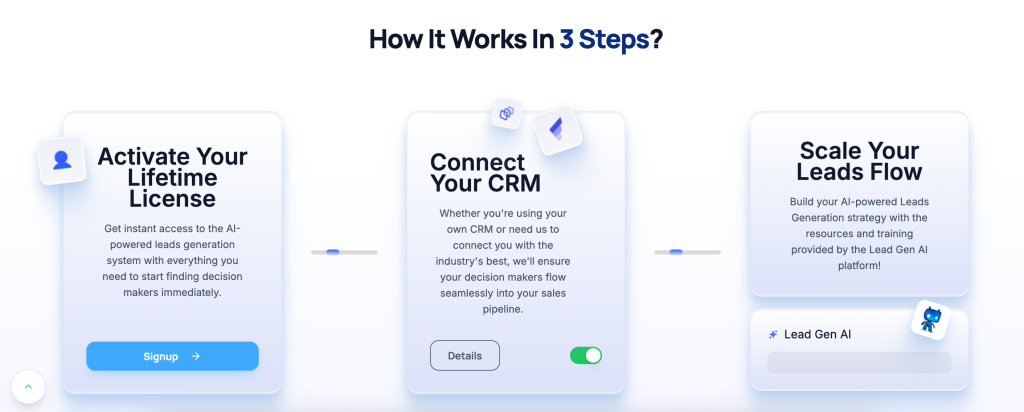
That is exactly the problem VektorOS claims to solve.
The official homepage language is unusually blunt:
- Find real decision-makers.
- Reach out automatically.
- Fill your pipeline faster.
That is useful because it frames the product as a workflow engine for outbound motion rather than a generic CRM extra.
Implementation Process :
The smartest VektorOS rollout would start with one tightly defined prospect segment and one clear outreach objective.
A realistic implementation would look like this:
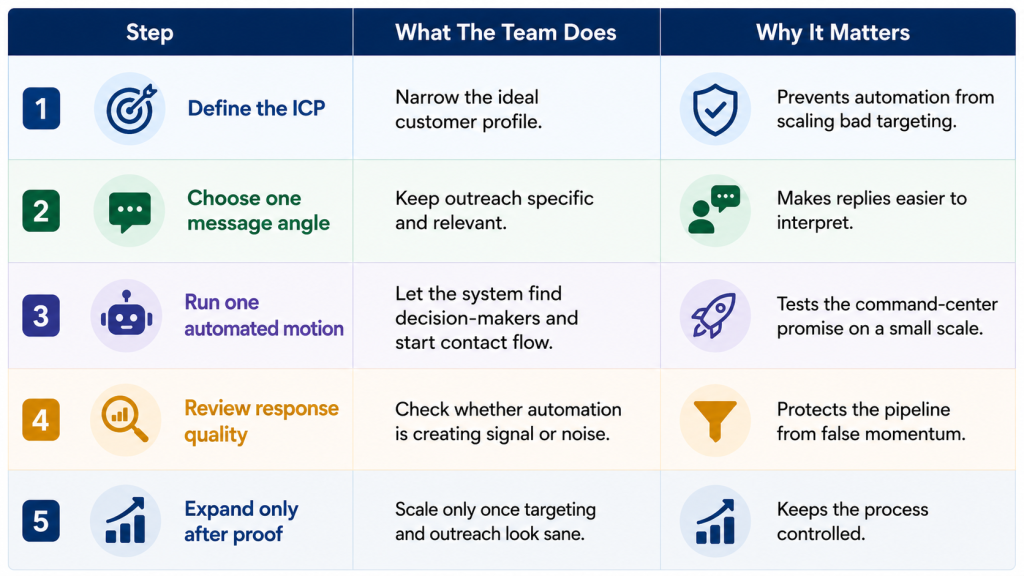
That is the right case-study pattern because lead-gen automation only helps when it reduces manual work without creating more cleanup later.
Results And Metrics
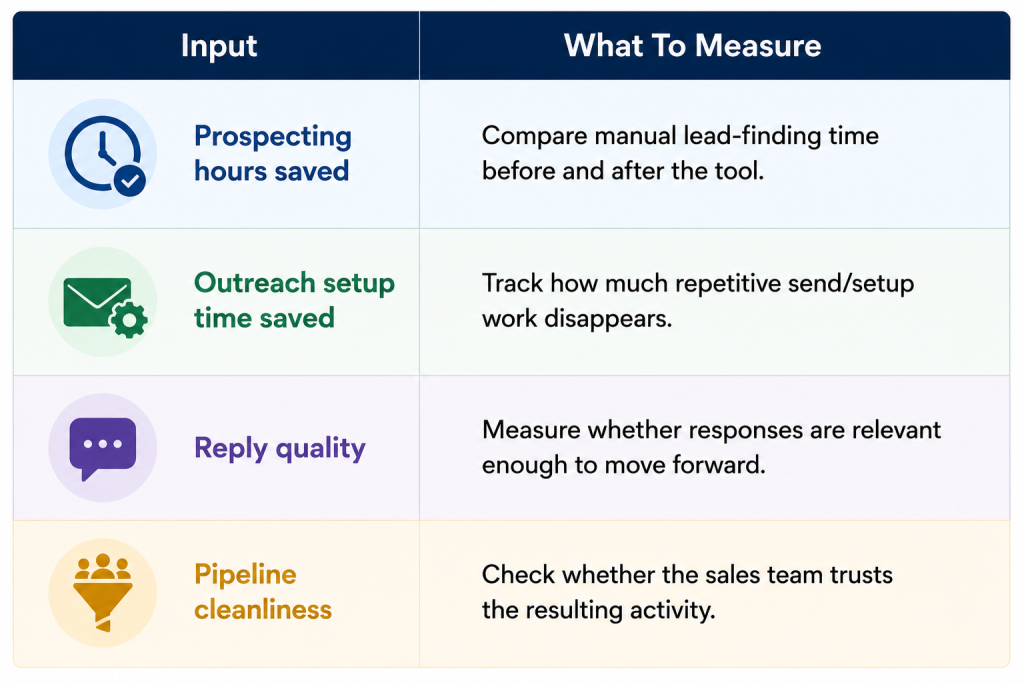
I am not going to invent exact win rates or pipeline numbers here. The more useful approach is to define the metrics the team should actually track.
The most important ones are:
- Lead relevance.
- Reply quality.
- Time saved on manual prospecting.
- Time saved on repetitive outreach tasks.
- Pipeline cleanliness after automation starts.
That last one matters a lot.
Many AI outreach tools can create “activity.” The real question is whether they create manageable pipeline activity.
The official VektorOS promise is not just speed. It is a better motion from one command center. So the results should be judged by whether the team now spends less time chasing the process and more time handling real sales conversations.
If that is the problem you are trying to solve, open VektorOS here and compare one narrow-segment workflow against your current outbound stack.
That distinction matters more than it sounds. A lot of lead tools can create “more.” The better question is whether they create better motion. If a product helps the team move faster but also creates confusion around ownership, lead quality, or follow-up, the time savings disappear fast.
Important Features That Drove The Difference :
Real Decision-Maker Discovery –
The first official promise on the homepage is about finding real decision-makers.
That matters because lead automation breaks quickly if the data quality is poor. A command center is only useful if it starts with the right people.
Automated Outreach –
The second official promise is automatic outreach.
This is where the product becomes interesting operationally. It suggests the tool is not only about identifying leads but also about moving them into the contact flow without so much manual setup.
Pipeline Acceleration –
The third official promise is pipeline acceleration. This is the outcome layer, not the feature layer.
It matters because the real customer does not want “more software.” The customer wants a more reliable sales motion with less manual drag.
Command-Center Framing –
The phrase “AI-powered command center” is doing a lot of work here. It suggests one place to manage the core outbound flow instead of scattering that effort across several tabs and handoffs.
Lessons Learned :
The main lesson from a VektorOS-style rollout is that automation needs boundaries.
If the targeting is unclear, VektorOS will only accelerate confusion. If the outreach angle is weak, automation will only scale bad messaging. If the response process is not owned, faster activity will just create messier follow-up.
So the first lesson is simple: define the segment first.
The second lesson is that one-command-center tools are most useful when the team is already clear on what good outbound looks like. They are less useful for teams hoping the software will invent a strategy for them.
The third lesson is that quality control still matters. AI can reduce repetitive motion, but someone still has to judge whether the motion is productive.
The fourth lesson is that a narrow pilot almost always tells the truth faster than a broad rollout. When the segment is tight and the message is specific, it becomes easier to see whether the product is genuinely surfacing better prospects and cleaner outreach or simply creating the illusion of momentum.
ROI Calculation
The right ROI model for VektorOS is operational rather than purely financial at first.
If the product truly helps the team:
- Find Better Targets.
- Automate More Of The First Touch.
- Reduce Manual Prospecting Work.
Then the time savings alone can justify a serious pilot.
The financial ROI becomes easier to judge later, once the team sees whether the pipeline quality actually improves rather than simply growing noisier.
That is the right sequence for measurement. Operational clarity first, commercial ROI second. Too many teams reverse that order and end up judging an automation tool before they have even confirmed whether the underlying process quality improved.
How To Replicate This Workflow :
If you want to test VektorOS the right way, keep the pilot narrow:
- Pick one segment.
- Pick one offer.
- Let the system run the first decision-maker and outreach workflow.
- Review actual reply quality.
- Expand only if the process feels lighter, not just busier.
That is the best way to evaluate whether the command-center promise is real for your team.
If you want to compare that pilot model with the live product promise, start with VektorOS here and judge the first workflow based on quality, not just volume.
Where A Team Usually Feels The Benefit First :
The first win usually appears in one of two places:
- Less time spent manually searching for and qualifying prospects.
- Less time spent coordinating the first layer of outbound motion.
That may not sound glamorous, but it is exactly where lean teams bleed energy. If VektorOS makes those first steps smoother, the downstream pipeline has a better chance of staying useful too.
If you want to test whether that promise holds up in your own outbound motion, open VektorOS here and judge the first pilot on lead quality, not just activity volume.
Expert Verdict :
VektorOS looks strongest in 2026 for lean outbound teams that want less manual prospecting and more centralized outreach control.
The official public site is concise, but the message is clear enough:
- Real decision-makers,
- Automatic outreach,
- Faster pipeline,
- One AI-powered command center.
That is a useful promise if your current outbound workflow is fragmented and repetitive.
FAQ :
What Is VektorOS Supposed To Do?
The official homepage says it is an AI-powered command center that finds real decision-makers, reaches out automatically, and fills your pipeline faster.
Is VektorOS Best For Big Enterprises?
Not necessarily. The clearest fit is lean outbound teams that need more structured automation without adding more manual process work.
What Should I Measure In A VektorOS Case Study?
Measure target quality, outreach quality, time saved on manual prospecting, and whether the pipeline becomes cleaner or noisier.
Does VektorOS Need A Pilot First?
Yes. A narrow pilot is the smartest way to evaluate whether the automation actually improves outbound workflow quality.
Is VektorOS A CRM?
Based on the official homepage language, it reads more like an AI-powered outbound command center than a traditional general-purpose CRM.
More on VektorOS
Hand-picked guides to help you choose the right tool — no fluff.
 ReviewsVektorOS Review 2026Hands-on verdict with the pros, cons and who it fits best.
 Advanced GuidesVektorOS Advanced Guide 2026Deeper workflows once the basics are in place.
 IntegrationsJibble Integrations Guide 2026What it connects to and how well each link holds up.
 ComparisonsRank Prompt vs Alternatives 2026The strongest competitors compared side by side.