

Who This Post Is For
Increff makes the most sense for retailers and consumer brands that need inventory, warehouse, and order management to behave like one connected system instead of three separate headaches. The official site positions Increff around supply chain management, inventory optimization, merchandising, OMS, and WMS. It also shows customer outcomes around real-time stock accuracy, fulfillment speed, and higher inventory health.
That means this post is especially relevant for:
- Omnichannel retailers are juggling online and offline inventory.
- Fashion and lifestyle brands with seasonal assortment complexity.
- Mid-market operations teams that need more control without a full custom build.
- Companies that care about inventory accuracy, fulfillment speed, and better replenishment discipline.
If that sounds like your world, start with Increff here and compare the inventory and warehouse workflow against the way your current stack behaves today.
Why Increff Fits The Niche
The strongest reason to consider Increff is that the platform is built around real operational problems, not abstract software language. The homepage highlights unified inventory visibility across channels, end-to-end management, and better fulfillment at scale. The site also shares concrete results from brands like Birkenstock India, PUMA India, and Reliance AJIO.
That matters because many retail platforms only solve one part of the chain. Increff feels more useful when a company needs planning, inventory, warehouse execution, and merchandising to stay in sync.
For an omnichannel brand, that can be the difference between knowing what you have and actually being able to move it where the customer is buying.
Top Features For The Niche
1. Unified Inventory Visibility
One of Increff’s most important promises is inventory visibility across channels. The site says Birkenstock India deployed Increff’s OMS, WMS, and merchandising platform to unify inventory visibility across all channels and improve stock accuracy.
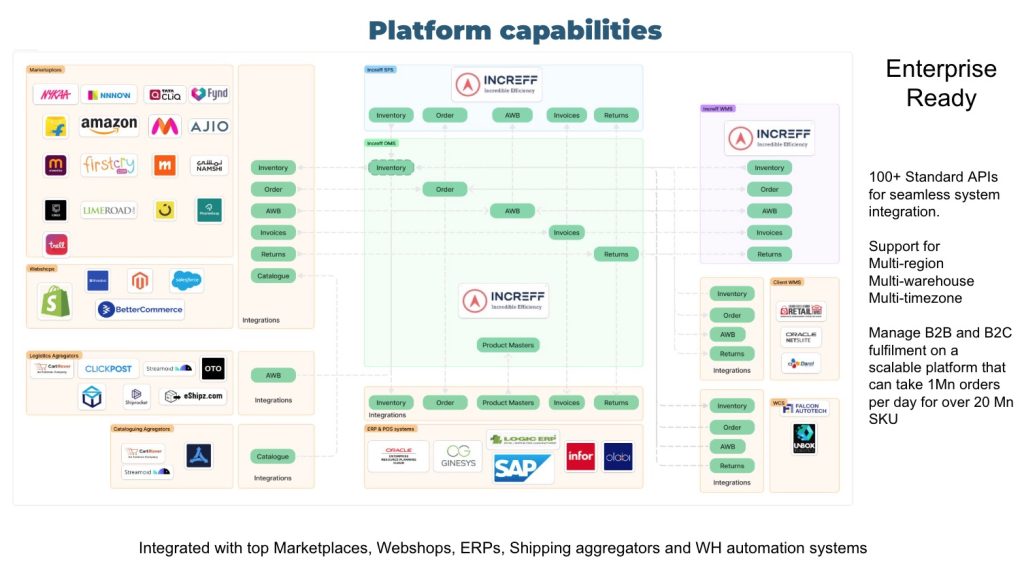
That is exactly what omnichannel teams need. When inventory is fragmented, every channel starts making guesses. When the data is unified, the brand can make faster and smarter decisions about replenishment, allocation, and fulfillment.
For a retail team, that usually means fewer bad promises and fewer late surprises.
2. OMS, WMS, And Merchandising Working Together
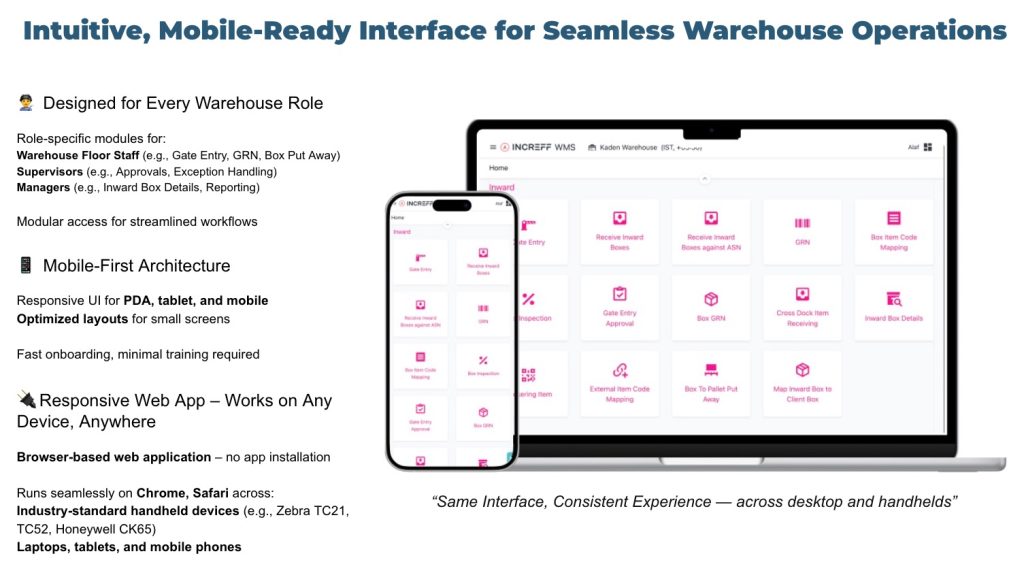
Increff is especially interesting because it does not position itself as a one-note warehouse tool. The official site speaks to order management, warehouse management, and merchandising in the same ecosystem.
That matters because planning, fulfillment, and assortment decisions are tightly connected. If the planning system is disconnected from warehouse execution, or if merchandising logic never reaches the inventory layer, the team ends up doing manual cleanup all day.
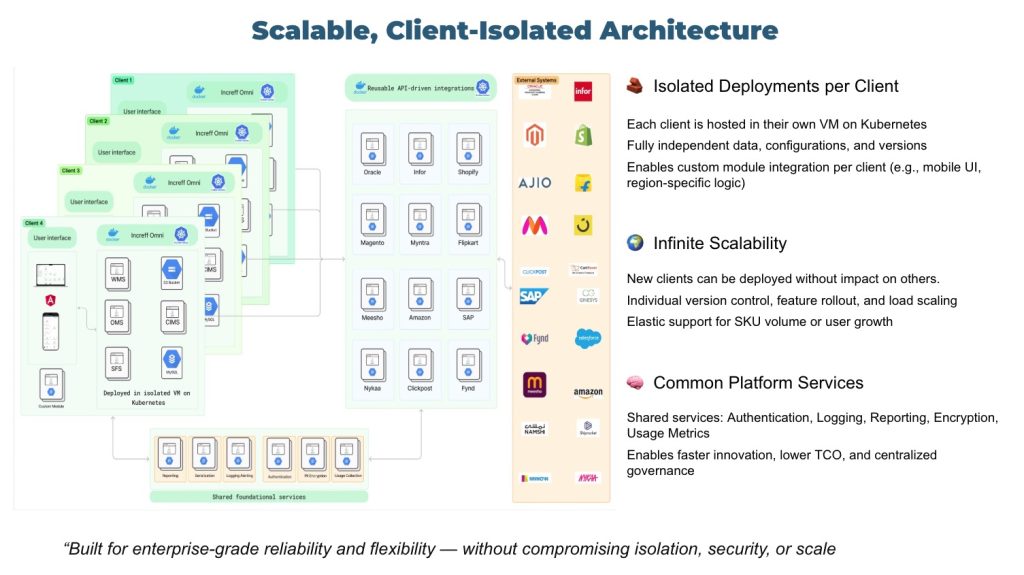
Increff’s value is in reducing that gap. It helps the retailer see inventory, plan inventory, and move inventory through the business more cleanly.
3. Better Fulfillment Speed And SLA Discipline
The official customer quotes are very useful here. PUMA India is cited as reducing order-to-ship SLAs across all channels using Increff’s inventory management platform. AJIO is cited as improving warehouse operations and fulfillment accuracy.
That makes Increff appealing for brands where service levels matter as much as sales velocity. If your team keeps missing shipping targets or struggling with availability accuracy, a platform like this can become a real operational lever.
The point is not just to move faster. It is to move faster without losing control.
4. Smart Planning And Automated Reordering
The official Smart Planning section says Increff’s merchandise planning software helps buyers build optimized assortments, plan seasonal buys, and manage inventory budgets with tools for financial planning, WSSI/MSSI, and automated reordering.
That is a big deal for fashion, retail, and category-driven businesses. Planning tools are only useful when they help the team make better decisions before the inventory lands. Increff looks strongest when the business wants to plan cleanly and then execute from the same operational logic.
If that is the gap you are trying to close, start with Increff here and compare your seasonal planning and replenishment process against the platform’s smart-planning flow.
5. Platform Intuitiveness And Scalability
The official site also says Increff stands out for platform intuitiveness, a scalable platform, in-house subject matter experts, gold standard support, multilingual support across time zones, an AI bot for queries, and seamless automation.
That combination matters for a mid-market retail stack. If the system is too rigid, teams fight it. If it is too shallow, teams outgrow it. Increff is trying to sit in the middle: sophisticated enough to matter, but structured enough that operations teams can actually use it.
Real-World Example
Imagine a fashion retailer that sells through ecommerce, stores, and marketplaces at the same time. One channel is moving quickly, another has a stock imbalance, and the warehouse team is trying to stay ahead of peak demand.
Without a connected platform, the business spends time reconciling data instead of making decisions. With Increff, the company can unify inventory visibility, tighten fulfillment, and improve replenishment decisions without relying on manual spreadsheets for every correction.
That is why the product is especially attractive for retail operations teams. It turns inventory from a reactive problem into something you can actually manage with discipline.
Pricing In Context
Increff does not present the kind of public price ladder you would expect from a simple SaaS tool. That is normal for a platform in this category. The value is tied to the operational footprint, the channel complexity, and the type of rollout the retailer needs.
For a brand considering Increff, the practical question is not “what is the cheapest plan?” It is “how much inventory pain can the platform remove across planning, warehouse execution, and fulfillment?”
That framing is much more useful for mid-market and enterprise retail buyers, because the cost of a bad fulfillment process usually exceeds the price of a better operating system very quickly.
If you want to judge the fit practically, start with Increff here and compare one high-friction inventory workflow against the platform’s unified OMS and WMS story.
Alternative Tools For The Niche
The alternatives are usually split into a few groups:
- Basic inventory tools that are too light for omnichannel complexity.
- Warehouse software that does not help with planning.
- Retail planning tools that do not connect tightly enough to fulfillment.
- Custom internal systems that are expensive to maintain.
Increff is strongest when a business wants less fragmentation and more control across the retail stack. That is especially useful for fashion, consumer brands, and retailers that have already outgrown disconnected tools.
Setup Steps
If I were rolling Increff out for a retailer, I would start with a small but real operational slice:
- Pick one channel or one category with obvious inventory pain.
- Map how planning, warehousing, and fulfillment currently talk to each other.
- Define the first KPI that matters, such as inventory accuracy or SLA adherence.
- Roll out the core workflow to the team that feels the pain most strongly.
- Review the change after one business cycle, not one afternoon.
That is the best way to tell whether the platform is creating actual control or just another dashboard.
Why Teams Choose It Over Simpler Tools
Retail teams usually move to a platform like Increff when the lighter tools stop keeping up with the business. Once inventory spans more than one channel, one warehouse, and several planning cycles, even small errors can turn into expensive problems.
Increff is useful in that stage because it is built to handle more of the operational picture at once. That gives the team a cleaner view of what exists, what needs to move, and where the process is breaking down.
For companies that have already outgrown spreadsheets and smaller inventory apps, that extra control is often the real reason to switch.
Verdict
Increff is best for retailers, omnichannel brands, and inventory-heavy businesses that need planning and warehouse execution to work together. The official site’s mix of OMS, WMS, merchandising, smart planning, and customer outcome stories makes it clear that the platform is designed for operational complexity.
If your team is tired of reconciling stock by hand or missing SLAs because systems do not talk to each other, start with Increff here and compare one critical inventory flow against the way your current stack behaves.
FAQ
What kind of company is Increff best for?
It is best for omnichannel retailers, fashion brands, and inventory-heavy businesses that need unified planning, warehouse execution, and merchandising.
What official capabilities does Increff highlight?
The official site highlights OMS, WMS, merchandising, smart planning, automated reordering, and inventory optimization.
Does Increff show real customer outcomes?
Yes. The homepage includes examples from Birkenstock India, PUMA India, and Reliance AJIO with outcome-focused quotes.
Is Increff a light SMB tool?
No. It is more of a serious operational platform for businesses with real inventory complexity.
What is the biggest benefit in practice?
The biggest benefit is better visibility and control across planning, warehouse operations, and fulfillment.