


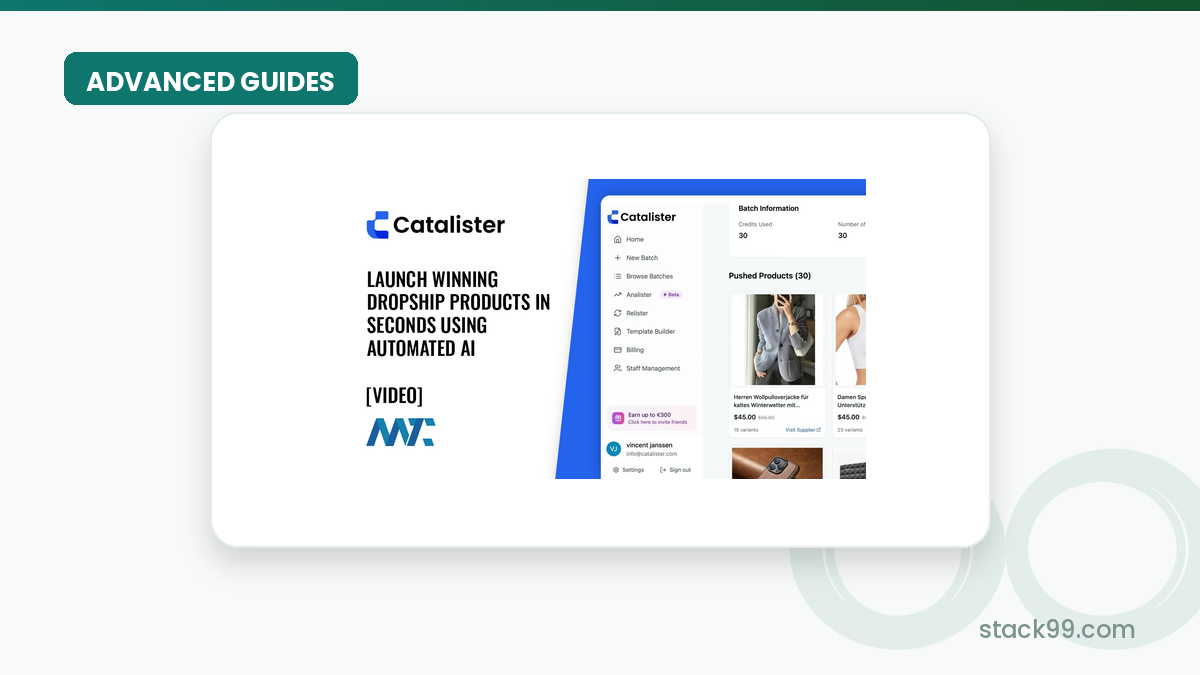
- Advanced Features
- Automation Workflows
- Custom Integrations And API
- Performance Optimization
In this guide
Power User Intro
Catalister is positioned on its official site as an AI product research and listing expert. The public-facing material is not as expansive as some of the bigger SaaS platforms in this batch, but the core message is very clear: Catalister is built for automated product listing in e-commerce or dropshipping workflows.
Disclosure: Stack99 earns a commission if you buy through links on this page. It costs you nothing extra and never changes our assessment.
That makes this guide most useful for power users who care about repeatability. If you are already past the “what is a product listing tool?” stage and are now thinking about workflow design, bulk handling, and how to keep listing operations from becoming manual busywork, Catalister is worth a closer look.
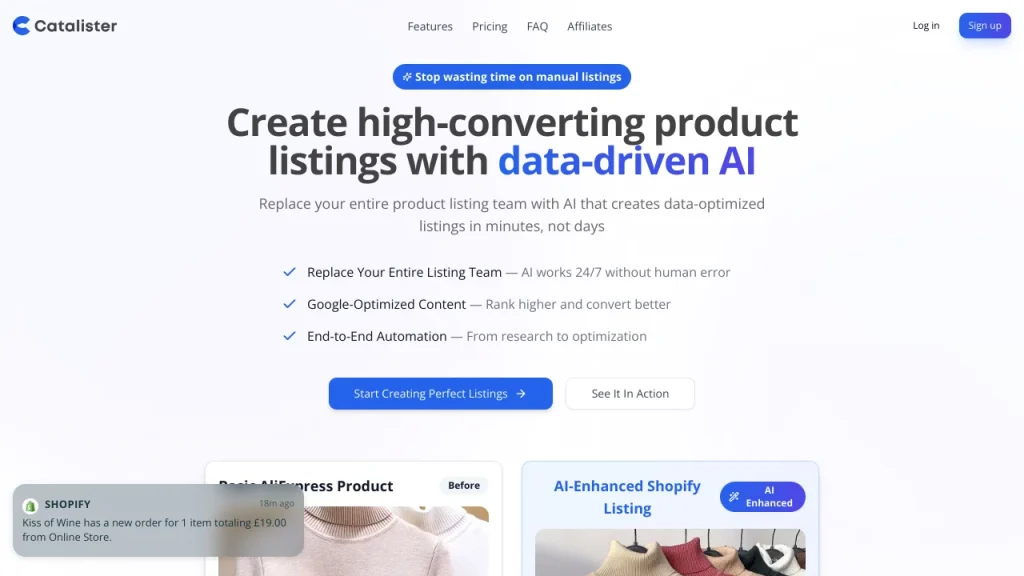
If that sounds like your use case, start with Catalister here and test how the platform fits into one real listing workflow before you try to scale it across everything.
Advanced Features
The strongest public signal from Catalister is its focus on automated product listing. The official affiliate agreement explicitly references software or services that compete with the Catalister platform in the area of automated product listing for e-commerce or dropshipping. That is a helpful clue because it shows the business is oriented toward listing automation, not just generic e-commerce language.
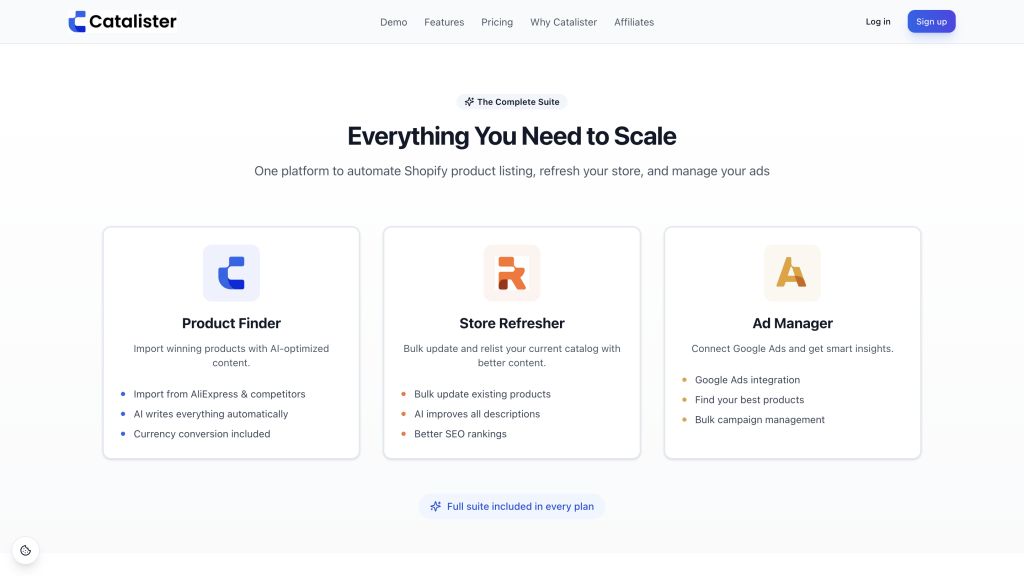
For an advanced user, that means the platform is most interesting when used as an operational layer. The point is not only to create listings faster. The point is to reduce the copy, paste, reformat, and recheck loop that usually slows teams down when they add more products.
The more products you handle, the more valuable that repeatable layer becomes.
What Power Users Should Expect
Power users usually care about three things:
- Consistency across listings.
- Speed without sloppy output.
- A workflow that can keep up as product volume grows.
Catalister’s public positioning suggests it is trying to support that exact shape of work. The official homepage title alone is useful here because it frames the product as a research and listing expert rather than a simple content tool.
If you want to explore whether that setup fits your catalog work, run one high-volume product batch through the platform before judging it on theory.
Automation Workflows
The best way to think about Catalister is as a workflow reducer. In advanced e-commerce environments, the annoying part is rarely only the writing. It is the chain of research, product assembly, copy generation, listing cleanup, and launch prep that eats hours.
That is where a tool like this can help. A strong workflow usually looks something like this:
- Identify products that are worth listing.
- Structure the key product data.
- Create listing-ready copy.
- Reuse the same operational pattern for the next product.
That sounds basic, but scale is where it starts to matter. When one person can only process a few listings a day, the business slows down. When the process is systematized, the team can spend more time on product selection, pricing, and store performance.
The official pages do not give me a huge public technical map, so I would treat automation as the thing to verify in a sales or onboarding conversation. But the platform’s naming and agreement language make it clear that automation is the point, not a side feature.
Custom Integrations And API
This is the section where an advanced buyer should be careful.
The official materials I reviewed make it clear that Catalister is about automated product listing, but they do not surface a broad public documentation hub the way some larger SaaS products do. That means API and integration depth should be treated as a pre-sale verification item instead of an assumed feature.
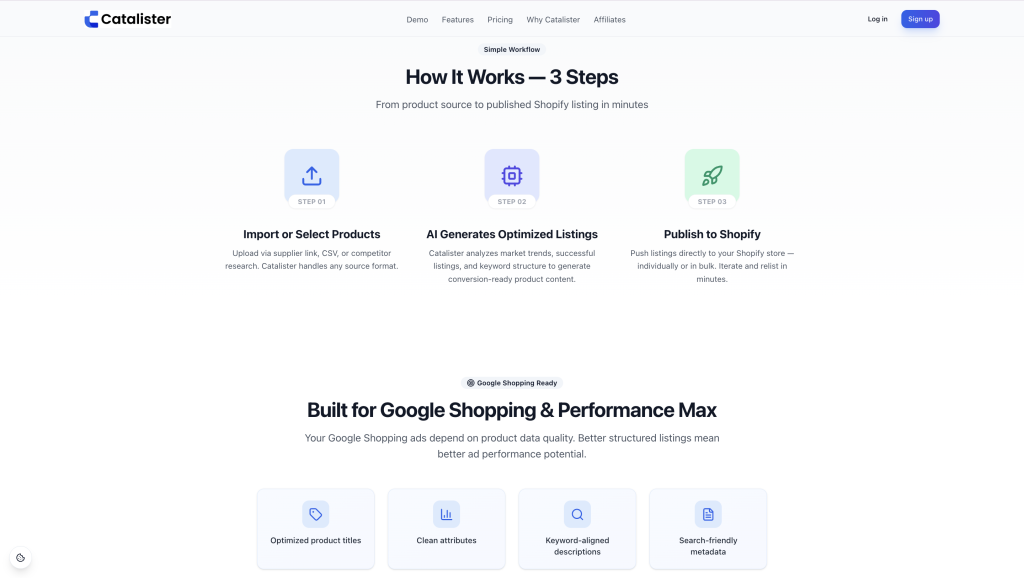
In practice, that is not a problem. It just means you should ask the right questions:
- Can Catalister fit into your store workflow cleanly?
- Does it support the import and export pattern you need?
- How does it handle bulk listing updates?
- What happens when the catalog grows?
For power users, those questions matter more than marketing language. If the platform can support the operational rhythm of your store, start with Catalister here and validate the integration path before you rely on it for a big launch.
Performance Optimization
The main optimization goal with a tool like Catalister is not just speed. It is output quality at speed.
That usually means standardizing product inputs before you automate anything. If your source data is messy, the listing output will be messy too. The smartest teams prepare their catalog data, decide which fields need manual review, and create a repeatable review routine before pushing volume through the system.
Another performance habit is to separate high-value products from low-risk products. Not every listing needs the same amount of care. A flagship item or a high-margin product may deserve more review time. A lower-risk catalog entry may only need one pass. The point is to use the platform intelligently instead of letting it create equal effort for every item.
That is also why advanced users should keep an eye on brand consistency. Bulk automation is only a win if the final output still looks like your store, not like a copied template from somewhere else.
Expert Workflows
If I were using Catalister as an advanced user, I would think about the workflow in layers.
Layer 1: Research
Use the platform to reduce the initial lift of product research and listing prep. The official site says this is an AI product research and listing expert, so research should be treated as a core part of the value.
Layer 2: Listing Drafting
Create the listing draft, then review the output with a human eye. The best automation systems still benefit from a review step, especially when product detail accuracy matters.
Layer 3: Bulk Operations
Once the template is stable, use the process repeatedly so the team can move through more products without rewriting the same structure every time.
Layer 4: Ongoing Refresh
Keep the process alive. Product catalogs change, prices shift, and positioning evolves. The best automation stack is the one that can keep pace without turning into manual maintenance again.
That is the level where Catalister should be evaluated. Not as a one-off helper, but as a repeatable listing engine.
Why The Platform Matters For Dropshipping Teams
Dropshipping teams often run into the same problem: too much work gets buried in listing prep. Product research, rewriting copy, and formatting catalog data can swallow the day if the workflow is not organized.
That is why Catalister’s positioning matters. It is not trying to be a generic dashboard. It is trying to be a focused listing automation layer for e-commerce and dropshipping.
If you are running a store where the bottleneck is “we can find products, but we cannot list them fast enough,” that is exactly the kind of pain point this platform is meant to address.
If that is your situation, start with Catalister here and compare one real product batch against your current manual process.
What To Verify Before Scaling
Because the public surface area is limited, I would verify a few things before treating Catalister as mission-critical:
- Whether the platform fits your catalog size.
- Whether it handles the listing format you use.
- Whether your team can review output fast enough.
- Whether the automation stays consistent when the product mix changes.
That does not make the tool weak. It just means advanced buyers should be disciplined. The best automation stack is one that fits the way your store actually works.
What A Mature Rollout Looks Like
The safest way to roll Catalister out is to start with one controlled catalog slice instead of trying to automate the whole store in one leap. That keeps the team from assuming the tool is perfect before they have checked the output.
I would begin with a product group that already follows a predictable structure. That gives you a cleaner test of whether the listing workflow saves time, keeps the copy consistent, and reduces the number of manual edits you need afterward.
From there, the real question is whether the platform keeps the listing process repeatable as the product count rises. Advanced teams should care less about a flashy demo and more about whether the same process still works after the first few batches.
If the workflow stays stable, Catalister becomes more than a helper. It becomes part of the operating rhythm.
For teams that want to reduce listing friction without rebuilding the whole commerce stack, start with Catalister here and test it on one controlled batch before you scale it further.
Verdict
Catalister is an interesting option for advanced e-commerce and dropshipping users because the official site makes its purpose clear: AI product research and automated listing for online sellers. That is a useful niche if your team wants to reduce listing overhead and move faster without manually rebuilding every product page.
The main caution is that the public materials are relatively limited, so you should confirm integration depth and workflow fit before you roll it out at scale.
If you want a focused listing automation tool rather than a broad e-commerce suite, start with Catalister here and validate one real workflow before you make it part of your operating system.
FAQ
What is Catalister best known for?
It is positioned as an AI product research and listing expert for e-commerce and dropshipping workflows.
Is Catalister more of a workflow tool or a general store platform?
It looks more like a focused workflow tool for listing automation than a broad all-in-one store platform.
Should advanced buyers ask about integrations?
Yes. The public materials do not clearly surface a large docs hub, so integration fit should be verified before scaling.
Who should consider Catalister the most?
E-commerce sellers, dropshippers, and catalog-heavy teams that want to reduce manual listing work should look at it first.
What is the biggest practical benefit?
The biggest benefit is reducing the repetitive work around product research and listing creation so the team can move faster.
More on Catalister
Hand-picked guides to help you choose the right tool — no fluff.
 ReviewsCatalister Review 2026Hands-on verdict with the pros, cons and who it fits best.
 TutorialsCatalister Beginner's Guide 2026A clean start-here walkthrough with no jargon.
 Advanced GuidesJibble Advanced Guide 2026Deeper workflows once the basics are in place.
 IntegrationsKeeper Security Integrations Guide 2026What it connects to and how well each link holds up.