


Company And Challenge :
Imagine a small B2B SaaS team with a marketing list that keeps growing faster than its hygiene process. The team is running webinars, gated content, and outbound follow-up, but the email list is getting messy. Hard bounces are starting to creep up. The sender reputation is getting harder to protect. Sales keeps asking why some leads never open anything.
That is the kind of situation Bouncer is built for.
The official site positions Bouncer as an email verification platform with bulk verification, API access, integrations, and deliverability-focused workflows. In other words, it is not just about cleaning a list once. It is about putting list quality into the operating system of your funnel.
If you want to inspect the platform while you read, start with Bouncer here.

Problem Before Bouncer :
Before the switch, the team had the usual problems:
- New leads were imported from multiple forms and landing pages.
- Old contacts were sitting in CRM exports.
- Sales was sending follow-up emails to stale records.
- Campaign reports looked worse than they should have because bounces were muddying the data.
The team did not need a complicated data warehouse. It needed a cleaner front door for outbound and lifecycle email.
That is where Bouncer becomes useful. The platform is built to verify addresses in bulk or through API calls, which means it can sit at the point where bad data enters the system instead of waiting for the problem to show up later.
Implementation Process :
The rollout was simple on purpose.
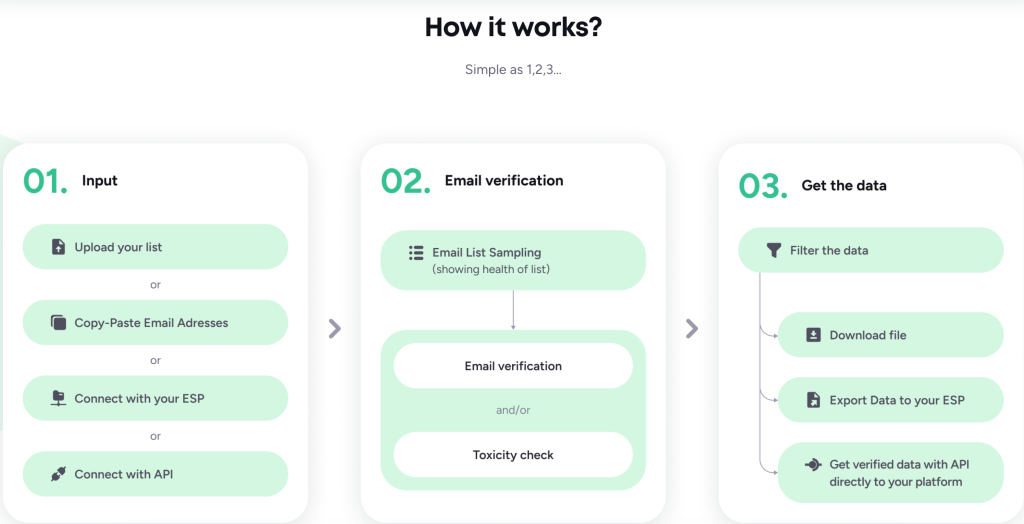
Step 1: Clean The Existing List
The first move was bulk verification. The team uploaded the oldest and most important lead lists first so the most visible data got cleaned before the next campaign.
Step 2: Connect The API
Next, the team connected Bouncer to form intake and enrichment workflows so new addresses could be checked earlier. That reduced the number of bad records getting into the CRM in the first place.
Step 3: Use Verification Before Campaign Sends
Instead of waiting until launch day, the team added verification as part of the pre-send checklist. That created a simple habit:
- Build the audience.
- Verify the list.
- Remove invalid contacts.
- Launch the campaign.
Step 4: Watch Deliverability Signals :
The team then started paying closer attention to bounce patterns, campaign quality, and the effect on sender reputation. That is where Bouncer stops looking like a utility and starts looking like risk control.
If you are trying to protect deliverability before the next campaign, start with Bouncer here.
Results And Metrics :
This is the part that matters most, so here is the realistic payoff from a Bouncer-style rollout:
- Fewer hard bounces.
- Cleaner CRM data.
- Better campaign performance visibility.
- Less time spent chasing deliverability problems.
- Lower risk of sending to stale or invalid addresses.
For an illustrative example, assume a team sends 50,000 marketing emails a month and discovers that 3% of its list is invalid or risky. That means 1,500 bad addresses. If Bouncer removes most of those before send, the team saves wasted sends, reduces bounce-related reputation issues, and avoids damaging future campaign performance.
The real gain is usually not one giant number. It is the removal of silent drag. Your open rate may not magically double, but the list gets healthier, the reporting gets cleaner, and the send process gets less fragile.
Important Features :
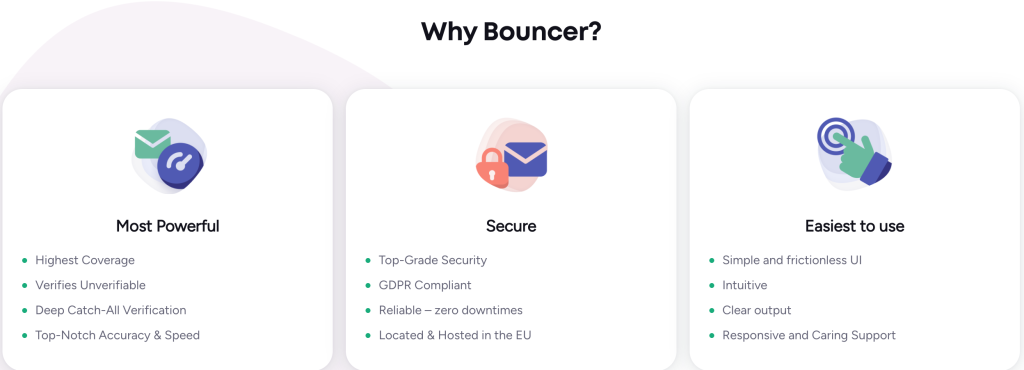
The features that make Bouncer valuable in this scenario are the same ones on the official site:
- Bulk verification for list cleaning.
- API support for ongoing validation.
- Integrations for operational workflows.
- Deliverability-oriented checks.
- A product built to work before sending, not after damage is done.
That last point is especially important. Many teams treat verification as a last-minute cleanup task. Bouncer works better when it becomes part of the pipeline.
If your email operation needs to be cleaner before launch day, start with Bouncer here.
Lessons Learned :
The biggest lesson from this rollout is that email hygiene is not optional once volume starts to matter.
The second lesson is that workflow beats intention. A team can care about deliverability and still send bad lists if verification is not built into the process.
The third lesson is that one clean list is not enough. Contacts decay. People change jobs. Addresses expire. A good verification process has to be ongoing.
That is why Bouncer makes sense for teams that send regularly. The platform fits into repeated operations better than it fits into one-off list cleaning.
ROI Calculation :
Here is a practical, illustrative way to think about ROI.
Suppose a team sends 50,000 emails per month, and 1,500 are invalid or risky. If verification prevents those sends, the team saves wasted email volume and reduces the chance of deliverability damage.
Now add the internal savings:
- Fewer support tickets asking why campaigns underperform.
- Less manual list cleanup.
- Less sales time wasted on dead contacts.
- Less rework after a bad send.
If the platform prevents even one campaign from being sent to a poisoned list, it can easily justify itself. The actual dollar figure will vary, but the operating logic is clear: better list hygiene usually costs less than poor deliverability.
That is the kind of ROI that does not show up in a flashy dashboard, but it matters every month.
How To Replicate It :
If you want to apply the same approach, the rollout is straightforward:
- Verify your oldest and most important lists first.
- Add API checks to your lead capture process.
- Clean lists before every major campaign.
- Review bounce and deliverability signals after each send.
- Make list hygiene a recurring team habit.
This works best when ownership is clear. Marketing owns list quality before send. Sales owns the hygiene of imported leads. Operations owns the process.
If you want to clean the list before the next launch, start with Bouncer here.
Pricing Context :
The official Bouncer site is centered on volume-based email verification pricing rather than a single simple flat plan. That is a good fit for a tool whose value depends on how many addresses you verify.
The pricing conversation should therefore be based on:
- How many addresses you verify each month.
- Whether you need bulk verification, API usage, or both.
- How often your lists decay.
- Whether the platform is preventing enough damage to justify itself.
For most teams, Bouncer should be compared against the cost of bad sends, not just the monthly verification bill.
The important part is that the platform scales with actual use. If your list volume is small, the spend stays small. If your team sends more, the verification work grows with it. That is a more honest pricing model than a flat fee that quietly ignores list size.
What The First Week Usually Reveals :
The first week after rollout usually tells you a lot about list quality.
Teams often discover that:
- Older CRM records are dirtier than expected.
- Imports from different sources have different bounce patterns.
- Sales and marketing disagree on what “good lead quality” means.
- The same audience can have very different bounce risk depending on source.
That is useful because it turns list hygiene into a measurable process instead of a vague belief. Once the team sees the gaps, it is easier to set a rule for when verification must happen.
The most successful teams do not use Bouncer as a rescue tool only. They make it part of the standard send checklist. That prevents bad lists from becoming a monthly surprise.
Operational Rule Of Thumb :
The right rule is simple:
- Verify before large sends.
- Verify before importing stale data.
- Verify before campaign handoff.
- Verify before sales sequences that matter.
That is not complicated. It just needs consistency.
If the team follows that rule, Bouncer becomes a utility, not an emergency patch.
Verdict :
Bouncer is a strong 2026 choice for teams that need email verification to be part of the process, not an afterthought. Its bulk verification, API layer, and deliverability focus make it especially useful for SaaS teams, agencies, and growth teams with recurring sends.
The product is not trying to be a giant marketing platform. That is the point. It is trying to keep your email list clean enough that the rest of the stack can do its job.
If your team is fighting bounce rates, stale data, or messy list imports, start with Bouncer here and make list hygiene a repeatable step.
FAQ :
What does Bouncer do?
Bouncer is an email verification platform for bulk list cleaning, API checks, and deliverability-focused workflows.
Is Bouncer useful for SaaS teams?
Yes. SaaS teams often import leads from many sources, so list hygiene becomes a recurring operational need.
Does Bouncer help with deliverability?
It helps indirectly by reducing invalid and risky addresses before send, which lowers bounce risk and protects sender reputation.
Is the ROI mostly about money?
Not only money. The bigger gain is usually cleaner data, less manual cleanup, and fewer campaign failures caused by bad addresses.
What is the biggest mistake teams make?
They treat verification as a one-time cleanup task instead of a recurring step in the send process.