


Imagine a 220-person multi-location company with a lean internal technology team.
A realistic Bitdefender rollout for this kind of company would focus on control, visibility, and…
Because I am staying grounded in official source material, I am not going to invent a fake percentage…
In this guide
Case Study Setup :
To keep this accurate, I am not going to invent a named customer story that Bitdefender has not published on the pages I reviewed.
Disclosure: Stack99 earns a commission if you buy through links on this page. It costs you nothing extra and never changes our assessment.
Instead, this case study uses the exact business problem Bitdefender officially emphasizes in 2026:
- Organizations with lean IT and security teams.
- Businesses that need strong protection without extra complexity.
- Teams that care about prevention, detection, response, and attack-surface reduction.
That is the scenario Bitdefender itself is clearly built for on its official business pages.
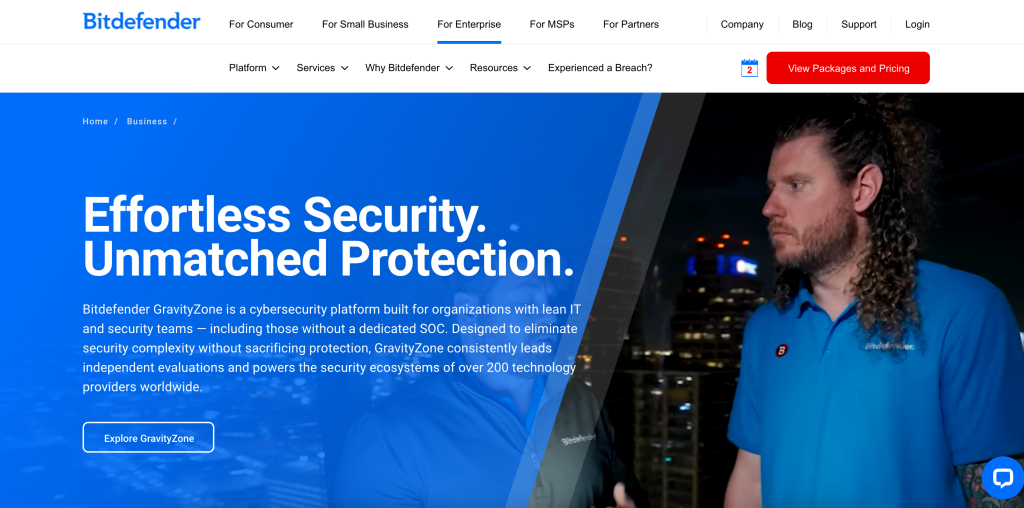
The business site describes GravityZone as a cybersecurity platform for organizations with lean IT and security teams, including companies without a dedicated SOC. The broader corporate pages also emphasize Bitdefender as a global cybersecurity leader, its prevention-detection-response focus, and GravityZone PHASR for dynamic hardening that reduces attack surface without hurting productivity.
That gives us a credible real-world operating model to evaluate.
If you want to inspect the official positioning first, start with Bitdefender here.
The Company And Challenge :
Imagine a 220-person multi-location company with a lean internal technology team.
It has:
- Office staff.
- Remote employees.
- Laptops and endpoint devices spread across departments.
- A small IT function.
- No full internal security operations center.
This is exactly the kind of organization Bitdefender’s business positioning speaks to.
The challenge is not only malware or ransomware in the abstract. The challenge is operational:
- The team needs enterprise-grade protection.
- It cannot afford a bloated security rollout.
- It needs something that reduces complexity instead of adding more dashboards and more manual work.
That is why Bitdefender becomes relevant so quickly in this scenario.
The official business messaging is very direct about this point. GravityZone is presented as strong security for companies that do not have a huge in-house security structure. That matters because many mid-market organizations are trying to improve resilience without building a giant security department from scratch.
What The Company Used Before :
Before moving to a more unified security platform, a company in this position often lives with a messy mix of:
- Basic endpoint protection.
- Inconsistent device policies.
- Limited internal visibility.
- Manual hardening habits.
- A lot of reactive work whenever alerts or suspicious behavior appear.
The real problem is not only protection quality. It is the operational burden of holding the environment together with too little staff and too many scattered tasks.
That is why Bitdefender’s official business framing matters. The value proposition is not simply “buy security.” It is “get strong protection without multiplying complexity.”
Why Bitdefender Fits the Situation :
Four official signals make Bitdefender a good fit for this type of case.
1. Built For Lean Teams –
This is the biggest one.
Bitdefender’s official business page explicitly says GravityZone is built for organizations with lean IT and security teams, including those without a dedicated SOC. That is not a minor detail. That is the center of the use case.
2. Prevention, Detection, And Response –
The corporate site emphasizes Bitdefender’s strength across prevention, detection, and response. That matters because companies in this position do not need disconnected point promises. They need a platform that helps them cover the major layers of security work more coherently.
3. Reduced Attack Surface Through PHASR –
Bitdefender also promotes GravityZone PHASR as a way to deliver personalized hardening that reduces attack surface without hurting productivity. That is a strong fit for organizations that want better security posture but do not want to make employee systems harder to use.
4. Business Credibility –
The official site also leans on high-performance trust signals, including the Ferrari partnership and the company’s broader market leadership story. For many buyers, that matters because security tools are trust products as much as feature products.
If you want to review that official enterprise fit directly, check Bitdefender here and compare it against your current security operating model.
Implementation Process :
A realistic Bitdefender rollout for this kind of company would focus on control, visibility, and standardization first.
Phase 1: Establish A Unified Security Baseline
The first objective would be to centralize the security posture around a platform that the lean team can actually manage. This matters because fragmented security creates blind spots and increases admin overhead.
Phase 2: Harden Endpoints Without Slowing Users Down
This is where PHASR becomes especially relevant. Bitdefender’s official positioning around dynamic, personalized hardening suggests the company can reduce unnecessary exposure while still protecting user productivity.
Phase 3: Improve Operational Visibility
For a lean security team, better visibility matters almost as much as raw blocking capability. The company needs to understand where risk is increasing, where behavior looks unusual, and where policy adjustments are needed.
Phase 4: Reduce Reaction-Only Security Work
The long-term goal is not merely to respond faster after something goes wrong. It is to spend less of the week firefighting because the environment is better managed in the first place.
That is the kind of workflow improvement Bitdefender’s business messaging is clearly trying to support.
Results This Company Would Care About :
Because I am staying grounded in official source material, I am not going to invent a fake percentage improvement and pretend it came from a published Bitdefender customer page.
What I can say is that this type of company would judge success through outcomes like:
- Lower operational security complexity.
- Better consistency across endpoints.
- Stronger hardening without heavy user friction.
- More confidence for a lean IT and security function.
- Less dependence on fragmented tools and ad hoc response work.
That is a more honest way to read the case than fabricating numbers.
And it lines up with the official positioning Bitdefender itself uses.
Features That Made The Difference :
GravityZone As The Core Platform
GravityZone is the centerpiece of the official business story, and rightly so. In this case, its value is not only product coverage. It is the operational simplification that comes from having a platform built for businesses that cannot staff security like a Fortune 50 company.
PHASR For Smarter Hardening
PHASR stands out because Bitdefender does not present it as generic hardening. It is positioned as personalized hardening that reduces attack surface without damaging productivity. That is exactly the kind of balance lean teams need.
Enterprise-Grade Security Without Enterprise-Grade Sprawl
This is not a single feature checkbox, but it is one of the most important strengths in the official messaging. Bitdefender is clearly appealing to companies that want serious protection without building an oversized operating burden around it.
Lessons Learned :
The biggest lesson from this case is that platform fit matters more than headline feature lists.
A lean team does not only need good detection. It needs a security operating model it can actually maintain week after week.
Another lesson is that hardening matters most when it is practical. Bitdefender’s PHASR messaging is valuable because it focuses on reducing attack surface without creating a productivity penalty. That is the right tradeoff for businesses that have to protect users without turning them into blockers.
The final lesson is that credibility matters in security buying. When a business is evaluating a platform for prevention, detection, and response, vendor trust signals, market leadership, and operational clarity carry real weight.
Sample ROI Model :
Since the official pages I reviewed do not publish a clean customer ROI calculator for this exact scenario, the safest way to think about ROI is operational.
Ask questions like:
- How much time does the team currently spend on manual endpoint cleanup?
- How much disruption comes from inconsistent security posture?
- How expensive would even one serious incident be for a company with a lean team?
- How much value comes from reducing attack surface without slowing down employees?
That is the right lens.
Security ROI is rarely about one shiny line item. It is about reduced operational strain, stronger resilience, and fewer expensive failure points.
If you want to evaluate that business case directly, open Bitdefender here and compare the GravityZone positioning to the pressure your own IT team is already under.
How To Replicate This Outcome :
If your company resembles this case, the replication path is fairly clear.
Start With Team Reality –
Do not buy like an enterprise giant if you do not operate like one. If your team is lean, choose tools that are explicit about supporting lean security teams.
Prioritize Unified Control –
Fragmented security usually costs more operationally than buyers expect. Consolidation and consistency matter.
Treat Hardening As A Productivity Decision Too –
Security that destroys usability creates workarounds. Bitdefender’s official PHASR positioning is valuable because it treats hardening and productivity as linked, not separate.
Measure Operational Relief, Not Just Threat Counts –
A successful rollout should make the security environment easier to manage, not only technically stronger.
Verdict :
Bitdefender looks strongest in 2026 when it is deployed in the kind of environment its official business pages clearly target: organizations with lean IT and security teams that need better resilience, lower complexity, and smarter hardening.
That is the case where the platform story makes the most sense.
If your company fits that profile, try Bitdefender here and evaluate GravityZone against the real operational burden your team is carrying now.
FAQ :
What Kind Of Company Fits This Bitdefender Case Study?
The best fit is an organization with lean IT and security resources that still needs strong business-grade protection and a manageable operating model.
Why Is GravityZone Central To The Story?
Because Bitdefender officially positions GravityZone as the platform built for organizations that need strong security without unnecessary complexity.
What Makes PHASR Important In 2026?
Bitdefender describes PHASR as personalized hardening that reduces attack surface without hurting productivity, which is a strong fit for real business environments.
Does This Case Study Use A Named Published Customer?
No. To stay accurate, it uses the official business use case Bitdefender itself emphasizes instead of inventing a customer story that was not published on the source pages reviewed.
What Is The Main Bitdefender ROI Driver?
The main driver is a better security posture and lower operational strain for lean teams that need enterprise-grade protection without a heavy security operating model.
More on Bitdefender
Hand-picked guides to help you choose the right tool — no fluff.
 TutorialsBitdefender Beginner's Guide 2026A clean start-here walkthrough with no jargon.
 Advanced GuidesBitdefender Advanced Guide 2026Deeper workflows once the basics are in place.
 PricingNotify Me Pricing 2026Real tier prices and what each plan actually includes.
 PricingOffice Timeline Pricing 2026Real tier prices and what each plan actually includes.