

Why This Guide Helps :
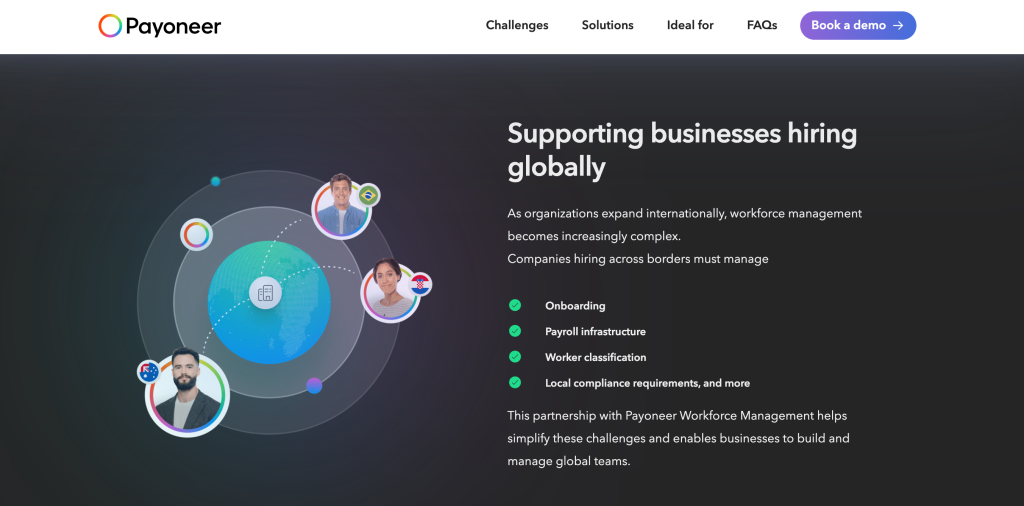
Payoneer Workforce Management makes more sense when you stop thinking of it as a generic HR tool and start thinking of it as a global operations layer. The official product page positions it around hiring, managing, and paying teams across more than 160 countries, with support for onboarding, payroll, compliance, contractor management, and EOR/AOR workflows.
That is a lot for a beginner to absorb at once, so the smartest way to approach it is one step at a time. You do not need to understand every country rule, payment flow, or team structure on day one. You just need to know how the platform helps you move from a scattered hiring process to a cleaner, repeatable operating rhythm.
If you want to test the official experience while you read, start with Payoneer Workforce Management here.
The platform also says it supports 70+ currencies, connects with 70+ apps and tools, and offers 24×5 support with transparent fee structure language on the partner page. For a beginner, that matters because it suggests the product is built for real cross-border work, not just local payroll with a global label on top.
Account Setup :
The best beginner setup starts with clarity, not volume. Before you click around, decide what kind of team you are actually trying to manage.
Use this simple setup order:
- Define The Team Type.
- Confirm Which Countries Are In Scope.
- Identify Whether You Need Contractors, EOR, Or AOR.
- List The Systems That Must Connect.
- Decide Who Needs Approval Rights.
That sequence keeps the account from turning into a mess of half-finished settings. The product page makes it clear that Payoneer Workforce Management is built for onboarding, payroll, compliance, and contractor management, so the first job is to map your own process to those categories instead of forcing the software to guess what you mean.
If your company already has a hiring workflow, bring that workflow with you. If you do not, start with one country, one team, and one operating rulebook. That is boring, but it is the fastest route to a clean first month.
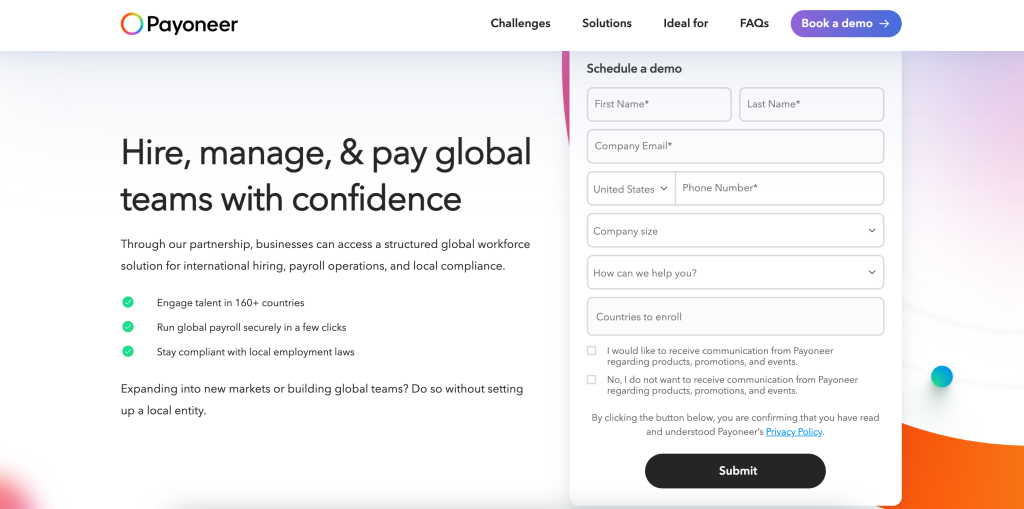
The official offer page also highlights a partner-client exclusive offer. That tells you the onboarding journey is not designed as a blind self-serve maze. There is room to compare the setup with a guided route, which is exactly what beginners usually need.
If you want to see how the product is positioned before you commit, open the official Payoneer Workforce Management page here and use it as your checklist while you map your team.
Dashboard Overview :
The beginner dashboard mindset is simple: you are not just looking at a screen, you are looking at an operating system for people, pay, and compliance.
The official materials point to a few core areas:
- Onboarding For New Hires.
- Payroll And Payments.
- Compliance And Documentation.
- Contractor Management.
- EOR And AOR Support.
- Connected Apps And Tools.
Once you view the dashboard through that lens, the product becomes much easier to understand. You are not hunting for random buttons. You are checking where a new worker enters the system, how that worker gets processed, how payment moves, and where the administrative trail is kept.
That is also why beginners should avoid overloading the first setup. The dashboard is most useful when the data is clean enough to show where a worker sits in the process and what still needs attention.
There is a useful habit here: always ask whether each record answers one of three questions.
- Who Is The Worker?
- What Is The Work Relationship?
- What Happens Next?
If a field does not help answer one of those questions, it is probably noise for a new user.
Your First Workflow Walkthrough :
For a first-time user, the best workflow is not the fanciest one. It is the simplest path from setup to a completed payment cycle.
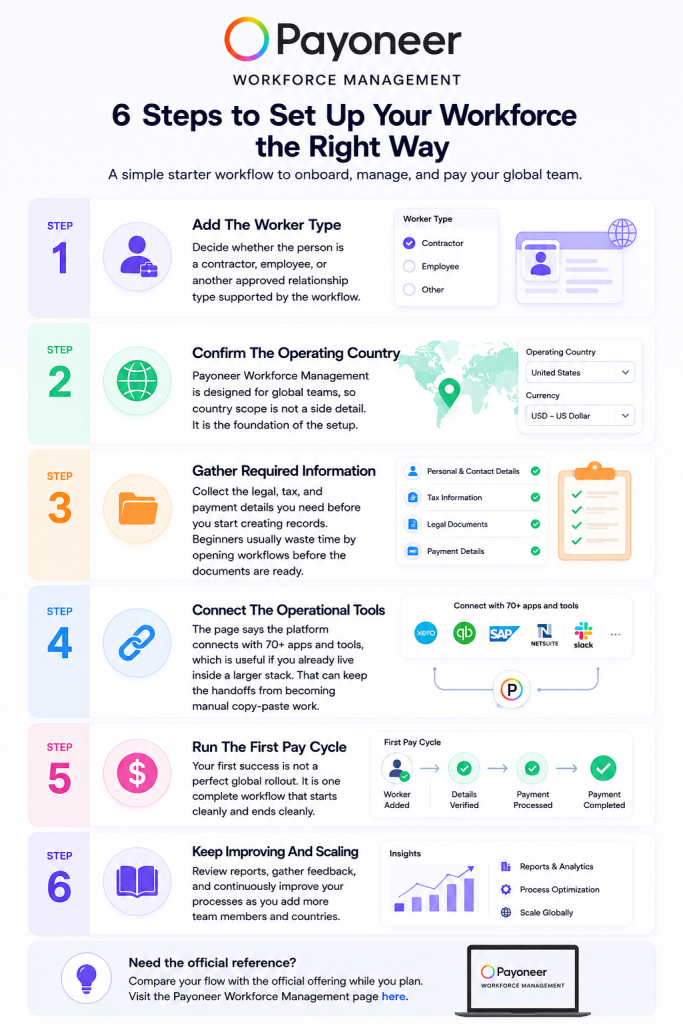
Step 1: Add The Worker Type
Decide whether the person is a contractor, employee, or another approved relationship type supported by the workflow.
Step 2: Confirm The Operating Country
Payoneer Workforce Management is designed for global teams, so country scope is not a side detail. It is the foundation of the setup.
Step 3: Gather Required Information
Collect the legal, tax, and payment details you need before you start creating records. Beginners usually waste time by opening workflows before the documents are ready.
Step 4: Connect The Operational Tools
The page says the platform connects with 70+ apps and tools, which is useful if you already live inside a larger stack. That can keep the handoffs from becoming manual copy-paste work.
Step 5: Run The First Pay Cycle
Your first success is not a perfect global rollout. It is one complete workflow that starts cleanly and ends cleanly.
If you want to compare that flow with the official offering while you plan, return to the Payoneer Workforce Management page here and treat it like a setup reference instead of a sales page.
Best Practices :
A beginner who wants the platform to feel manageable should keep the first rollout tight.
- Start With One Country Or Region.
- Keep The First Team Small.
- Document Every Approval Rule.
- Use The Platform For Real Work, Not Sample Chaos.
- Review The Setup After The First Payment Cycle.
Those habits sound ordinary, but they are what prevent the early-stage “we set up the tool and nobody trusts it” problem.
The platform’s transparency language is also a clue. If the product is being sold around a transparent fee structure, you should treat clarity as part of the implementation, not as an afterthought. That means your internal notes, approval logic, and payment rules should be easy enough for another teammate to understand without a long call.
Another useful practice is to define a rollback point. If the first workflow feels too broad, pause and narrow it. Beginners often think progress means expanding quickly. In global workforce operations, progress usually means reducing confusion before adding scale.
Common Mistakes :
Trying To Launch Every Country At Once –
Global coverage sounds exciting until someone has to support it on a Monday morning. Start smaller and build confidence.
Skipping The Compliance Readout –
The product page clearly includes compliance as a core part of the offer. If you ignore that part, you are missing the reason the platform exists.
Treating Contractor Management Like A Side Feature –
Contractor management is not just a nice extra. It is one of the product’s central use cases and should be set up deliberately.
Forgetting To Check Tool Connections –
With 70+ supported apps and tools, integration is a real strength. But a strength only matters if the systems you actually use are connected in the first place.
Expecting Pricing To Be Fully Self-Serve –
The public page emphasizes transparency and the partner offer, but it does not behave like a consumer checkout with a fixed sticker price. That is normal for workforce products and worth planning around.
Pricing Context :
The official page does not present a simple public pricing card the way some consumer SaaS products do. Instead, it emphasizes transparent fees, support, and a guided partner offer.
That is useful information in its own way. It means beginners should approach pricing as a conversation about scope rather than a guess. If your company only needs one category of worker, the pricing conversation will look very different from a full global onboarding and payroll rollout.
There are two practical lessons here:
- Clarify Your Scope First.
- Ask For The Full Fee Structure Before You Commit.
If you want to evaluate the product with your own requirements in mind, use the official Payoneer Workforce Management page here and map your real team size, country list, and workflow needs against it.
Support Resources :
Beginners should not treat support as a backup plan. For a global workforce platform, support is part of the product value.
The official page highlights:
- 24×5 Support.
- Onboarding Guidance.
- Payroll And Compliance Coverage.
- A Connected Tooling Story.
That combination matters because workforce management is one of those categories where one unclear step can break the whole workflow. A support model that exists inside business hours across multiple time zones is a practical benefit, not a marketing flourish.
If you are building an internal rollout, it helps to keep a tiny launch checklist:
- Confirm The Country List.
- Confirm The Worker Type.
- Confirm The Approval Chain.
- Confirm The Payment Method.
- Confirm The Support Contact.
That list will save you more time than trying to memorize every menu item on the first day.
Verdict :
Payoneer Workforce Management is a strong beginner option if your actual problem is global hiring, onboarding, compliance, and payment coordination rather than just local HR admin. The official offering is clearly aimed at cross-border operations, and the combination of 160+ countries, 70+ currencies, 70+ apps and tools, and 24×5 support makes it feel designed for real-world complexity.
The best beginner strategy is to keep the first rollout narrow, get one workflow working cleanly, and then expand. That approach is slower at the start, but it is much safer and much easier to trust.
In plain English, this is not a product for people who want to improvise on the fly. It is for teams that want order, documentation, and a predictable way to run global work.
If that is the kind of control you want, open the official Payoneer Workforce Management page here and use it to plan your first real workflow instead of guessing your way through the setup.
FAQ :
Is Payoneer Workforce Management good for beginners?
Yes, as long as the beginner is willing to start small. The product is broad, but the official materials make the core use cases understandable.
Does Payoneer Workforce Management support global teams?
Yes. The official page says it supports hiring, managing, and paying teams in 160+ countries.
Does it support different currencies?
Yes. The official page says it supports 70+ currencies.
Is pricing public?
Not as a simple public sticker price. The official page emphasizes transparent fees and a partner offer, so you should review the scope directly.
What should a beginner do first?
Start with one country, one worker type, and one clean workflow. That gives you a stable foundation before you expand.