

Pricing Overview :
Kaspr’s pricing is one of the more readable B2B data pricing models in 2026 because the official pricing page makes a visible effort to show what changes from Free to Starter to Business.
The product is built around a mix of unlimited B2B email access, phone credits, direct email credits, team controls, and workflow upgrades. That means the pricing story is not just about paying more for “more software.” It is about paying for more prospecting capacity and more operational control.
If you want to look at the plans while you read, start with Kaspr here.
What The Free Plan Gives You :
The official pricing page currently shows a Free plan with:
- $0 per month.
- 15 B2B email credits.
That makes the free tier useful as a workflow sampler, not just a throwaway signup hook.
For a founder, recruiter, or small outbound rep, that free plan is enough to test:
- Whether the browser workflow feels natural.
- Whether the contact data is useful for your market.
- Whether the general operating style fits your team.
That is valuable, because a lot of data tools make it hard to evaluate real usefulness before money is involved.
Starter Plan Breakdown :
Kaspr’s Starter plan is where the product begins to look commercially serious.
The official page currently shows:
- $49 per user per month on annual billing.
- $65 per user per month on monthly billing.
The visible monthly credit structure includes:
- Unlimited B2B email credits.
- 100 phone credits per month.
- 5 direct email credits per month.
The annual view also surfaces the year-level totals:
- 1,200 phone credits per year.
- 60 direct email credits per year.
Starter also includes workflow upgrades beyond Free, including use on Sales Navigator, data sharing, and broader enrichment and syncing support.
That makes Starter the real entry point for teams that are prospecting regularly instead of just experimenting.
It is also the plan where the product stops feeling like a sample and starts feeling like a repeatable prospecting workflow. That transition matters because it is usually where teams first discover whether their monthly credit mix is actually aligned with the way they source meetings.
Business Plan Breakdown :
Kaspr’s Business plan is marked as the best-value option on the current pricing page, and the public pricing currently shows:
- $79 per user per month on annual billing.
- $99 per user per month on monthly billing.
The visible credit structure includes:
- Unlimited B2B email credits.
- 200 phone credits per month.
- 200 direct email credits per month.
The annual totals shown on the page are:
- 2,400 phone credits per year.
- 2,400 direct email credits per year.
Business also expands team-oriented capabilities such as activity tracking, reports, permissions, and recruiter-oriented usage enhancements.
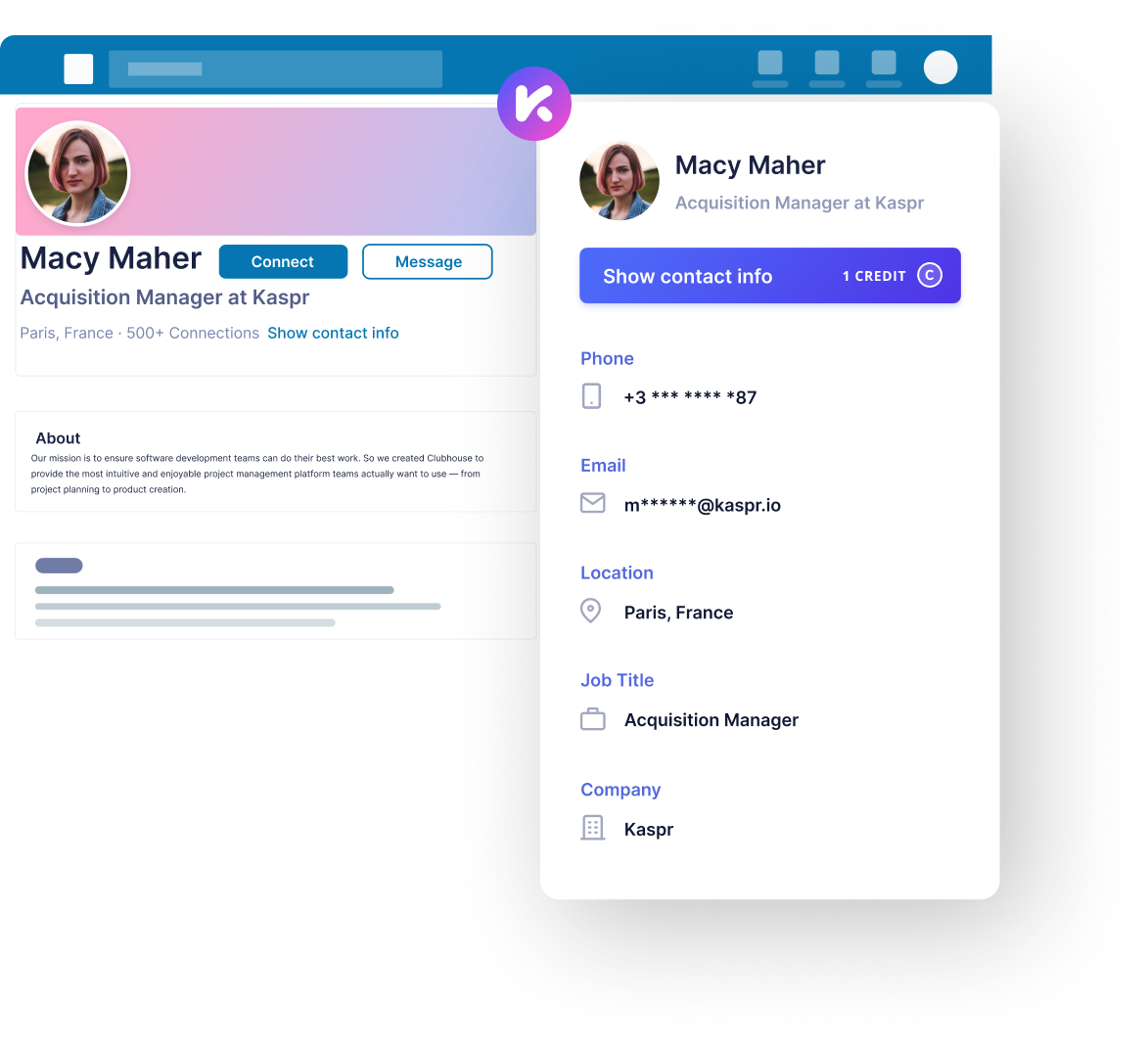
This is why Business reads like the first plan designed for coordination, not just for individual output. Once multiple users share a workflow, the visibility layer becomes almost as important as the raw contact-credit counts.
What Actually Changes As You Upgrade :
Kaspr’s pricing page is useful because the differences are not hidden behind vague wording.
The upgrade path is really about four things:
- Higher usable contact-credit capacity.
- Better workflow support for real prospecting teams.
- More team visibility and admin control.
- Stronger role-specific usefulness for sales, founders, and recruitment workflows.
That is a healthier pricing story than one where every plan claims to do everything.
Here, the product is basically saying:
- Free is for light evaluation.
- Starter is for active individual users or small operators.
- Business is for teams that need more volume and stronger operational control.
That is easy to understand.
Hidden Costs And Gotchas :
Kaspr’s pricing page is clear, but there are still a few practical things buyers should watch closely.
First, the product is not really “unlimited” in every meaningful sense just because unlimited B2B email credits appear on paid plans. Phone credits and direct email credits still matter a lot if those are the data types your team relies on.
Second, the per-user pricing adds up quickly in a real team environment.
For example:
- A solo user on Starter can justify the price one way.
- A 6-person team on Business is making a very different spend decision.
Third, annual billing changes the economics. The pricing page actively promotes the annual discount structure, so buyers should compare monthly flexibility against annual savings instead of looking at one price in isolation.
Finally, add-on credits matter. The official page explicitly points users toward learning about add-on credits, which means the true cost can expand beyond the base plan if your team burns through data aggressively.
ROI Example :
Imagine a three-person outbound team choosing between Starter and Business.
Starter on annual billing would be:
- 3 users x $49 = $147 per month.
Business on annual billing would be:
- 3 users x $79 = $237 per month.
That is a $90 monthly difference before any add-ons.
The real decision then becomes:
- Will the extra phone and direct email capacity actually convert into more meetings?
- Will the better team controls reduce wasted prospecting time?
- Does the team need the broader recruiter and reporting functionality now or later?
That is the right way to judge the price.
If the extra credits and operational controls unlock more pipeline, the higher plan is easy to defend. If not, Business can become premature spend.
If you want to model that for your own team, start with Kaspr here and compare your likely monthly credit burn against the public plan limits before choosing a tier.
Cost Comparison To Alternatives :
Kaspr’s public pricing suggests it wants to compete on simplicity and European-data credibility more than on being the absolute cheapest contact-data tool on the market.
That is an important distinction.
Some tools will look cheaper on the surface.
Others will look richer in enterprise complexity.
Kaspr’s commercial pitch is strongest when a buyer wants:
- A clear free tier.
- A visible two-step paid ladder.
- Straightforward credit logic.
- Prospecting support that starts quickly.
That makes the product easier to budget than many sales-data tools that bury important limits deep in demos and sales calls.
If you want to compare those tradeoffs directly, start with Kaspr here and line up your expected monthly phone and direct email usage with the current public plan table before locking yourself into a seat count.
Best Value Tier :
For most serious but still lean teams, Business is probably the best-value tier on paper because it improves the direct email and phone-credit story dramatically and adds better operational control.
But that does not mean everyone should buy it first.
Starter is the better-value tier if:
- You are a solo user.
- You are still validating workflow fit.
- Your phone and direct email needs are modest.
Business becomes the better value when:
- Prospecting volume is consistent.
- More than one user is involved.
- Reporting and permission control start to matter.
- Higher direct contact volume changes output in a real way.
That is also where the annual-versus-monthly choice becomes more meaningful. Once a team knows Kaspr is part of the regular workflow, the annual discount structure looks a lot easier to justify than it does during an uncertain trial phase.
Verdict :
Kaspr’s pricing in 2026 is solid because it is visible, tiered logically, and tied to clear usage differences instead of vague upgrade promises.
The Free plan is useful for evaluation. Starter is the true paid entry point. Business is the real team plan. And the biggest commercial questions are about contact-credit mix, user count, and how hard your team will lean on phone and direct email outreach.
If you want a clean pricing sanity check, start with Kaspr here and map your real user count, likely credit burn, and annual-versus-monthly preference against the current public plan table.
That kind of practical math tells you much more than generic “best lead generation tool” rankings ever will.
It also keeps the decision tied to how the team actually books meetings, not just to whichever pricing table looks friendliest at first glance.
That distinction matters because prospecting tools often look affordable until the team realizes the real constraint is not seats, but the kinds of credits the workflow actually burns through every week.
That is why the smartest buyers model usage first and pricing second, not the other way around.
That small shift in thinking usually prevents the biggest pricing surprise.
It also makes the upgrade path much easier to justify internally.
That clarity can be worth a lot on its own for lean teams.
It also reduces internal pricing confusion.
That helps small teams.
FAQ :
Is Kaspr free?
Yes. The official pricing page currently shows a Free plan at $0 per month with 15 B2B email credits.
How much does Kaspr Starter cost?
The official page currently lists Starter at $49 per user per month on annual billing or $65 per user per month on monthly billing.
How much does Kaspr Business cost?
The official page currently lists Business at $79 per user per month on annual billing or $99 per user per month on monthly billing.
What is the biggest pricing gotcha with Kaspr?
The biggest thing to watch is that unlimited B2B email access does not remove the importance of phone and direct email credits, which can become the real limiting factor for active outbound teams.