


In this guide
Pricing Overview :
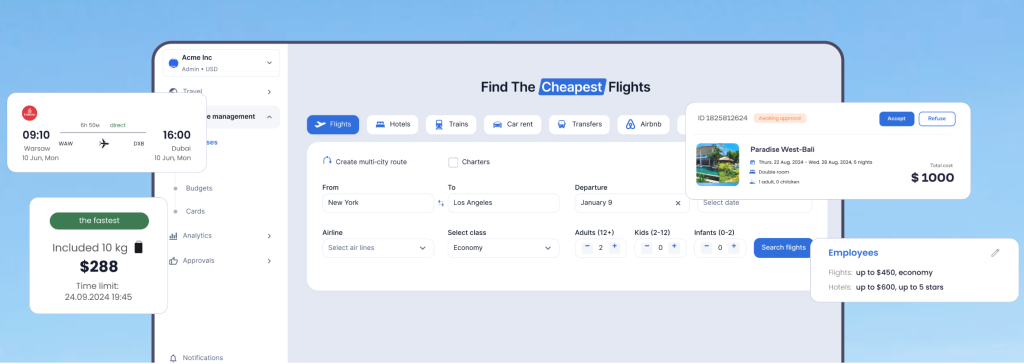
Travel Code’s pricing page stands out because it doesn’t just list plans; it positions pricing around real business travel value, including policy control, improved booking conditions, analytics, support, and savings tools like RateGuard.
Disclosure: Stack99 earns a commission if you buy through links on this page. It costs you nothing extra and never changes our assessment.
That is important because Travel Code is not selling a generic consumer booking app. The official positioning is clearly built around corporate travel management.
The public pricing page currently highlights:
- Starter: Free, for companies up to 50 employees.
- Premium: $100 per month.
- Pro: $290 per month.
- Annual billing: 15% off compared with monthly pricing.
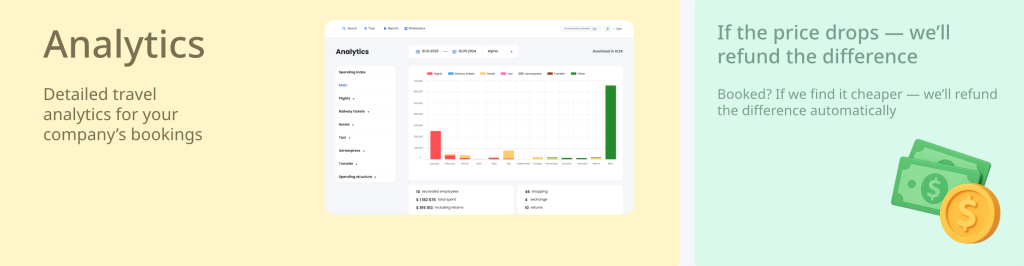
The homepage also reinforces the business-travel angle with claims around 2 million hotels, 350 airlines, reporting, instant confirmation, 24/7 support, and automatic refunding of price drops through its RateGuard positioning.
If you want to see the platform while you read, start with Travel Code here.
The important thing is that Travel Code is selling managed business-travel outcomes, not just access to a booking search box. That changes how the pricing should be judged.
All Pricing Tiers Explained :
Starter :
Starter is the public free entry point. The pricing page positions it for companies with up to 50 employees.
Included features shown on the public page include:
- Unlimited employees.
- Booking contracted rates.
- Booking any travel content.
- Trip planner.
- Travel documents.
- Basic analytics.
- Multi-access with two roles.
- Reporting.
That makes Starter a meaningful entry option, not a fake free shell. It looks designed for companies that want to centralize travel booking without paying for advanced controls immediately.
Premium :
Premium is listed at $100 per month and is positioned as a plan where the included services are meant to offset subscription cost.
The page says Premium includes Starter plus:
- Better hotel cancellation terms.
- Flight cancellations within the first 24 hours.
- Priority support.
- All available roles in multi-access.
- Two free eSIM cards.
- RateGuard Engine with 20% return.
- Up to two legal entities in one account.
- Custom traveler fields.
- Extended analytics.
This is the tier where Travel Code starts to look less like simple booking software and more like a managed corporate travel stack.
Pro :
Pro is listed at $290 per month and is positioned as the save-on-travel-expenses tier.
The public page shows Pro includes Premium plus:
- RateGuard Engine returning 50%.
- No extra fees for card payments.
- Special rates for Pro hotels.
- Airbnb booking.
- Unlimited legal entities in one account.
- Silver loyalty level included.
- Unlimited travel policy access.
- Access to bookings in Amadeus.
- Five free eSIM cards.
- Extended detailed flight information.
That makes Pro the plan for more mature travel programs, especially if the company needs policy depth, legal-entity flexibility, and stronger savings logic.
It is also the tier that looks most clearly designed for organizations treating travel as an operational program rather than a convenience tool.

Hidden Costs And Gotchas :
Travel Code’s pricing page is pretty feature-rich, but there are still a few practical things buyers should notice.
First, not every valuable business-travel feature shows up on the free plan. Better cancellation terms, richer role access, and stronger analytics move up the plan ladder quickly.
Second, the difference between Premium and Pro is not just “more stuff.” It is often about whether the company needs deeper control:
- More legal entities.
- Higher savings returns.
- No extra card fees.
- Broader policy setup.
- Richer flight detail access.
Third, the FAQ on the pricing page states that Travel Code does not charge service fees or subscription fees, which reads a little oddly alongside the published monthly plan prices. The practical interpretation is that the platform is emphasizing the absence of separate service fees on top of the listed plan structure.
That is worth clarifying internally before a finance team signs off.
If you want to check how the plans feel in practice, start with Travel Code here and compare the features you would actually use against your current approval, booking, and cancellation flow.

ROI Example :
Imagine a 40-person company with frequent sales trips, hiring travel, and occasional leadership offsites.
Without a centralized travel platform, the company may deal with:
- Inconsistent booking behavior.
- Weak visibility into travel spend.
- Poor cancellation outcomes.
- Time lost chasing documents and approvals.
- Limited policy enforcement.
In that kind of setup, a $100 monthly Premium subscription can be easy to justify if it reduces one avoidable hotel cancellation penalty, saves a few hours of admin every month, or improves rate quality enough to make spending more predictable.
The Pro tier becomes more logical when the company has:
- Multiple entities.
- Meaningful monthly travel volume.
- Need for tighter policy control.
- Desire for deeper savings recovery through RateGuard.
That is the right way to look at Travel Code pricing. The real value is not in the subscription alone. It is in avoided friction, better controls, and better booking outcomes.
If you want to pressure-test that value on a real workflow, start with Travel Code here and compare one month of real travel volume against the plan features you would actually use.
That kind of test is especially useful for companies that already book enough travel to feel the pain, but not enough to justify a messy enterprise rollout.
Cost Comparison To Alternatives :
Travel Code competes in a corporate travel category where many alternatives lean heavily on custom demos, enterprise sales conversations, and less transparent packaging.
That gives Travel Code a practical advantage:
- A free entry plan.
- Public monthly pricing.
- Clear annual discount.
- Explicit feature differences across tiers.
That does not automatically make it cheaper than every alternative. But it does make it easier to evaluate quickly.
For smaller or mid-sized companies, that matters a lot. Some corporate travel tools make buyers fight through a longer sales cycle before they can even understand the shape of the commercial model.
Travel Code’s public pricing page does a better job than that.
It also lets finance and operations teams discuss the plan ladder with real numbers on the table instead of trying to reverse-engineer a sales conversation.
Best Value Tier Recommendation :
For many smaller companies, Starter is the right place to begin because it centralizes the workflow without immediate software cost.
For companies with recurring travel and a real need for better booking conditions, Premium looks like the most practical value tier.
That is because it adds:
- Better cancellation support.
- Priority support.
- Extended analytics.
- More robust role access.
- RateGuard value.
Pro becomes the right tier when travel operations are no longer lightweight and the company wants broader control, broader savings mechanics, and more mature multi-entity administration.
So the value ladder is pretty clean:
- Starter for adoption.
- Premium for structured growing teams.
- Pro for mature travel operations.
That clarity is a strength. Too many B2B travel tools make the plan jump feel arbitrary. Travel Code’s public tier progression is easier to explain internally.
Discounts And Billing Notes :
Travel Code’s pricing page shows an annual option with 15% off, which is meaningful if the company already knows it will standardize on the platform for more than a short test.
That discount matters most at the Pro tier, but it is still useful at Premium if the travel program is already stable enough to commit.
It is also worth remembering that the official feature table ties meaningful value to plan level, not only booking volume. That means billing choice should follow expected operational use, not just a reflex to choose the cheapest monthly number.
Verdict: Is Travel Code Worth It?
Travel Code pricing in 2026 looks strongest for companies that want a clear corporate-travel platform with public plan structure, a free entry point, and real operational upgrades as they move up the ladder.
Starter is a credible way to adopt the platform. Premium looks like the best general value tier for growing companies. Pro looks justified when travel volume, entity complexity, and savings optimization become more serious.
If your team is still managing business travel in a scattered way, start with Travel Code here and compare the platform against one real month of travel spend, approvals, and cancellation friction.
The tool is easiest to justify when you treat it as a travel-operations system, not just a place to click “book.”
That framing usually leads to a better buying decision and a more honest expectation of what the software is supposed to improve.
It also helps teams judge whether they are buying convenience, control, or measurable savings, which is the real pricing conversation here.
That is usually a much smarter lens than comparing subscription numbers in isolation.
That is also why the free Starter tier matters more than it first appears.
FAQ :
How much does Travel Code cost in 2026?
The official pricing page shows Starter at free, Premium at $100 per month, and Pro at $290 per month, with 15% off on annual billing.
Does Travel Code have a free plan?
Yes. Starter is free and is positioned for companies with up to 50 employees.
Which Travel Code plan is the best value?
For many growing companies, Premium looks like the best value because it adds stronger cancellation terms, priority support, extended analytics, and broader access controls without jumping all the way to Pro.
What is the biggest difference between Premium and Pro?
Pro adds deeper savings and control features like stronger RateGuard returns, unlimited legal entities, no extra card-payment fees, broader policy access, and more advanced travel-program capability.
Before You Choose, Compare These
Hand-picked guides to help you choose the right tool — no fluff.
 AlternativesTravel Code Alternatives 2026Credible alternatives and when each one wins.
 IntegrationsUniqode Integrations Guide 2026What it connects to and how well each link holds up.
 PricingFreshmarketer Pricing 2026Real tier prices and what each plan actually includes.
 ReviewsHubstaff Review 2026Hands-on verdict with the pros, cons and who it fits best.