

Pricing Overview
Notify Me pricing in 2026 is one of those setups that looks simple on the surface and then gets more interesting once you read the official billing docs carefully. The public pricing page shows entry plans clearly, while the help center explains how notifications, wishlist actions, preorders, and message costs actually behave once a store starts growing.
That is good news, because e-commerce apps get annoying fast when the real billing logic only appears after you install them.
As of April 2026, the official public pricing page highlights:
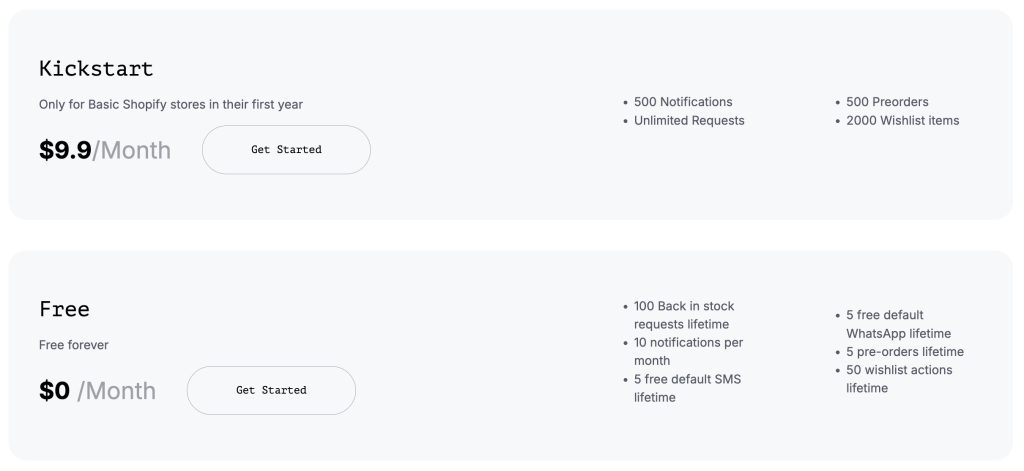
- Free at $0 per month.
- Kickstart at $9.9 per month for qualifying Basic Shopify stores in their first year.
- Annual billing with savings of up to 20%.
The official help article for the current pricing model adds more structure for new users:
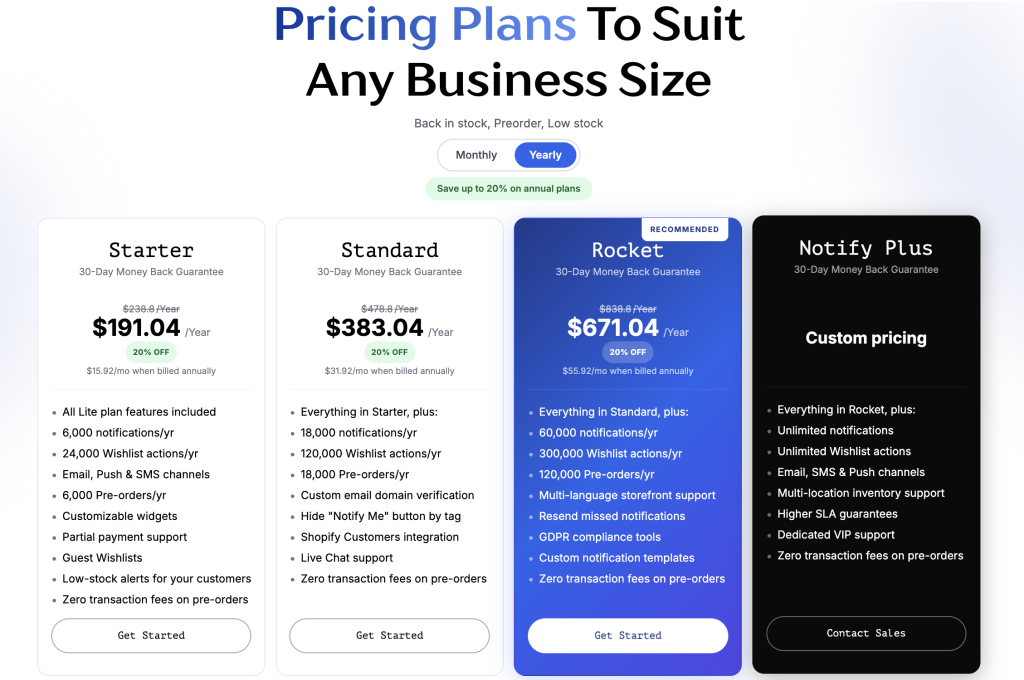
- Starter at $19.9 per month.
- Standard at $39.9 per month.
- Rocket at $69.9 per month.
- Notify Me Plus with custom pricing.
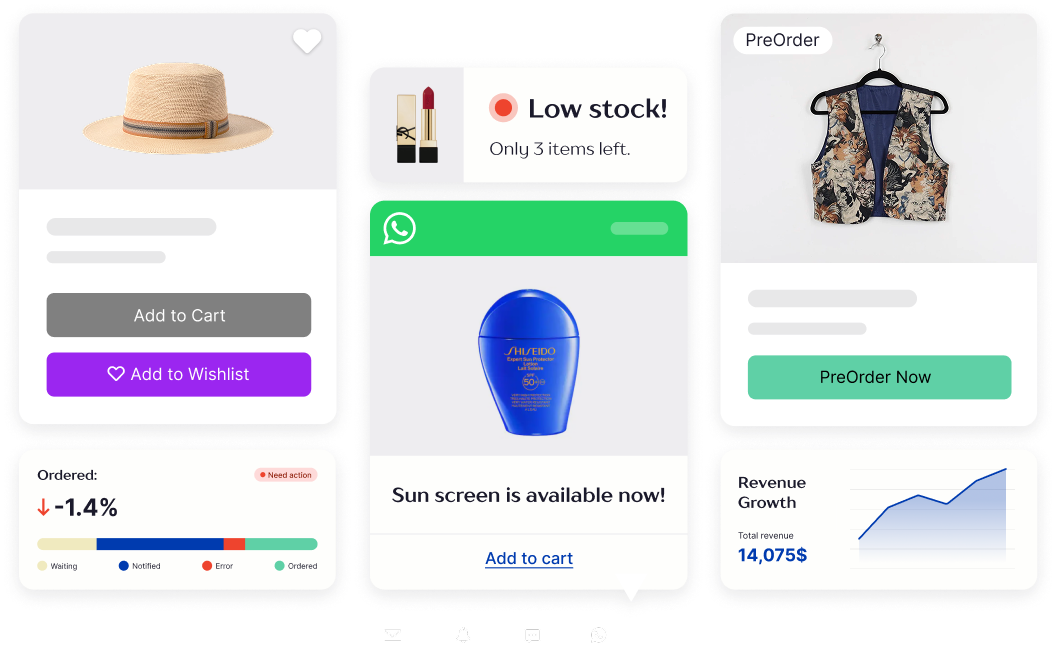
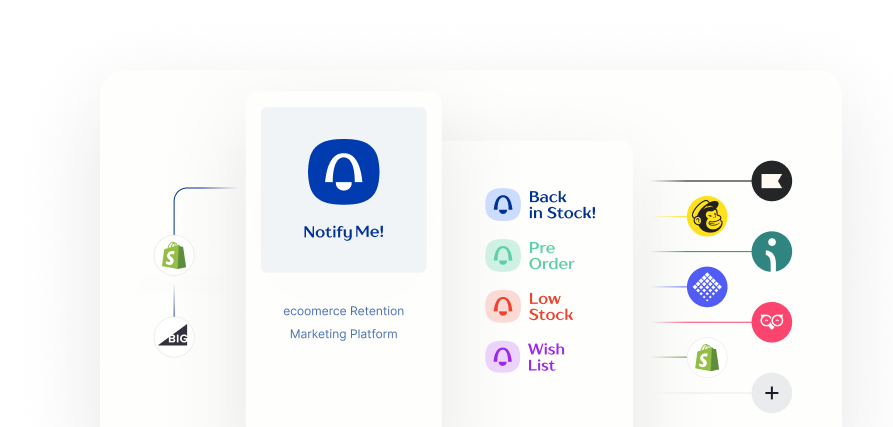
The app is built around back-in-stock alerts, preorders, low-stock messaging, and wishlist activity, so the pricing question is really about how much demand recovery your store needs each month.
If you want to review the official offer while you read, start with Notify Me here.
Pricing Tiers
Notify Me’s pricing makes more sense when you break it into entry access, growth plans, and usage logic.
Free
The official pricing page lists a Free plan at $0 per month. It includes limited lifetime requests and small monthly notification allowances. This is not a serious scale plan, but it is useful for testing fit.
Kickstart
Kickstart is listed at $9.9 per month and is specifically framed for Basic Shopify stores in their first year. The public page highlights 500 notifications, 500 preorders, and 2,000 wishlist items in the plan.
Starter
The help documentation for the current pricing model lists Starter at $19.9 per month with 500 notifications, 500 preorders, and 2,000 wishlist actions. That makes it the cleaner non-entry option if the store does not qualify for Kickstart.
Standard
Standard is listed at $39.9 per month in the help center and includes 1,500 notifications, 1,500 preorders, and 10,000 wishlist actions.
Rocket
Rocket is listed at $69.9 per month and expands to 5,000 notifications, 10,000 preorders, and 25,000 wishlist actions.
Notify Me Plus
Notify Me Plus is custom-priced and is described with unlimited notifications, unlimited preorders, and unlimited wishlist actions.
That is a sensible ladder. The plans scale around store demand intensity instead of drowning you in fake feature differentiation.
What The Plans Mean In Practice
A lot of merchants make the mistake of judging this app like a generic “alerts widget.” That is too narrow.
What you are really buying is a way to capture demand when:
- A product is out of stock.
- A preorder campaign is still converting.
- Low-stock urgency needs to be surfaced.
- Wishlist behavior needs to be measured and monetized.
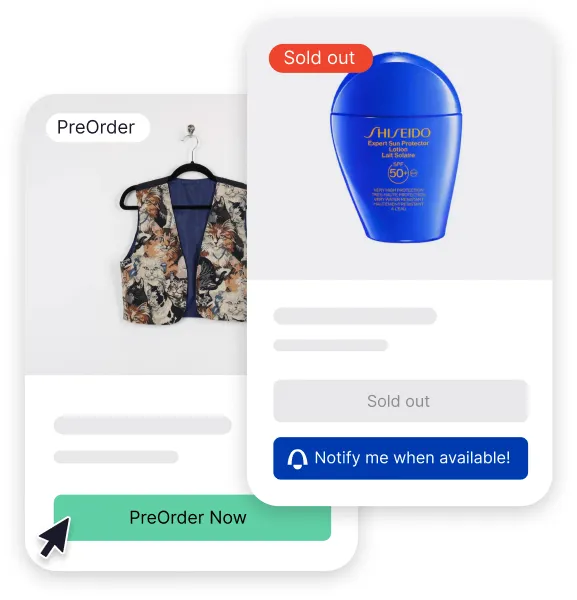
That means the best plan depends on how many customer actions your store produces, not just how many products you carry.
Free And Kickstart Are For Testing And Very Early Stores
These plans make sense for new stores, lighter traffic, or merchants that want to validate whether the app actually converts demand before spending more.
Starter And Standard Are The Real Everyday Merchant Tiers
These are the plans where the app starts to operate like a meaningful revenue recovery layer instead of a tiny experiment.
Rocket And Plus Are For Stores With Serious Volume
Once a store has repeat launches, consistent reorder cycles, or heavier preorder activity, the bigger plans become easier to justify because the recovered revenue can outgrow the subscription quickly.
If you want to see where your store might fit, start with Notify Me here and compare your current monthly alert and preorder volume against the plan limits.
Hidden Costs And Gotchas
This is where the official help docs really help.
SMS And WhatsApp Are Separate
The pricing page explicitly says SMS and WhatsApp prices vary by country. That means the base subscription does not tell the whole story if your store relies heavily on message-based outreach.
Preorders Use A Soft Limit
The help article says preorder limits work differently from notifications and wishlist actions. If you exceed the preorder amount in your plan, you can continue collecting preorders and be charged per extra preorder based on your tier.
Notifications And Wishlist Actions Are Hard Limits
The same help article says notifications and wishlist actions pause once you reach the monthly limit unless you upgrade. That is important because some merchants assume everything just rolls into overage billing. It does not.
Shopify Billing Timing Can Feel Confusing
Notify Me’s help center notes that usage tracking inside the app and charges shown on Shopify invoices may not line up perfectly because the billing cycles differ. That is not shady by itself, but merchants should know it before panicking over invoice timing.
ROI Example
This app becomes very easy to justify when one missed restock or preorder cycle already costs more than the monthly fee.
Imagine a store on Standard at $39.9 per month. If the app recovers a handful of otherwise-lost purchases from an out-of-stock bestseller, the subscription can pay for itself quickly. That is especially true for brands with higher average order values or frequent stockouts.
The bigger point is not “all apps have ROI if you squint hard enough.” The bigger point is that Notify Me is attached directly to a real revenue leak. That makes the ROI case much cleaner than it is for a lot of fluffier Shopify add-ons.
Cost Comparison To Alternatives
Compared with doing nothing, Notify Me costs money. Compared with losing out-of-stock demand, missing preorder momentum, and leaving customer intent uncaptured, it can be cheap.
Compared with more bloated e-commerce suites, its pricing is also relatively focused. You are not paying for a thousand unrelated marketing features. You are paying for demand capture and recovery.
That is why the real comparison is not “can I avoid paying $19.9 or $39.9?” It is “how much revenue am I letting walk away right now because inventory communication is weak?”
Best Value Tier
For many established Shopify stores, Standard looks like the best-value plan.
Why not Kickstart? Because Kickstart is excellent for very early stores, but it is constrained and qualification-specific.
Why not Rocket? Because Rocket makes sense once volume clearly justifies it, but many stores can still recover meaningful revenue on Standard before they need the bigger plan.
Standard feels like the point where Notify Me stops being a lightweight experiment and starts becoming a reliable operational revenue tool.
It is also the point where the app starts making more sense for merchandising teams that want enough room to test preorders, alerts, and wishlist behavior together without immediately hitting small-plan ceilings. That balance is why Standard looks like the most practical middle-ground choice.
If you want to pressure-test that middle tier, start with Notify Me here and compare one month of actual stockout demand against the Standard limits.
Annual Billing And Buying Confidence
The public pricing page says annual billing can save up to 20%, which is useful for stores that already know the app fits their workflow. The site also says there is a 7-day free trial and the FAQ states a 30-day money-back guarantee for subscriptions.
That combination gives merchants a healthy testing path:
- Try the product.
- Verify it fits the store.
- Confirm the usage pattern.
- Then consider annual savings if the value is obvious.
That is a much better buying flow than jumping into a long commitment on day one.
Verdict
Notify Me pricing in 2026 is solid because the public page gives merchants an easy entry point, and the help center does a good job explaining what really drives the bill. Free and Kickstart reduce the barrier to testing, Standard looks like the best-value growth tier for many stores, and Rocket or Plus become logical once alert and preorder volume gets heavy.
The big thing to remember is this: the cheapest plan is not automatically the best plan. The best plan is the one that matches your real monthly demand capture volume without pausing important workflows.
If your store keeps losing momentum when products sell out, start with Notify Me here and evaluate the cost against recovered sales, not just against app-store sticker shock.
FAQ
How much does Notify Me cost in 2026?
The public pricing page shows Free at $0 and Kickstart at $9.9 per month, while the official help docs for the current pricing model list Starter at $19.9, Standard at $39.9, Rocket at $69.9, and Notify Me Plus with custom pricing.
Does Notify Me charge extra beyond the subscription?
Yes. The official docs say SMS and WhatsApp are billed separately by country, and preorder overages can generate extra charges depending on the plan.
Which Notify Me plan is the best value?
For many growing stores, Standard looks like the best value because it offers a larger operating cushion without jumping immediately to Rocket.
Does Notify Me offer a trial or refund policy?
Yes. The public pricing page says there is a 7-day free trial, and the FAQ also mentions a 30-day money-back guarantee on subscriptions.