


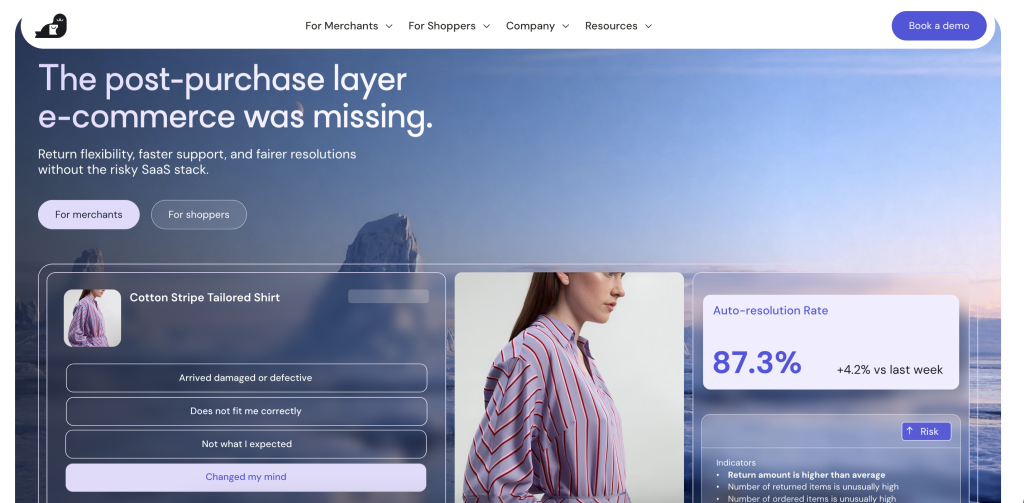
Seel is not trying to sell you another bloated dashboard with a dozen tabs you will forget to open. It positions itself as the post-purchase layer e-commerce was missing, which is a pretty clean way of saying it wants to handle returns, support, and protection in one place. If you are comparing it with a traditional SaaS stack, that matters, because the real question is not “how much is the plan” but “how much friction and manual work does it remove?” If you want to explore the merchant flow while reading, the official entry point is right here.
The pricing story is a little different from the usual software subscription story. Seel frames its offer around a Worry-Free Purchase experience where shoppers pay a small protection fee at checkout, Seel handles the resolution, and the merchant keeps the original sale revenue. That is a very different model from paying for yet another support or returns platform on top of your store. In other words, the value is tied to post-purchase conversion, fewer headaches, and a smoother brand experience rather than a simple seat count.
Pricing Overview :
If you are looking for a neat public pricing table, Seel does not present itself like a generic tiered SaaS product. The official message is much more practical: it helps merchants add return flexibility and protection at checkout, it is white-labeled, and it uses transparent pricing. That means the real buying decision starts with your store, your return profile, and the kind of customer experience you want to run.
The merchant-side model is attractive because it does not feel like paying for empty software seats. The shopper pays a small protection fee at checkout, Seel covers the resolution path, and the merchant avoids having to bolt together extra systems for the same job. For a brand that loses time and margin to support tickets, returns emails, and disputes, that can be worth more than a conventional monthly fee.

There is also an important subtlety here. Seel is not just about returns for the sake of returns. The official site emphasizes flexible policies, faster support, and fairer resolutions without a fragmented SaaS stack. That is a clue about how to think about pricing: the product is solving an operational problem that usually spreads across multiple tools, teams, and manual approvals.
What The Product Actually Includes :
The official Worry-Free Purchase flow highlights four things that matter to most merchants:
- White-Labeled Experience. The shopper sees your brand, not a clunky third-party support layer.
- Transparent Pricing. The cost is framed clearly instead of hiding behind vague add-ons.
- NAIC-Licensed Protection. That is a serious trust signal for businesses that care about compliance language and coverage structure.
- 100% Of Original Sale Revenue Retained. That line is one of the strongest reasons a merchant would look twice at Seel.
Seel also positions itself around three practical outcomes: returns, support, and protection. That matters because many merchants only think of returns as a cost center, when in reality it is part of a broader post-purchase relationship. A product that can reduce back-and-forth, speed up resolution, and make the shopper feel protected can improve conversion quality, not just support efficiency.

Seel’s own FAQ and terms also show the structure of what can be covered. The docs reference delay compensation, loss coverage, and damage coverage. That is useful because it tells you the company is not making fuzzy claims; it is describing specific protection categories. For a merchant, that is better than hearing a marketing line about “better CX” with no operational detail behind it.
How The Pricing Logic Works In Practice :
I like to think about Seel pricing in three layers. First, there is the shopper-facing protection fee at checkout. Second, there is the merchant-side operational value from fewer manual return issues. Third, there is the brand value of making the post-purchase moment feel calmer and more controlled. If you run a store where returns are frequent or where shipping confidence affects conversion, those layers stack up fast.
A simple way to frame the math is this: if Seel helps a store retain revenue that would otherwise be lost to avoidable support friction, then the fee is not just an expense line. It becomes a conversion insurance layer. That is especially true for categories where hesitation is high, shipping uncertainty is common, or customers need reassurance before completing checkout. This is where the official merchant experience becomes more than a feature list.

In a practical sense, merchants should ask three questions before they judge the cost. How often do customers ask for flexibility after purchase? How much time does support spend resolving the same post-purchase issues? How much margin are you willing to trade for a smoother shopper experience? If the answer to all three is “a lot,” Seel may be cheaper than it looks on paper.
Pros And Cons :
The Upside –
- It focuses on the part of the customer journey that usually gets neglected.
- It is white-labeled, which matters when you care about brand consistency.
- The coverage model is easy for shoppers to understand.
- It can reduce the operational drag of returns and disputes.
- The “merchant keeps the sale revenue” positioning is very compelling.
The Tradeoffs –
- It is not a conventional self-serve SaaS pricing page with a simple monthly plan table.
- The coverage model depends on eligibility and policy availability, so you still need to review the details carefully.
- If your store already has a tiny return volume, the value may be nice but not dramatic.
- The product is strongest when the post-purchase experience is a real business problem, not a nice-to-have.

When The Price Makes Sense :
Seel starts to make sense when returns, shipping anxiety, or customer reassurance affect checkout behavior. That is often true for apparel, home goods, gifts, and any store where a shopper may worry about timing or fit. It also makes sense for brands that want a premium checkout feel without building a custom support stack from scratch.
It may also be a strong fit if your team is small. Small teams feel every support ticket, every refund loop, and every manual process. In that world, saving a few hours each week is not a small thing. It is one of the main reasons teams buy software in the first place, and Seel is honest about being part of that post-purchase infrastructure.
Decision Criteria :
When I compare Seel against a more traditional returns or support tool, I care about three things. First, does the product reduce real friction for shoppers without making the brand feel generic? Second, does it save enough support time to justify the experience change? Third, does it match the kind of store I am actually running? If the answer is yes on all three, the official merchant path becomes a pretty reasonable next step instead of a speculative experiment.
The other thing I look for is whether the protection layer changes customer confidence. Some products are worth less than they look because they solve a problem nobody feels. Seel is the opposite. If a shopper is nervous about shipping, returns, damage, or timing, then the value is immediate. That is why I think the model is more compelling than a simple seat-based monthly plan. You are paying for less confusion at the exact point where confusion normally hurts the sale.
In practical terms, Seel is best for merchants who want a cleaner post-purchase story and do not mind paying for that clarity through the checkout experience rather than through a static software subscription.
Verdict :
Seel pricing is best understood as a post-purchase value model rather than a standard software subscription. That is actually a strength, because the product is trying to solve a real operational problem instead of adding another dashboard to your stack. If your business wants smoother checkout protection, clearer returns handling, and a brand-safe customer experience, the pricing story starts to look reasonable very quickly.
If you want the cleanest next step, review the official merchant flow and then decide whether the protection model fits the way your store sells today. If it does, start there and judge it on the actual customer experience, not just on a line item.
FAQ :
Is Seel a traditional subscription tool?
Not really. The official framing is around checkout protection and post-purchase support rather than a generic per-seat SaaS subscription.
Does Seel publish a simple public price list?
Not in the usual software sense. The official site emphasizes the protection fee model and merchant value rather than a standard tier table.
What kinds of protection are mentioned in the official docs?
The terms and FAQ reference delay, loss, and damage coverage, which gives you a better sense of the product than a vague promise would.
Is Seel suitable for a brand that wants a white-labeled experience?
Yes. That is one of the strongest points the official site makes, and it is one of the main reasons merchants will care.
Should I choose Seel if I only care about cutting support load?
If post-purchase issues are eating into your team’s time, Seel is worth a serious look. If your support volume is already tiny, it may be more of a nice upgrade than a must-have.