

Who This Post Is For :
This version of the Breezy HR conversation is really for startups. Not giant enterprises with a six-layer hiring committee. Not massive global employers trying to rebuild HR from the ground up. Startups.
More specifically, this is for startup teams that are hiring often enough to feel the pain, but not large enough to want a heavy, slow-moving recruiting system that turns every open role into a software project.
Breezy HR’s official site and pricing pages make that fit pretty clear. The product is built around attracting candidates, automating repetitive hiring work, collaborating with hiring teams, and moving people through a pipeline without drowning the company in setup friction.
If that sounds close to your situation, start with Breezy HR here.
Why Breezy HR Fits Startups Better Than A Lot Of ATS Tools :
Startup hiring is messy in a very particular way.
You are usually doing several things at once:
- Opening new roles quickly.
- Hiring across departments that all operate differently.
- Keeping founders, managers, and recruiters aligned.
- Trying not to lose candidates because scheduling and feedback are too slow.
That is where Breezy makes a good case for itself.
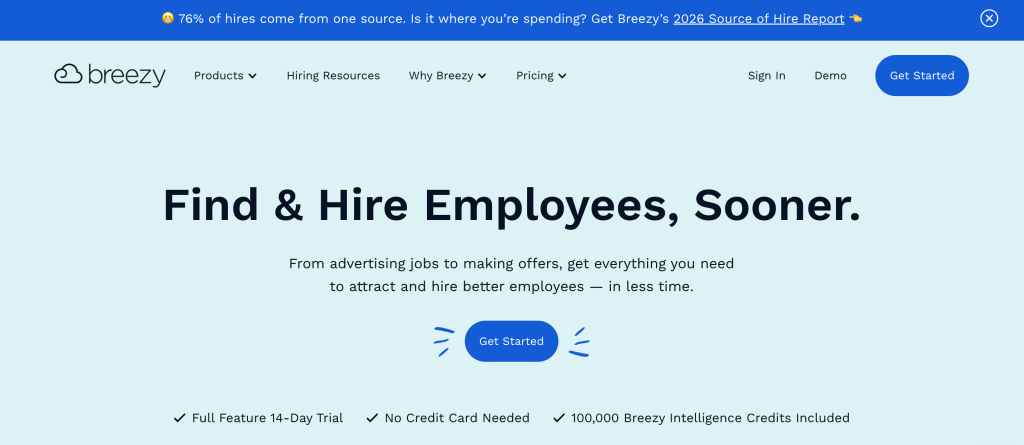
The official homepage leans into the practical side of recruiting: advertise jobs, automate screening work, simplify interviews, collaborate faster, and move toward offers and onboarding without extra tool sprawl. That is a much better startup fit than software that assumes you already have a huge talent ops team.
The pricing page also helps its case by keeping the message simple: all paid plans include unlimited users, unlimited candidates, and customer support. That is a strong startup-friendly policy because early growth teams hate seat anxiety and weird candidate caps.
Top Startup-Friendly Feature 1: A Real Free Entry Point
One of Breezy’s most useful strengths for startups is that the official pricing page still includes a genuinely usable free tier.
The Bootstrap plan includes:
- Unlimited Users.
- 1 Active Pool or Position.
- Unlimited Candidates added within the last 30 days.
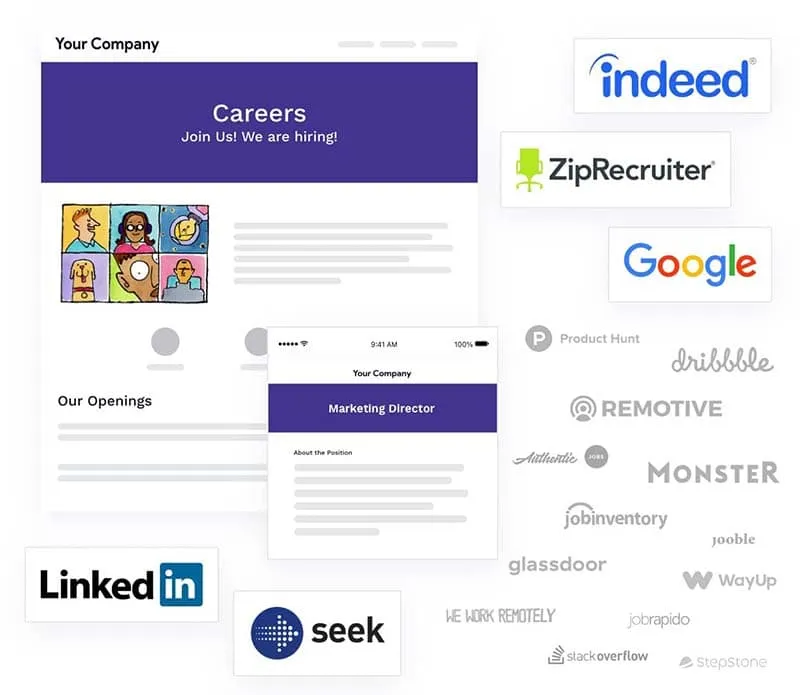
- A branded career site.
- Distribution to 50+ job boards.
- GDPR compliance and automation.
- Multi-language support.
- Resume parsing.
That is a solid starter setup for a young company testing whether a formal ATS actually helps.
Real talk: most startup teams do not need twenty dashboards on day one. They need one clean place to post jobs, review applicants, and stop managing hiring out of inboxes and random docs. Breezy’s free entry point makes that easier than tools that force a paid commitment before you have proven the process.
Top Startup-Friendly Feature 2: Hiring Automation Without Feeling Heavy
The official homepage keeps returning to the same promise: automate tedious hiring tasks so teams can spend more time engaging candidates.
That matters a lot in startups because the “recruiting team” is often a recruiter plus three managers plus a founder who replies late at night.
Breezy specifically highlights automation around:
- Pre-screening candidates.
- Sending emails.
- Scheduling interviews.
- Collecting feedback.
That is the right kind of automation for startup teams. It reduces admin work without forcing the company into a giant enterprise implementation.
The platform also now includes Breezy Intelligence as an add-on, which the pricing page describes as AI-powered candidate evaluation, interaction summaries, and resume auditing. For fast-moving teams, this can shorten first-pass review work without requiring a separate AI layer outside the ATS.
If your hiring process is already messy in the “too many clicks, too many handoffs” way, start with Breezy HR here and compare one active hiring workflow against your current setup.
Top Startup-Friendly Feature 3: Paid Plans Remove The Usual Scaling Friction
Once a startup is hiring regularly, the free plan is usually not enough. That is where Breezy’s paid structure becomes more relevant.
The public pricing page currently shows:
- Bootstrap: Free.
- Startup: $157/month billed annually or $189/month billed monthly.
The site also states there are additional paid tiers, and a Breezy comparison page says paid plans start at $143 per month. More important than the exact ladder, though, is what paid plans include by default:
- Unlimited users.
- Unlimited candidates.
- Customer support.
- Unlimited positions on higher-paid plans.
That combination is a good fit for startups because it lets the hiring process grow without seat-count stress every time another manager joins the team.
The Help Center adds another useful detail: all paid plans can customize the default recruiting pipeline, while Growth, Business, and Pro plans can also create additional pipelines for different positions. That matters for startups once hiring is no longer one-size-fits-all.
Real-World Startup Example :
Picture a startup with 45 people that is suddenly hiring for:
- Two sales reps.
- A product designer.
- A customer success manager.
- A senior engineer.
That team usually does not need an enterprise procurement theater. It needs speed, consistency, and shared visibility.
Breezy fits that situation well because:
- Jobs can be distributed broadly.
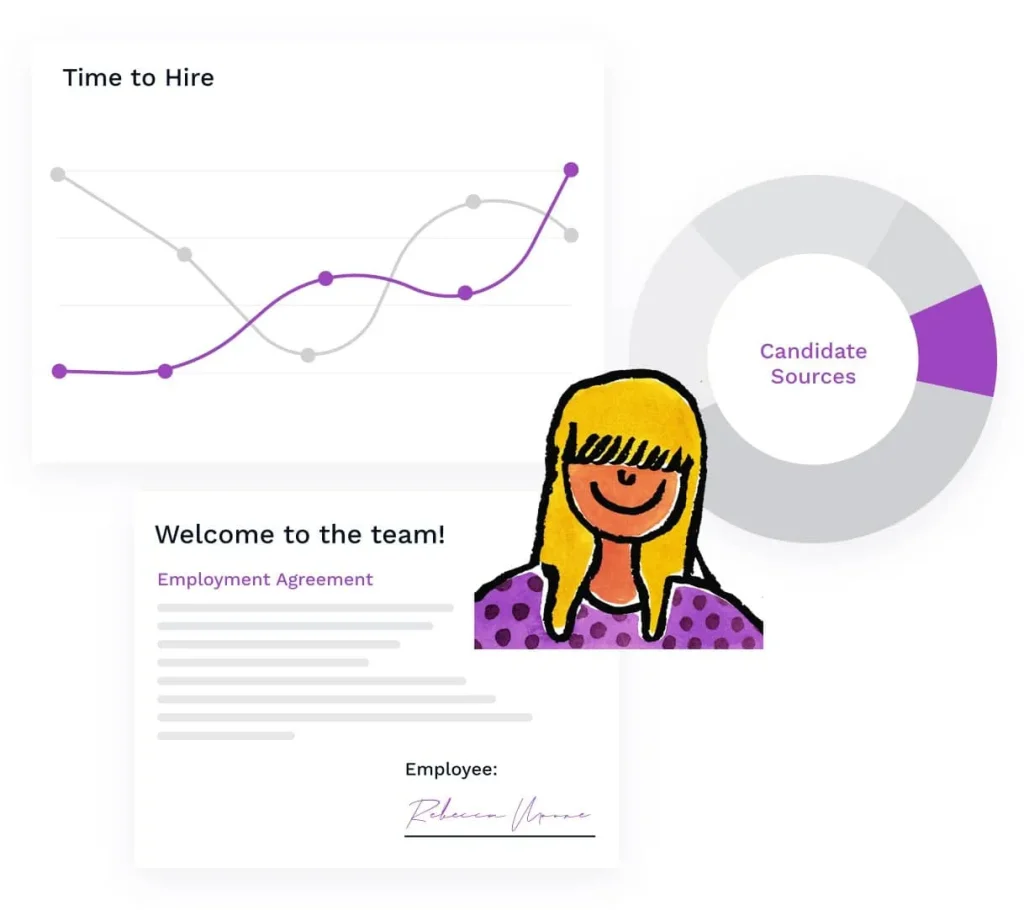
- Candidate review stays in one pipeline.
- Team feedback can happen inside the platform.
- Scheduling gets less manual.
- The career site still looks branded and credible.
That does not make hiring easy. Nothing does. But it does make the process feel less chaotic, which is often the bigger win in fast-growth environments.
Pricing In Context For Startup Teams :
Here is the practical way to think about Breezy’s public pricing:
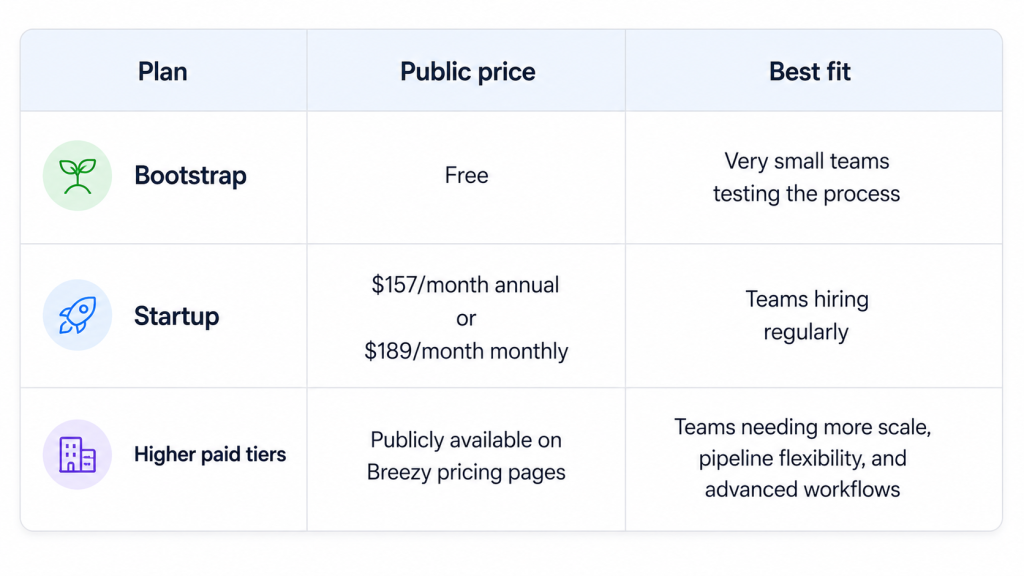
The nice part is not only the sticker price. It is the structure around it.
Because paid plans include unlimited users and candidates, the platform feels easier to budget than tools that look affordable until every interviewer, recruiter, and hiring manager starts needing access.
There are also optional add-ons on the pricing page, including:
- Breezy Intelligence credits start at $30 per 100,000 credits.
- SMS/Text Messaging credits starting at $41 per month.
- Onboard starting at $49 per month.
- Perform for performance management.
- Expert Training.
That is useful because startups can layer extra capability when they actually need it instead of paying for every possible workflow up front.
If you want to sanity-check that pricing against your actual hiring pace, start with Breezy HR here and compare the free Bootstrap flow with the Startup plan before you commit to a heavier ATS.
Alternative Tools For This Niche :
If you are a startup, the main question is not “what is the best ATS on earth?” It is “What level of ATS do we actually need right now?”
Breezy is a good fit when you want:
- A clear career site.
- Fast setup.
- Hiring pipeline visibility.
- Good automation coverage.
- Broad collaboration without seat bloat.
You may want to look elsewhere if you need:
- Deep enterprise process control from day one.
- Very complex approval structures across many regions.
- Highly bespoke recruiting operations built for a large internal talent team.
That is not a weakness. It is just product fit. A startup-friendly ATS should feel operational, not ceremonial.
Setup Steps For Startup Teams :
A smart startup rollout in Breezy usually looks like this:
- Build the branded career site first so your open roles do not feel thrown together.
- Set up one clean default pipeline for your common hiring flow.
- Connect calendars and email early so scheduling does not become manual again.
- Use automation only on repeatable steps such as screening, reminders, and interview coordination.
- Add AI or SMS features only when the core workflow is already stable.
That sequence matters because hiring software only helps when the team actually uses it consistently.
The good news is Breezy seems built for that kind of lightweight but structured adoption. It does not ask startups to become giant enterprises before they can get value.
Verdict :
Breezy HR is one of the better startup-fit ATS options in 2026 because it balances simplicity with enough structure to support real growth. The free Bootstrap tier is useful, the paid plans remove common scaling friction with unlimited users and candidates, and the platform focuses on exactly the kind of automation startups need most.
It is especially strong for startups that are hiring often, moving fast, and trying to keep the candidate experience organized without bringing in a bloated recruiting stack.
If that sounds like your team, start with Breezy HR here and run one active role through the platform before you overcomplicate the rest of your hiring stack.
FAQ :
Is Breezy HR good for startups in 2026?
Yes. Its free Bootstrap plan, startup-friendly automation, branded career site, and paid plans with unlimited users and candidates make it a strong fit for growing teams.
What does Breezy HR cost for startups?
The public pricing page shows Bootstrap is free, and the Startup plan is $157 per month billed annually or $189 per month billed monthly.
Do all paid Breezy HR plans include unlimited users?
Yes. The public pricing page says all paid plans include unlimited users, unlimited candidates, and customer support.
Can startup teams customize pipelines in Breezy HR?
Yes. Breezy’s Help Center says all paid plans can customize the default pipeline, and higher-tier plans can create additional pipelines for different positions.