

Quick Verdict
Brand24 is a serious social listening and media monitoring tool for teams that need to know what is being said about their brand before the conversation gets away from them. The official features page makes that clear right away: it is built around tracking mentions, analyzing sentiment, surfacing anomalies, comparing competitors, and turning noisy public chatter into something a human can actually use.
That matters because brand monitoring is not really about vanity. It is about timing. A good alert can help marketing move faster, sales notice a signal sooner, and support step in before a small issue turns into a public mess. Brand24 is strongest when you need a reliable read on what is happening across the web and social platforms without manually checking every source yourself.
If you want the short version, this is a strong fit for startups, small businesses, and agencies that care about reputation, share of voice, and quick trend detection. If that sounds like your team, start with Brand24 here and compare the trial against one brand, one competitor set, and one campaign you already care about.
Product Facts And Overview
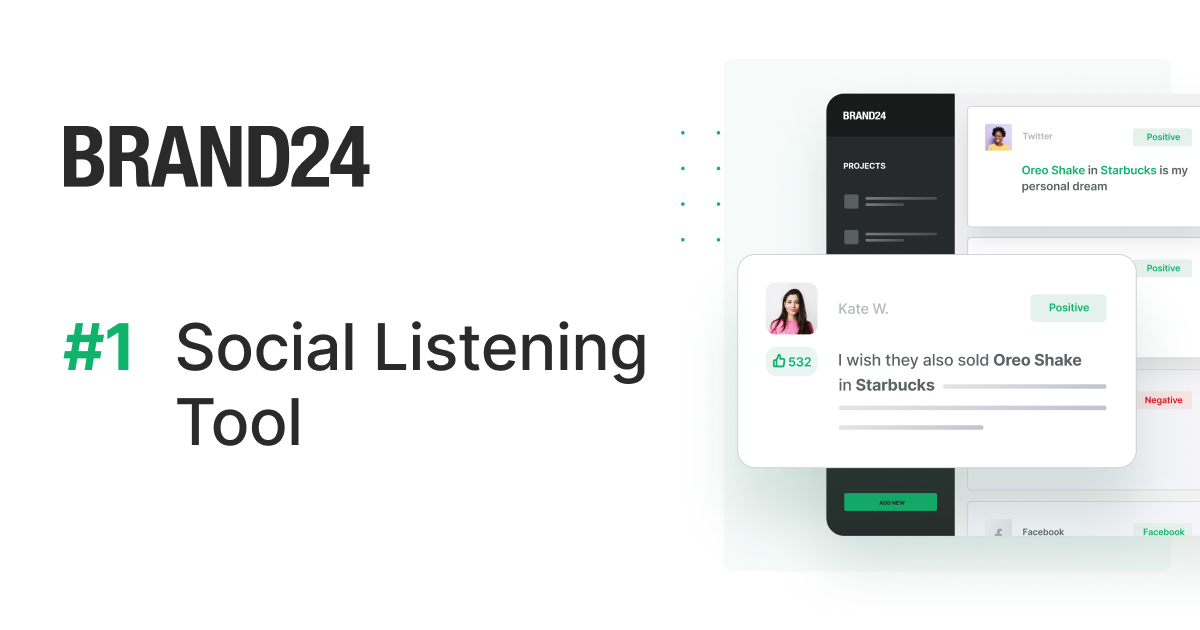
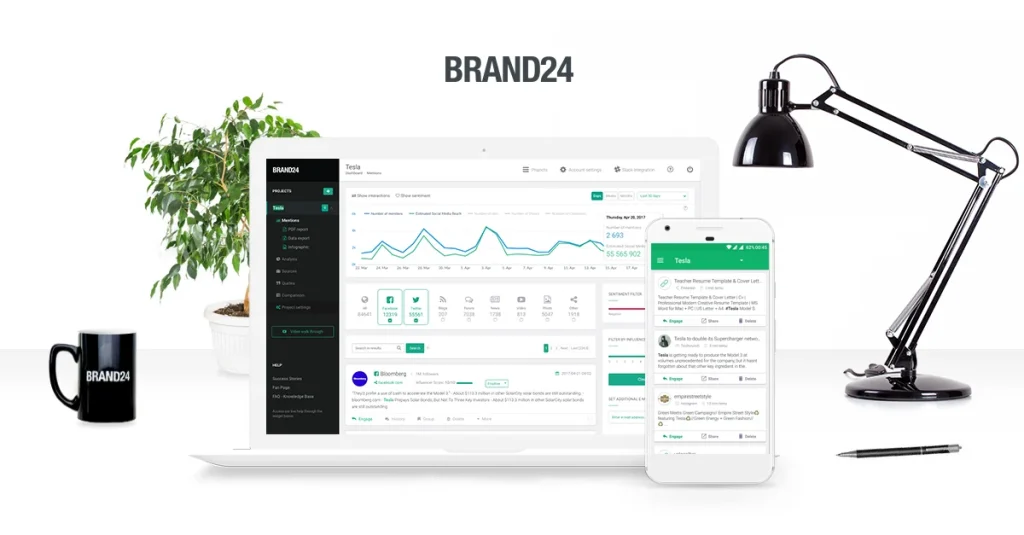
Brand24’s official positioning is straightforward. It tracks and analyzes mentions, then turns that raw mention flow into insights through features like Anomaly Detector, Reach, Sentiment Analysis, and Share of Voice. On the feature page, Brand24 also highlights media monitoring, crisis management, reports and data visualization, competitor analysis, comprehensive analysis, and influencer marketing.
That combination tells you the product is not trying to be a basic keyword alert tool. It is trying to be the operational layer for online reputation. If your team needs to know what people are saying, where they are saying it, how strong the conversation is, and whether anything unusual is happening, Brand24 is built for that exact job.
The public pricing page reinforces that seriousness. Brand24 offers a 14-day free trial and then a plan ladder that scales from Individual to Team, Pro, Business, and Enterprise. That makes it easier to test without guessing whether the product only works for giant companies.
Pros And Cons
Pros
- It tracks mentions across a wide public surface area.
- AI features are built into the monitoring story, not bolted on later.
- Competitor analysis is part of the core product.
- The pricing page is public and easy to compare.
- The product supports both light brand tracking and heavier agency-style use.
Cons
- The plan ladder gets expensive as you move upward.
- Small teams may need to be disciplined about what they track.
- The tool is most valuable when someone actually reviews the insights, not when alerts are left to pile up.
That is the honest tradeoff with monitoring software. The tool can surface the signal, but it still needs a human to decide what matters.
Feature Deep Dive
1. Mention Tracking That Actually Feels Operational
Brand24’s core job is to track and analyze mentions, and the official feature page makes that the center of gravity. That sounds simple until you realize how quickly mention streams become unusable without structure. A brand gets mentioned in the news, social media, blogs, reviews, comments, and random public posts. If you only see fragments, you miss the story.
Brand24 helps by collecting that flow and attaching features like reach, sentiment, and share of voice. That means the team can stop treating every mention as equal and start seeing the shape of the conversation. For a startup founder or marketing lead, that is the difference between “we saw a spike” and “we understand why it happened.”
2. AI Brand Assistant And Anomaly Detection
The official feature page is very clear about the AI side. Brand24 includes AI Insights, AI Brand Assistant, AI Events Detection, and an AI Anomaly Detector. That matters because the most useful monitoring tools do not just show data; they help you notice when the data changes in a way that deserves attention.
The anomaly layer is especially useful for brand teams because sudden spikes are often where the most important conversations start. It might be a product launch, a press mention, a customer complaint, or a creator talking about your company. The product’s job is to give you enough context to react quickly instead of finding out late.
If you want to explore that kind of workflow in a real setup, start with Brand24 here and test the AI alerting behavior against one keyword set that actually matters to your business.
3. Competitor Analysis And Share Of Voice
Brand24 also leans hard into competitor analysis. That is important because a brand does not exist in a vacuum. If your competitors are winning attention, getting more positive sentiment, or generating better topic coverage, you want to know that early.
Share of voice is useful here because it gives the team a practical comparison lens. Instead of asking only “how many mentions did we get?”, you can ask whether your brand is becoming more visible relative to the market. That is a much better question for strategy.
The same logic applies to campaign tracking. If you are launching a product, running a PR push, or trying to shape a category narrative, the competitor view tells you whether your story is breaking through or getting buried.
4. Reports, Context, And Internal Sharing
The feature page also emphasizes reports and data visualization, email reports, context of discussion, emotion analysis, and data exports. That matters because insights are only useful if the rest of the team can understand them.
Marketing teams usually need a quick summary. Founders often need the bigger pattern. Support teams may need the actual wording people are using. Brand24’s reporting stack is helpful because it tries to serve all three without turning every update into a spreadsheet project.
5. Influencer Marketing And Reach
Another part of the product that stands out is influencer marketing. That makes sense because brand monitoring and influencer discovery often overlap in practice. If a topic starts to spread, you want to know who is helping it move.
The reach and engagement view is useful because it helps you separate a large audience from a meaningful one. A mention from a highly relevant creator may matter more than a larger pile of low-quality chatter. Brand24 gives teams the structure to make that call more intelligently.
Pricing Breakdown
Brand24’s public pricing is easy to understand once you realize the main limiter is keywords. The official pricing page offers a 14-day free trial and then shows the following plan ladder:
- Individual: $249 per month, or $199 per month billed annually.
- Team: $349 per month, or $299 per month billed annually.
- Pro: $499 per month, or $399 per month billed annually.
- Business: $699 per month, or $599 per month billed annually.
- Enterprise: from $1499 per month billed annually.
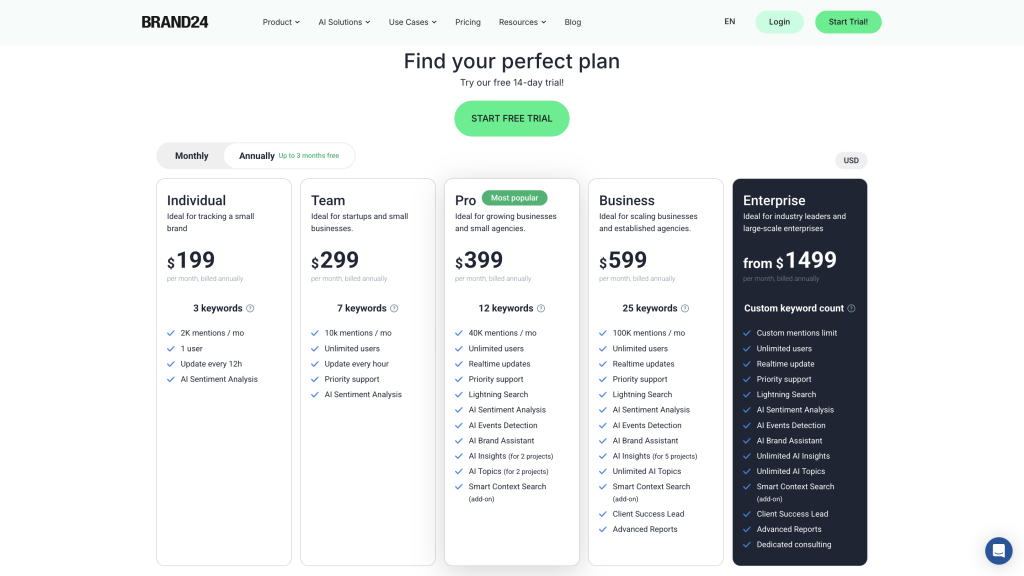
The plan descriptions make the buyer fit very clearly. Individual is for tracking a small brand. Team is ideal for startups and small businesses. Pro is aimed at growing businesses and small agencies. Business is for scaling businesses and established agencies. Enterprise is for large-scale organizations.
That is helpful because it prevents the classic monitoring tool mistake: buying too little monitoring and then wondering why the alerts are too shallow to matter. Keyword count, mention limits, user count, update frequency, and advanced AI features all change the actual value.
If you want to compare the pricing structure against a real use case, start with Brand24 here and test one brand, one competitor, and one campaign during the trial before choosing a plan.
Who Should Use It
Brand24 makes the most sense for teams that need ongoing visibility into public conversation.
That usually includes:
- Startups protecting their reputation while they grow.
- Agencies managing multiple client brands.
- Small businesses are trying to watch competitors and customer sentiment.
- Content and PR teams that need faster reaction loops.
- Founders who want a better read on what the market is saying.
It is less compelling for teams that only want a casual alert or a one-off vanity search. The product is more useful when there is a real decision attached to the data.
Trial And Rollout Advice
If I were rolling out Brand24, I would begin with a narrow keyword set and a short stakeholder list. The biggest mistake with monitoring tools is trying to track too much on day one. That creates noise, and noise destroys trust.
Start with one brand term, one competitor, and one campaign phrase. Then decide who actually needs alerts and who only needs a weekly summary. That alone can make the tool feel ten times more useful because people stop getting buried in unfiltered mention volume.
The second step is to decide what counts as an action. A spike in reach is not automatically a crisis. A negative thread is not automatically a fire. Brand24 gives the signal; the team still needs a response rule.
If you want to see whether the workflow fits your process, use the trial to build one simple operating rule before you expand to more keywords.
That extra discipline is often the real difference between a noisy dashboard and a useful early-warning system.
What A Good Monitoring Routine Looks Like
The best Brand24 setup is not the biggest one. It is the one people actually check. That usually means defining a clear owner for the dashboard, a clear reason for each alert, and a clear next step when a meaningful mention appears.
For a startup, that might mean one founder reviews high-priority alerts every morning. For an agency, it might mean account managers review client projects and send only the important spikes to the rest of the team. For a PR lead, it might mean using anomaly alerts to separate routine chatter from moments that need a response.
That is where the product becomes genuinely valuable. It does not just tell you that conversation exists. It helps you build a habit around the conversation so the team can react faster and with more context.
If you want to check that habit against your own team, start with Brand24 here and spend the first week figuring out which alerts deserve a response and which ones are just background noise.
[IMAGE: Brand24 alerting routine and daily monitoring workflow]
Expert Verdict And CTA
Brand24 stands out because it treats social listening like a real business function. It is not only trying to count mentions. It is trying to help teams understand sentiment, detect anomalies, compare competitors, and explain what is happening to people who do not live inside the dashboard.
That makes it a strong choice for teams that want public conversation to become part of their decision-making rhythm instead of an occasional surprise.
If that is the kind of visibility you need, start with Brand24 here and compare one monitored topic against the way your team currently finds out about brand chatter.
That is a cleaner way to stay ahead.
FAQ
What is Brand24’s main strength in 2026?
Its main strength is real-time social listening and media monitoring with AI-assisted insight layers like anomaly detection, sentiment analysis, and Brand Assistant.
Does Brand24 offer a free trial?
Yes. The official pricing page currently offers a 14-day free trial.
Is Brand24 only for big companies?
No. The public pricing ladder includes Individual, Team, Pro, Business, and Enterprise, so smaller teams can start too.
What kinds of teams benefit most from Brand24?
Startups, agencies, founders, PR teams, and marketers who need to watch brand conversation and competitor movement will get the most value.
Does Brand24 help with competitor monitoring?
Yes. Competitor analysis is part of the official feature set, along with share of voice, AI insights, and reporting.