

When To Consider Alternatives :
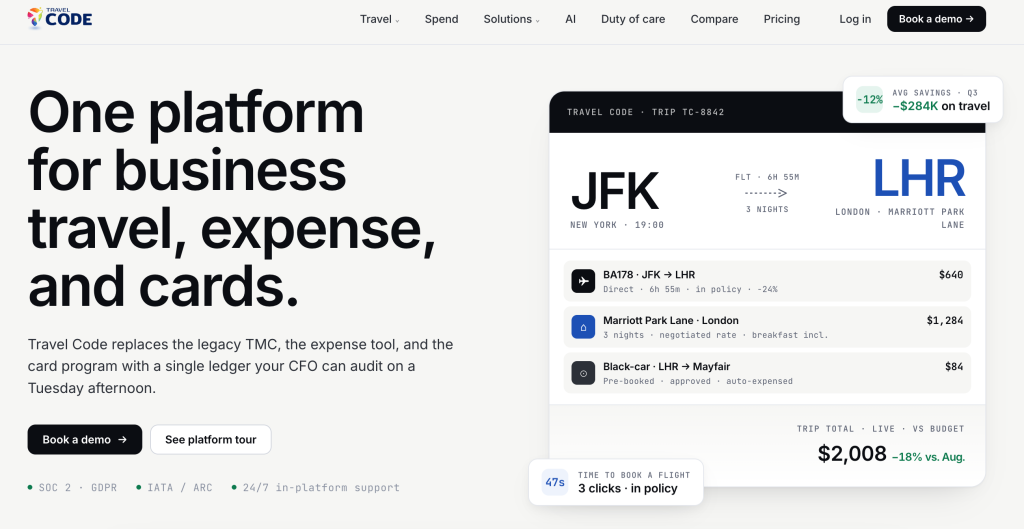
Travel Code has a very clear point of view in 2026. The official pricing page leans hard into flat pricing, unlimited travelers, transparent ticket fees, approval workflows, RateGuard, and a travel-plus-expense-ledger story for finance teams.
That is a strong positioning angle, but not every company wants the same thing from a corporate travel platform.
You may want alternatives if:
- You want a more familiar enterprise travel brand.
- You need a different pricing model.
- You are comparing a legacy TMC against a self-serve platform.
- You only want travel booking, not a wider finance workflow.
- You want a tool that feels more established in your region or industry.
If you want to compare Travel Code against the live product while you read, start with Travel Code here.
The big decision is not just “Which tool books trips?” It is “Which tool fits the way our finance and travel team actually wants to operate?”
For some buyers, Travel Code’s flat-plan model is exactly the win. For others, the best alternative is the one that is easier to evaluate, easier to roll out, or more aligned with their current travel stack.
Alternative 1: SAP Concur
SAP Concur is the obvious comparison point for many travel buyers because it represents the legacy enterprise travel-management world.
Why people compare it:
- Familiar name recognition.
- Deep travel-program history.
- Suitable for larger and more process-heavy organizations.
Compared with Travel Code, Concur often appeals when the buyer wants the safety of a known category leader and is willing to accept a more traditional enterprise feel.
That does not make it better by default. It just makes it a different answer to the same problem.
Alternative 2: Navan
Navan is another natural alternative because it sits in the modern travel-management conversation alongside Travel Code.
Why it matters:
- Modern travel workflow positioning.
- Useful for teams that want a polished booking experience.
- Strong relevance for companies comparing newer travel platforms.
Travel Code’s own pricing page references Navan as one of the per-seat platforms that charges a license fee. That makes Navan especially relevant in any serious comparison.
In simple terms, Navan is worth considering when your team wants the “modern travel platform” feel but still wants to compare it against a flatter, more transparent Travel Code model.
Alternative 3: TravelPerk
TravelPerk is one of the other names Travel Code itself uses in its pricing story, which makes it a very fair alternative to compare.
Why buyers look at it:
- Broad travel-management relevance.
- Useful for companies that want a strong commercial platform.
- Common benchmark in travel software comparisons.
Travel Code looks strongest when the buyer wants transparent fees and a ledger-style travel, expense, and cards model. TravelPerk often enters the conversation when the company wants a well-known travel platform with a different commercial structure.

Alternative 4: Egencia Or A Legacy TMC
Sometimes the real alternative is not one named product. It is the old way of doing travel.
That means:
- Traditional TMC workflows.
- Agency-managed booking.
- Heavier manual approval chains.
- Slower implementation but familiar operating patterns.
This comparison matters because some finance teams value predictability over software novelty. They do not necessarily want the most modern platform. They want the travel program to be easy to audit, easy to explain, and easy to control.
Travel Code tries to solve that with software. Legacy TMCs solve it with process and human support.
Alternative 5: Regional Or Specialist Travel Tools
Depending on where you operate, a regional or specialist travel platform may be the better fit.
Why that matters:
- Local support may be easier.
- Regional policy rules may fit better.
- Some companies need country-specific workflows.
- Integration expectations can vary a lot by market.
If your organization has unusual travel policies, legal entities, or regional accounting requirements, a specialist tool can beat a broader platform even if the broader platform looks better in a demo.
That is a good reminder that travel software is rarely judged on feature lists alone. It is judged on how well it handles approval flow, finance visibility, policy enforcement, and support when trips go wrong.
Comparison Matrix :
Here is the practical read:
- Travel Code: best when you want flat pricing, transparent fees, and a single travel-plus-finance ledger.
- SAP Concur: best when you want a long-established enterprise travel brand.
- Navan: best when you want a modern travel platform benchmark.
- TravelPerk: best when you want a familiar commercial travel stack.
- Legacy TMCs: best when human-managed process still matters most.
That is really the choice set.
Travel Code’s official page makes a strong case for itself by emphasizing:
- Unlimited travelers.
- Transparent service fees on tickets.
- Booking, expense, cards, and policy in one place.
- API access and webhooks on the higher tier.
- SSO and SCIM for larger teams.
Those are meaningful advantages. But they are not the only way to solve corporate travel.
If you want the cleanest way to compare it against your current process, start with Travel Code here and test one live trip from request to reconciliation.
Pricing Context :
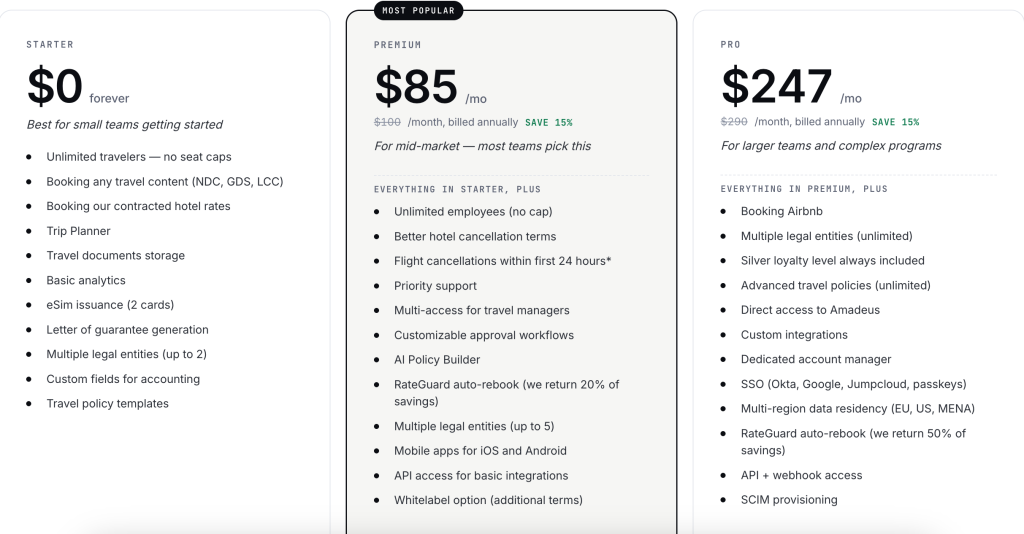
Travel Code’s public pricing page is unusually explicit about structure.
It highlights:
- A free Starter plan.
- Premium and Pro paid tiers.
- Annual billing savings.
- Transparent service fees on flight and rail tickets.
- No setup fees.
- No hidden markup positioning.
It also shows where the platform tries to go beyond a booking widget:
- Policy enforcement.
- Multi-tier approvals.
- RateGuard auto-rebook.
- Legal entity support.
- Mobile apps.
- API access.
- SSO and SCIM on higher tiers.
That means the pricing conversation is not just about the monthly plan cost. It is about whether the whole travel operation becomes cleaner.
For companies comparing Travel Code against per-seat travel platforms, that distinction matters a lot.
The monthly license may be only one part of the total cost. The real savings can come from fewer manual approvals, fewer policy exceptions, less admin around rebooking, and better visibility for finance.
If your current program wastes time in those exact places, start with Travel Code here and compare it against one real booking workflow before deciding.
That comparison is worth doing carefully. A travel platform can look great when the demo is only about booking screens, but the real cost shows up later in approvals, rebookings, policy exceptions, support response time, and finance visibility.
Travel Code’s flat-plan positioning is especially interesting because it tries to make those hidden costs more predictable. If your team is tired of license creep and surprise add-ons, the platform’s pricing story may be more valuable than a lower-looking headline price elsewhere.
The other thing worth thinking about is internal adoption. A tool like this can be objectively strong on paper and still fail if the finance, travel, and approver groups do not all understand how it is supposed to be used. That is why clear pricing, transparent fees, and a simple approval story matter so much in travel software.
If the people who book trips, approve them, and reconcile them all understand the same operating model, the platform tends to earn trust quickly. That is where Travel Code can be especially interesting for mid-market teams that want fewer moving parts and more consistency.
When To Stick With Travel Code :
Travel Code makes the most sense if you want:
- Flat pricing instead of seat-based pricing.
- A travel program that finance can audit more easily.
- Booking, expense, and cards in one system.
- Transparent fee language.
- A modern platform built around mid-market travel operations.
That is a compelling package.
It is especially compelling for finance-led organizations that want one travel ledger rather than a pile of disconnected tools. The more your team cares about policy, approvals, and reconciliation, the better Travel Code’s story gets.
Verdict :
The best Travel Code alternatives in 2026 depend on whether you want a legacy enterprise platform, a modern travel app, or a more regional or specialist solution.
SAP Concur, Navan, and TravelPerk are the most obvious comparison points. Traditional TMCs still matter too, especially when human-managed service is the real requirement.
Travel Code itself stands out when the buyer wants transparent pricing, travel plus expense under one roof, and a finance-friendly operating model.
If that sounds like your problem, start with Travel Code here and compare it against your current process using one live trip.

That kind of real-world comparison usually tells you more than a feature table ever will.
It also keeps the buying decision grounded in the way your company actually handles travel, approvals, expenses, and support.
The right alternative is not always the biggest brand. Sometimes it is the one that reduces friction fastest for the people who book trips, approve them, and reconcile the costs afterward.
That is the core test to use here.
One more thing to keep in mind is implementation effort. Even if two platforms look similar in a demo, the one with cleaner policy setup, easier approvals, and better finance visibility can save a lot more time over the first year. That is especially true when travel is tied to budgets, multiple approvers, or many recurring trips.
So the best comparison is not only commercial. It is operational. Ask how much work each platform removes from the people who touch a trip from request to reconciliation. That answer usually decides the winner faster than any logo slide ever will.
FAQ :
What are the best Travel Code alternatives in 2026?
The strongest alternatives are SAP Concur, Navan, TravelPerk, legacy TMC workflows, and regional specialist travel tools.
Is Travel Code better than per-seat travel platforms?
It can be, if you want flat pricing, transparent service fees, and a travel ledger that finance can audit easily.
Who should stick with Travel Code?
Teams that want travel, policy, cards, and expense in one workflow usually get the most value from sticking with Travel Code.
When should you choose an alternative?
Choose an alternative when you need a more established enterprise brand, a different travel-service model, or a regional workflow that Travel Code does not match as well.