



In this guide
Why This Comparison Matters
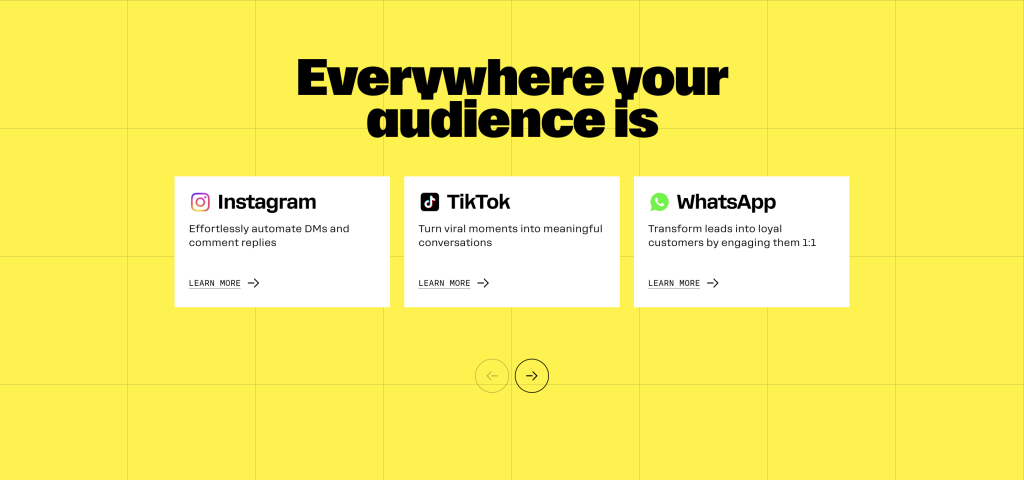
Manychat sits in a crowded category, and that is exactly why a lazy review does not help much. On its official site, Manychat presents itself as a chat-marketing platform for Instagram, WhatsApp, TikTok, and Messenger. It promises faster engagement, automated replies, follower growth, lead capture, and more sales through conversation workflows. That is a compelling pitch, but it is not a unique one anymore.
Disclosure: Stack99 earns a commission if you buy through links on this page. It costs you nothing extra and never changes our assessment.
In 2026, businesses comparing Manychat usually are not asking, “Can this tool automate messages?” They are asking tougher questions:
- Is it better for social-first growth or broader team inbox work?
- Does it fit creators better than service businesses?
- Is the pricing more forgiving than the alternatives?
- Can a small team actually run it without turning every DM into weird robotic sludge?
That is where this comparison gets useful. I am looking at Manychat against two realistic official-source alternatives: Chatfuel and Respond.io. They overlap with Manychat in meaningful ways, but they are not identical products. That is the point. Different teams want different kinds of automation.
If you already know Manychat is on your shortlist, start here with Manychat and keep this comparison open in the next tab.
Quick Comparison Table
| Tool | Starts at | Free option | Best for |
|---|---|---|---|
| Manychat ↗THIS GUIDE | $14/mo | Free plan | Chat marketing |
| Chatfuel | $49/mo | Free plan | AI chatbot marketing |
| Respond.io | $79/mo | 7-day trial | Omnichannel conversations |
Here is the short version before we get into the details.
- Manychat: Best for creators, marketers, and brands focused on Instagram, WhatsApp, TikTok, and Messenger engagement with quick automations and social growth workflows.
- Chatfuel: Best for businesses that want a more sales-assistant feel across WhatsApp, Instagram, TikTok, and website chat, with a single-plan commercial pitch.
- Respond.io: Best for larger support and sales teams that need a unified inbox, CRM syncing, lead management, and cross-channel continuity.
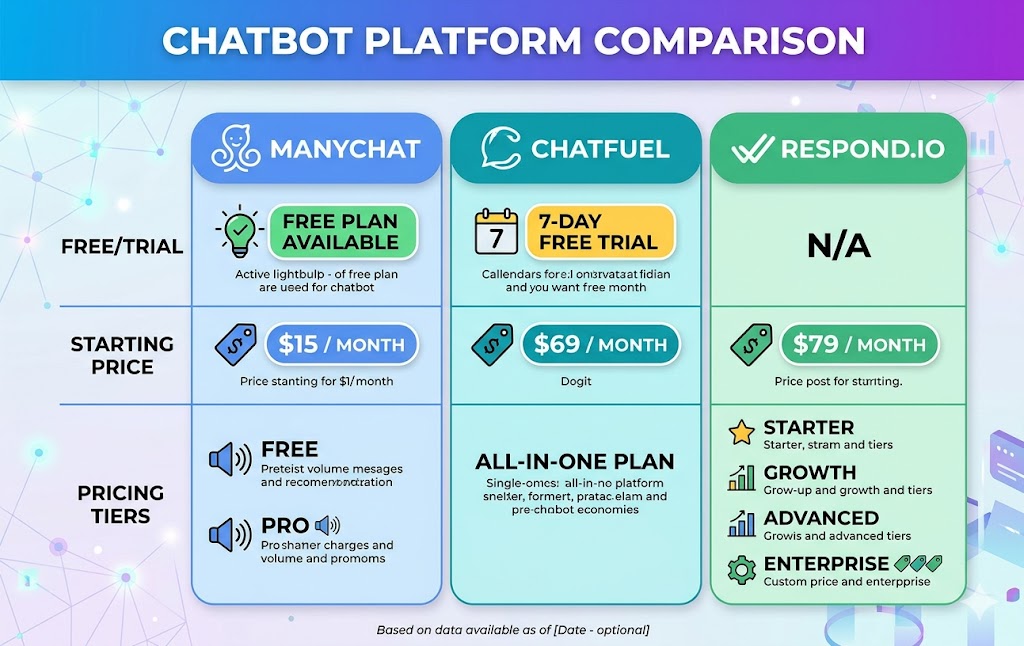
Pricing also starts in very different places based on official pages:
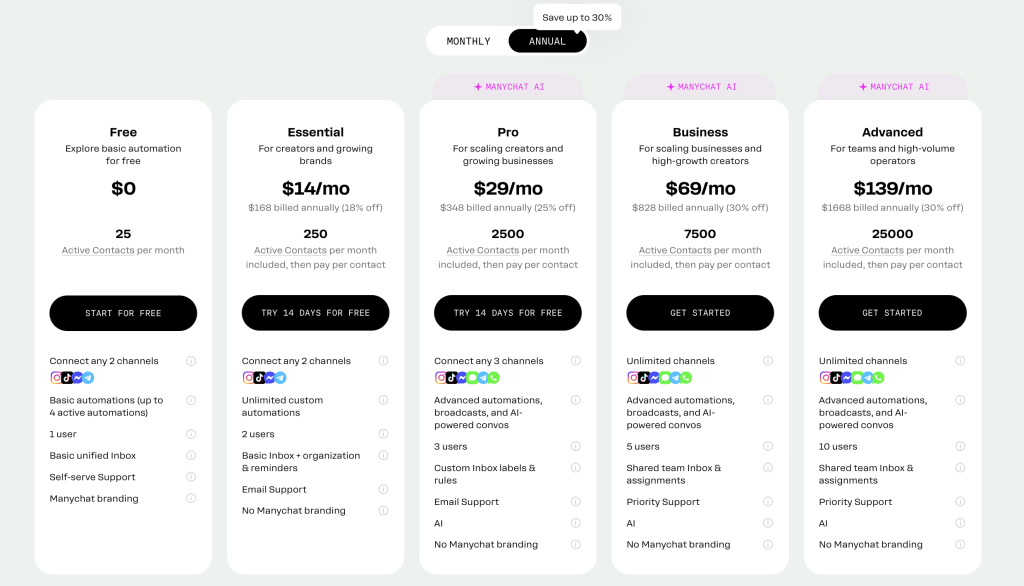
- Manychat: Free plan, with Pro starting at $15 per month based on contact volume.
- Chatfuel: One plan at $69 per month, with a 7-day free trial.
- Respond.io: Starter at $79 per month, Growth at $159 per month, Advanced at $279 per month, and Enterprise at custom pricing.
That spread tells you a lot already. Manychat enters low. Chatfuel keeps it simple. Respond.io aims higher and looks more team-operations heavy.
Manychat Deep Dive
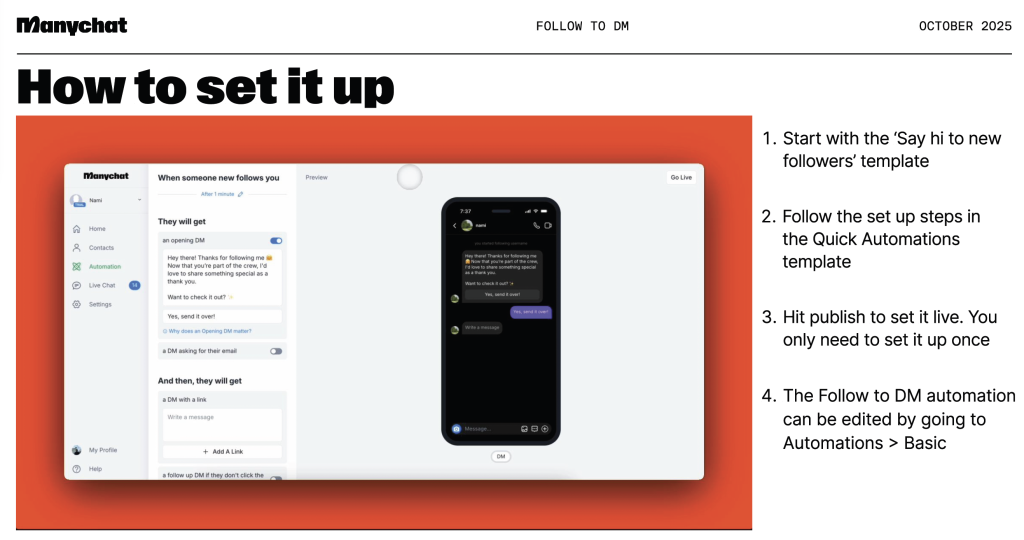
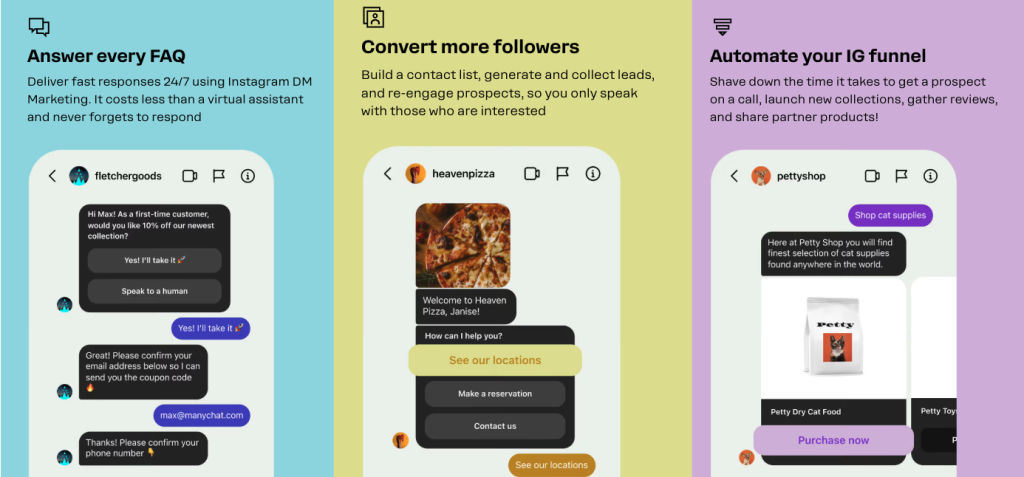
Manychat’s strength is clarity. The official homepage does not hide what it wants to be. It is built around social and messaging-channel automation, especially where comments, DMs, mentions, follow-ups, and lead capture can turn audience attention into revenue.
The strongest official Manychat signals are:
- Instagram, WhatsApp, TikTok, and Messenger support.
- Quick automations and custom flows.
- Comment-to-DM and auto-reply style use cases.
- Email and SMS list growth language.
- A no-code setup path with AI assistance for building flows.
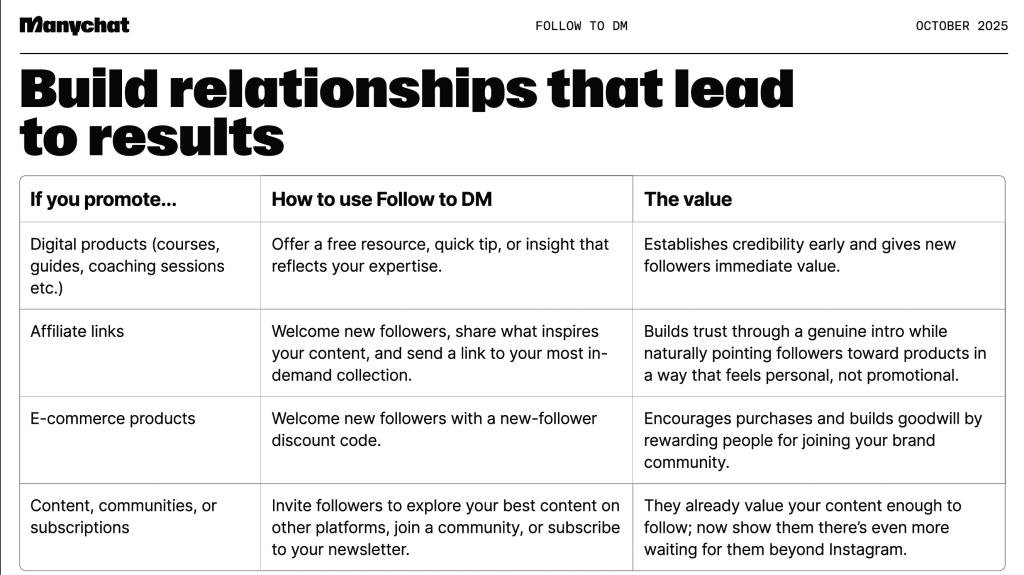
That makes Manychat feel very natural for creators, ecommerce brands, social media marketers, and agencies that live inside engagement loops. If your business wins by responding fast, turning comments into conversations, and capturing intent before it cools off, Manychat fits the moment well.
Its pricing structure also lowers the barrier to testing. The official pricing page shows a free tier and a Pro plan that starts at $15 per month, with billing tied to contact list size. That is attractive for smaller teams that want to start cheap and scale later.
The trade-off is that Manychat is more social-conversation-oriented than broad, central team-operations-oriented. That is great if social is your engine. Less great if your real need is a company-wide communications hub with deep routing and management structure.
If your main priority is social-first growth, try Manychat here and see how quickly your real audience workflow maps into it.
Chatfuel Deep Dive
Chatfuel comes from a slightly different angle. Its official site leans into business communication across WhatsApp, Instagram, TikTok, and website chat, but the pricing page frames the product more like an AI business assistant than a pure growth-automation play.
A few things stand out from the official pages:
- One simple plan at $69 per month.
- Support for WhatsApp, Instagram, TikTok, and website chat.
- AI agent positioning for sales, booking, FAQs, and lead qualification.
- Integrations like Stripe, Shopify, Google Sheets, Zapier, and API access.
- Strong emphasis on business outcomes instead of just follower engagement.
That structure makes Chatfuel feel simpler to explain to business owners who hate plan sprawl. It also feels more obviously commercial in the “turn chat into bookings and sales” sense.
Where Chatfuel can beat Manychat is in straightforwardness. One plan. One pitch. One business assistant story. Where Manychat can beat Chatfuel is in lower entry pricing and a more creator-and social-marketing-native feel.
So if you are a creator or brand marketer, Manychat may feel more aligned. If you are an owner-operator who wants one commercial automation layer and less pricing math, Chatfuel becomes more appealing.
Respond.io Deep Dive
Respond.io is the heavyweight alternative in this comparison. Its official homepage frames the platform as AI-powered customer conversation management software, with a unified team inbox, CRM syncing, native lead management, and support for customers switching channels without breaking the conversation flow.
This is a different posture from Manychat.
Official Respond.io positioning highlights:
- Unified customer touchpoints and CRM sync.
- Team inbox and lead management.
- AI agents.
- Broader sales-and-support operational use.
- Pricing tiers starting at $79 per month for Starter, then $159 Growth and $279 Advanced before Enterprise.
Respond.io even surfaces a customer-story claim about choosing Respond.io over Manychat for significantly higher WhatsApp sales, which tells you the company sees Manychat as a direct comparison in some sales environments.
In practice, Respond.io looks stronger for teams that need assignment, visibility, CRM continuity, and multi-agent workflows. It looks weaker for someone who mainly wants to automate social comments, DMs, and creator funnels at a low starting cost.
Feature Matrix
Here is the practical feature read, not the fluffy brochure version.
- Manychat wins on social-native automation feel.
- Chatfuel wins on pricing simplicity and the “AI business assistant” angle.
- Respond.io wins on team inbox depth and operational structure.
If your top use cases are comment replies, lead capture from content, automatic DMs, and audience growth, Manychat is probably the most natural fit.
If your top use cases are appointment handling, sales qualification, and straightforward business messaging across a few core channels, Chatfuel has a very clean pitch.
If your top use cases involve agents, routing, CRM continuity, and shared visibility across channels, Respond.io is operating in a more robust lane.
The real mistake here is assuming all three are interchangeable. They overlap, yes. They are not the same tool wearing different fonts.
Pricing Comparison
This is where the trade-offs get very obvious.
Manychat is the cheapest official starting point in this group. The pricing page shows a free option and a Pro plan starting at $15 per month, with the cost tied to the contact count. That is friendly for lean teams and for people who want to prove ROI before committing real budget.
Chatfuel is simpler but pricier at the entry point. The official pricing page shows one $ 69-per-month plan with a 7-day free trial. That makes the decision easier, but it also means the jump from “just testing” to “paying” is steeper than Manychat.

Respond.io is clearly positioned above both for teams with more advanced needs. Official pricing starts at $79 per month for Starter, $159 for Growth, and $279 for Advanced, before custom Enterprise.
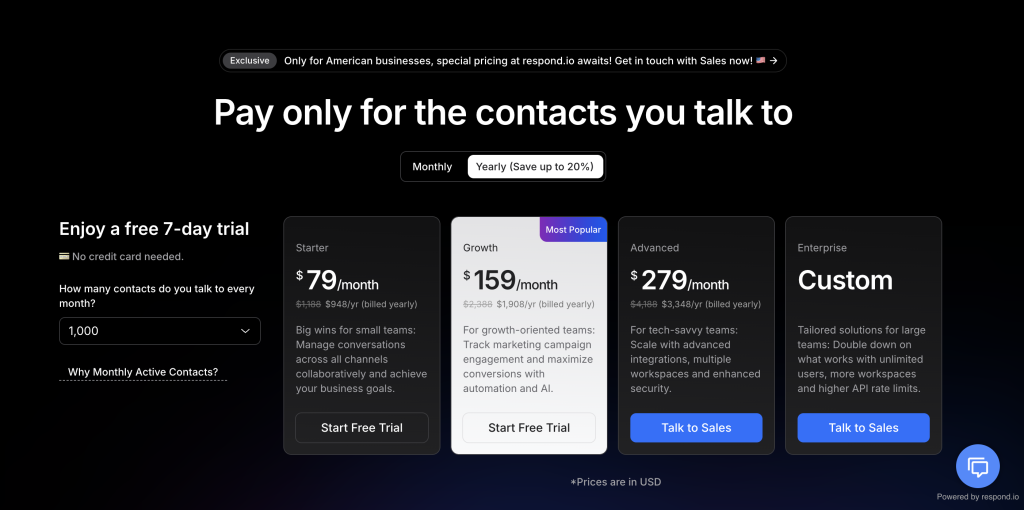
So the pricing ladder looks like this:
- Manychat for low-friction experimentation.
- Chatfuel for simple packaged business use.
- Respond.io for teams that are ready to pay for operational depth.
If you want the lowest-risk starting point, start with Manychat here and test a real campaign rather than an imaginary one.
Use Case Recommendations
Choose Manychat If :
- Your growth engine is social-first.
- You care about Instagram comments, DMs, and creator-style engagement flows.
- You want a lower-cost starting point.
- You need automations that marketers can launch quickly.
Choose Chatfuel If :
- You want an AI business assistant framing instead of a creator-tool vibe.
- You prefer one simple commercial plan over contact-based plan scaling.
- Your use case is more sales, booking, and FAQ driven than audience-growth driven.
Choose Respond.io If :
- You need a true shared inbox feel across a team.
- CRM sync and lead management matter a lot.
- Conversations move across channels and agents.
- You are willing to pay more for operational structure.
What Teams Usually Get Wrong In This Comparison
The biggest mistake is comparing these tools as if they are all trying to win the same customer in the same way. They are not. Manychat is strongest when social engagement is the front door to revenue. Chatfuel is strongest when chat feels more like a business assistant. Respond.io is strongest when conversation operations need structure across a team.
That is why the wrong shortlist can waste weeks. A creator-led brand may overbuy with Respond.io. A support-heavy team may underbuy with Manychat. A business owner who wants quick commercial automation may prefer Chatfuel’s simpler packaging over both of the others. Fit matters more than feature count, and this category punishes vague buying decisions fast.
Verdict
Manychat still earns its place in 2026 because it does not try to be everything. It is strongest when social channels are the growth surface, and fast, automated conversations are the mechanism for conversion. That makes it especially attractive for creators, ecommerce teams, social marketers, and agencies.
Chatfuel is a serious alternative if you want a more packaged business-assistant pitch and do not mind a higher base price. Respond.io is the better alternative if your problem is team conversation management, not just social engagement automation.
So the simplest honest verdict is this: Manychat is not the most expansive option here, but it is probably the most accessible and social-native one. For a lot of growing brands, that is exactly the point.
If that sounds like your lane, give Manychat a try here and compare your first real workflow against the alternatives before you commit.
FAQ
Is Manychat cheaper than its alternatives?
Yes at the entry level. Manychat’s official pricing starts with a free plan and a Pro tier starting at $15 per month, while Chatfuel starts at $69 per month and Respond.io starts at $79 per month.
Is Manychat better for creators than Respond.io?
Generally, yes. Manychat’s official positioning is much more social and creator-oriented, while Respond.io is more focused on unified team inboxes, CRM syncing, and lead management.
Is Chatfuel a direct Manychat alternative?
Yes. Chatfuel supports overlapping channels and use cases, especially for business messaging, sales, FAQs, and automation across WhatsApp, Instagram, TikTok, and website chat.
Should small teams start with Manychat or Respond.io?
Most smaller social-first teams should start with Manychat. Respond.io makes more sense once the conversation workflow is more operationally complex and team-managed.
More on Manychat
Hand-picked guides to help you choose the right tool — no fluff.
 PricingManychat Pricing 2026Real tier prices and what each plan actually includes.
 AlternativesManychat Alternatives 2026Credible alternatives and when each one wins.
 PricingNotify Me Pricing 2026Real tier prices and what each plan actually includes.
 PricingOffice Timeline Pricing 2026Real tier prices and what each plan actually includes.