


In this guide
Quick Verdict
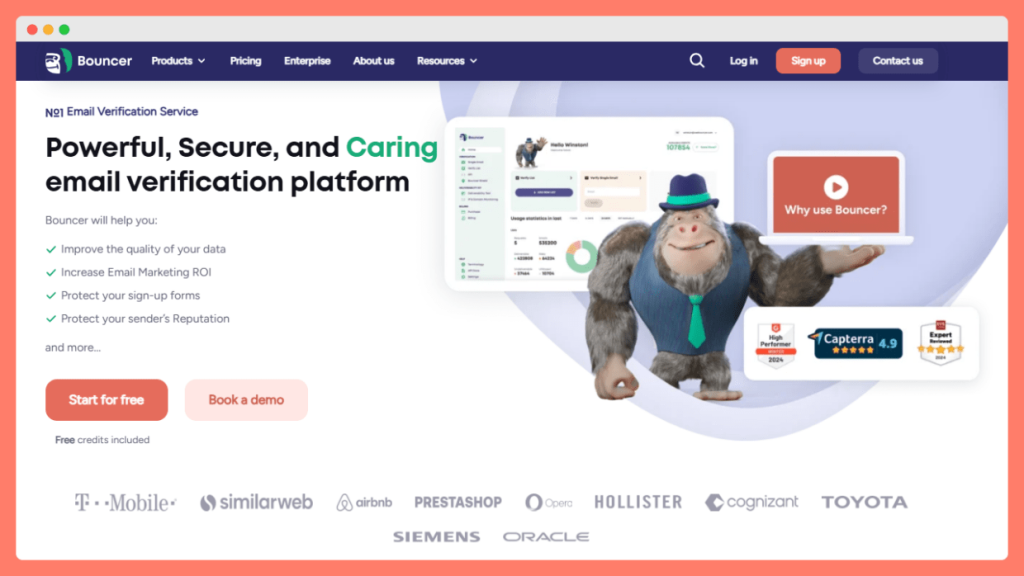
Bouncer is one of those products that becomes easier to understand the moment you stop treating email verification like a boring checklist item. The official site calls it a “Powerful, Secure, and Caring email verification platform,” and that tone is actually useful. It tells you the product is not only about catching bad emails. It is about protecting sender reputation, improving data quality, and keeping email operations cleaner before campaigns, onboarding flows, or outbound sequences go live.
Disclosure: Stack99 earns a commission if you buy through links on this page. It costs you nothing extra and never changes our assessment.
That matters in 2026 because a lot of teams still spend real money sending email to weak lists, invalid contacts, or stale data they never cleaned properly. Bouncer’s pitch is simple: reduce that waste, reduce the risk, and make the process easier to run.
If you want to inspect the product while you read, start with Bouncer here.
Product Facts And Overview
The official site gives Bouncer a very distinct public identity. The main headings and product language keep coming back to a few ideas:
- Powerful.
- Secure.
- Caring.
- How it works.
- What Bouncer can do.
- Security and reliability for everyone.
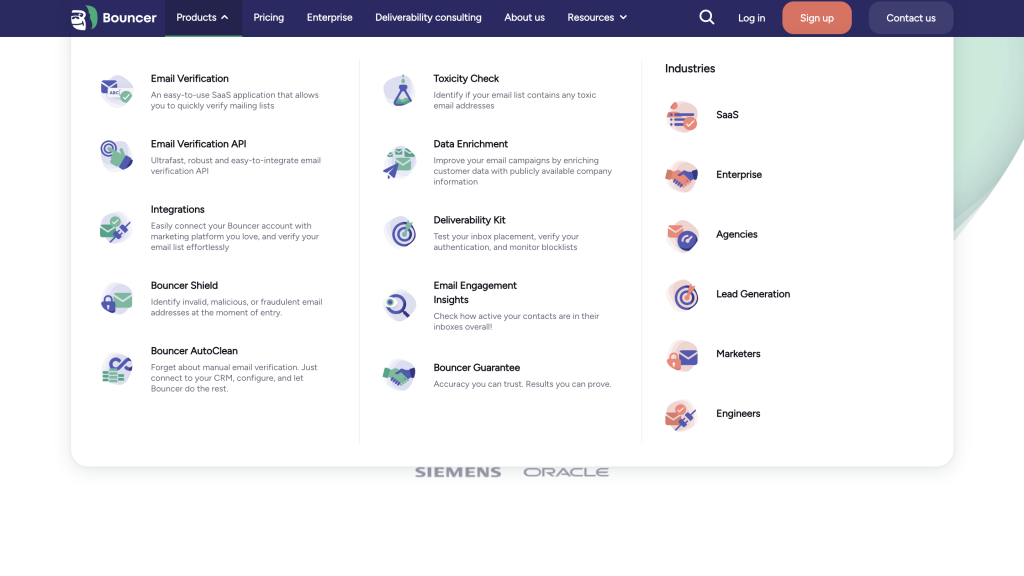
That combination is interesting because it pushes Bouncer beyond the usual “upload a CSV and hope for the best” category. The product is clearly trying to position itself as:
- Easy enough for smaller teams.
- Reliable enough for serious senders.
- Clean enough to fit into repeat email workflows.
The official site also makes a point of saying users from any company size can use it, which suggests Bouncer wants to stay approachable for smaller operators while still being credible to more mature teams.
That is a good product posture for email verification software. If the tool feels too technical, adoption drops. If it feels too lightweight, buyers do not trust it with meaningful list hygiene. Bouncer is trying to sit in the middle.
What Bouncer Is Actually Designed To Solve
The core use case is straightforward: improve email list quality before poor data damages performance.
That includes situations like:
- Marketing campaigns built on old lists.
- Outbound sequences pulling in weak lead data.
- Signup or form flows that create bad contacts over time.
- Partnerships or imports that bring inconsistent records into the system.
Bouncer is not glamorous software. It is operational software. And that is exactly why it matters.
A lot of email pain does not come from copy quality or automation logic. It comes from list quality. If the addresses are wrong, stale, risky, or structurally weak, everything downstream gets worse:
- Deliverability suffers.
- Reporting gets noisier.
- ROI drops.
- Teams make decisions from bad signals.
That is the real problem Bouncer exists to handle.
If that sounds familiar, open Bouncer here and compare its workflow against the way your team currently verifies email data.
Pros And Cons
What we liked
- Clear product positioning around email verification
- Strong official emphasis on security and reliability
- Easy-to-understand use case for both marketing and outbound teams
- Public product messaging that feels approachable instead of overly technical
What to watch
- The official public pages I reviewed do not show a simple pricing table
- The category itself is narrow, so teams expecting a broad email platform may misread the product
- The value depends heavily on whether the business actually sends enough email for data quality to matter operationally
Those tradeoffs are reasonable. Bouncer is not trying to be a CRM, outreach suite, or marketing automation platform. It is trying to be very good at one operational problem. That kind of focus is usually a strength when the problem is real.
Feature Deep Dive
1. Email Verification As The Core Product
The official site makes this the center of gravity. That is a good sign because the strongest point tools are usually the ones that do not bury their core use case under vague AI or platform language.
Bouncer is clearly saying:
This is an email verification platform first.
That makes the buying decision cleaner. You are not sorting through feature sprawl. You are judging whether the verification workflow is worth adopting as a repeatable operational step.
2. Security And Reliability Messaging
One official heading literally says “Security and reliability for everyone.” That matters more than it sounds.
If a company is giving a vendor contact data, even for verification, trust matters. Bouncer is leaning into that concern directly rather than treating it as a tiny footnote. For many buyers, that will be one of the biggest signals that the product takes the category seriously.
3. Ease Of Use
The official site repeatedly suggests the platform is easy to use. That matters because email verification fails as a habit if the interface or process feels clunky.
A team should be able to:
- Understand what it is doing.
- See why verification matters.
- Run the process without turning it into a mini project.
Bouncer looks well aligned to that expectation.
4. Broad Company-Size Fit
The public messaging says users from any company size love the product. Even if you treat that as marketing language, it still signals that Bouncer wants to be relevant for:
- Small startups.
- Agencies.
- Mid-market senders.
- Larger teams with more structured email operations.
That kind of range is useful in this category because data-quality problems are not exclusive to enterprise email programs.
[IMAGE: Bouncer product sections highlighting security, reliability, and usability]
How Bouncer Fits Into A Real Email Operations Workflow
The easiest way to understand Bouncer is to stop thinking about it as a one-time cleanup tool and start thinking about it as a control point inside a repeatable email process.
For example, a team could use Bouncer before:
- A Large newsletter send.
- A New outbound campaign.
- A CRM import from events or partners.
- A Form-source cleanup after a busy lead-generation month.
That matters because weak data usually enters the system in waves, not all at once. One event list, one old spreadsheet, one rushed export, or one poorly formatted signup flow can quietly introduce enough junk to distort campaign performance for weeks.
In that kind of environment, Bouncer is valuable because it gives the team a repeatable moment to ask:
- Which addresses are safe to use?
- Which ones look risky?
- Where are we introducing waste into the system?
That is operationally useful. It helps marketing teams avoid inflated list counts, helps outbound teams protect deliverability, and helps operations teams trust their numbers a little more. None of that sounds dramatic, but the impact adds up very quickly when email is tied to demos, pipeline, nurture, or revenue reporting.
What Bouncer Can Do For Different Team Types
The official headings around “What Bouncer can do?” and “Who is Bouncer for?” are a good reminder that the product should not be judged through only one use case.
For Marketing Teams
Marketing teams can use Bouncer to clean lists before campaigns, protect sender health, and reduce the embarrassment of paying to email invalid or stale addresses. That is especially useful when campaign performance is being watched closely and every weak record drags down the signal.
For Sales And Outbound Teams
Outbound teams benefit when prospect data is checked before sequences go live. If the list is weak, the sequence metrics become misleading fast. Bouncer helps create a better starting point.
For Agencies
Agencies often inherit list-quality problems from clients. That makes verification software valuable not only as a tactic but as a service-quality layer. Running cleaner data can help protect both campaign performance and the agency-client relationship.
For SaaS Operations Teams
SaaS teams with signup flows, webinar registrations, gated content, or imported customer lists can use Bouncer as a way to keep contact quality from degrading silently over time.
Pricing Breakdown
I want to stay strict here: the official public pages I reviewed do not show a simple, clean pricing table with the kind of details I would want to quote as settled pricing. So the honest answer is that buyers should treat the pricing path as something to confirm directly on the official Bouncer experience before making a cost-based decision.
That said, pricing is only part of the evaluation anyway.
The bigger cost question is:
What is weak list quality already costing your team?
That cost may show up as:
- Lower campaign performance.
- Wasted sends.
- Messier outbound reporting.
- Reputation damage over time.
- Team hours spent fixing preventable list problems later.
So even without a clean public pricing card in hand, the economic logic is still easy to understand. If the product helps reduce repeated data-quality waste, it may justify itself quickly for teams that send email at meaningful volume.
If you want to investigate the official product flow directly, try Bouncer here and use your real list-cleaning workflow as the benchmark.
Who Should Use Bouncer
Bouncer looks strongest for:
- Email marketing teams that care about sender quality.
- Outbound or sales teams importing prospect data regularly.
- Agencies managing client email programs.
- SaaS businesses with lead capture flows that create messy contact records over time.
- Teams that want verification to become a normal pre-send habit.
It is less compelling for:
- Businesses that send very little email.
- Teams that already have strong list hygiene deeply embedded elsewhere.
- Buyers expecting a full email platform rather than a specialized verification tool.
That distinction matters because Bouncer is easiest to justify when the business already feels the pain of bad data. If the pain is real, the category makes sense. If the pain is hypothetical, the tool can feel like extra process.
What I Would Check Before Buying
If I were reviewing Bouncer for a real team purchase in 2026, I would focus on a few simple questions:
- How often do bad contacts enter our systems?
- How much email volume do we send every month?
- Do we already have a dependable verification step somewhere else?
- Is poor data already affecting campaign results or outbound efficiency?
Those questions are better than obsessing over feature trivia. The product makes sense when the underlying operational problem is already expensive enough to deserve its own guardrail.
Real-World Use Case
Imagine a B2B SaaS team running webinars, demos, and outbound sequences at the same time. Contacts are coming in from:
- Paid campaigns.
- Imported lists.
- Partner events.
- Website forms.
- Sales enrichment workflows.
That team probably does not have one perfect source of truth. It has a lot of contact flow. That is exactly where verification matters.
Bouncer would fit neatly into that stack as the guardrail before poor-quality addresses contaminate campaign reporting or outbound performance. It is not replacing the CRM or the email platform. It is improving the health of the data moving through them.
[IMAGE: Bouncer use case for marketing and outbound list quality control]
Expert Verdict And CTA
Bouncer is a focused product, and that is the right thing for it to be. The official site presents a strong case for a platform built around email verification, security, reliability, and usability without trying to pretend it is solving every email problem on earth.
That gives it a clear advantage for the right buyer.
If your team sends enough email that list quality affects revenue, reporting, or reputation, Bouncer is worth serious attention. If your team barely sends at all, the product may simply be more process than you need.
For companies living in real email operations, though, that is the whole point: turn list quality into a consistent habit instead of an emergency fix.
If you want to pressure-test the fit, start with Bouncer here and compare one real verification workflow against the cost of your current data mess.
FAQ
What Does Bouncer Do?
Bouncer is an email verification platform. The official site frames it around list quality, reliability, security, and usability for teams that depend on email.
Is Bouncer Only For Big Companies?
No. The official messaging suggests it is used by companies of different sizes, which makes sense for a verification product with broad operational relevance.
Does Bouncer Focus On Security?
Yes. The official site explicitly emphasizes security and reliability as part of the core product story.
Is Bouncer A Full Email Platform?
No. It is better understood as a specialized email verification product rather than a full marketing or outreach suite.
When Should I Use Bouncer?
Use it when bad contact data is already hurting campaign quality, deliverability, outbound efficiency, or confidence in your email metrics.
More on Bouncer
Hand-picked guides to help you choose the right tool — no fluff.
 FeaturesBouncer Top Features 2026The standout features and whether they justify the price.
 ComparisonsBouncer vs Alternatives 2026The strongest competitors compared side by side.
 PricingFreshsales Pricing 2026Real tier prices and what each plan actually includes.
 PricingFreshservice by Freshworks Pricing 2026Real tier prices and what each plan actually includes.