

Who This Post Is For :
Leadpages is a very good fit if your business needs one thing above all else: more leads from focused landing pages. The official product pages are very clear about that. Leadpages is built to help small businesses connect with an audience, collect leads, and close sales.
That makes it especially useful for startups, agencies, and freelancers who do not need a giant website platform but do need pages that convert quickly. If your team wants a page that can be planned, launched, tested, and iterated without a giant production cycle, Leadpages deserves a close look.
If you want to inspect the official product while you read, open Leadpages here.
The niche angle here is simple: Leadpages is strongest when the landing page is the business asset. It is not trying to be everything. It is trying to help you publish better-performing pages with fewer moving parts.
Why It Fits The Niche :
Startups, agencies, and freelancers usually share the same constraint: time.
- Startups Need Fast Validation.
- Agencies Need Repeatable Client Delivery.
- Freelancers Need A Simple Way To Turn Attention Into Leads.
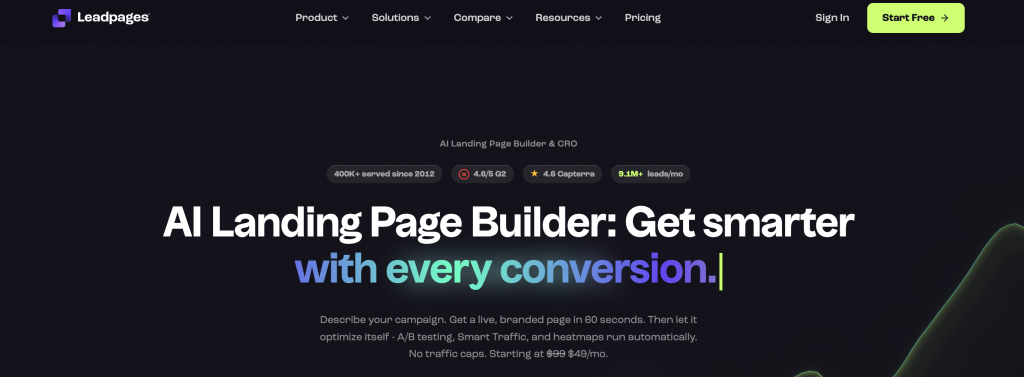
Leadpages fits those groups because the official materials emphasize templates, lead capture, A/B testing, Smart Traffic, and conversion tools. The product is designed around the funnel, not around the vanity of building a huge site architecture first.
The current official pages highlight:
- 14-Day Free Trial.
- 200+ Templates On The FAQ Page.
- 250+ Templates On The Pro Annual Page.
- Unlimited Traffic And Leads.
- 3 Custom Domains.
- 90+ Integrations.
- E-Commerce With No Transaction Fees.
- AI Engine Credits.
That is a very practical stack for niche buyers who care about speed and results.
If that sounds like your use case, open Leadpages here and compare the live plan page against your current funnel setup.
Top Features For The Niche :
The strongest Leadpages features for this niche are the ones that make conversion work easier to repeat.
Templates –
Templates save time, but only if they are actually useful. Leadpages’ official pages currently point to 200+ templates in the FAQ and 250+ templates on the Pro annual page, which suggests the product is built for people who want to start from a proven structure instead of a blank canvas.
Conversion Tools –
The lead generation page calls out A/B testing, Smart Traffic, heatmaps, dynamic text replacement, and lead enrichment. That is the kind of feature set startups and agencies should care about because it helps you learn what works instead of guessing.
Traffic And Lead Limits –
The official materials say there are no traffic caps and no lead caps on the plans highlighted on the product page. That is useful when you expect campaigns to scale faster than your page builder budget.
Integrations –
The Pro annual page highlights 90+ integrations. That matters for startups that need a simple stack, agencies that need client systems to connect, and freelancers who want landing pages to hand off leads cleanly to email or CRM tools.
If you want to see the niche fit in the product context, return to Leadpages here and compare the feature list against your actual funnel.
Real-World Example :
Here is the kind of scenario where Leadpages makes sense.
Imagine a small startup launching a new SaaS tool. The team needs:
- A waitlist page.
- A short demo-signup page.
- A lightweight thank-you page.
- A quick way to test different headlines.
That is a perfect use case for Leadpages because the team does not need to invent a giant website before it can start collecting interest. It just needs a strong page, a reliable form, and a simple way to test what messaging converts.
Now imagine an agency running campaigns for three clients at once. Each client needs slightly different positioning, different traffic sources, and different landing page variations. Leadpages helps because the same conversion logic can be reused across clients without rebuilding the entire process every time.
For freelancers, the value is even simpler. You want to turn portfolio traffic, referral traffic, and social traffic into conversations. You do not need fifty pages. You need one good page that does not fight you.
That is why the niche fit is so strong.
Pricing In Context :
Leadpages currently shows a clear pricing structure on the official site:
- Grow At $99 Per Month.
- Optimize At $199 Per Month.
- Scale At $399 Per Month.
- 7-Day Free Trial.
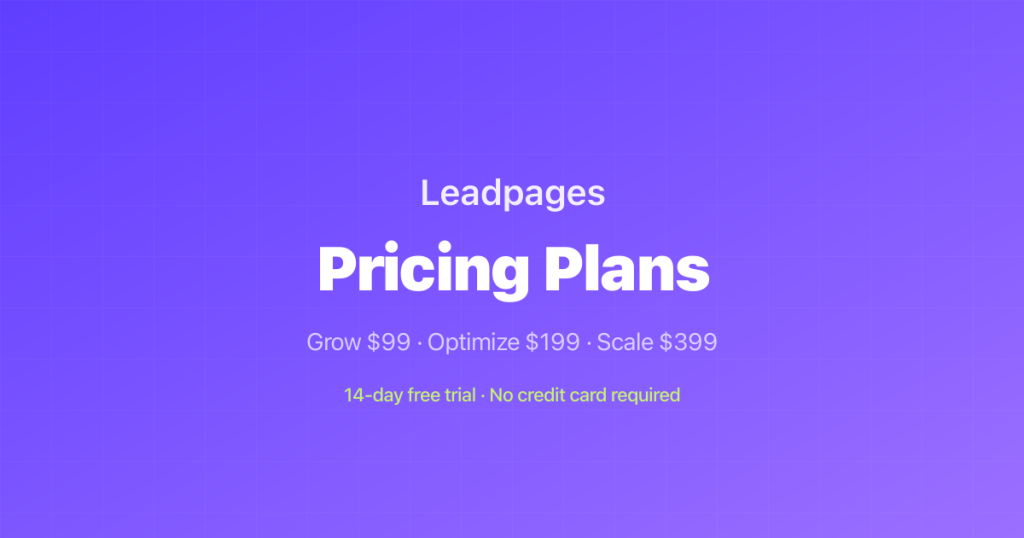
The pricing page also highlights unlimited traffic and leads, which is a major part of the value story. The Pro annual page adds more detail by calling out 30,000 monthly AI Engine credits, AI Engine features like Headlines and Writing Assistant, 3 custom domains, 90+ integrations, and no transaction fees on e-commerce.
That means the cost conversation should be tied to the outcome, not just the monthly billing.
Ask yourself:
- Do I Need More Leads Or More Design Complexity?
- Do I Need Testing Built In?
- Do I Need Multiple Client Or Brand Domains?
- Do I Need A Faster Way To Launch Campaign Pages?
If the answer is yes, then Leadpages becomes easier to justify because the platform is focused on getting pages live and improving them quickly.
If you want to compare the pricing against your funnel needs in real time, open Leadpages here and map your traffic, lead volume, and domain needs before you choose a plan.
Alternative Tools For The Niche :
Leadpages is a strong fit, but it is not the only way to solve the problem.
Use A Heavier Website Builder If –
You need a full brand site, a deep content structure, and many non-conversion pages.
Use A CRM-Led Funnel Stack If –
You already live inside a sales system and only need the page layer to feed it.
Use Leadpages When –
You want a cleaner, faster, conversion-first landing page workflow without turning the project into a six-week redesign.
The point is not to crown one universal winner. The point is to choose the platform that matches the work you actually do.
For a startup, that often means speed.
For an agency, that often means repeatability.
For a freelancer, that often means clarity and low friction.
That is where Leadpages fits nicely.
Setup Steps :
The first setup should stay simple.
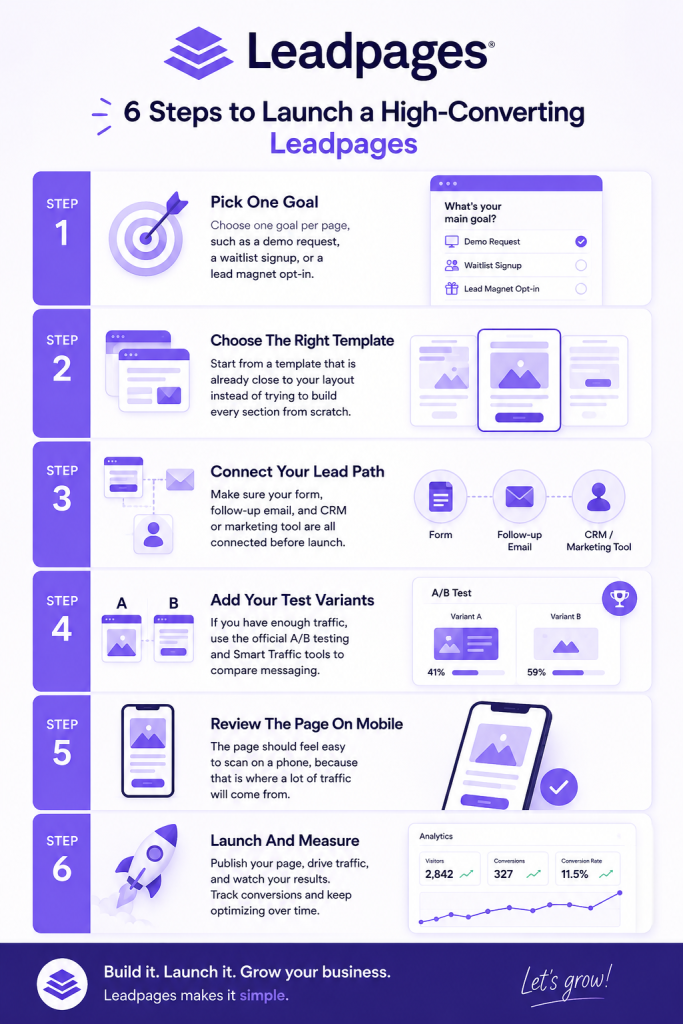
Step 1: Pick One Goal
Choose one goal per page, such as a demo request, a waitlist signup, or a lead magnet opt-in.
Step 2: Choose The Right Template
Start from a template that is already close to your layout instead of trying to build every section from scratch.
Step 3: Connect Your Lead Path
Make sure your form, follow-up email, and CRM or marketing tool are all connected before launch.
Step 4: Add Your Test Variants
If you have enough traffic, use the official A/B testing and Smart Traffic tools to compare messaging.
Step 5: Review The Page On Mobile
The page should feel easy to scan on a phone, because that is where a lot of traffic will come from.
Step 6: Launch And Measure
Use the actual data, not your instinct, to decide what to keep.
The best thing about this workflow is that it keeps the page focused on conversion. Leadpages does not need you to overthink the entire site before it becomes useful.
What Success Looks Like :
The real sign that Leadpages is working for your niche is not that the page looks pretty in a browser tab. It is that the page starts doing the job you built it to do.
For a startup, success might mean the waitlist form starts filling up, and the team learns which headline gets the best response. For an agency, success might mean client pages go live faster, and the reporting conversation gets easier because the structure is already standardized. For a freelancer, success might simply mean the contact form starts turning casual visitors into real conversations.
That is why the platform fits this niche so well. It helps you turn a loose idea into a page with a purpose, and then it gives you enough testing and integration support to keep improving the result instead of rebuilding everything from scratch.
If you treat Leadpages like a conversion system instead of a design toy, it tends to make much more sense.
Verdict :
Leadpages is best for startups, agencies, and freelancers who want a focused landing page and lead generation workflow rather than a giant website stack. The official materials are strong on templates, unlimited traffic and leads, testing tools, AI assistance, integrations, and no-transaction-fee e-commerce.
The pricing is straightforward enough to model, and the free trial gives you a clean way to test whether the platform fits your actual funnel needs.
If you are trying to generate more leads without dragging the project into unnecessary complexity, Leadpages is a very reasonable choice.
If that is the kind of fit you want, open Leadpages here and build a real page before you decide whether to upgrade.
FAQ :
Is Leadpages good for startups?
Yes. The template library, testing tools, lead capture focus, and unlimited traffic and leads make it a practical startup option.
Is Leadpages good for agencies?
Yes. Agencies benefit from repeatable page creation, quick testing, and a simple way to deliver lead gen campaigns for multiple clients.
Does Leadpages have a free trial?
Yes. The official pricing page shows a 7-day free trial, and the FAQ materials mention a 14-day trial.
Does Leadpages support integrations?
Yes. The official pages currently highlight 90+ integrations on the Pro annual plan page.
Does Leadpages charge transaction fees?
The Pro annual page says e-commerce is available with no transaction fees.