


Quick Verdict :
Uniqode is strongest when you want QR codes and digital business cards to behave like real marketing infrastructure instead of one-off design assets. The official site makes that clear. It talks about free QR code generation, custom QR codes, tracking, digital business cards, and an integrations layer that includes docs and API resources.
That makes Uniqode a good fit for teams that need QR codes to connect with the rest of the stack. If your campaign traffic, event materials, packaging, or business cards all need to connect back into a measurable workflow, Uniqode is built for that kind of job.
If you want to explore the product while you read, start with Uniqode here.
What Uniqode Actually Does :
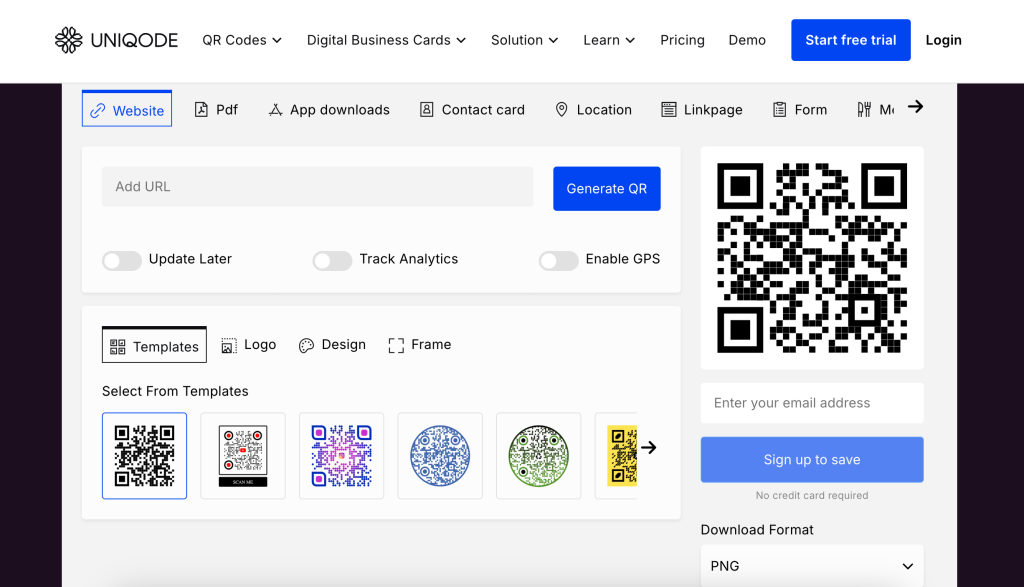
Uniqode is more than a QR code generator. The official homepage shows a product centered on custom QR codes, digital business cards, analytics, tracking, and business use cases that range from marketing to feedback collection to WiFi access.
The practical way to think about it is this:
- It creates QR codes for many use cases.
- It lets you customize the appearance so the code fits your brand.
- It supports tracking so you can see what the code is doing.
- It also supports digital business cards and workflow-style use cases.
That combination is why the integrations angle matters. A QR code tool is only valuable when it can feed real work into the rest of your marketing and operations stack. A code that sits in isolation is just a square on a page. A code connected to your systems becomes measurable.
If you need a QR platform that plays well with your systems instead of sitting outside them, start with Uniqode here and see how the integration story fits your stack.
Integrations That Matter Most :
The official site highlights an integrations docs area and a QR Code API resource, which is the first thing I would look at for real workflow work. That tells you Uniqode is not just about creating the code. It is also about connecting the code to the rest of the journey.
The most important integration categories are:
- Marketing campaign tracking.
- CRM or customer data workflows.
- Event and registration systems.
- Product packaging and print workflows.
- Digital business card distribution.
- Feedback and lead capture flows.
Those are not theoretical categories. They are the places where QR codes actually earn their keep. If your code can send traffic into a campaign, registration flow, or contact capture flow, then you can measure value instead of guessing at it.
Another useful signal is that the site emphasizes scan tracking and real-time updates. That matters because a QR code should not become a dead asset the moment it is printed. Uniqode’s model is designed to keep the destination flexible even after deployment.
Top Integration Use Cases :
1. Marketing Campaigns –
The homepage specifically calls out QR codes for marketing campaigns and tracking what actually works. That is the easiest place to start because it shows the basic integration loop: generate the code, place it in a campaign, and measure engagement.
2. Print Materials –
Uniqode also highlights print materials such as brochures and posters. That is where QR tracking becomes particularly valuable because print is normally hard to measure. If you can attach a trackable code to a flyer or poster, you can finally see whether that asset is doing anything useful.
3. Digital Business Cards –
Digital business cards are a separate but related use case. The site emphasizes creating a business card in minutes, using the mobile app, and sharing contact info instantly. That gives sales and networking teams a practical way to connect offline interactions with digital follow-up.
4. Product Packaging –
Packaging is another strong integration point. QR codes on packaging can connect a physical product to a digital destination, whether that is a manual, a registration page, or a review flow.
5. Event Registration And WiFi –
The site also points to event registration and WiFi access. Those are the kinds of operational workflows where one scan can remove friction for both the attendee and the organizer.
If you want to see the integrations in practice before you commit to a rollout, start with Uniqode here and test one marketing use case first.
How The Setup Flow Works :
Uniqode’s own walkthrough is refreshingly simple.
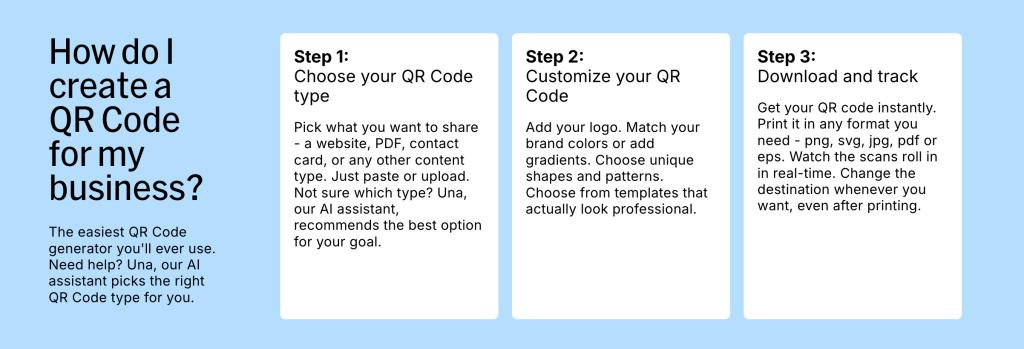
Step 1. Choose Your QR Code Type
You pick what you want to share, whether that is a website, PDF, contact card, or another content type. The homepage also mentions that Una, the AI assistant, can help pick the right code type.
Step 2. Customize The QR Code
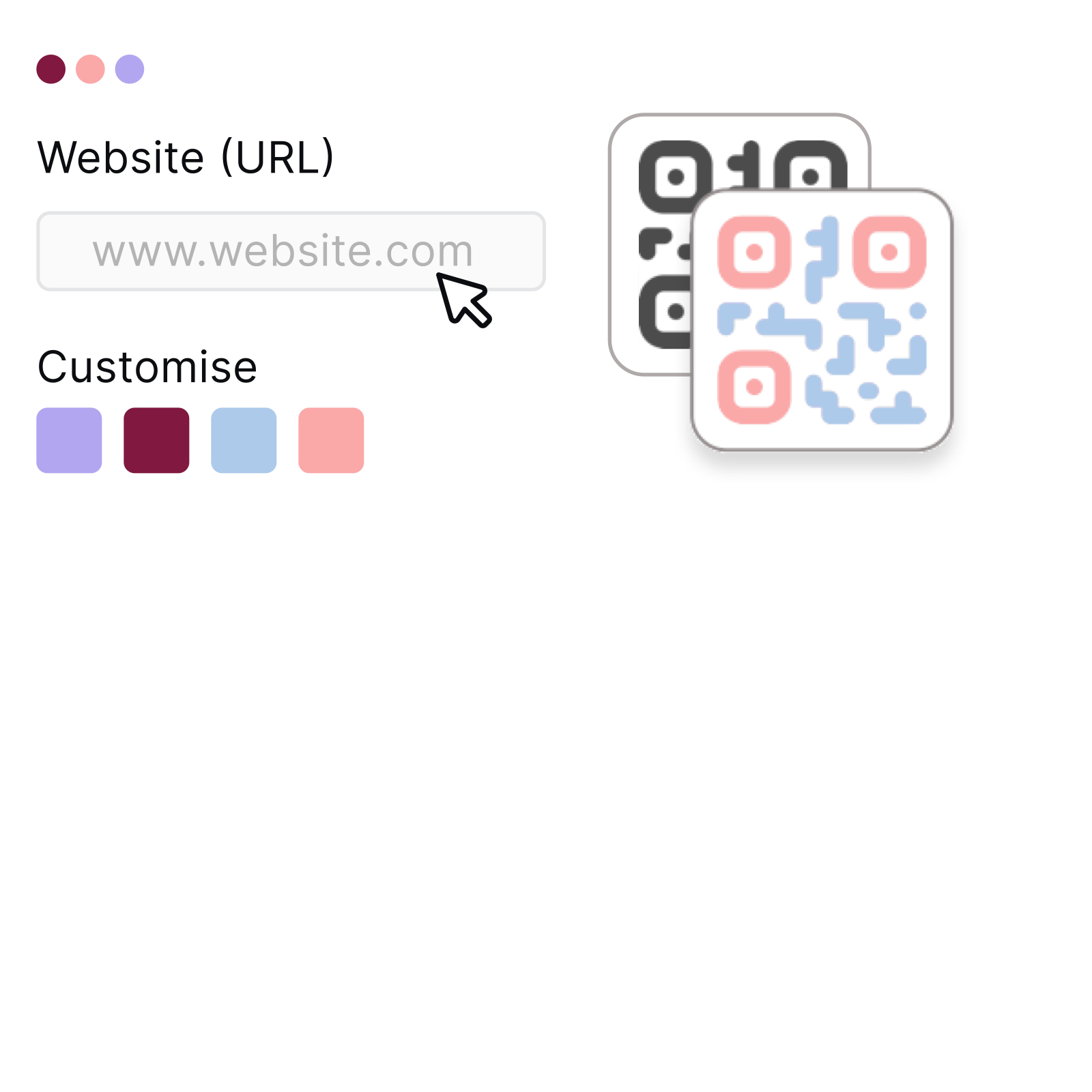
You can add a logo, match brand colors, and choose shapes and patterns. That matters because integrations are more likely to get used when the code looks like part of the brand, not a generic black square dropped on the page.
Step 3. Download And Track
The official page says you can download the code in formats such as png, svg, jpg, pdf, or eps, and then track scans in real time. That is the part that makes the asset operational instead of decorative.
The nice thing about this flow is that it is practical for both marketing and operations. You do not need a giant implementation project to get value from it. You need a clear destination, a useful placement, and a reason to measure the results.
Popular Tech Stack Patterns :
If you are using Uniqode in a real business, the most common stack pattern is simple:
- A QR code or digital business card at the front.
- A tracking or capture step in the middle.
- A CRM, analytics, or email system at the back.
That is the right way to think about integration. The QR code is not the destination. It is the bridge.
For example, a marketing team might use a code on a brochure to send people to a landing page with a form. A sales team might use a digital business card to speed up follow-up after a meeting. An events team might use a code to streamline registration or check-in. An operations team might use a code on packaging to send customers to setup or support instructions.
The stack does not have to be complicated to be useful. It just has to be measurable.
API And Automation Notes :
The official page surfaces a QR Code API and integrations documentation. That is what makes the tool fit automation-minded teams.
If your team builds workflows around webhooks, APIs, or campaign infrastructure, the API layer gives you a way to create and manage code-driven experiences programmatically instead of treating every QR code as a one-off manual task.
That can matter a lot when you are dealing with:
- Large campaign volumes.
- Multiple locations or stores.
- Product packaging that changes over time.
- Digital business cards for a growing sales team.
- Trackable assets that need to stay editable after print.
The biggest practical benefit is that the code can stay flexible. That means you can change the destination later without reprinting the material, which is one of the main reasons teams move to dynamic QR systems in the first place.
If your workflow needs programmatic control, start with Uniqode here and check whether the API and docs are enough for your internal stack.
Troubleshooting The Integration :
The most common integration problems are usually not technical at first. They are workflow problems.
- The QR code points to the wrong destination.
- The code is branded but the destination page is not.
- The team prints assets before the link is finalized.
- Nobody owns the scan data after launch.
- The code exists, but no one checks whether it is being used.
To avoid that, I would use a simple rollout process:
- Finalize the destination.
- Create the branded code.
- Test the scan behavior on a phone.
- Confirm the tracking destination.
- Only then send it to print or publish.
That is boring, but it is the difference between a code that works and a code that gets blamed for the wrong problem.
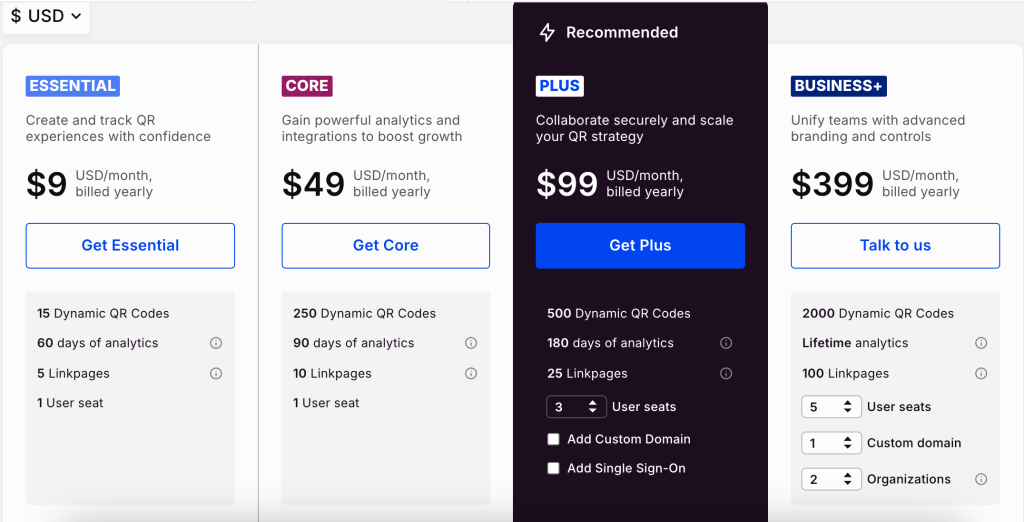
Pricing :
Uniqode’s homepage makes one important pricing point very clearly: the free QR code generator is unlimited for static QR codes, fast, ad-free, and does not require a credit card.
That is useful for evaluation. It means you can test the basic workflow without getting trapped in a trial flow.
For the broader platform, the official site points users toward the pricing page. I would treat that as the place to verify the current plan structure, especially if your team needs dynamic QR codes, analytics, digital business cards, or API access.
The cleanest pricing takeaway is this:
- Static QR creation can be tested for free.
- The broader platform is where tracking, dynamic behavior, and workflow value show up.
That is exactly the kind of split you want in a product like this. Free gets you confidence. Paid features should get you measurable business utility.
xVerdict
Uniqode is a strong fit if you want QR codes to behave like real infrastructure. The product page makes the right promises: customization, tracking, API resources, and workflow use cases that go beyond novelty.
If your team needs codes that can connect campaigns, packaging, business cards, or events back into a measurable process, it is worth a serious look.
If you want to test that workflow for yourself, start with Uniqode here and start with one campaign path before rolling it across the whole team.
Verdict :
Uniqode is a strong fit if you want QR codes to behave like real infrastructure. The product page makes the right promises: customization, tracking, API resources, and workflow use cases that go beyond novelty.
If your team needs codes that can connect campaigns, packaging, business cards, or events back into a measurable process, it is worth a serious look.
If you want to test that workflow for yourself, start with Uniqode here and start with one campaign path before rolling it across the whole team.
FAQ :
Is Uniqode just a QR code generator?
No. It is a QR code platform with customization, tracking, digital business cards, API resources, and integrations documentation.
Can I use Uniqode for marketing campaigns?
Yes. The official site explicitly calls out QR codes for marketing campaigns and tracking scan performance.
Does Uniqode support editable destinations?
Yes. The site emphasizes trackable codes and the ability to change destinations after printing.
Is there a free way to try it?
Yes. The homepage says the static QR generator is free, fast, ad-free, and does not require a credit card.
Who should buy it?
Marketing teams, event teams, sales teams, and operations teams that need QR codes to connect into a wider workflow.