

Why Integrations Matter
ElevenLabs is not just selling voice generation in 2026. Its official site positions the product as AI voice infrastructure for creators, developers, enterprises, and conversational agents.
That means integrations matter a lot.
If the product only created audio in isolation, it would still be useful. But its official docs and integrations pages show a broader goal: letting teams connect voice generation, conversational agents, apps, websites, mobile experiences, telephony, and workflow tools into one operating layer.
That is why this guide matters. The platform becomes much stronger when you understand how it fits into the rest of a stack.
If you want to explore the platform while you read, start with ElevenLabs here.
Top Integration #1: REST API And Official SDKs
The official ElevenLabs documentation is very clear that its capabilities are accessible through a REST API, official Python and TypeScript SDKs, and a web app for no-code use.
That is the backbone of the integration story.
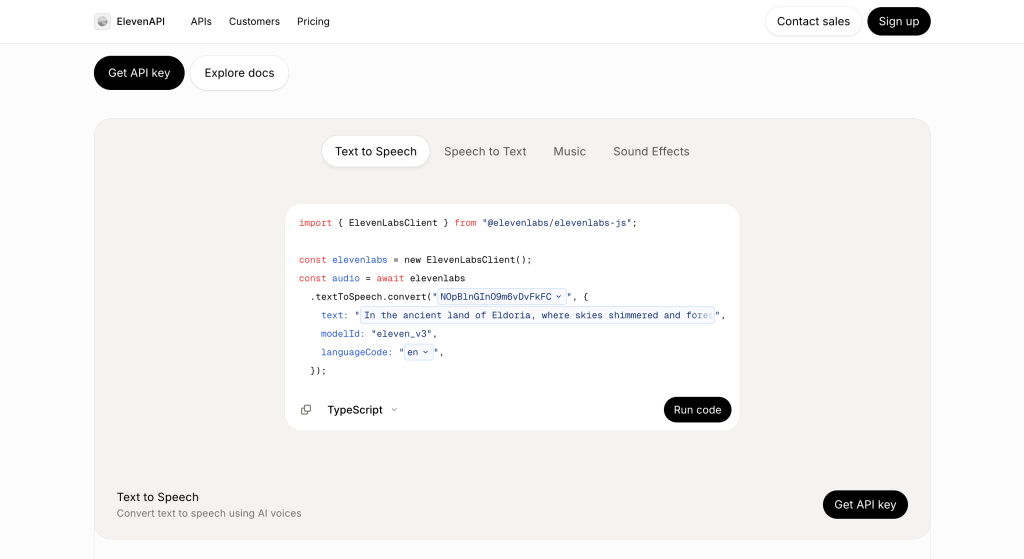
It matters because the API-first approach lets teams:
- Build custom voice workflows.
- Connect text, speech, and agent logic into products.
- Automate voice generation inside internal systems.
- Move from manual audio creation to programmable operations.
For developers, this is the main reason ElevenLabs is more than a standalone voice tool.
Top Integration #2: Agent Integrations Across Automation And CRM
ElevenLabs’ official conversational agent integrations page shows that the platform connects with a surprisingly wide range of workflow categories.
The page explicitly lists integrations across:
- Automation.
- CRM.
- Customer Support and CX.
- Data platforms.
- Payments.
- Retail.
- Scheduling and communication.
- Telephony.
That is a strong signal that ElevenLabs wants its agent product to sit inside business workflows, not only demo environments.
The official page specifically mentions tools such as Zapier, n8n, Make, Salesforce, Pipedrive, Monday.com, Zendesk, ServiceNow, Stripe, Shopify, Slack, Mailchimp, Calendly, and Cal.com.
That is a real integration ecosystem.
If voice agents are your main interest, start with ElevenLabs here and compare those official integration categories against the systems your team already uses.
Top Integration #3: Web, Mobile, And Embedded Deployment
The official integration documentation also shows that ElevenLabs is serious about deployment, not only model access.
The docs include official paths for:
- Embedding a widget in a website.
- Building with React components.
- Building React web apps.
- Native iOS with Swift SDK.
- Native Android with Kotlin SDK.
- Cross-platform apps with React Native.
That matters because many voice products stop at the API level and leave the deployment story vague.
ElevenLabs does not. It clearly documents how to get voice agents into real user environments.
For product teams, this is one of the platform’s most practical strengths for integration.
Top Integration #4: Telephony And Real-Time Voice Workflows
Another standout part of the official docs is the emphasis on telephony and real-time deployment.
The integration documentation lists:
- SIP trunk integration.
- Batch outbound calls.
- Twilio integration.
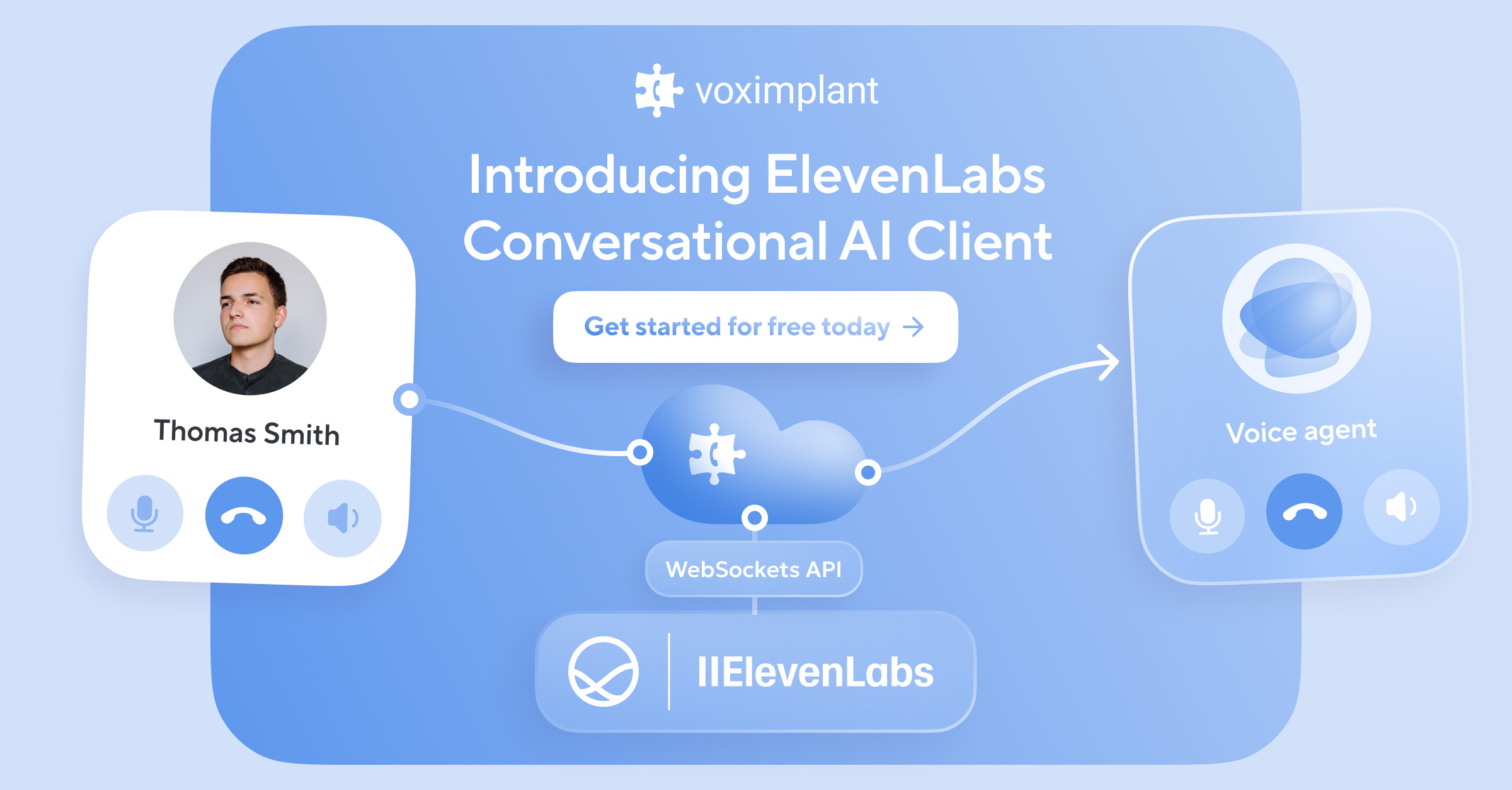
- WebSocket API for custom integrations.
- Real-time events.
That is a very strong enterprise and developer story.
It means ElevenLabs is not limited to prerecorded voice use cases. It can also sit closer to live conversational infrastructure.
That makes the platform especially relevant for:
- Voice support workflows.
- AI call experiences.
- Automated outreach.
- Real-time customer interactions.
Top Integration #5: Creator Workflow And Content Export
The official homepage positions ElevenLabs around creators as much as developers, and the official app help page reinforces that.
The app documentation says users can:
- Choose synced voices and presets.
- Create voiceovers with current models.
- Export clips into tools like CapCut, iMovie, or Instagram.
- Use one account across the web and mobile.
That matters because creator workflows often live across multiple tools.
ElevenLabs becomes more useful when it can generate audio once and move it cleanly into editing, publishing, dubbing, and social workflows.
This is a less technical integration angle, but it is still important.
Popular Tech Stacks For ElevenLabs
Based on the official site and docs, the most natural ElevenLabs stacks look like this:
- Developer stack: REST API + Python or TypeScript SDK + React app + WebSocket layer.
- Agent stack: ElevenLabs agents + automation connectors + CRM + support tools + scheduling tools.
- Creator stack: ElevenCreative + mobile app + export into editing and publishing tools.
- Telephony stack: Twilio or SIP trunk + real-time agent flows + event-driven integrations.
That range is one reason ElevenLabs stays flexible. It does not force every user into the same operating pattern.
If you want to test one of those stack directions, start with ElevenLabs here and map the official docs against one real product, support, or content pipeline.
Why The Integration Story Is Stronger Than It First Looks
At first glance, some buyers still think of ElevenLabs as only a voice generation vendor.
The official docs and integrations pages tell a much broader story. They show a platform that can plug into websites, mobile apps, telephony systems, support desks, commerce workflows, payment flows, CRMs, and custom agent stacks.
That matters because infrastructure products become much more valuable when they can flex across very different operating environments without forcing every user into the same pattern.
Pricing Context
The official ElevenLabs pricing page currently shows these visible plan levels:
- Free for a month.
- Starter at
$6per month. - Creator at
$22for the first month with a visible$11monthly promotional figure. - Pro at
$99per month. - Scale at
$299per month. - Business at
$990per month. - Enterprise as the custom upper tier.
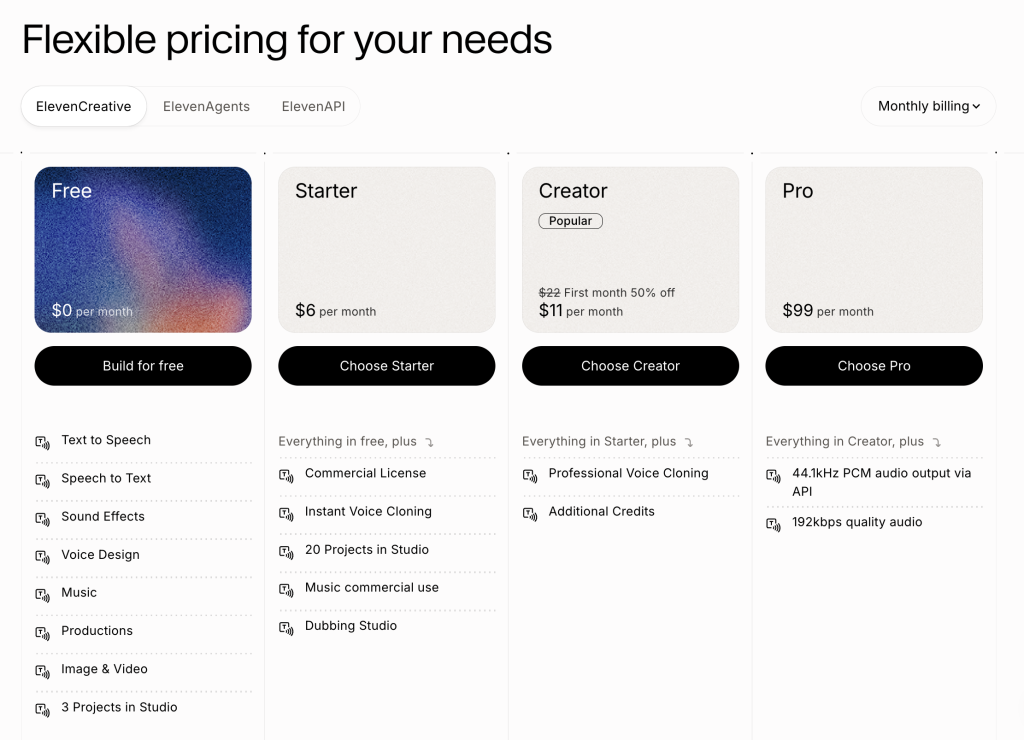
The visible page also shows credit-based positioning and category-specific usage logic, which makes sense for a platform that spans creators, agents, and APIs.
That pricing ladder is helpful because it signals that ElevenLabs can work for individual builders as well as bigger operational teams.
API Overview
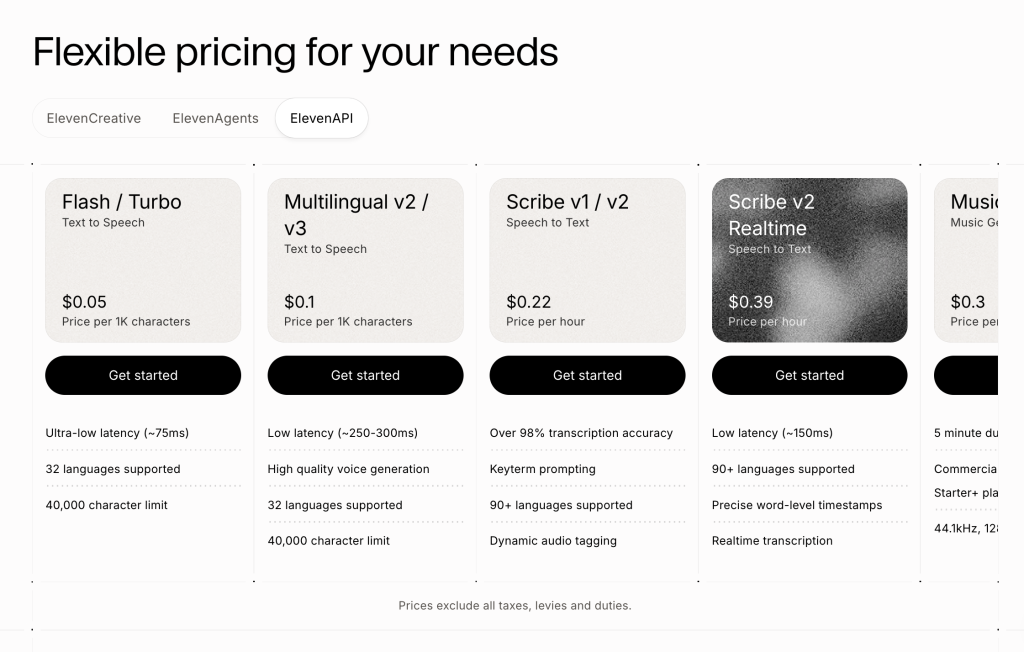
The official documentation says ElevenLabs provides AI voice infrastructure for:
- Text to speech.
- Speech to text.
- Voice cloning.
- Conversational agents.
- Generative audio.
It also notes that official SDKs exist for Python and TypeScript and that the platform supports web app access for no-code usage.
That is a healthy API story because it gives technical teams multiple ways to start:
- Fast prototype through the web app.
- Product built through the API.
- App integration through SDKs and deployment guides.
That staged adoption path is a real advantage because teams can move from experimentation into production without abandoning the platform.
Troubleshooting Integration Fit
The most important question is not whether ElevenLabs has integrations in general. It is whether it has the right integration depth for your use case.
A few practical questions help:
- Do you need creator exports or business workflows?
- Do you need embedded web or mobile deployment?
- Do you need telephony support?
- Do you need CRM and automation connections for agents?
- Do you need custom low-level control through WebSocket APIs?
Those questions matter because ElevenLabs serves multiple buyer types, and the best setup path depends on which one you are.
Another useful way to frame it is to ask where the voice layer will actually live.
If it lives inside a product, the API and SDK path matters most.
If it lives inside support or CX, the CRM, support, telephony, and workflow integrations matter more.
If it lives inside a creator workflow, exports, app access, and quick editing paths matter much more than agent deployment.
That simple question usually makes the right integration path much easier to choose.
It also keeps teams from overbuilding too early.
That discipline matters because the fastest way to lose momentum with a voice platform is to choose an integration path that is more complex than the use case actually requires.
Verdict
ElevenLabs has a strong integration story in 2026 because the official platform goes well beyond simple voice generation.
The biggest integration strengths are the REST API and SDK foundation, broad agent integrations across business systems, web and mobile deployment paths, telephony support, and creator-friendly export workflows.
That is why the platform keeps showing up in serious voice conversations. It can fit product, creator, and customer-experience stacks without pretending those are all the same thing.
If you are evaluating whether it fits your workflow, start with ElevenLabs here and compare the official API, SDK, widget, mobile, and agent-integration paths against the exact deployment model you need.
FAQ
Does ElevenLabs have an official API?
Yes. The official documentation says ElevenLabs provides a REST API along with official Python and TypeScript SDKs.
What business systems does ElevenLabs integrate with?
The official agent integrations page lists categories such as automation, CRM, customer support, payments, scheduling, retail, data platforms, and telephony, with named integrations including Zapier, n8n, Make, Salesforce, Zendesk, Stripe, Shopify, Slack, Calendly, and Twilio.
Can ElevenLabs be deployed on web and mobile?
Yes. The official integration docs include web widgets, React components, Swift SDK, Kotlin SDK, and React Native guidance.
Who benefits most from ElevenLabs integrations?
Developers, conversational AI teams, support organizations, and creator workflows benefit the most because the platform supports both programmable voice infrastructure and no-code or app-based usage.