


In this guide
When To Consider Alternatives :
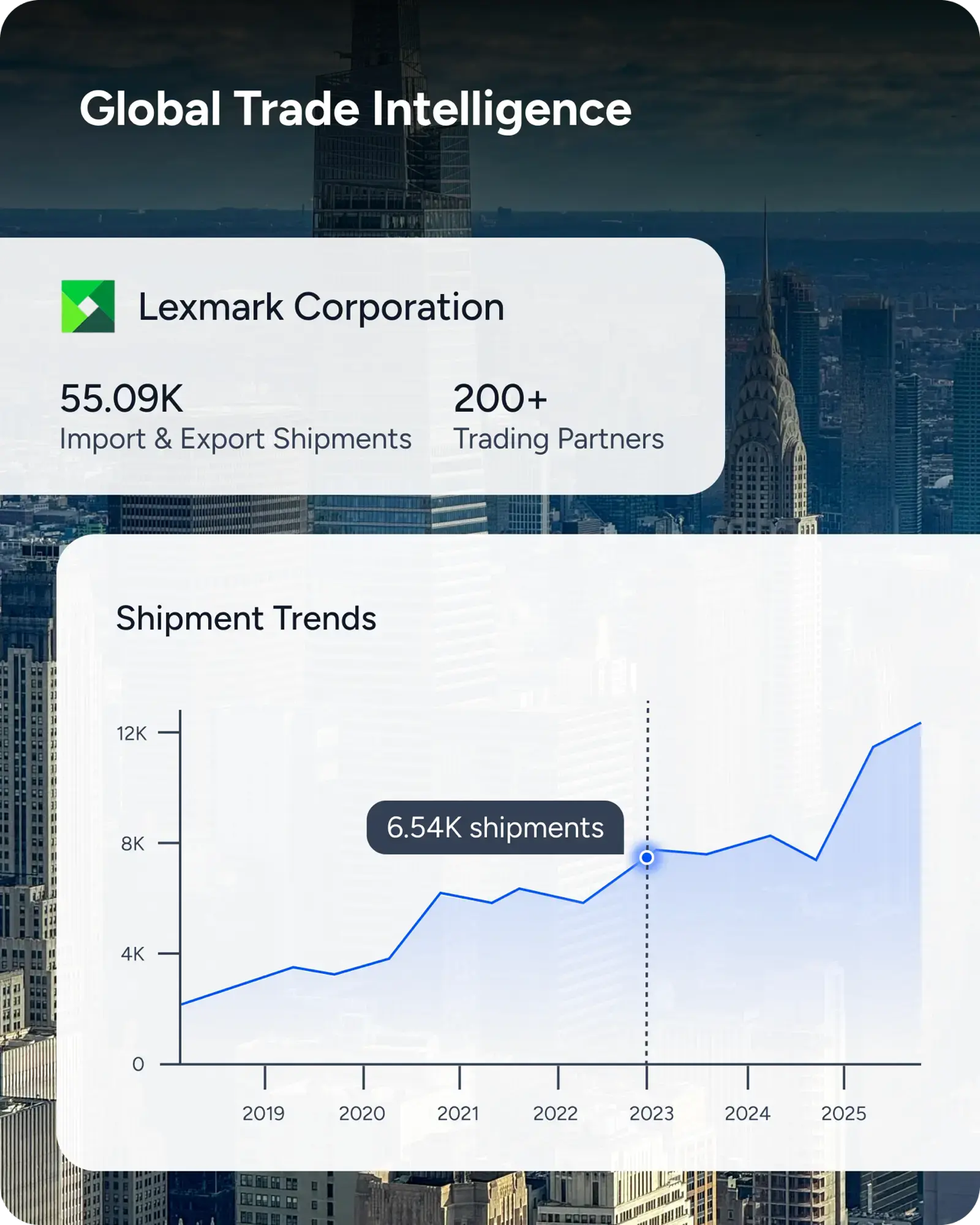
Volza is a serious product in 2026 if your team wants global export-import intelligence with deep shipment data, search workflows, and market discovery across a very large country footprint. The public pricing page leans hard into that value story: 203 countries, billions of shipment records, opportunity discovery, and high claimed ROI for traders and sourcing teams.
Disclosure: Stack99 earns a commission if you buy through links on this page. It costs you nothing extra and never changes our assessment.
So why would someone look for Volza alternatives?
Usually for one of these reasons:
- You want a simpler tool.
- You want a different pricing model.
- You care more about one market than global coverage.
- You need a more recognizable enterprise procurement brand.
- You want a product that feels easier to evaluate at a glance.
If you want to compare Volza itself while you read, start with Volza here.
Alternative 1: ImportYeti
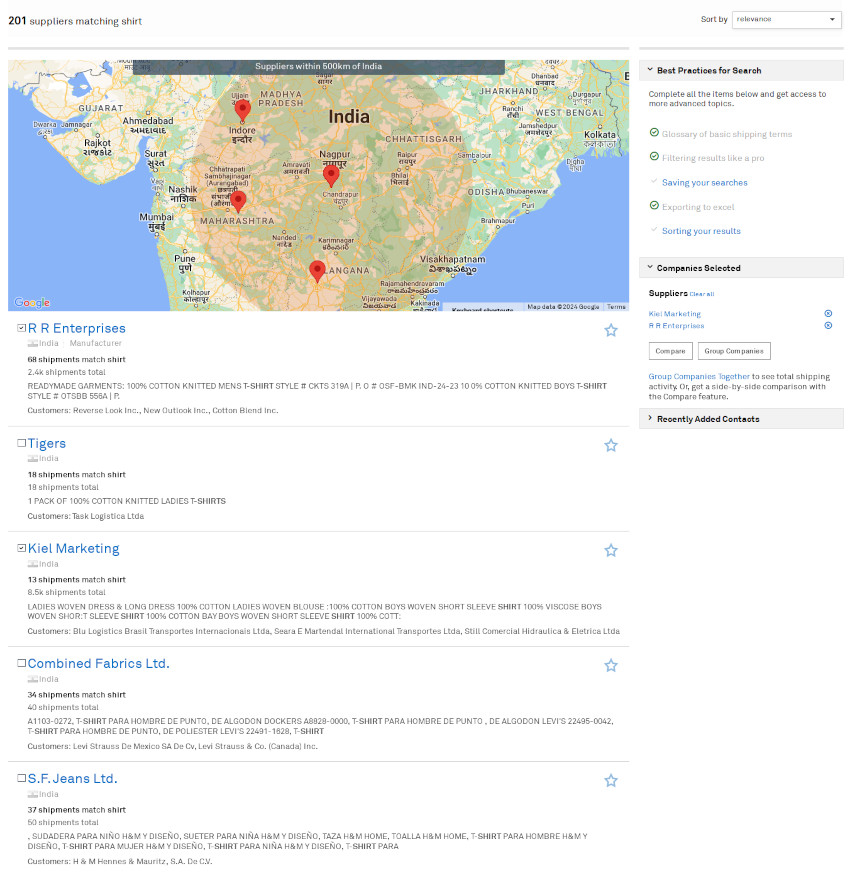
ImportYeti is one of the most obvious alternatives because it is well known for making supplier and shipment discovery feel more accessible.
Why it is relevant:
- Friendly discovery-first experience.
- Useful for sourcing and supplier research.
- Lower-friction entry point for many users.
Compared with Volza, ImportYeti is often attractive when the buyer wants something lighter and more approachable. Volza usually looks stronger when the user wants broader database depth and more structured commercial capability.
That makes ImportYeti a useful baseline comparison. It helps buyers separate “we need something easy to start with” from “we need a heavier trade-intelligence engine.”
Alternative 2: Panjiva
Panjiva is a very credible alternative for teams that want trade intelligence through an established market-intelligence brand.
Why buyers consider it:
- Strong brand recognition.
- Relevance for supply-chain and trade teams.
- Useful for corporate sourcing and market intelligence workflows.
Compared with Volza, Panjiva can feel more enterprise-shaped. Volza can feel more aggressively positioned around self-serve discovery and broad global database reach.
That difference matters when the buyer is balancing recognition and usability. Some teams want the known enterprise brand. Others want a faster self-serve workflow.
Alternative 3: Trademo
Trademo is relevant for buyers who want trade intelligence, supply-chain visibility, and commercial insight with a more modern intelligence-platform feel.
Why it matters:
- Strong relevance for global trade research.
- Useful for businesses tracking suppliers, buyers, and market movement.
- Better fit for teams that want trade visibility plus intelligence workflows.
Compared with Volza, Trademo can appeal when a team wants a strong platform narrative around trade intelligence, while Volza stays very explicit about global data coverage and opportunity finding.
That is why Trademo is a meaningful alternative even when the categories overlap. It can feel more intelligence-platform oriented, while Volza feels more coverage-and-discovery driven.
Alternative 4: ImportGenius
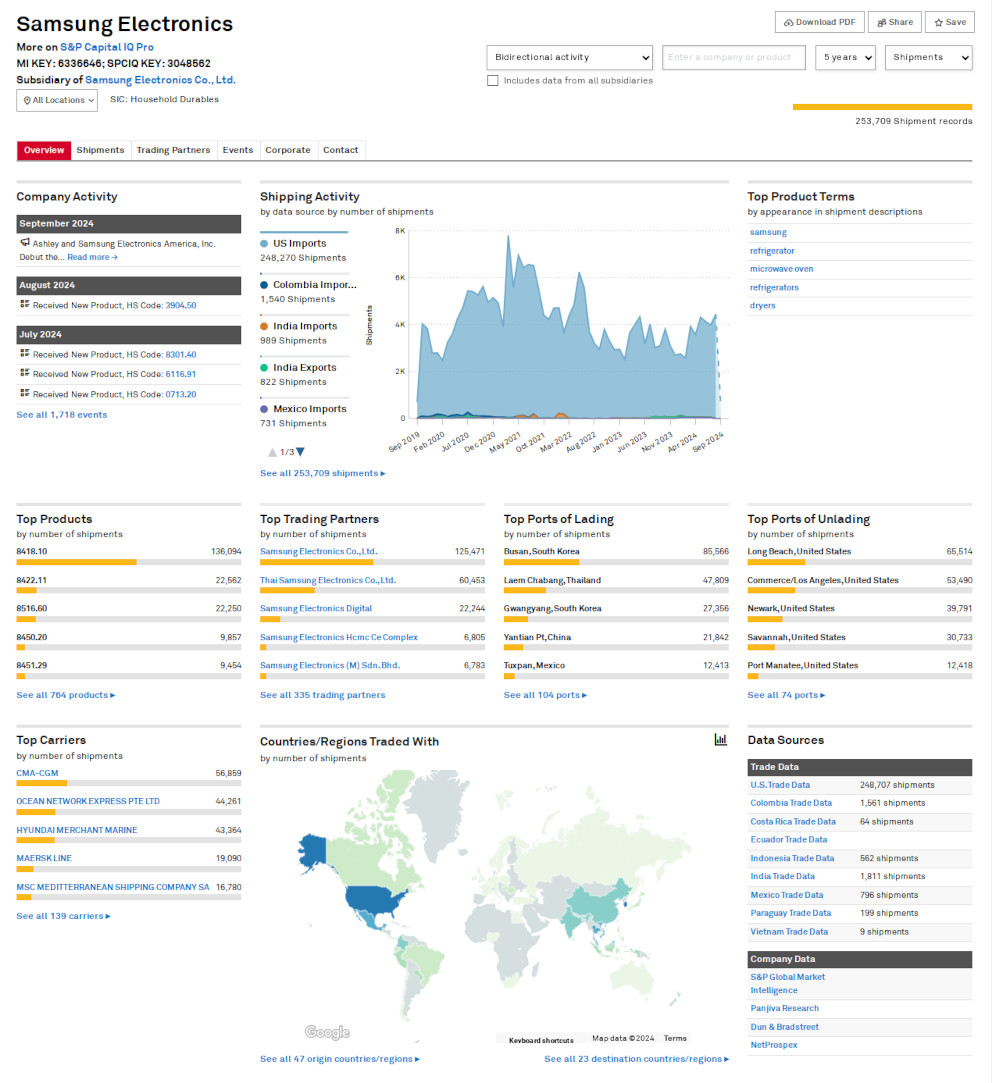
ImportGenius is another meaningful comparison point because it has long been part of the shipment-data and supplier-intelligence conversation.
Why buyers look at it:
- Import and shipment research relevance.
- Familiarity for sourcing and competitor-analysis use cases.
- Practical value for buyers tracking supply chain movements.
Compared with Volza, ImportGenius may appeal to buyers who want a narrower shipment-intelligence research experience without necessarily buying into Volza’s broader “203 countries and massive ROI” style of positioning.
For smaller sourcing teams, that narrower feel can actually be an advantage if it keeps the workflow simpler and faster to learn.
Alternative 5: Datamyne
Datamyne also belongs in this alternatives conversation because it is a recognizable trade-data product for businesses doing import-export research and supplier analysis.
Why it is relevant:
- Longstanding trade-data relevance.
- Useful for import-export market research.
- Good fit for buyers who prioritize established commercial trade-data tooling.
That makes it a solid comparison point for teams deciding whether they want Volza’s scale-heavy positioning or a different enterprise trade-data feel.
It is also relevant for teams that already understand the trade-data category well and want to compare vendor style as much as raw data access.
Comparison Matrix :
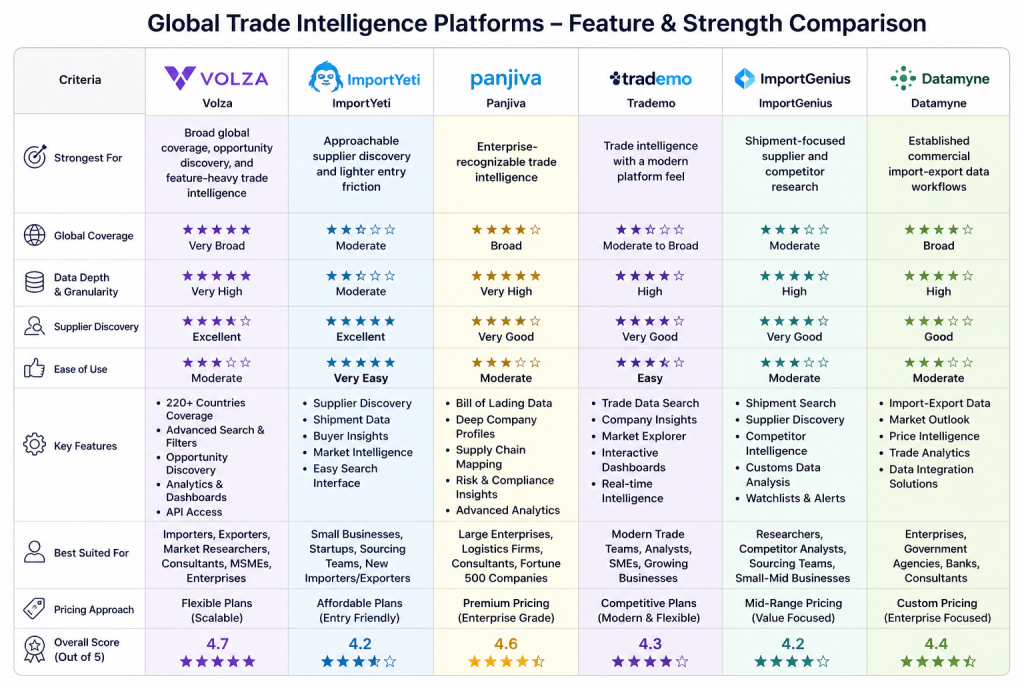
Here is the simple practical read:
- Volza: strongest for broad global coverage, opportunity discovery, and feature-heavy trade intelligence.
- ImportYeti: strongest for approachable supplier discovery and lighter entry friction.
- Panjiva: strongest for enterprise-recognizable trade intelligence.
- Trademo: strongest for trade intelligence with a modern platform feel.
- ImportGenius: strongest for shipment-focused supplier and competitor research.
- Datamyne: strongest for established commercial import-export data workflows.
That does not create one universal winner. It creates several different buying styles.
That is why alternatives research matters in this category. Trade-data tools often look similar from a distance, but the real differences show up in:
- Coverage depth.
- Search experience.
- Pricing clarity.
- Enterprise feel.
- Self-serve usability.
Those differences matter a lot because these tools are usually purchased to support real sourcing, trade, and market decisions, not casual curiosity.
That means even small workflow differences can become expensive later. A tool that feels great for occasional lookups may feel weak when the team starts building repeatable sourcing or expansion decisions around it.
Pricing Context :
Volza’s official pricing page is rich in feature detail. It currently highlights:
- A new free trial at $0.
- Startup.
- SME.
- Corporate.
The public page also emphasizes plan differences such as:
- Country coverage.
- Search limits.
- Shipment view access.
- Download credits.
- Number of users.
- Workspace limits.
- Support access.
That is useful because the commercial story is not only about plan names. It is about how much data access and operational depth the team actually needs.
One thing worth noting is that Volza’s public pricing page is much clearer about feature and usage structure than it is, at first glance, about simple sticker-price communication in the search result summary. That means some buyers may still need a more deliberate evaluation step.
That is exactly where alternatives can become attractive.
For some teams, that is not a problem at all. They are happy to evaluate a more complex platform if the data depth and opportunity upside are strong enough. For other teams, faster commercial clarity is part of the buying experience itself.
Some buyers want:
- Faster pricing comprehension.
- Simpler usage framing.
- A lighter onboarding decision.
Others will gladly accept more pricing complexity if the data depth and opportunity discovery are genuinely stronger.
If you want to compare that trade-off directly, start with Volza here and evaluate the actual coverage, download, and search needs your team has instead of guessing from brand reputation alone.
That is the smartest way to judge these tools anyway. Country count, search limits, and download allowances matter far more in practice than generic “best trade intelligence platform” claims.
It is also why serious buyers should compare one live workflow, not ten marketing headlines. Trade-intelligence software earns its keep through real research outcomes.
When To Stick With Volza :
Volza stays especially compelling if you want:
- Very broad country coverage.
- Large-scale global trade data access.
- Shipment-level research depth.
- Opportunity-discovery positioning.
- Support for multiple users and workspaces in one platform.
Another reason to stay is the product’s confidence in its value proposition. The pricing page openly leans into ROI claims, refund language, and commercial outcomes rather than treating the tool like a passive database.
That will not appeal to everyone, but it does appeal to teams that want a product built around finding trade opportunities rather than just browsing records.
It also makes the product feel more commercially opinionated. Volza is clearly trying to be a decision-making tool, not just a warehouse of import-export rows.
If that sounds closer to your buying style, start with Volza here and compare it against one live sourcing, supplier, or market-expansion workflow.
Verdict :
The best Volza alternatives in 2026 depend on whether your team wants easier entry, broader enterprise familiarity, or a different trade-intelligence workflow.
ImportYeti is attractive for lighter and more accessible discovery. Panjiva is attractive for enterprise-recognizable trade intelligence. Trademo is attractive for modern trade-visibility positioning. ImportGenius and Datamyne are attractive for shipment and import-export research use cases.
Volza itself stays attractive when you want a big global dataset, strong coverage claims, and a product explicitly built around uncovering profitable trade opportunities.
That is why the better question is not “which trade data tool is best?” It is “which one helps my team make faster, better sourcing and market decisions without creating unnecessary evaluation friction?”
If Volza still looks close to that answer, start with Volza here and test it against one real market, supplier, or competitor discovery task.

That kind of live comparison usually tells you more than any feature table ever will.
It also prevents overbuying or underbuying. Trade-data platforms can become expensive mistakes when teams choose based on category hype instead of real sourcing and research habits.
That is especially true for smaller import-export teams that need commercial clarity just as much as raw dataset size.
The best decision usually comes from matching the platform to one clear use case first, then expanding only if the workflow proves valuable in practice.
That is the safest way to buy in a category where bigger datasets sound impressive but only matter when the team can actually turn them into sourcing decisions, market-entry ideas, or supplier intelligence.
That practical fit is what usually separates a tool that gets renewed from one that gets quietly abandoned after the first few months.
In other words, workflow reality matters more than category prestige in this market.
That is exactly why live evaluation matters so much in trade intelligence software.
The team that will actually use the platform every week should be part of that evaluation, because usability matters as much as database claims once the subscription is active.
FAQ :
What are the best Volza alternatives in 2026?
Strong alternatives include ImportYeti, Panjiva, Trademo, ImportGenius, and Datamyne, depending on whether you value ease of use, enterprise familiarity, or shipment-intelligence depth.
Does Volza have a free plan or trial?
Yes. The official pricing page shows a new free trial at $0.
Why would someone choose an alternative instead of Volza?
They may want simpler pricing evaluation, a different enterprise feel, or a lighter-weight supplier and shipment discovery workflow.
When should you stick with Volza instead of switching?
Stick with Volza when broad country coverage, global trade data depth, shipment research, and opportunity discovery are more important than simpler pricing presentation.
More on Volza
Hand-picked guides to help you choose the right tool — no fluff.
 IntegrationsVolza Integrations Guide 2026What it connects to and how well each link holds up.
 TutorialsVolza Beginner's Guide 2026A clean start-here walkthrough with no jargon.
 ComparisonsHello Bar & Subscribers vs Alternatives 2026The strongest competitors compared side by side.
 Advanced GuidesWhatConverts Advanced Guide 2026Deeper workflows once the basics are in place.