

When To Consider Alternatives
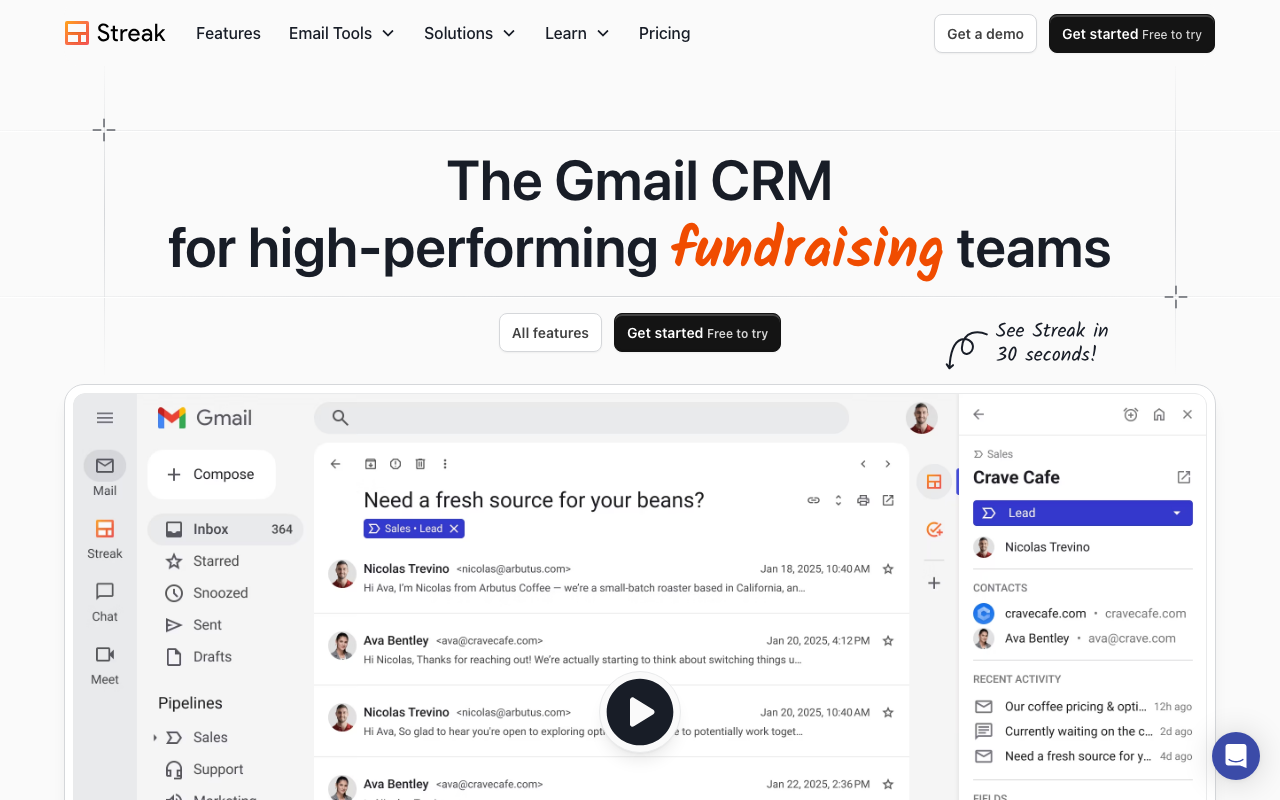
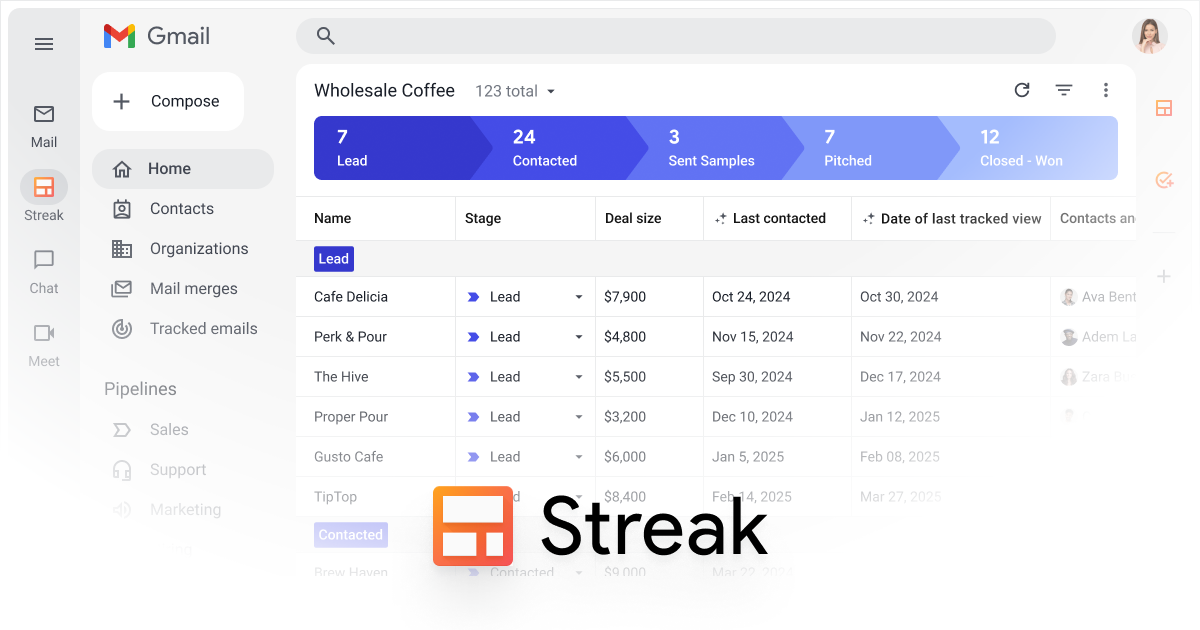
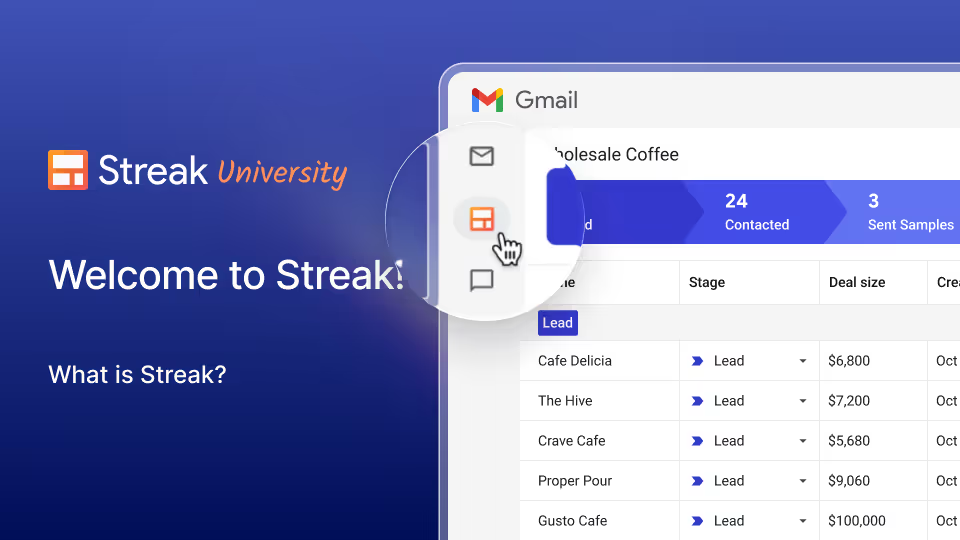
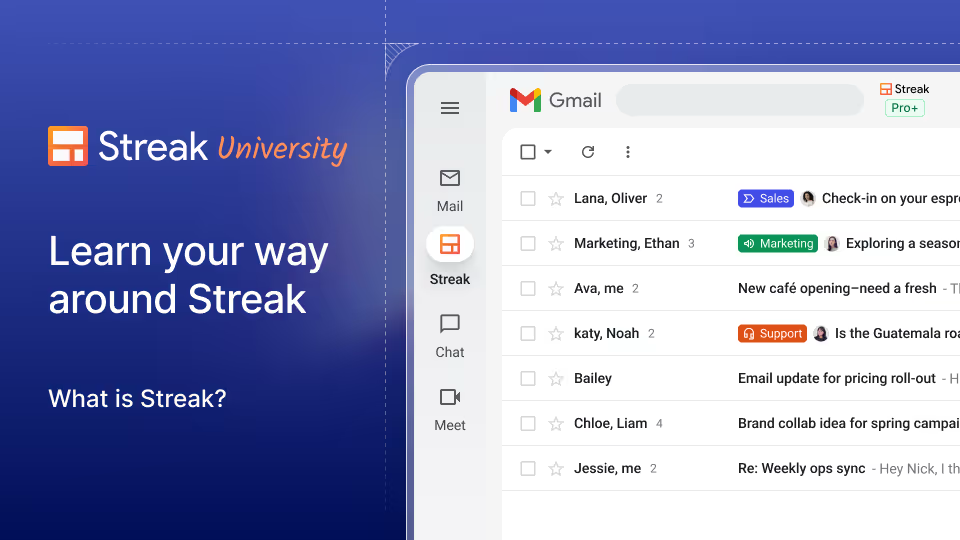
Streak earns its spot in the CRM conversation because it lives directly inside Gmail. That is not a small detail. For teams that basically work from the inbox all day, the official Streak positioning is compelling: pipelines, mail merge, shared contacts, tasks, and CRM records all without bouncing out to a separate tab every five minutes.
That said, not every team wants its CRM to be Gmail-native first.
You may want alternatives if:
- Your team needs a broader sales suite outside Gmail.
- You want a more visual pipeline workspace.
- You need a heavier calling or outbound sales tooling.
- You prefer a CRM that works more independently from Google Workspace.
- You want a different pricing shape for growing teams.
If you want to compare the Gmail-native option while you read, start with Streak here.
Alternative 1: Copper
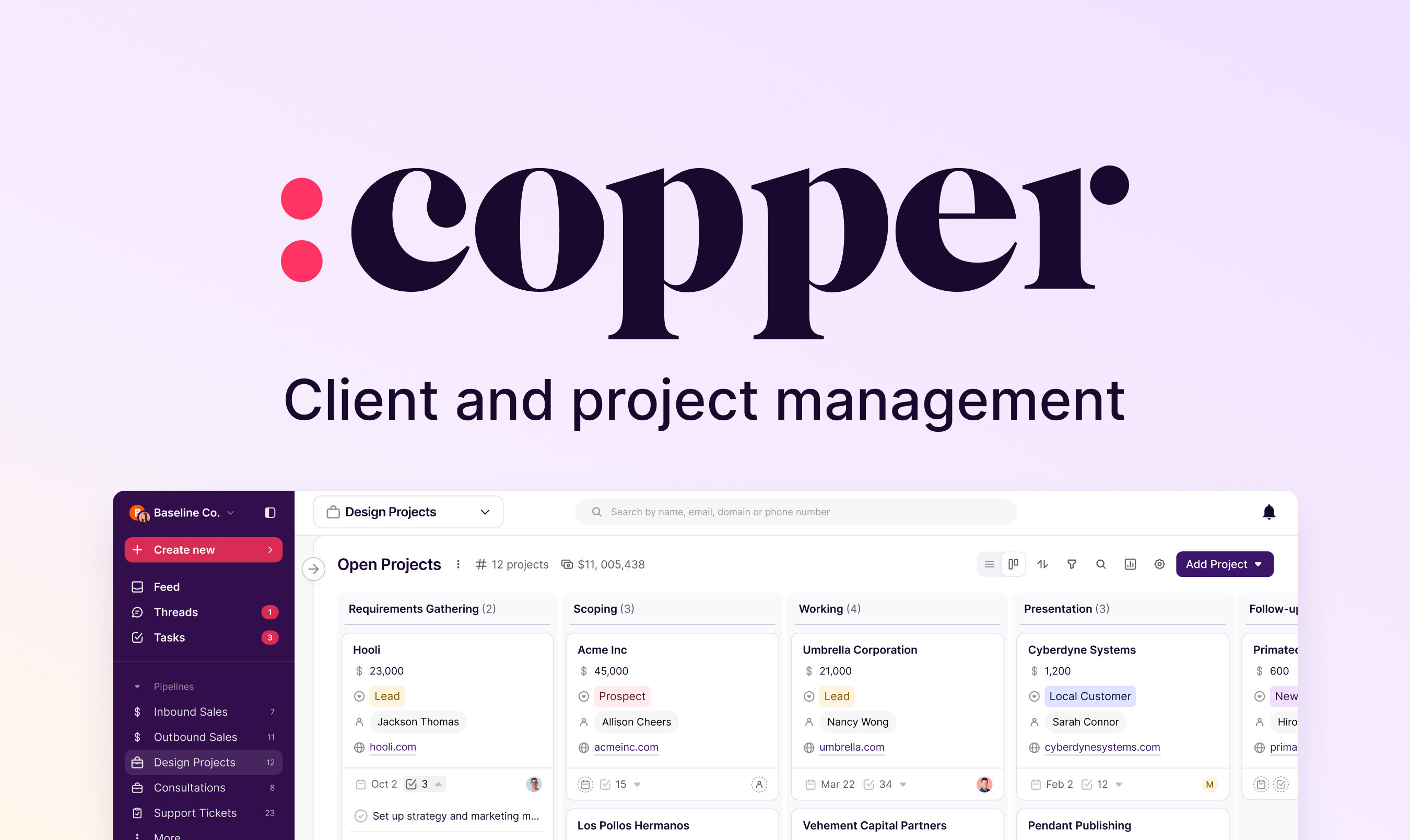
Copper is one of the most obvious Streak alternatives because it also leans heavily into the Google Workspace ecosystem. Its official positioning focuses on Google-friendly CRM workflows, pipeline visibility, automation, and relationship management for teams that want CRM structure without a giant enterprise feel.
Why is it relevant:
- Strong Google Workspace fit.
- More traditional CRM presentation than inbox-only tools.
- Better for teams that want CRM structure outside individual email threads.
- Familiar sales pipeline approach for revenue teams.
Compared with Streak, Copper usually makes more sense when the team still wants a Google-friendly CRM but does not want the product experience to live so tightly inside the inbox itself.
Alternative 2: HubSpot Sales Hub
HubSpot is a very different kind of alternative. The official product positioning is broader, with CRM, marketing, sales, automation, reporting, and service tools all tied into a larger platform.
That makes HubSpot relevant for teams that are asking a different question altogether:
- Do we want a CRM only?
- Or do we want a bigger go-to-market stack?

Why buyers consider it:
- Broad CRM ecosystem.
- Strong reporting and automation potential.
- Useful for teams that expect to add more tooling later.
- Familiar market presence.
The tradeoff is that HubSpot can be more platform-shaped than Streak. If your team mostly wants to run pipeline activity from Gmail, that added scope may feel unnecessary.
Alternative 3: Pipedrive
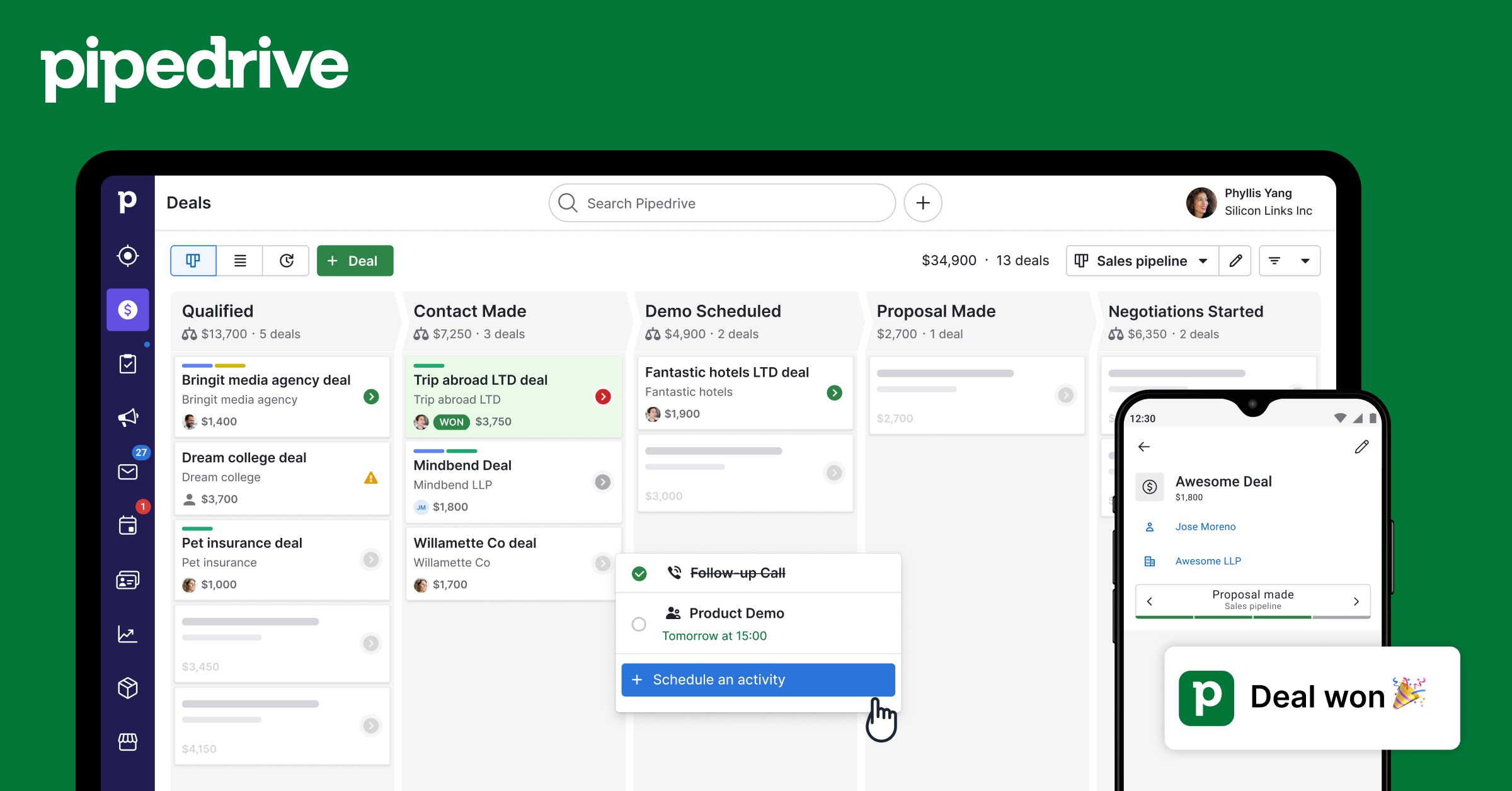
Pipedrive remains a strong alternative for teams that care about sales pipeline visibility first. Its official product positioning centers on deal management, automation, reporting, and sales process clarity.
Why it matters in this comparison:
- Strong visual pipeline experience.
- Clear sales workflow orientation.
- Good fit for teams that want a separate CRM workspace.
- Easier for some sales managers to operate outside the inbox.
Compared with Streak, Pipedrive can feel more like a dedicated sales cockpit. Streak, by contrast, feels more natural when email remains the center of gravity.
Alternative 4: Close
Close is a more sales-heavy alternative. The official positioning leans into outreach, calling, pipeline management, and productivity for revenue teams that live in fast-moving sales motions.

That makes it relevant if:
- Your team needs heavier outbound workflows.
- Calling and follow-up speed matter a lot.
- You want a CRM designed around active sales execution.
Close is usually a better fit than Streak when the CRM is expected to drive the whole sales floor. Streak is often better when the inbox itself is still the main working environment.
Alternative 5: Folk
Folk is another alternative worth considering for teams that care about relationship management but want something lighter and more modern-feeling than a classic enterprise CRM.

Why buyers look at it:
- Flexible relationship-tracking workflows.
- A cleaner collaborative feel for lean teams.
- Useful for partnerships, recruiting, and founder-led pipelines.
That makes Folk relevant for teams that do not need an ultra-traditional sales CRM but still want more structure than spreadsheets and inbox labels.
Comparison Matrix
Here is the simple, practical read:
- Streak: strongest when your team wants CRM workflows directly inside Gmail.
- Copper: strongest when you want a Google-friendly CRM with a more separate CRM interface.
- HubSpot: strongest when you want a broader sales and marketing platform.
- Pipedrive: strongest when visual sales pipeline management is the priority.
- Close: strongest when active outbound sales execution matters most.
- Folk: strongest when flexible relationship management matters more than a classic sales stack.
That does not produce one universal winner. It gives six different operating styles.
The key difference is where the work happens:
- In Gmail.
- In a separate CRM workspace.
- In a bigger go-to-market platform.
That distinction matters more than feature-count arguments on social media.
It also changes team behavior in a very practical way. Inbox-native tools usually reduce friction for founders, recruiters, partnerships managers, or lean sales teams that already live in Gmail. Separate CRM workspaces often make more sense when managers want a more formal sales environment, more standardized reporting habits, or less dependence on how each rep uses email.
That is why the “best alternative” question is not really about one feature list. It is about where your team loses the least time every day.
Pricing Context
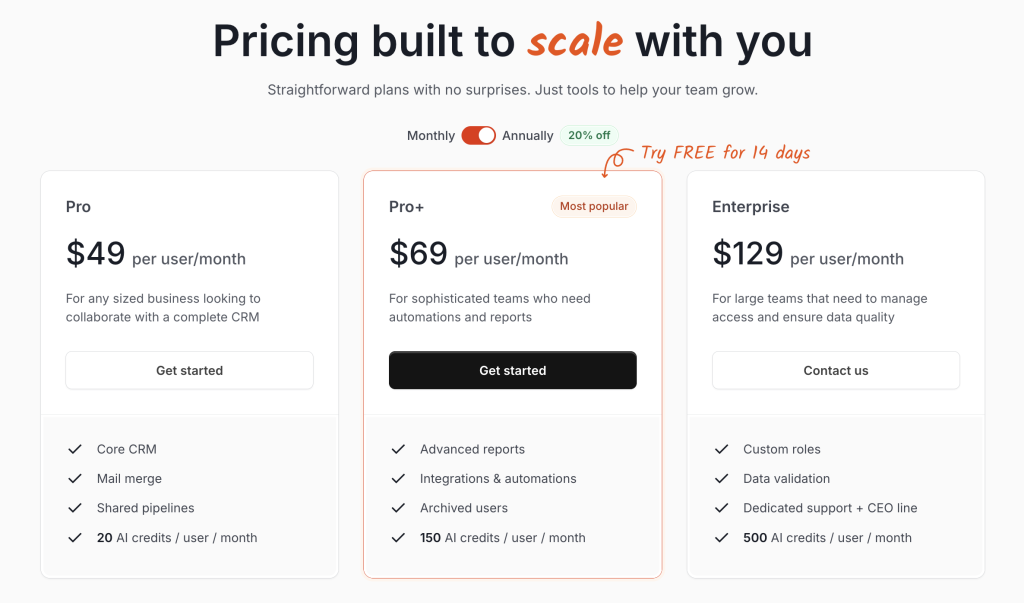
Streak’s official pricing page is actually one of the clearer parts of its story. The public page currently highlights:
- Pro at $49 per user per month on annual billing, or $59 with monthly billing.
- Pro+ at $69 per user per month on annual billing, or $89 with monthly billing.
- Enterprise at $129 per user per month on annual billing, or $159 with monthly billing.
The same pricing page also keeps a free forever layer for Streak’s email power tools, which helps explain why so many Gmail users try it before committing to full CRM usage.
That pricing shape matters because Streak is not trying to win with the cheapest generic CRM claim. It is trying to win on workflow efficiency for inbox-based teams.
By contrast, alternatives tend to break into a few buckets:
- Broader platform pricing.
- More classic per-seat CRM pricing.
- Higher-cost sales-execution pricing.
- Lighter relationship-tool pricing.
That means the right comparison is not only sticker price. It is whether the workflow saves enough time to justify the seat cost.
That is especially true for Gmail-heavy teams. A product that removes pipeline-copying, note duplication, and inbox context-switching may be worth more than a tool that looks slightly cheaper on paper but creates more admin in practice.
If your team works inside Gmail all day, start with Streak here and compare its per-user cost against how much tab-switching and manual pipeline updating it removes.
Another useful pricing sanity check is training cost. Tools that look comparable in monthly price can feel very different once you factor in setup effort, onboarding time, and how much behavior change the team has to absorb.
When To Stick With Streak
Streak remains especially compelling if you want:
- A CRM built directly into Gmail.
- Shared pipelines without leaving the inbox.
- Email-centric workflow control.
- Mail merge, shared contacts, and pipeline tracking in one place.
- A tool that feels more native to Google Workspace habits.
That last point matters a lot.
Some teams do not need a CRM that can do everything under the sun. They need a CRM that their team will actually use consistently. Streak’s Gmail-native model can make adoption much easier because it reduces the “I will update the CRM later” problem.
That is a bigger advantage than it sounds. A theoretically stronger CRM is not actually stronger if the team keeps avoiding it.
It is also where Streak can work well outside traditional sales teams. Hiring workflows, investor outreach, partnerships, customer success follow-up, and support-adjacent coordination often benefit from pipeline structure without needing a huge standalone CRM deployment.
If inbox-first adoption is what matters most, start with Streak here and compare it against one real pipeline your team already runs through email.
Verdict
The best Streak CRM for Gmail alternatives in 2026 depend on what you want your CRM to be.
Copper is attractive if you want Google alignment with a more traditional CRM shell. HubSpot is attractive if you want a much broader platform. Pipedrive is attractive if you want a visual sales-first cockpit. Close is attractive if you want heavier outbound execution. Folk is attractive if you want flexible relationship management with a lighter feel.
The streak itself stays strongest when Gmail is the real operating system for the team.
That is why the better question is not “which CRM has the most features?” It is “which CRM matches the way our team already works without creating extra admin?”
If the answer still points back to the inbox, start with Streak here and test it against one active sales, hiring, fundraising, or support workflow instead of a fake sandbox.
That workflow-first evaluation usually leads to a better decision than chasing the loudest CRM brand in the room.
It also leads to a more honest decision. Some companies really do need a bigger CRM platform. Others mostly need a cleaner way to run pipeline work from Gmail without adding another operational layer. Streak wins the second conversation much more often than the first.
That is exactly why Streak remains a serious contender in 2026 instead of just a niche Gmail add-on.
FAQ
What are the best Streak CRM for Gmail alternatives in 2026?
Strong alternatives include Copper, HubSpot, Pipedrive, Close, and Folk, depending on whether you want Google alignment, broader platform scope, or a more sales-heavy workflow.
Is Streak cheaper than other CRM tools?
Not always. The official Streak pricing page positions it as a workflow-efficiency product rather than a bargain-basement CRM. The value depends on how much your team benefits from Gmail-native usage.
Who should stick with Streak instead of switching?
Teams that live in Gmail and want their CRM activity to happen inside the inbox are the best fit for staying with Streak.
When does an alternative make more sense than Streak?
An alternative makes more sense when your team wants a broader CRM platform, heavier outbound sales tooling, or a workflow that lives outside Gmail.