


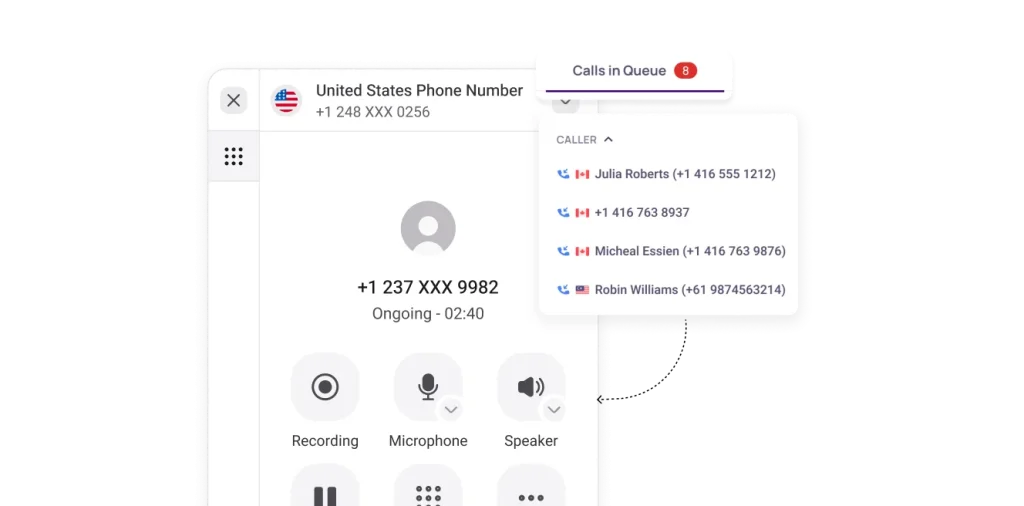
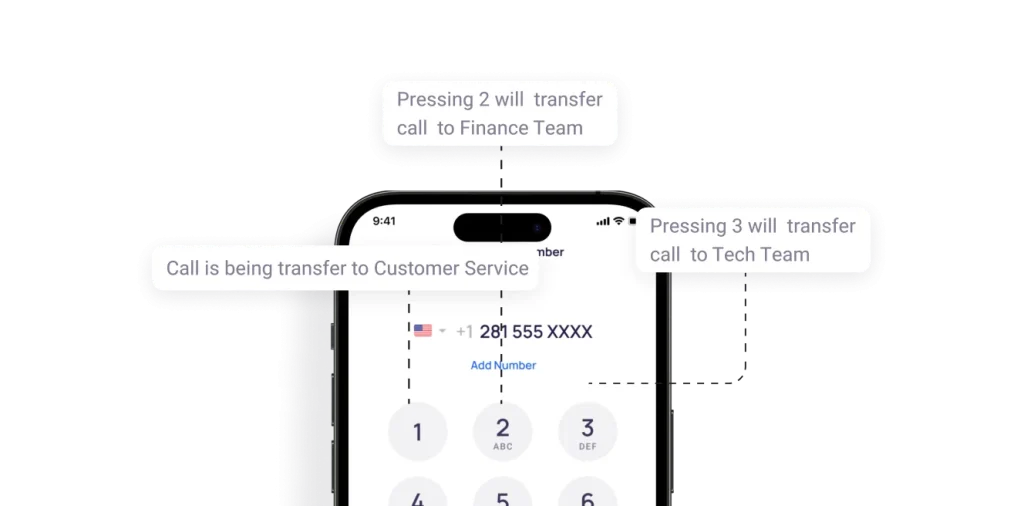
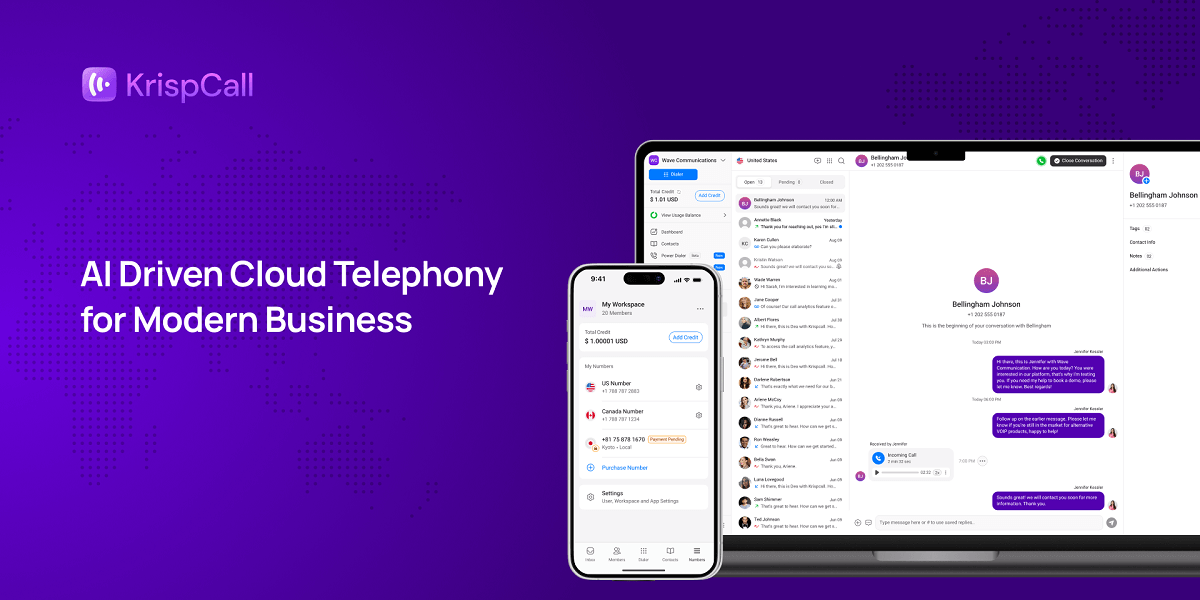
KrispCall is an interesting cloud telephony option because its official site positions it as AI-driven cloud telephony for modern business, with local and international numbers, SMS, VoIP calling, CRM integrations, AI Copilot features, and contact-center style capabilities. That makes it a serious option for sales, support, and distributed teams.
It also sits in a crowded category. If you are shopping for business phone software in 2026, you are not just comparing “phone systems” you are comparing workflow styles, pricing models, team collaboration needs, CRM fit, AI ambitions, and how much infrastructure complexity you actually want to manage.
That is why KrispCall alternatives matter. Some buyers want simpler onboarding. Some want stronger contact-center depth, some want cleaner SMB pricing, others want heavyweight enterprise telephony.
The official KrispCall pricing page offers Essential, Standard, and Enterprise plan paths with calling and SMS charges on top, plus a deep feature matrix and 100+ CRM integrations across the product story. That is a credible offer. It is not automatically the best one for every team.
If KrispCall is on your shortlist, start with KrispCall here and compare it against the alternatives using your real sales or support workflow, not just the feature checklist.
Alternative 1: OpenPhone
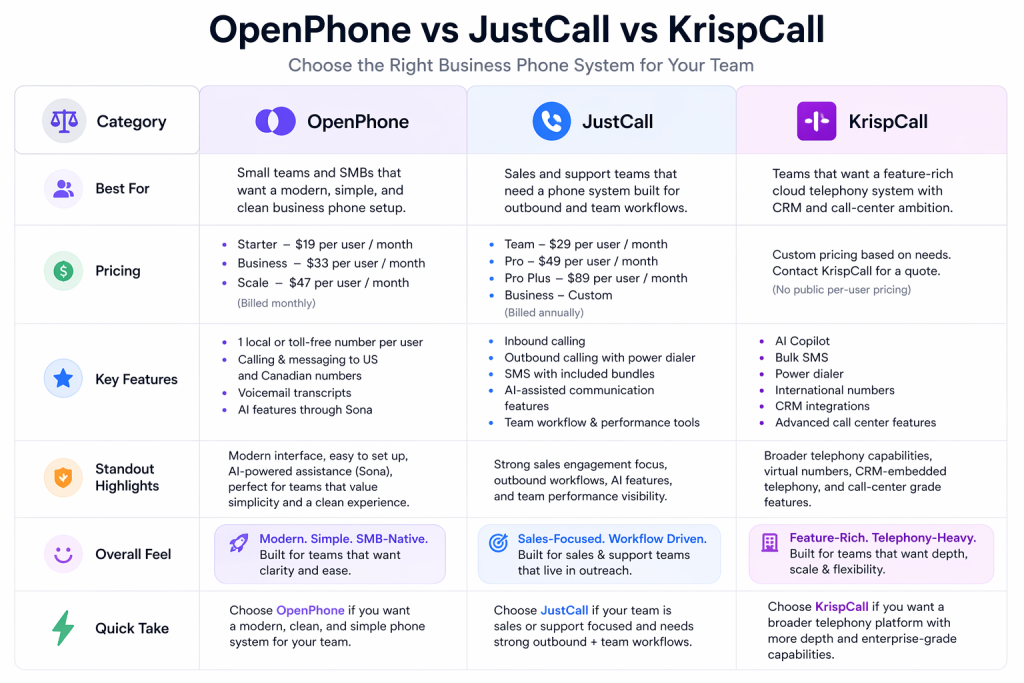
OpenPhone is one of the cleanest alternatives for smaller teams that want a modern business phone setup without a huge contact-center feel. Its official pricing page shows:
- Starter at $19 per user per month.
- Business at $33 per user per month.
- Scale at $47 per user per month.
The official page also highlights one local or toll-free number per user, calling and messaging to US and Canadian numbers, voicemail transcripts, and AI elements through Sona.
Compared with KrispCall, OpenPhone feels more SMB-native and cleaner in presentation. KrispCall feels broader and more telephony-heavy, especially with features like AI Copilot, bulk SMS, power dialer, and deeper cloud-phone language. OpenPhone feels better if you want something modern and straightforward. KrispCall feels better if you want a more feature-rich telephony system with broader CRM and call-center ambition.
Alternative 2: JustCall
JustCall is another strong option for teams focused on sales and support communication. The official pricing page shows annual-billing tiers of:
- Team at $29 per user per month.
- Pro at $49 per user per month.
- Pro Plus at $89 per user per month.
- Business custom.
Its official pricing and product language emphasize inbound calling, outbound calling, SMS bundles, and increasingly AI-assisted communication features.
Compared with KrispCall, JustCall feels especially relevant for sales-led and support-led teams that want a business phone system with stronger team workflow packaging. KrispCall, meanwhile, leans harder into cloud telephony breadth, international numbers, and CRM-embedded telephony messaging.
If your team cares heavily about rep workflows and structured outbound communication, JustCall deserves a look. If you want a broader virtual-number and CRM-telephony story, KrispCall may still feel more aligned.
Alternative 3: CloudTalk
CloudTalk is a strong alternative for teams that want more explicit call-center and AI voice positioning. The official pricing page highlights flexible plans and shows annual pricing such as:
- Lite at €19 per user per month.
- Starter at €25.
- Essential at €29.
- Expert at €49.
The official materials also emphasize AI voice agents, call routing, global number management, analytics, monitoring and coaching, and a broader call-center posture.
Compared with KrispCall, CloudTalk feels more intentionally contact-center shaped. KrispCall looks more like a cloud telephony platform that also serves sales, support, freelancers, remote teams, and SMBs through a wide catalog of telephony features and integrations.
So the choice here often comes down to operational style:
- Choose CloudTalk when your use case is more explicitly call-center and coaching oriented.
- Choose KrispCall when you want a flexible business-phone layer with CRM integration depth and a broad feature mix.
Alternative 4: RingCentral
RingCentral is the heavyweight enterprise-style alternative in this group. Its official plans-and-pricing page for RingEX shows:
- Essentials starting around $19.99 per user monthly on annual pricing.
- Standard from $24.99.
- Premium from $34.99.
- Ultimate from $49.99.
RingCentral’s official pitch leans into enterprise-grade communications, unlimited calling within the US and Canada, meetings, video, fax, and broader business communications depth.
Compared with KrispCall, RingCentral feels bigger, more established, and more enterprise-ops oriented. KrispCall feels lighter, more CRM-centric in its homepage story, and more focused on integrating telephony into modern go-to-market workflows.
That means RingCentral is often better for organizations that want a broader enterprise communications suite. KrispCall can feel better for teams that want modern cloud telephony with strong CRM alignment and a more focused phone-system story.
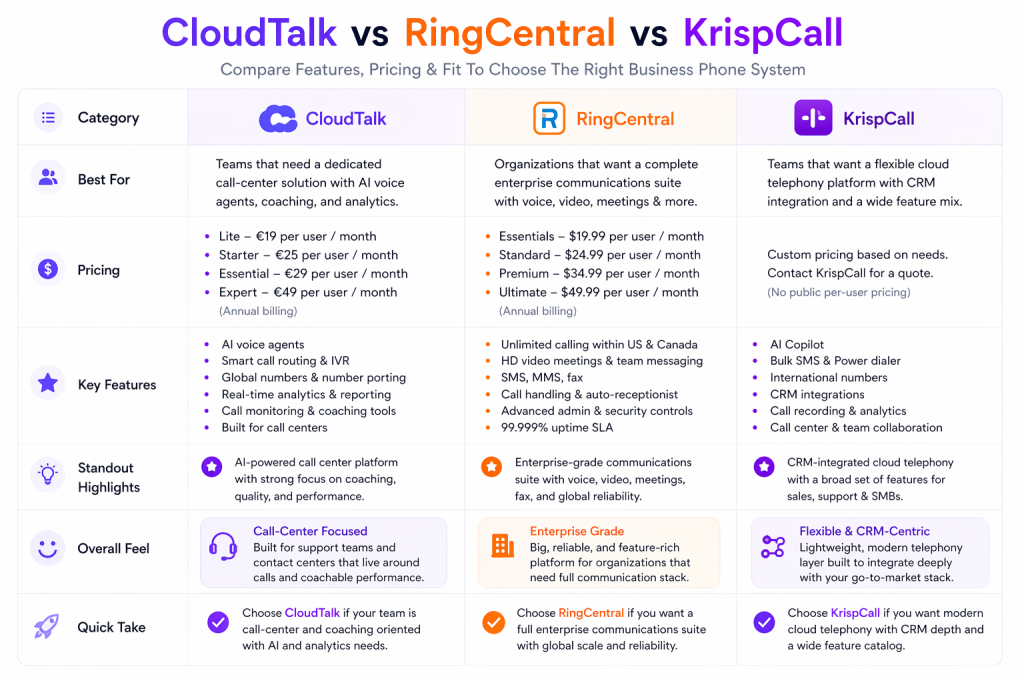
Pricing And Fit In Context
KrispCall’s own pricing and feature story makes more sense when you compare it against the alternatives by team type instead of by raw headline alone. The official pricing page shows Essential, Standard, and Enterprise, plus calling and SMS charges, number considerations, and a long feature table that covers everything from call analytics and bulk SMS to browser extensions, voicemail, mobile apps, and call monitoring.
That means KrispCall is not trying to be the cheapest possible option. It is trying to be a flexible telephony platform with broad business use cases.
Here is the practical fit:
- OpenPhone if your team wants modern simplicity.
- JustCall if your team lives in sales and support workflows.
- CloudTalk if your team needs more classic contact-center structure.
- RingCentral if your team wants enterprise communications breadth.
- KrispCall if your team wants CRM-connected cloud telephony without jumping straight into the heaviest enterprise stack.
If that last profile sounds right, start with KrispCall here and compare one real team workflow against the alternatives instead of trying to compare hundreds of line items in the abstract.
Alternative 5: Stick With KrispCall
This is the part people skip, but they should not.
Sometimes the best alternative to KrispCall is not leaving KrispCall at all. The official product story has alot going for it:
- 100+ CRM integrations.
- Local, mobile, toll-free, and vanity number options.
- VoIP calls and SMS in one app.
- AI Copilot and transcription direction.
- Power Dialer and bulk SMS.
- Features for sales, support, remote, and management teams.
If your business specifically wants telephony brought into the CRM and values international number flexibility, KrispCall remains a compelling choice. Not every alternative balances those same priorities in the same way.
This is especially true if your team is already thinking in terms of CRM-connected call workflows rather than just “we need a phone number for work.”
Comparison Matrix
Here is the practical read:
- OpenPhone is strongest for cleaner SMB simplicity.
- JustCall is strongest for structured sales-and-support team workflows.
- CloudTalk is strongest for contact-center style operations and coaching.
- RingCentral is strongest for enterprise communications breadth.
- KrispCall is strongest when CRM-connected cloud telephony and global-number flexibility are central to the use case.
That is why there is no universal winner here. The better platform depends on what your team values more:
- Simplicity.
- Sales workflows.
- Contact-center depth.
- Enterprise breadth.
- CRM-embedded telephony.
If you want to evaluate the KrispCall side of that tradeoff directly, start with KrispCall here and compare your real number-management, SMS, and CRM needs against the alternatives.
One more useful way to think about the comparison is implementation weight. OpenPhone is lighter. RingCentral is heavier. CloudTalk is more center-of-operations oriented. JustCall is very team-workflow focused. KrispCall sits in a middle zone that can be attractive for growing businesses that want range without immediately stepping into the most complex deployment model.
When To Stick With KrispCall
Stay with KrispCall when:
- CRM integration is a top priority.
- You need cloud numbers and messaging flexibility.
- Your team wants telephony and SMS in one environment.
- You want a business phone stack that still feels modern and AI-aware.
- You prefer a platform that serves multiple business team types rather than only contact centers.
In other words, KrispCall may not be the simplest alternative in the market, but it can be one of the more balanced ones if your team lives inside customer conversations and CRM workflows all day.
That balance is the whole story here. Some alternatives win by being cleaner. Some win by being bigger. KrispCall wins when the buyer wants telephony, messaging, number flexibility, CRM connection, and a modern feature set without immediately moving into the most enterprise-heavy environment available.
That is especially relevant for startups, remote sales teams, agencies, support teams, and SMBs that are growing fast enough to need real telephony structure but do not want to adopt something that feels like it was designed only for giant corporate call centers.
For those buyers, “good enough plus connected” can be far more useful than buying the biggest communications suite on the market and only using a fraction of it daily.
Verdict
KrispCall alternatives are strong in 2026, but they are strong for different reasons. OpenPhone is easier for SMBs, JustCall is attractive for structured sales and support teams, CloudTalk is more contact-center oriented, and RingCentral is the enterprise heavyweight.
KrispCall still holds its own because its official positioning is broader than basic calling. It is about AI-driven cloud telephony, numbers, SMS, CRM integrations, and business communication inside one modern platform.
If that is what your team actually needs, start with KrispCall here and compare it against the alternatives based on daily workflow friction, not just surface-level pricing.
FAQ
What are the best KrispCall alternatives in 2026?
Strong official-source alternatives include OpenPhone, JustCall, CloudTalk, and RingCentral, depending on whether you prioritize SMB simplicity, sales workflows, contact-center depth, or enterprise breadth.
Is KrispCall better than OpenPhone?
It depends. KrispCall offers a broader cloud-telephony and CRM-integration story, while OpenPhone feels simpler and more SMB-friendly.
Which alternative is best for call-center style teams?
CloudTalk is one of the strongest alternatives for call-center style operations, coaching, and analytics-heavy workflows.
When should a team choose KrispCall over the alternatives?
Choose KrispCall when CRM-connected telephony, international number flexibility, SMS, and a broad business-phone feature set are central to the workflow.