


Quick Verdict
Amplemarket is one of those products that makes more sense the deeper you look into the workflow it is trying to replace. On its official site, it is positioned as an all-in-one AI sales platform that combines data, buyer signals, multichannel engagement, deliverability tooling, and AI-assisted execution.
That is a much more ambitious promise than “we help you send outreach.”
After reviewing the official pricing and product pages, I think Amplemarket looks strongest for outbound teams that are tired of stitching together separate tools for contact data, sequencing, warmup, signal tracking, and sales assistance. It does not look like the cheapest option in the market, and it definitely is not aimed at tiny teams that only need a basic list builder. But if your team wants one serious operating layer for outbound, it is easy to see why Amplemarket has traction.
If you want to evaluate it in a live workflow while you read, start with Amplemarket here.

Product Facts And Overview
The official site frames Amplemarket around several connected capabilities:
- Data and lead generation
- AI Intent Signals
- Multichannel sequences
- Deliverability optimization
- Duo Copilot
- Duo Voice and Duo Inbox
That matters because the product is clearly not trying to be a narrow point solution. It wants to become the place where outbound teams research, prioritize, execute, and optimize.
The pricing pages also highlight some big data points:
- 200M+ AI-verified contacts
- 70M+ records updated weekly
- Under 3% average bounce rates
- 96.5% phone accuracy
Those are vendor claims, so I would always test them in context. But they tell you how the company wants the market to understand the product: as an integrated sales system rather than a single feature tool.
That positioning feels believable because the rest of the official messaging is consistent. The platform keeps tying everything back to a more connected outbound workflow instead of pretending one feature does all the work.
Pros And Cons
What I Like
- The workflow is broad enough to replace tool sprawl for many outbound teams.
- Duo Copilot and AI Intent Signals look like practical features, not just AI window dressing.
- Deliverability gets meaningful attention, which is a real differentiator.
- Public pricing exists, which makes early evaluation easier.
- The product direction feels like it is expanding, not standing still.
What Gives Me Pause
- The price point is clearly aimed at serious teams, not casual users.
- Some valuable features and add-ons are tied to higher plans.
- The strongest ROI probably depends on using several modules together.
- Smaller teams may not need this much platform depth.
That mix feels honest. Amplemarket looks strong, but it looks strongest when a team actually needs a serious outbound operating system.
I would also add that some buyers may like the ambition of the platform more than the day-to-day discipline it requires. The broader the system, the more important it becomes to use it intentionally.
Feature Deep Dive
Duo Copilot
Duo Copilot is the clearest flagship feature. On the official site, it is presented as an AI sales assistant that helps reps find the right buyers, gather context, and craft more relevant outreach.

That is useful because it supports the actual work reps do every day:
- Find better targets
- Get context faster
- Write smarter outreach
This is the feature that most clearly captures what Amplemarket is trying to become.
AI Intent Signals
The official site repeatedly emphasizes signals, and that is one of the most convincing parts of the product story. Timing matters in outbound, and a platform that helps teams prioritize based on buying signals can be more useful than one that simply hands you a huge database.
That is why AI Intent Signals stand out. They are tied to action, not just information.
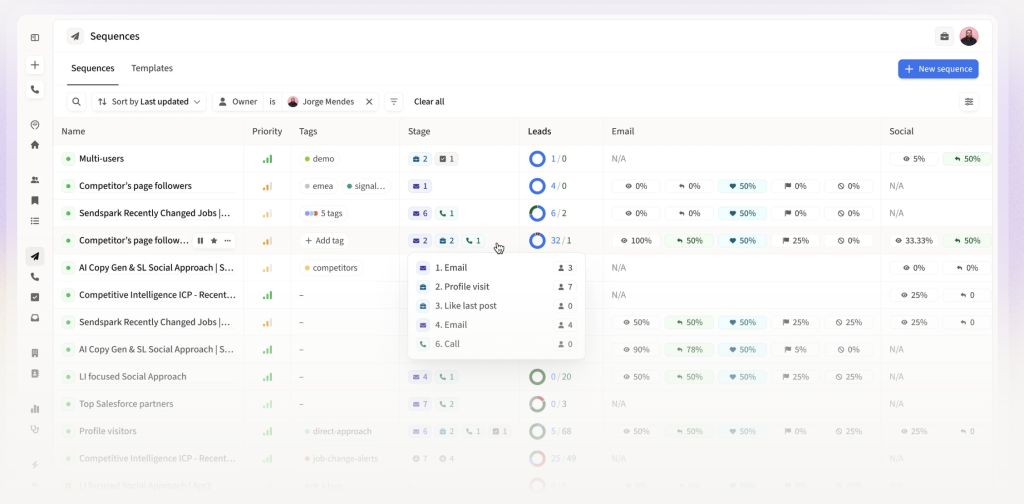
Multichannel Sequences
Amplemarket also pushes multichannel engagement as a core part of the platform. The site highlights sequences, workflows, analytics, and social automation, which tells you the product is meant to coordinate outreach rather than treat email as the entire game.
That matters because serious outbound teams need more than a single repetitive channel. They need orchestration.
Deliverability Optimization
This is one of the more practical strengths of the platform. The official product pages highlight:
- Domain Health Center
- Deliverability Booster
- Mailbox Rotation
- Email Spam Checker
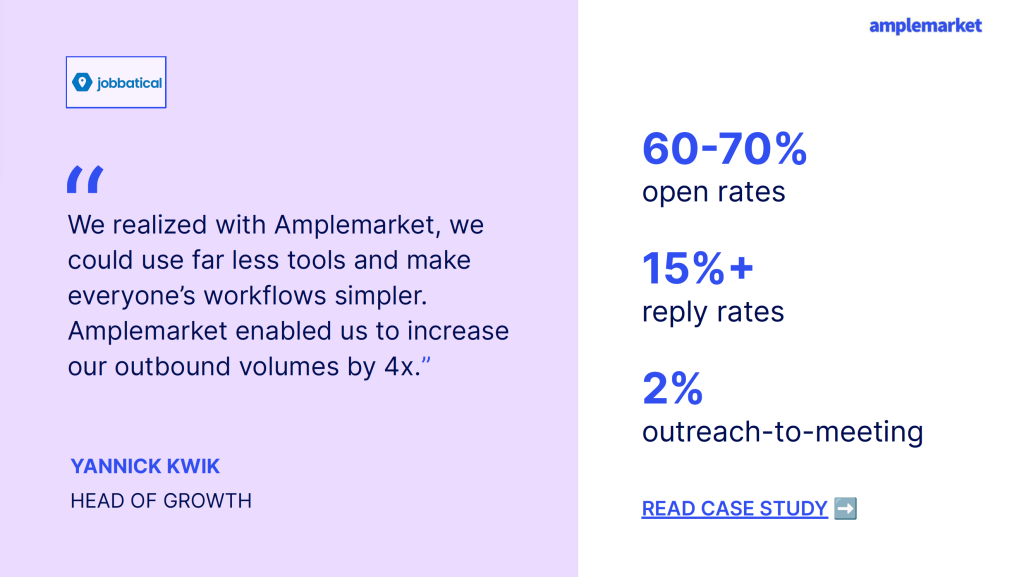
That is not a small detail. A lot of platforms are happy to help you send more messages and are much less interested in whether those messages actually land. Amplemarket feels more mature here than tools that treat deliverability as an afterthought.
Data And Lead Generation
Amplemarket also wants to be the data layer, not just the execution layer. If the official numbers around contacts, weekly updates, bounce rates, and phone accuracy hold up in practice, that reduces the need for yet another vendor in the stack.
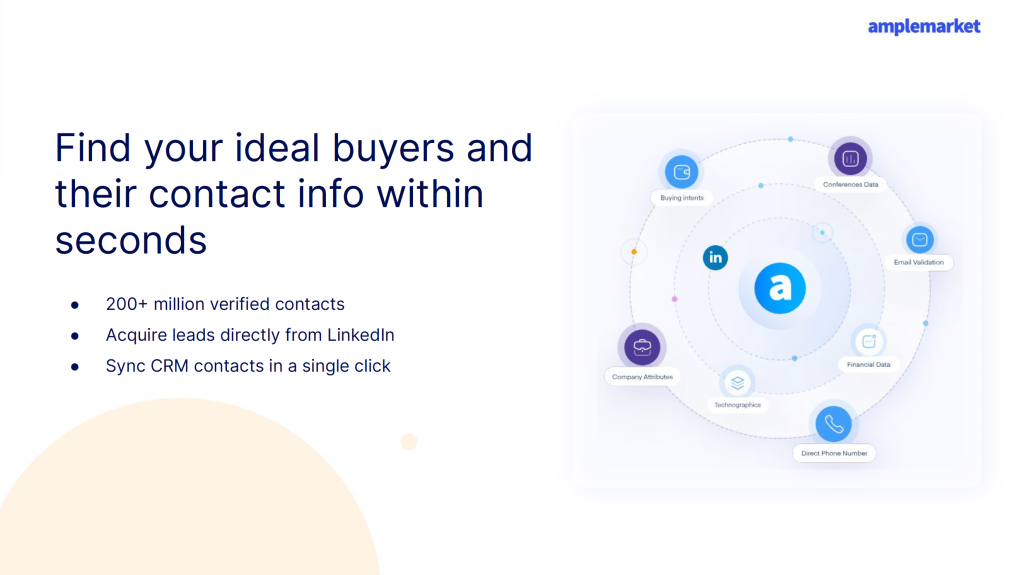
That combination of data plus execution is one of the most important parts of the product’s value story.
Where The Product Feels Most Different
A lot of sales tools are strong in one area and weak in several others. Amplemarket feels different because it keeps tying everything back to one operating model:
- Find the right buyers
- Use signals to prioritize timing
- Reach them across channels
- Protect deliverability
- Use AI to reduce repetitive work
That is a more complete story than “we have good data” or “we have AI inside the workflow.”
Pricing Breakdown
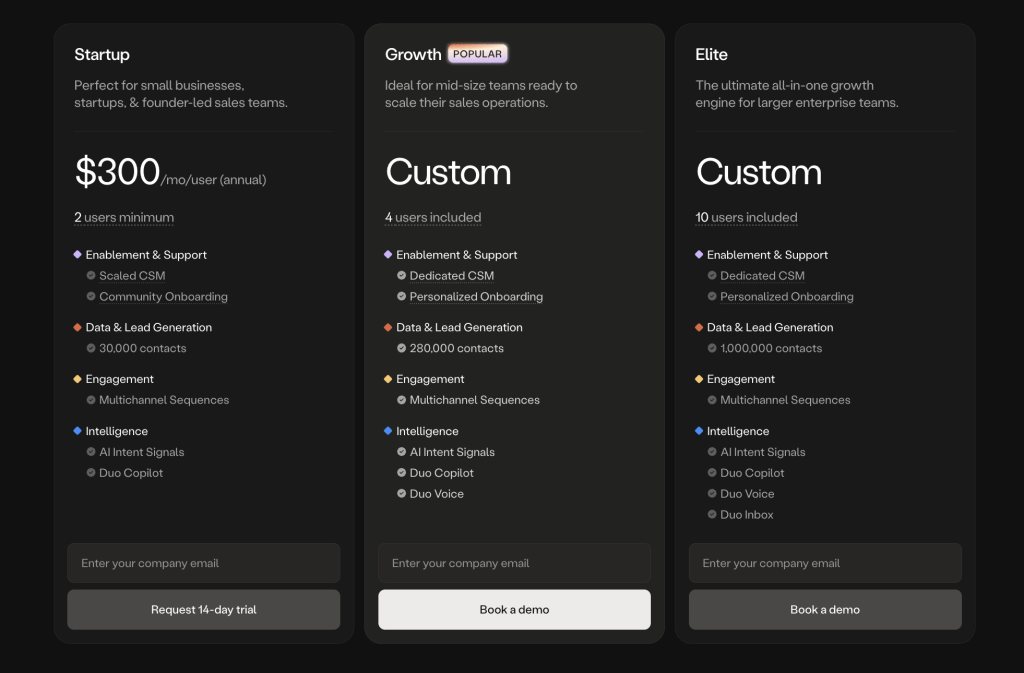
At the time of review in April 2026, the official pricing page shows:
- Startup: $600 per month on annual billing for 2 users
- Growth: Custom pricing with 4 users included
- Elite: Custom pricing with 10 users included
The same pages also reference credits and feature access tied to each plan, including items such as:
- Multichannel sequences
- Duo Copilot
- AI Intent Signals
- Duo Voice on higher tiers
- Duo Inbox is an add-on or included, depending on plan
This pricing makes the target audience pretty clear. Amplemarket is not trying to win on being the cheapest. It is trying to win by replacing multiple outbound tools at once.
If you are comparing it seriously, start with Amplemarket here and compare the monthly price against the total stack cost you might remove.
Is The Pricing Fair?
For teams with meaningful outbound volume, I think the answer can be yes. The startup plan is not tiny money, but it makes more sense if the platform is replacing several subscriptions and helping a team move faster at the same time.
For teams that only need one narrow job done, the price will feel harder to defend. This is why product fit matters so much here. Amplemarket is easier to justify as a system than as a single-purpose tool.
Another way to look at it is this: if a team is already paying separately for data, sequencing, deliverability support, and signal tools, then the headline price starts to look more reasonable. If a team only wants a single feature, the same price can feel heavy.
Who Should Use It
I think Amplemarket makes the most sense for:
- Outbound teams running a serious sales motion
- Companies are tired of tool sprawl
- Teams that care about signal-based selling
- Revenue orgs that want AI inside the workflow, not beside it
It looks less compelling for:
- Very small teams that only need simple outreach
- Buyers looking for the cheapest database
- Teams that will only use one narrow feature
That last point matters a lot. The more of the platform you use together, the more convincing the value becomes.
I also think this is where a lot of review decisions get made. If your team already knows it wants a broader outbound operating layer, Amplemarket is easy to take seriously. If your team still buys tools one tiny problem at a time, it will feel like too much platform.
That is also why the product feels more enterprise-leaning than bargain-leaning. It assumes the buyer is trying to reduce fragmentation, not simply add one more tactical tool.
Expert Verdict And CTA
My 2026 take is that Amplemarket looks like a serious product for serious outbound teams. It is broad, modern, and more operationally mature than a lot of tools that only talk about AI at a surface level.
The biggest downside is that it expects a team to have real workflow needs and enough motion to justify the cost. If that is true for your business, the platform looks compelling. If it is not, the price may feel harder to justify.
If your team wants one system for data, signals, sequences, deliverability, and AI support, start with Amplemarket here and judge it on a full outbound workflow instead of a feature demo.
Final Practical Take
My short version is this: Amplemarket looks like a mature outbound platform for teams that are serious enough to use it properly. It is not built for dabbling. It is built for teams that want more signal, more coordination, and less tool sprawl.
That makes it a strong candidate in the category, but only if the team buying it is ready for that level of workflow ownership.
For the right buyer, that maturity is the whole point. For the wrong buyer, it can feel like overkill. That is why the best evaluation is always a live workflow test rather than a surface-level feature comparison.
If I were reviewing it strictly as a buying decision, I would say this: the product looks strongest when a company is already committed to outbound as a real motion and wants better system quality around it. It looks less convincing when the buyer is still solving for basic outreach fundamentals.
That may sound obvious, but it matters. A platform can be excellent and still be the wrong fit for a team that is too early, too small, or too fragmented to use the workflow properly. Amplemarket seems best suited to teams that are ready to use coordination, signal depth, and deliverability discipline as competitive advantages instead of optional extras.
That is why I would describe Amplemarket as a strong fit for teams that want a more opinionated and integrated sales system, not just a place to pull contacts. In the right environment, that difference can be worth a lot.
It also explains why the product review comes out positive for me overall. The official positioning is coherent, the workflow story is believable, and the feature mix addresses real operational pain points instead of novelty use cases.
If your outbound team is already juggling several disconnected tools, that coherence is a real advantage. It gives the platform a stronger chance of creating operational lift instead of just adding one more line item to the stack.
That is the main reason I would take Amplemarket seriously in 2026. It looks like a product built for teams that want a better system, not just a shinier feature set.
For teams in that stage of growth, that distinction can matter a lot.
It is a meaningful buying difference.
FAQ
What is Amplemarket in 2026?
Amplemarket is positioned as an all-in-one AI sales platform for data, signals, multichannel outreach, deliverability, and AI-assisted selling.
What is Amplemarket’s strongest feature?
Duo Copilot is the clearest flagship feature, but the bigger strength may be the combination of signals, sequencing, and deliverability in one platform.
Does Amplemarket publish pricing?
Yes. The official pricing page shows a Startup plan at $600 per month on annual billing, with Growth and Elite available through custom pricing.
Is Amplemarket good for small teams?
It can be, but it looks strongest for teams with enough outbound activity to justify a broader platform instead of a narrow tool.
Is Amplemarket worth trying?
If your outbound team wants to consolidate tools and run a more integrated workflow, yes. The easiest next step is to start with Amplemarket here and evaluate it on live usage.