


Who This Post Is For :
Freshdesk by Freshworks is not trying to be everything for every type of software buyer.
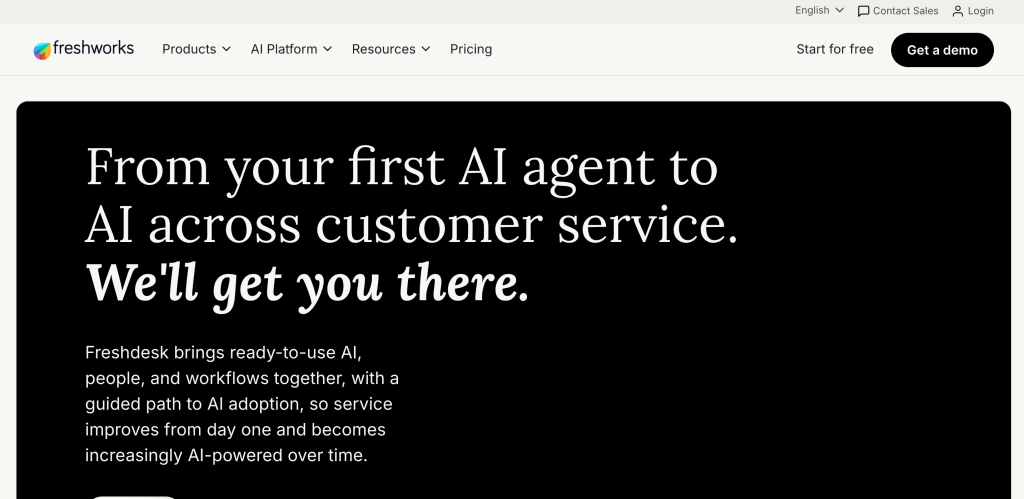
The official product page in 2026 is very clear about the lane it wants to own:
- AI-powered customer service.
- Easy setup.
- Simple day-to-day use.
- Strong agent productivity.
- Connected business apps.
That makes the best-fit niche easier to define than it first appears.
Freshdesk looks especially strong for scaling customer support teams that need to modernize service without taking on a painful implementation project.
More specifically, the sweet spot looks like:
- Mid-market support teams.
- Ecommerce and consumer brands handling repetitive support volume.
- SaaS companies with growing ticket loads.
- Service organizations that want AI assistance but still need an approachable tool.
If you want to inspect the official positioning while you read, start with Freshdesk here.
Why Freshdesk Fits This Niche :
The official Freshdesk page uses unusually practical language.
It describes the product as:
- AI-powered.
- Easy to set up.
- Simple to use.
- Built to boost agent productivity.
That is not just marketing polish. It points directly to the type of team that benefits most.
A scaling support organization usually has two competing needs:
- It needs better structure, automation, and AI support.
- It cannot afford a giant change-management project every time it upgrades tooling.
Freshdesk looks well matched to that problem.
The official page also says the platform is trusted by more than 74,000 businesses and highlights customer-service results tied to Freddy AI, including examples where resolution time dropped significantly and where AI handled a meaningful share of routine queries. That does not mean every buyer gets the same outcome, but it does show what kind of use case Freshdesk is optimized for.
The Best Specific Niche: Scaling Support Teams With Repetitive Volume
If I had to narrow the niche to one clear segment, I would say Freshdesk is best for scaling support teams that need to handle repetitive ticket volume more efficiently.
That could be:
- A direct-to-consumer brand fielding order and delivery questions.
- A SaaS company with account, billing, and onboarding tickets.
- A multi-channel support team handling email, chat, and self-service deflection.
Why this niche?
Because the official Freshdesk page repeatedly emphasizes AI-powered service, agent productivity, and ease of use. Those qualities matter most when the team is trying to keep service quality up while ticket volume increases.
If your organization has only a tiny trickle of support conversations, Freshdesk may be more platform than you need. But if your team is feeling the pressure of volume, response speed, resolution efficiency, and integration sprawl, the fit becomes much more obvious.
Top Features For This Niche :
1. Easy Setup And Simple Daily Use –
This matters more than many buyers admit.
Support leaders often want better tooling, but they do not want to spend months getting there. Freshdesk’s official positioning around quick setup and simple use is a big reason it suits scaling teams so well.
The product is clearly trying to reduce friction for adoption, not only impress buyers with feature density.
2. AI-Powered Customer Service –
Freshdesk is not merely a standard ticketing tool that bolted on AI at the last minute. The official 2026 messaging puts AI near the center of the product story.
That matters for support teams facing repetitive inbound questions because AI can help on two fronts:
- Faster agent work.
- More automation for routine requests.
Freshworks also showcases Freddy AI outcomes on the official pages, including a customer example reporting a major reduction in average resolution time and another example showing a substantial share of queries handled by AI. Again, those are official examples, not promises, but they show the direction of value clearly.
3. Agent Productivity Focus –
Freshdesk does not only talk about customer experience. It talks directly about boosting agent productivity.
That is important because support software should not just look good in a demo. It should help the team get through the queue faster, stay organized, and avoid burnout from repetitive work.
For the niche we are talking about, this is one of the strongest reasons to take Freshdesk seriously.
4. Connected Business Apps –
The official page explicitly highlights app connectivity.
That matters because support work rarely happens in isolation. Support teams often need context from:
- CRM tools.
- Billing systems.
- Ecommerce platforms.
- Order tools.
- Internal knowledge sources.
The easier it is to connect support work to the rest of the business, the more useful the platform becomes.
If you want to pressure-test that fit, review Freshdesk here and compare its AI-and-productivity story against the real bottlenecks inside your support queue.
A Real-World Support Scenario :
Picture a support team at a fast-growing ecommerce business in 2026.
The team is handling:
- Order updates.
- Shipping complaints.
- Refund questions.
- Product availability requests.
- Repetitive policy clarifications.
At first, the volume was manageable. Then growth kicked in. Suddenly the team needed better triage, faster agent responses, and more leverage from automation.
This is where Freshdesk looks like a strong niche fit.
Why?
Because the official product story is about modern customer service with AI, easier setup, easier use, and productivity gains. That is exactly what a scaling support team needs. Not a bloated transformation project. Not a tool that requires a huge services engagement. A workable platform that can help the team move faster.
Pricing In Context :
I want to stay accurate here.
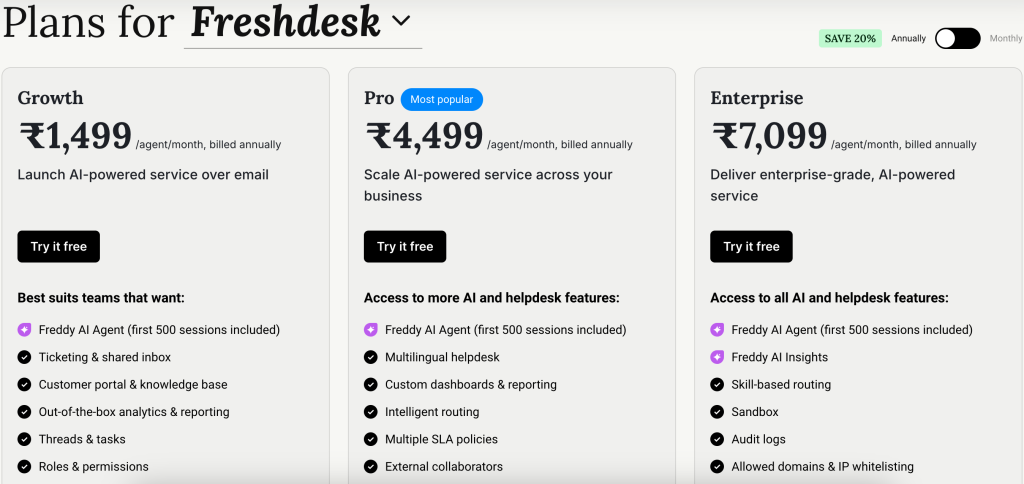
The specific official product page I reviewed does not present a full pricing table in the clean, settled format I would want to quote as final plan pricing. So I am not going to guess.
Instead, the better question for this niche is:
What is the cost of support inefficiency already?
That cost might show up as:
- Slower resolutions.
- Agents spending too much time on repetitive work.
- Customers waiting too long for simple answers.
- Managers struggling to scale service quality with the same headcount.
If Freshdesk helps reduce those costs through better structure and AI assistance, the business case becomes easier to justify even before you compare plans line by line.
If you want to check the live plan path yourself, open Freshdesk here and verify the current commercial details on the official site.
Alternatives For This Niche :
Freshdesk is not the only option for scaling support teams, so the alternative conversation matters.
You might compare it with:
- Heavier enterprise support platforms.
- Smaller help desk tools with less AI emphasis.
- Channel-specific support setups patched together from multiple apps.
Freshdesk looks strongest when the team wants a middle path:
- More modern than a basic ticketing tool.
- Simpler to adopt than a massive enterprise service rollout.
- Stronger on AI and productivity than a bare-bones queue system.
That is a good place to be.
For many mid-market teams, the ideal platform is not the broadest possible one. It is the one that helps agents work better quickly.
Setup Steps For This Niche :
If I were rolling out Freshdesk for a support team in this niche, I would keep the rollout focused.
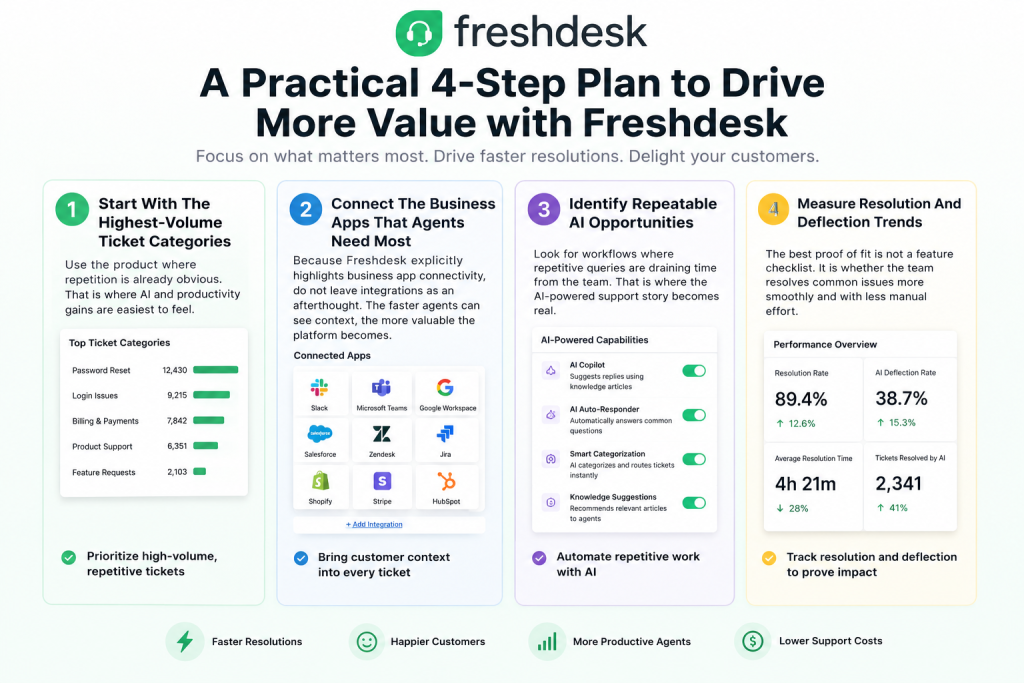
Step 1: Start With The Highest-Volume Ticket Categories
Use the product where repetition is already obvious. That is where AI and productivity gains are easiest to feel.
Step 2: Connect The Business Apps That Agents Need Most
Because Freshdesk explicitly highlights business app connectivity, do not leave integrations as an afterthought. The faster agents can see context, the more valuable the platform becomes.
Step 3: Identify Repeatable AI Opportunities
Look for workflows where repetitive queries are draining time from the team. That is where the AI-powered support story becomes real.
Step 4: Measure Resolution And Deflection Trends
The best proof of fit is not a feature checklist. It is whether the team resolves common issues more smoothly and with less manual effort.
Where Freshdesk Is A Weaker Fit :
Freshdesk is a weaker fit when:
- The support volume is tiny.
- The team does not need connected workflows yet.
- The organization wants a far heavier enterprise service-management model.
- AI and automation are not meaningful priorities for the support operation.
That does not make the product weak. It just means the best-fit niche is specific.
And in this case, that specificity is useful.
Verdict :
Freshdesk by Freshworks looks especially strong in 2026 for scaling support teams with repetitive ticket volume, growing service expectations, and a real need for AI-assisted productivity.
That is the niche where the official product positioning makes the most sense.
If that sounds like your team, try Freshdesk here and judge it against one real support workflow instead of a generic software shortlist.
FAQ :
What Niche Is Freshdesk Best For In 2026?
Freshdesk looks best for scaling customer support teams that need AI-powered service improvements without a hard-to-adopt platform.
Why Is Freshdesk Strong For Mid-Market Support Teams?
Because the official product story combines easy setup, simple use, app connectivity, AI support, and agent productivity gains.
Does Freshdesk Show Official AI Results?
Yes. The official pages include customer examples tied to Freddy AI, including faster resolution and a meaningful share of queries handled by AI.
Is Freshdesk Best For Tiny Support Teams?
Not necessarily. It becomes more compelling when support volume, workflow complexity, and the need for productivity improvements start to rise.
When Should A Team Choose Freshdesk?
Choose Freshdesk when you need a modern customer service platform that is easier to adopt than a heavy enterprise rollout but stronger than a basic help desk.