

Quick Verdict :
Webydo is one of those products where the official homepage tells you the story almost immediately. The public language is direct:
- Start Designing Today.
- Your All-In-One Web Design Solution.
- Design.
- Launch.
- Manage.
That is a compact but useful promise. It suggests Webydo is trying to serve designers and web-focused teams that want a smoother route from creative work to launch and then into site management, without splitting every step across separate tools.
If you want to inspect the product while you read, start with Webydo here.

Product Facts And Overview :
Webydo’s official public positioning is tighter than a lot of SaaS website tools. It does not try to sound like everything for everyone. Instead, the official page keeps bringing you back to one simple idea:
This is an all-in-one web design solution.
That phrase matters because it implies a specific type of buyer:
- Someone who designs sites.
- Someone who launches them.
- Someone who has to manage them after launch.
The official three-step language of Design, Launch, and Manage is especially useful because it maps directly to the real lifecycle of website work. A lot of tools are strong in only one of those phases. Webydo’s public story suggests it wants to support all three in a tighter environment.
That is a promising product identity in 2026 because web work still tends to break apart operationally. Design happens in one place, deployment happens in another, and post-launch management becomes a separate chore. Webydo is clearly trying to reduce that fragmentation.
That matters more than it may sound at first. A lot of site teams do not actually lose time because they lack one more design feature. They lose time because every stage of the work belongs to a different tool, a different owner, or a different handoff ritual. When a platform promises to close those gaps, it deserves to be evaluated through workflow efficiency as much as through visible features.
What Webydo Is Designed To Do :
At its core, Webydo looks built for users who want website production to feel more unified.
That does not automatically mean it is the best choice for every site team. But it does mean the product is easiest to understand when you view it through the workflow.
The official site is essentially saying:
- Design in one working environment.
- Launch from the same broader solution.
- Keep managing the site after it goes live.
That workflow continuity is the whole point.
And that continuity has a real business effect. When the workflow is calmer, revisions move faster, client expectations are easier to manage, and the entire design-to-live process becomes less fragile. That is particularly valuable for small teams that do not have a separate specialist waiting at every stage.
It is especially attractive for:
- Designers who do not want endless handoff friction.
- Freelancers or studios managing more than one client site.
- Smaller teams that want one calmer operating model around site work.
If that sounds like your situation, open Webydo here and compare its working model against the way your team currently handles design-to-launch handoffs.
Pros And Cons
Pros –
- Clear all-in-one positioning.
- Strong workflow language around design, launch, and management.
- Easier to understand than bloated platform pitches.
- Attractive for creative teams that want fewer handoff points.
- Likely to feel more coherent for users who care about the lifecycle, not just the editor.
Cons –
- The official page I reviewed is concise, so some buyers may want deeper public detail before deciding.
- Teams needing a huge enterprise ecosystem may want more breadth than the public product story emphasizes.
- The value depends on whether the all-in-one workflow is actually the problem the buyer wants to solve.
Those tradeoffs are normal. The most important one is the last one. A product like Webydo is strongest when the buyer’s real pain is fragmented site production.
Why The Design-Launch-Manage Lifecycle Matters :
Website teams often underestimate how much momentum gets lost between stages.
A design may look great, but if the launch is awkward, the project slows down. A site may launch on time, but if ongoing updates feel clumsy, the team starts avoiding small improvements that should have been easy. Over time, that creates a very normal but expensive pattern:
- The site becomes harder to maintain.
- The team delays updates.
- Client or stakeholder requests stack up.
- Creative energy gets spent on process instead of outcomes.
Webydo’s official public language is useful because it suggests the product understands that the lifecycle is one connected job. That is why the platform feels more interesting than a tool that only promises visual editing.
Feature Deep Dive :
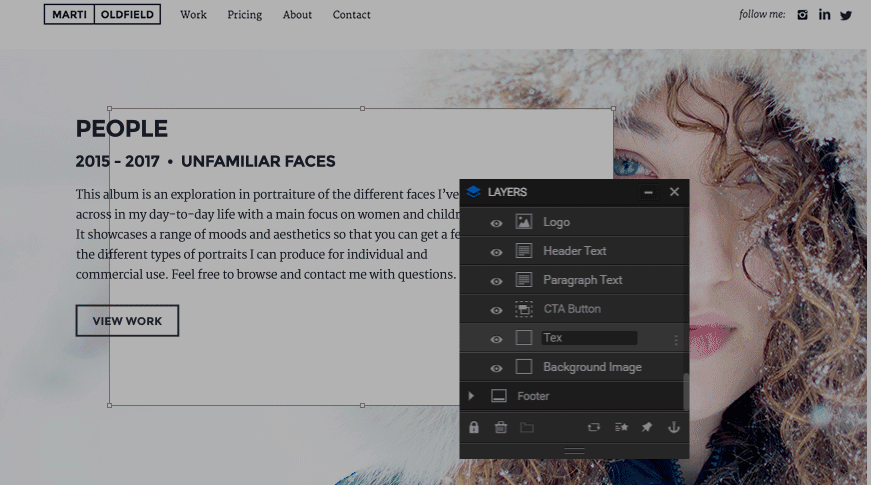
1. Design-Centered Workflow
The first thing the official page tells you is to “Start Designing Today.” That sounds simple, but it reveals a lot about the product’s self-image.
Webydo wants design to feel central, not secondary.
That matters because a lot of site platforms are really content systems first and design systems second. Webydo’s public language implies a more design-forward orientation, which should appeal to users who care about the creative layer as much as the site output.
2. Launch Without A Big Operational Split
The second key official concept is Launch.
That word matters because it suggests the product is trying to keep the move from design to live site tighter and less awkward. In many workflows, launch is where the stress enters:
- Files need to move.
- Developers need to step in.
- Publishing becomes a separate process.
- Ownership gets fuzzy.
If Webydo can make launch feel like a natural continuation of design instead of a separate ordeal, that is a meaningful product advantage.
That is also where many buyers will feel the difference fastest. If you have ever watched a project get slower the moment it leaves the design stage, you already understand why a tighter launch path matters. It reduces ambiguity, lowers handoff friction, and keeps project ownership clearer.
3. Ongoing Management
The third official concept is Manage, and I think this is where the product gets more interesting.
A lot of website tools help you get a site live. Fewer feel well-shaped for what happens next. But most real site work does not end at launch. It turns into:
- Edits.
- Upkeep.
- Structure updates.
- Client requests.
- Performance of the ongoing workflow itself.
Webydo’s official public promise suggests it wants to stay useful after launch rather than becoming irrelevant the moment the design is done.
What Real Teams Could Gain From Webydo :
The most practical benefit of Webydo is not abstract creativity. It is the chance to make the common site work feel less scattered.
For a freelancer, that could mean fewer awkward transitions between mockup, delivery, and revision.
For a studio, it could mean a more repeatable way to move client work from concept to live output without rebuilding the process every time.
For an in-house team, it could mean a calmer environment for managing site changes after launch instead of treating every update like a mini-emergency.
Those gains are easy to dismiss when reading a homepage, but they are exactly the kinds of improvements that make a tool worth paying for over time.
Pricing Breakdown
I want to stay careful here. The official page I reviewed does not give me a clean public pricing table I would want to treat as settled pricing. So the honest read is that buyers should validate exact cost details through the official purchase flow before making pricing-led decisions.
That said, the buying logic is still understandable.
The real pricing question for Webydo is not only:
“How much does this tool cost?”
It is:
“How much workflow friction does this tool remove?”
For design and site teams, that friction can show up as:
- Handoffs.
- Tool switching.
- Launch delays.
- Site-management clutter.
- Repeated client updates across fragmented systems.
If Webydo reduces enough of that, the product can be easier to justify even before you have a perfect spreadsheet comparison in front of you.
That is why I would not compare Webydo on price alone. I would compare it against the labor cost of fragmented execution. If the tool cuts revision cycles, shortens launch effort, or makes post-launch maintenance smoother, that operational gain is part of the value story too.
If you want to evaluate the live product path directly, try Webydo here and map it against one real design-to-launch process.
What I Would Check Before Choosing Webydo :
If I were evaluating Webydo for a real team in 2026, I would ask:
- Do we need a more unified web production workflow?
- Are design-to-launch handoffs slowing us down today?
- Who owns site updates after launch?
- Are we trying to simplify operations or expand technical complexity?
Those questions matter because Webydo looks strongest when simplification is the goal. If your team wants a cleaner production rhythm, the platform’s public positioning makes sense. If the team wants something built around deep engineering customization, the fit may be weaker.
Who Should Use Webydo :
Webydo looks strongest for:
- Designers who want more control over the full website workflow.
- Studios that care about reducing handoffs.
- Freelancers managing client site delivery.
- Small teams that want one calmer environment for design, launch, and management.
It is less compelling for:
- Buyers who mainly want a giant all-purpose platform ecosystem.
- Teams that already have a well-oiled site workflow spread across other specialized tools.
- Organizations whose main constraint is something other than site production flow.
That is why product fit matters so much here. Webydo is easiest to justify when the pain is operational fragmentation, not when the team is shopping for abstract feature breadth.
Real-World Use Case :
Imagine a small web design studio handling several client websites at once.
The actual pain is not only about design quality. It is the repeated effort around moving from mockup to live site and then continuing to manage the site without turning every client request into a mini production event.
That is where Webydo’s official story starts to look practical:
- Design in the platform.
- Launch through the same broader workflow.
- Manage changes afterward without creating a brand-new process every time.
That is the kind of lifecycle coherence creative teams usually want more than one more isolated feature.
It also helps explain why the product can appeal to smaller organizations. They often do not need ten disconnected specialist systems. They need one setup that makes the website work easier to move forward without constant coordination overhead.
Expert Verdict And CTA :
Webydo’s strongest quality in 2026 is not that it sounds huge. It is that it sounds clear.
The official page is not trying to impress you with endless category sprawl. It is making a focused promise around design, launch, and management as one connected experience. That is a smart product position for teams that are tired of fragmented site work.
If your team’s biggest website pain is not creativity but operational fragmentation, Webydo is worth a serious look. If your needs are much broader or you live elsewhere, another platform may fit better.
That is the honest read.
If you want to pressure-test the fit, start with Webydo here and compare its all-in-one design workflow against your current site-production stack.
Final Thought :
Webydo makes the most sense when you read it as a workflow product disguised as a design product.
Yes, design matters. But the official public promise around Design, Launch, and Manage is really a promise about continuity. And continuity is what many web teams are missing most.
If your current process feels split, delayed, or heavier than it should, that is the lens through which Webydo should be judged.
FAQ :
What Is Webydo?
Webydo is positioned on its official site as an all-in-one web design solution built around design, launch, and ongoing management.
Who Is Webydo Best For?
It looks strongest for designers, studios, freelancers, and smaller teams that want fewer handoffs across the website lifecycle.
Does Webydo Focus On Design Or Management?
Both. The official product story explicitly covers design, launch, and management rather than only one part of the process.
Does Webydo Show Public Pricing On The Page Reviewed?
Not in a clean way, I would want to quote as settled pricing, so the exact cost should be confirmed directly through the official product flow.
When Should I Choose Webydo?
Choose Webydo when your main problem is fragmented website production, and you want a more unified working model from design through live management.