


In this guide
When To Consider Alternatives :
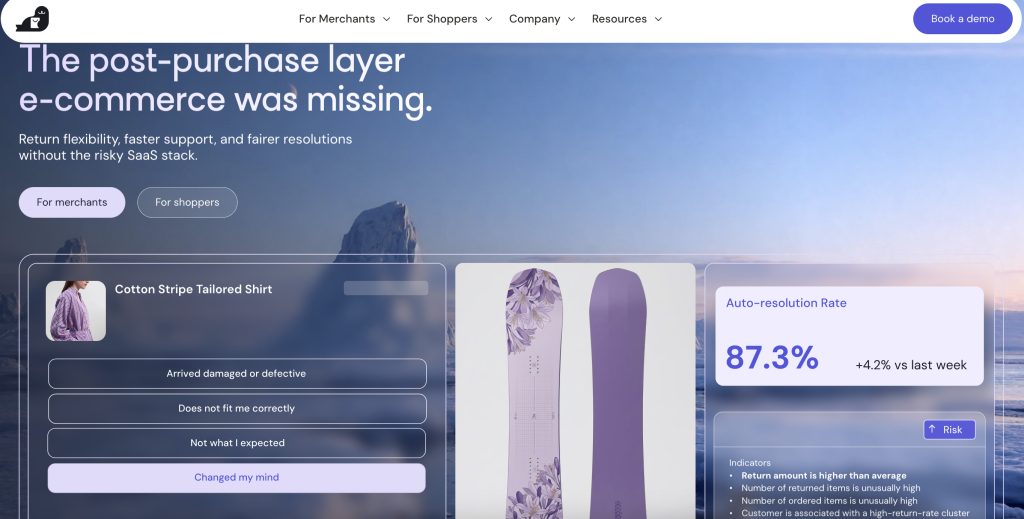
Seel is not trying to be a generic returns app with a prettier dashboard. The official site positions it as post-purchase infrastructure for retailers, with products such as Worry-Free Purchase, Worry-Free Delivery, and Extended Warranty layered around returns, support, and resolution. That makes Seel interesting, but it also means it is not the right fit for every merchant.
Disclosure: Stack99 earns a commission if you buy through links on this page. It costs you nothing extra and never changes our assessment.
You should consider Seel alternatives when:
- Your team wants a more traditional returns-first platform.
- You need a bigger enterprise post-purchase suite with heavy integrations.
- You care more about package tracking and shipping visibility than protection.
- You want a product-protection specialist instead of a broader post-purchase layer.
- Your store is still small enough that a lighter operational stack makes more sense.
That is the real comparison point. Seel is broad. Some alternatives are narrower, but that can actually be a strength if the problem you need to solve is narrower too.
If you want to compare the source product while you read, start with Seel here.
Alternative #1: Loop Returns
Loop Returns is one of the strongest official alternatives when the main priority is returns and exchanges as a retention workflow.
Loop’s official site describes itself as an operations platform built for retention. Its public pricing page is unusually clear, with:
| Plan | Price |
|---|---|
| Essential | $155/mo |
| Advanced | $272/mo |
| Enterprise | Custom |
The official copy also emphasizes:
- Automated return policies.
- Unlimited destinations.
- Return and exchange workflows.
- Fraud prevention.
- Tracking and package protection.
- Checkout+ add-ons.
Why teams choose Loop instead of Seel:
- The returns and exchange story is more explicit and more mature on the public site.
- Public pricing is easier to evaluate without a sales conversation.
- The workflow is very operations-oriented for retention teams.
Why Seel may still win:
- Seel’s broader protection story can be more compelling if the merchant wants returns, delivery, and warranty-style coverage in one branded layer.
- Seel’s official positioning feels more like a post-purchase infrastructure strategy than a pure returns platform.
Loop is best when the merchant’s biggest question is, “How do we turn returns into a cleaner retention workflow?”
Alternative #2: Narvar
Narvar is the best-known enterprise-style alternative in this group.
The official Narvar site emphasizes an intelligent personalization layer beyond the buy moment, with products such as:
- Promise.
- Secure.
- Track.
- Shield.
- Notify.
- Assist.
That product framing matters because Narvar is not a small-feature competitor. It is a larger, more enterprise-leaning post-purchase platform. The site also leans heavily on retailer personalization, fraud management, delivery confidence, returns, and large-scale customer interaction insight.
Why teams choose Narvar instead of Seel:
- They want a bigger enterprise platform with a broader post-purchase surface area.
- They value personalization and branded tracking at a larger scale.
- They want a product family that looks built for high-volume retail environments.
Why Seel may still win:
- Seel can feel simpler and more focused if your team does not need the weight of a larger enterprise stack.
- Seel’s protection framing may be easier to adopt for merchants who want less platform complexity.
Narvar is best when the retailer’s problem is not only returns or protection, but the full post-purchase customer journey at enterprise scale.
Alternative #3: Extend
Extend is a very relevant alternative when product protection, warranties, return behavior, and shopper operations matter more than a traditional SaaS dashboard.
Extend’s official site describes itself as a personalized shopper operations platform, with sections for:
- Shopper Intelligence.
- Returns.
- Delivery.
- Product Protection.
The official homepage also talks about:
- Shipping protection.
- Streamlined claim resolution.
- Behavior-based returns and exchanges.
- Accidental damage and product-failure warranties.
That makes Extend a close conceptual alternative to Seel in some use cases, especially when the merchant wants to embed protection and claim workflows directly into the shopping journey.
Why teams choose Extend instead of Seel:
- They want a strong product-protection and warranty angle.
- They care about personalized shopper operations and claim automation.
- They want a platform that looks protection-led as much as returns-led.
Why Seel may still win:
- Seel’s brand message around the post-purchase layer feels simpler and more retailer-friendly for some merchants.
- Seel’s product naming and merchant story may be easier to explain internally if you want a cleaner “support, returns, and protection” pitch.
Extend is especially relevant for brands where trust, protection, and resolution quality directly affect repeat purchase behavior.
Alternative #4: Route
Route is the lightweight big-name alternative that stays very focused in its public positioning.
Its official homepage describes Route as a post-purchase platform for:
- Protection.
- Tracking.
- Returns.
That is a short list, but it is useful. Some merchants do not want a complicated post-purchase philosophy. They want tracking, protection, and returns in a recognizable package.
Why teams choose Route instead of Seel:
- They want a simpler and more familiar brand in the protection-and-tracking category.
- They care strongly about package protection and shopper visibility.
- They want a product with a very clear public identity.
Why Seel may still win:
- Seel’s official site presents a broader infrastructure mindset and may feel more operationally ambitious.
- Seel looks stronger if the merchant wants deeper returns, flexibility, and a more layered protection offering.
Route is best when the merchant wants a recognizable post-purchase protection path without overcomplicating the decision.
If your team keeps bouncing between “we need better returns” and “we really need a cleaner post-purchase stack,” take another look at Seel here before defaulting to the narrowest alternative too early.
Quick Comparison Matrix :
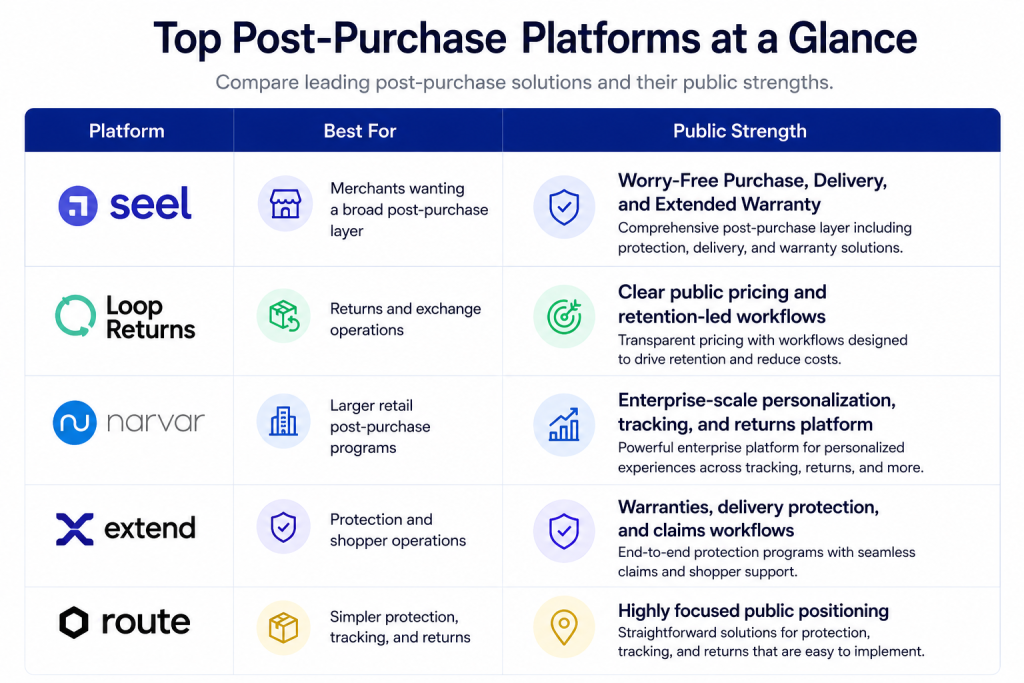
That matrix tells the truth faster than any marketing slogan can.
Seel is not the obvious winner for every merchant. It is the right fit when the team wants a broader post-purchase infrastructure layer. If the team only wants one narrow function, an alternative can be cleaner.
When You Should Stick With Seel :
You should probably stay with Seel if your team likes the official product mix it currently presents:
- Worry-Free Purchase.
- Worry-Free Delivery.
- Extended Warranty.
- A branded post-purchase experience.
- Return flexibility and faster support without stacking several unrelated tools.
That is the key. Seel’s official site is really arguing against the risky SaaS stack. If your current plan involves too many separate vendors for returns, tracking, warranty, and support logic, Seel becomes much easier to justify.
If that sounds like your situation, open Seel here and compare the full post-purchase approach against the narrower alternatives before you commit elsewhere.
How To Choose Between Them :
The fastest decision rule is this:
- Choose Loop if returns and exchanges are the core problem.
- Choose Narvar if your post-purchase environment is larger and more enterprise-driven.
- Choose Extend if protection and warranty logic are central.
- Choose Route if you want simpler protection, tracking, and a return package.
- Choose Seel if you want a broader, retailer-friendly post-purchase layer instead of a stack of niche tools.
That may sound overly neat, but it is actually how these products separate in practice.
A lot of merchants make this decision harder than it needs to be. They compare feature pages line by line and forget to ask the blunt question: where does post-purchase pain show up first in our business?
If it shows up in returns operations, Loop becomes stronger. If it shows up in enterprise-scale customer experience and tracking, Narvar becomes stronger. If it shows up in claims, protection, and warranty trust, Extend becomes stronger. If it shows up in the basic package, confidence and return visibility, Route becomes stronger. If it shows up as a broader “our post-purchase experience is fragmented” problem, Seel remains very compelling.
There is also an internal-buy-in angle here. Loop is often easier to defend inside a returns or CX team because the use case is tightly defined. Narvar is easier to defend in larger organizations that already think in enterprise customer-journey programs. Extend is easier to defend when protection or warranty economics are the main conversation. Route is easier to defend when the goal is simply to add familiar tracking-and-protection confidence without expanding the stack too much.
Seel is easiest to defend when leadership already understands that post-purchase pain is not one isolated problem. It is often several problems showing up together: returns friction, support load, delivery confidence, protection expectations, and inconsistent customer experience after the order is placed. That is why Seel can feel too broad for one merchant and exactly right for another. The width of the platform is either the point or the problem, depending on how fragmented the current setup already is.
Verdict :
The best Seel alternatives in 2026 are Loop Returns, Narvar, Extend, and Route. They are not interchangeable, and that is exactly why this comparison matters.
Loop is the strongest returns-led option. Narvar is the strongest enterprise-scale alternative. Extend is the strongest protection-and-warranty-style comparison. Route is the simplest big-name post-purchase alternative in the set.
Seel still stands out when the merchant wants more than one narrow workflow. Its official story is broader, more infrastructure-oriented, and clearly designed to replace a fragmented post-purchase stack.
If you want that broader route, start with Seel here and compare it against the alternative that matches your biggest post-purchase pain point.

FAQ :
What Is The Best Seel Alternative In 2026?
It depends on the problem. Loop is strongest for returns operations, Narvar for enterprise post-purchase programs, Extend for protection and warranty workflows, and Route for a simpler protection-and-tracking path.
Is Seel Mainly A Returns Tool?
Not really. The official Seel site positions it as a broader post-purchase infrastructure platform with Worry-Free Purchase, Worry-Free Delivery, and Extended Warranty products.
Does Loop Returns Publish Pricing Publicly?
Yes. Loop’s official pricing page lists Essential starting at $155 per month and Advanced starting at $272 per month, with Enterprise as contact-us pricing.
Is Narvar Better Than Seel?
For some larger retail environments, it can be. Narvar’s public site looks more enterprise-oriented. Seel may still be the better fit for merchants wanting a simpler and more focused post-purchase layer.
When Should I Stick With Seel?
Stick with Seel if you want a broader post-purchase experience that combines protection, delivery, and resolution logic instead of using several separate tools.
More on Seel
Hand-picked guides to help you choose the right tool — no fluff.
 TutorialsSeel Beginner's Guide 2026A clean start-here walkthrough with no jargon.
 PricingSeel Pricing 2026Real tier prices and what each plan actually includes.
 ComparisonsCredit Repair Cloud vs Alternatives 2026The strongest competitors compared side by side.
 ComparisonsairSlate vs Alternatives 2026The strongest competitors compared side by side.