

Who This ThorData Guide Is Really For :
ThorData is not the kind of product you buy because the dashboard looks cool. You buy it because your team needs reliable access to public web data and does not want that access layer falling apart every week.
So this “best for” guide needs a specific niche, not a generic one. Based on the official product pages, the strongest fit is data collection teams inside agencies, growth-intelligence shops, and research operations that need proxy infrastructure plus scraping tools in one place.
Why that niche?
Because the official ThorData site combines:
- Residential, Mobile, ISP, And Datacenter Proxies.
- Geo-Targeting.
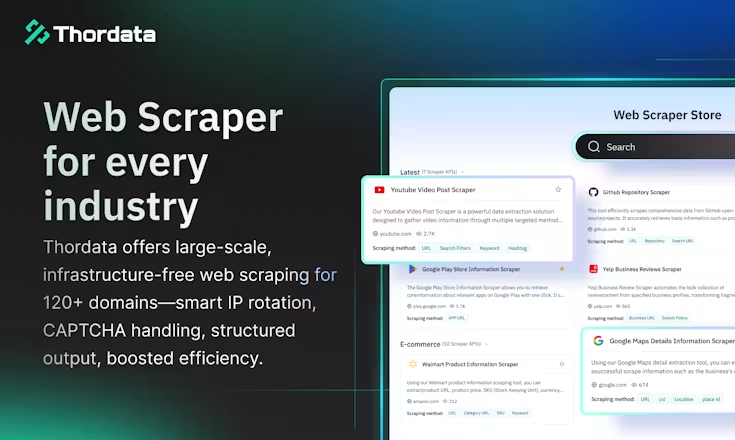
- Web Scraper API.
- SERP API.
- Web Unlocker.
- Scraping Browser.
- Datasets.
That is a better match for execution-heavy research or scraping teams than for casual one-off users.
If you want to inspect the current platform directly, start with ThorData here.
Why ThorData Fits Agencies And Data Ops Teams :
Agencies and data ops teams usually live in an awkward middle zone.
They are too advanced for simple browser plugins and tiny scraping hacks, but they are not always excited to build and maintain an entire proxy-and-unlocker stack from scratch. They need working access, usable pricing, enough product range to handle different targets, and support when things break.
That is exactly where ThorData’s official product mix makes sense.
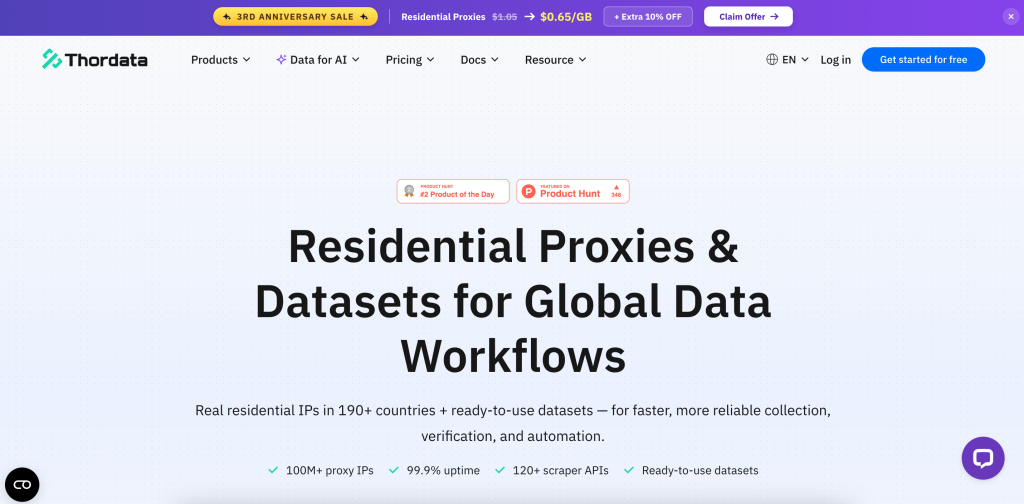
The homepage and pricing pages show a vendor that is trying to cover both access and extraction:
- Access Through Multiple Proxy Types.
- Extraction Through APIs And Browser-Based Products.
- Structured Data Options Through Datasets.
That makes ThorData useful for teams running recurring client research, SEO monitoring, competitor tracking, SERP collection, review monitoring, or geo-specific public web collection.
It is not just about whether you can hit a page. It is about whether you can keep doing it at scale with enough flexibility to match the target and the use case.
Top Feature For This Niche #1: Broad Proxy Coverage With Real Product Choice
ThorData’s public pricing page lists a lot more than one proxy plan.
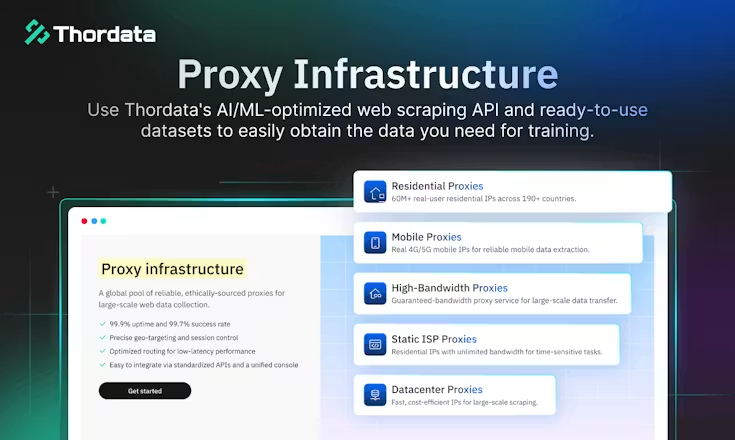
Officially, the product lineup includes:
- Residential Proxies.
- Residential Proxies High Volume.
- Mobile Proxies.
- High Bandwidth Proxies.
- Datacenter Proxies.
- ISP Proxies.
That matters because agencies and data teams rarely have one uniform traffic pattern.
Some tasks need residential traffic to blend in better. Some need mobile IPs. Some need a lower-cost datacenter layer. Some need heavier bandwidth for demanding workloads. A vendor that only does one thing well becomes limited fast.
ThorData’s current public pricing also makes the entry point relatively clear:
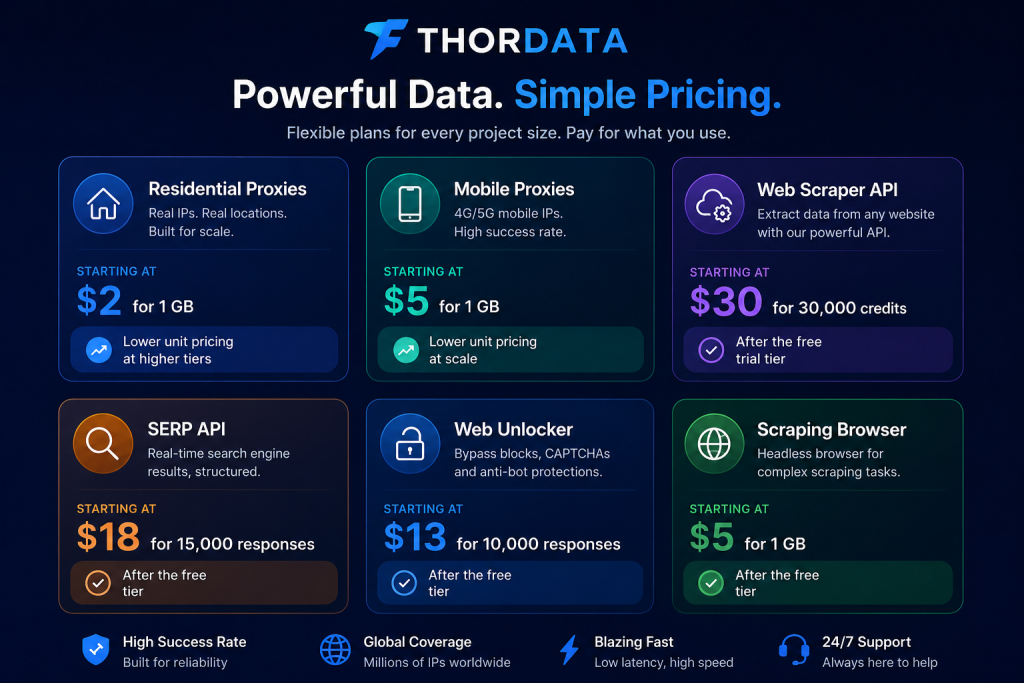
- Residential Proxies Start at $2 for 1 GB.
- Mobile Proxies Start At $5 For 1 GB.
- Residential High-Volume Pricing Drops As Usage Scales.
That flexibility is a practical fit for agencies that handle different client sizes and project shapes.
Top Feature For This Niche #2: Built-In Scraping Products Beyond Raw Proxies
Many proxy vendors stop at access. ThorData does not.
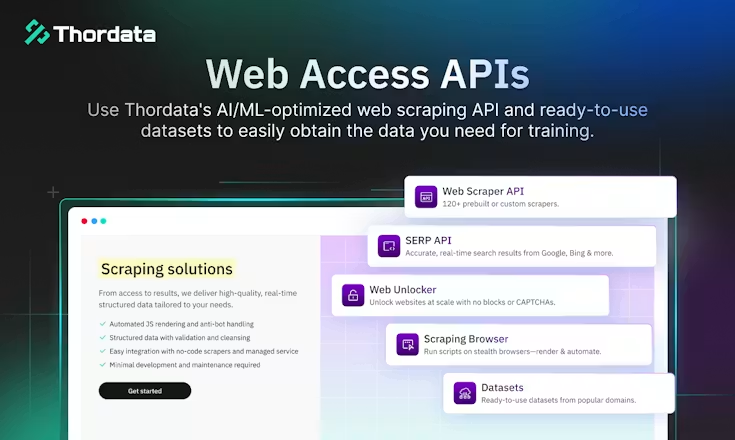
The official pricing catalog includes:
- Web Scraper API.
- SERP API.
- Web Unlocker.
- Scraping Browser.
- Datasets.
That is one of ThorData’s biggest advantages for this niche because agencies and data teams often do not want to manage every single layer themselves.
If the team can get:
- Access Through Proxies.
- Harder Targets Through Unlocking.
- Search Result Collection Through SERP API.
- Browser-Like Execution Through Scraping Browser.
- Ready-Made Data Through Datasets.
Then the whole operation becomes easier to scale across multiple use cases.
That is especially helpful when one client project is about search monitoring, another is about review collection, and another is about broader web data extraction. A vendor with several paths reduces tool sprawl.
If your team is tired of gluing five scraping tools together with hope and caffeine, check ThorData here and compare whether one stack can cover more of the workload.
If you want a cleaner proxy-plus-extraction stack, open ThorData here and review the official product menu from the source.
Top Feature For This Niche #3: Global Reach And Operational Scale
ThorData’s public site emphasizes a large proxy network and global targeting. The homepage and solutions pages mention coverage across 190+ countries and solutions built for collection at scale.
For agency and data-ops buyers, that matters for three reasons.
First, geo matters. If you collect local SERPs, reviews, or market signals, country-level access is not enough by itself. Teams need confidence that the vendor thinks seriously about location-based collection.
Second, support matters. The official site repeatedly highlights 24/7 support for a toy tool, which is marketing fluff. For web data infrastructure, it is operationally meaningful.
Third, concurrency and scale matter. ThorData’s review-monitoring solution page publicly mentions unlimited concurrent sessions and extensive residential coverage. That is exactly the sort of operational signal data teams watch closely.
In short, this is a better fit for teams doing repeatable work under deadlines than for hobby scraping experiments.
Real-World Example For This Niche :
Imagine a digital agency handling three recurring client programs:
- Local SERP Tracking For Franchise Visibility.
- Review Monitoring For Brand Reputation.
- Competitive Pricing Collection Across Regions.
That team does not want three unrelated access stacks and four separate vendors if it can avoid it.
ThorData fits that kind of workflow because the official product family can support:
- SERP API For Search Collection.
- Residential Or Mobile Proxies For Harder Public Targets.
- Web Unlocker For Pages That Need More Help.
- Scraping Browser For Browser-Like Collection Paths.
That does not magically remove all scraping complexity. Nothing does. But it gives the agency a more unified base layer, which is often the bigger win.
Pricing In Context For Agencies And Data Teams :
Here is the honest pricing read from the public page:
- Residential Proxies: $2 for 1 GB, then lower unit pricing at higher tiers.
- Mobile Proxies: $5 for 1 GB, then lower unit pricing at scale.
- Web Scraper API: starts at $30 for 30,000 credits after the free trial tier.
- SERP API: starts at $18 for 15,000 responses after the free tier.
- Web Unlocker: starts at $13 for 10,000 responses after the free tier.
- Scraping Browser: starts at $5 for 1 GB.
That matters because agency buyers need to think in workloads, not just in sticker prices.
A lower-priced proxy plan is not actually cheaper if the team still needs to bolt on unlockers, browser tooling, and datasets elsewhere. ThorData’s value for this niche is the ability to consolidate more of that spend into one vendor relationship.
The public pricing is also useful for testing. Teams can start small, validate a workflow, and only then move into larger-volume tiers.
Alternatives For This Niche :
The main alternative paths are pretty clear:
- Bright Data.
- DIY Proxy And Scraper Stacks.
- Single-Purpose Point Tools.
Bright Data is strong when the team wants a broader enterprise web data platform. DIY is attractive when engineering capacity is abundant and the maintenance burden is acceptable. Point tools are fine for narrow jobs, but can become messy fast when the scope widens.
ThorData sits in the middle in a useful way. It gives agencies and data teams multiple infrastructure and extraction options without forcing them into a giant internal platform build.
[IMAGE: ThorData geo-targeting, sessions, and review-monitoring workflow]
Setup Steps For This Niche :
If I were rolling ThorData out for an agency or data team, I would keep the first phase boring on purpose:
- Define One Repeatable Use Case First.
- Choose The Proxy Type That Matches The Target.
- Decide Whether Raw Proxy Access Or API Access Is Cleaner.
- Test The Output On A Small Sample.
- Validate Geo Requirements Before Scaling.
- Add Volume Only After Success Rate And Parsing Quality Look Stable.
That matters because the best proxy platform in the world still fails if the team scales a broken workflow too early.
ThorData looks strongest when it is part of a disciplined collection process, not when it is treated like a magic shortcut.
Verdict :
ThorData is best for agencies, growth-intelligence teams, and data operations groups that need a practical middle path between toy scraping tools and a fully self-built infrastructure stack.
The official feature story is compelling for that niche because it combines broad proxy coverage with APIs, unlockers, scraping-browser tooling, and datasets. That is exactly the sort of product mix that helps teams serve multiple use cases without multiplying vendors.
It is not the perfect fit for every buyer. If you only need a tiny one-off test, it may be overkill. If you want a broader enterprise data platform, you may compare it closely with larger alternatives. But for repeatable public web collection work, it looks very well aligned.
If that sounds like your workflow, start with ThorData here and test one real collection job before making the bigger commitment.
FAQ :
What Niche Is ThorData Best For In 2026?
It looks strongest for agencies and data teams that need proxy infrastructure plus scraping products in one vendor relationship.
Does ThorData Offer More Than Residential Proxies?
Yes. Officially, it includes residential, high-volume residential, mobile, datacenter, high-bandwidth, and ISP proxy options, plus multiple scraping products.
Is ThorData Better For Beginners Or Experienced Teams?
It is more useful for teams with repeatable data-collection needs. Beginners can still test it, but the feature set is most valuable when the workflow is operational rather than casual.
Does ThorData Publish Public Pricing?
Yes. The official pricing page lists public entry pricing for several proxy and API products.
What Is The Biggest Advantage For Agencies?
The biggest advantage is consolidation: proxy access, scraping APIs, unlocking, browser workflows, and datasets can all sit under one vendor instead of being stitched together manually.