

Why This Comparison Matters :
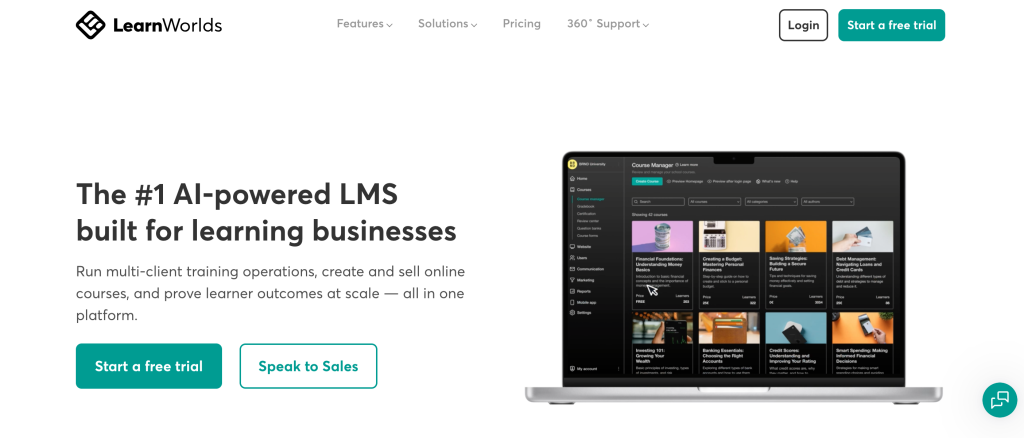
LearnWorlds is not trying to be a tiny course host that only stores videos and checks off a few lesson boxes. The official pricing page calls it an AI-powered LMS for course creators and pairs that with selling tools, marketing tools, and a platform story that is meant to help you build a business, not just upload content.
That makes the comparison interesting. If you only need a basic place to publish lessons, there are lighter options out there. If you want a platform that can support the course itself, the storefront, the funnel, and the learner experience, LearnWorlds starts to look more serious.
If you want to inspect the official product while you read, open LearnWorlds here and compare the public pricing page against the way you actually sell courses.
Product A Deep Dive :
The official site describes LearnWorlds as an AI-powered LMS built for course creators. The public pricing page currently lists Starter at $29, Pro Trainer at $79, and Learning Center at $299. It also highlights a 4.7 rating and a G2 Leader award in Spring 2026, which tells you the platform is not just selling itself as fancy; it is trying to prove that people are actually using it.
That matters because course platform buyers often drift into feature overload. They start by wanting to sell a class, then need a site, then need landing pages, then need automation, then need community, then need analytics. LearnWorlds is trying to keep all of that inside one system.
The stronger version of the product appears to be the one that helps you create, sell, and promote courses while keeping the learning experience polished. The site language points to marketing and selling tools, online courses, digital products, and a scalable platform. That is exactly the right mix for people who are treating education like an actual business.
If you want the full platform story, open LearnWorlds here and judge whether the all-in-one approach fits your course plan.
Product B Deep Dive :
A lighter course stack usually looks easier on day one.
You pick a simple course host, connect a payment tool, bolt on email automation, and maybe add a membership layer later. That path can work. In fact, it can feel better at the beginning because you only buy the things you absolutely need.
The problem is that the stack gets messy as soon as you need a more polished experience. You start stitching together pages, coupons, automation, checkout flow, and learner engagement in separate places. That is not always a deal-breaker, but it does mean you spend more time maintaining the machine and less time teaching.
LearnWorlds is a better fit if you want the machine to be more integrated from the start. The lighter stack is better if you want to minimize commitment and keep the setup simple until the business proves itself.
Feature Matrix :
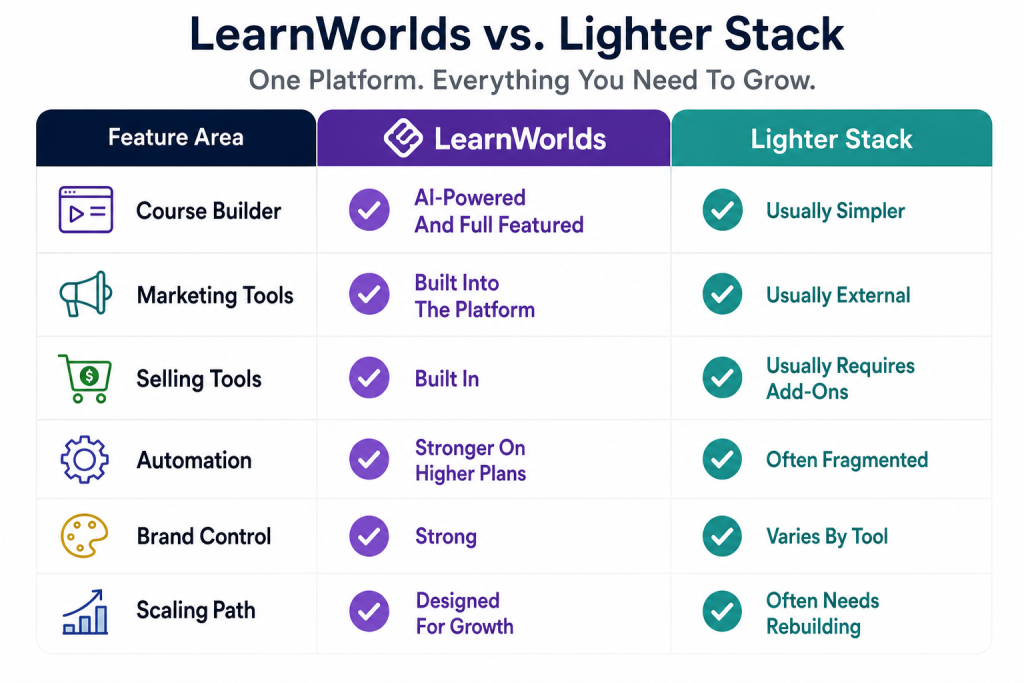
That table is why LearnWorlds feels more like a business platform than a content host. It gives you a more complete starting point, which is useful when you do not want the backend of your course business to feel improvised.
Pricing Comparison :
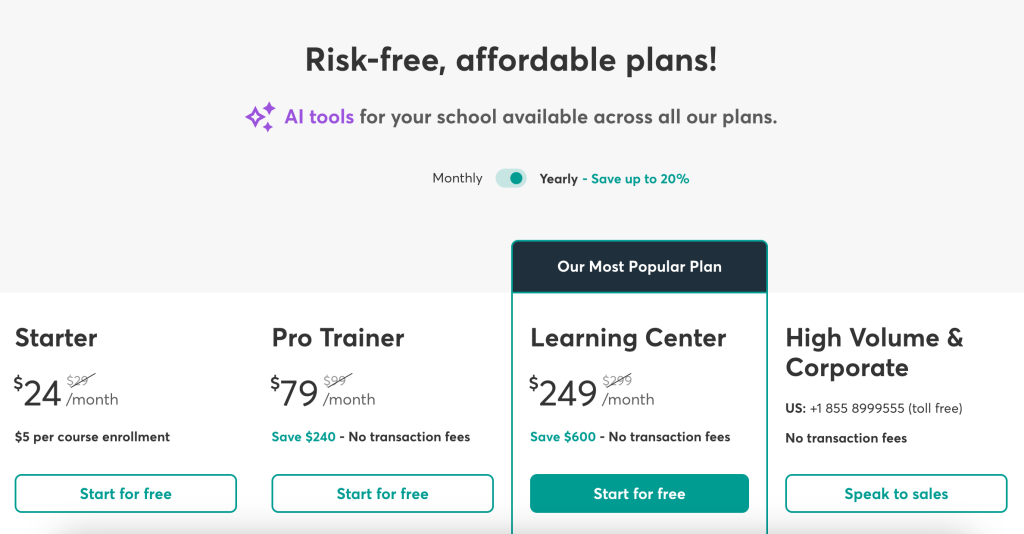
The public pricing page is the place to focus because the numbers are simple enough to judge quickly. LearnWorlds currently lists Starter at $29, Pro Trainer at $79, and Learning Center at $299. The page also shows the product in a way that suggests the higher you go, the more automation, scale, and feature depth you unlock.
That is the right model for course businesses that expect to grow. The platform is not asking you to pay for only one small slice of functionality and then glue the rest together yourself. It is asking you to choose the level of system you need.
If your course business is still experimental, the lower tier may be enough. If your business already needs automation, branding, and a stronger customer journey, the higher tier starts to make more sense. That is true even when the monthly number stings a little, because the real cost of a course platform is usually not the sticker price. It is the time you spend compensating for gaps.
If you want to compare the current tiers against your revenue model, open LearnWorlds here and see which plan lines up with the way you actually sell.
Use Case Recommendations :
Choose LearnWorlds If –
You Want A Proper Course Business Platform.
You Need Marketing And Sales Tools In The Same Place.
You Care About Branding And Learner Experience.
You Expect To Scale Into More Automation Over Time.
Choose A Lighter Stack If –
You Are Still Testing Your First Offer.
You Only Need To Publish A Few Lessons.
You Prefer The Cheapest Possible Setup.
You Do Not Need Much Automation Yet.
That split is really the whole decision. If the course is a side project, keep it light. If the course is becoming the business, LearnWorlds starts to make a lot more sense.
If that is where your head is at, start with LearnWorlds here and see whether the platform can carry the weight of the business you want to build.
Practical Buyer Notes :
The biggest strength of LearnWorlds is also the reason some people hesitate. It is more than a course host. That means more power, but it also means more decisions.
You need to think about course structure, payment flow, learner engagement, site branding, and how much automation you actually want on day one. The upside is that once you make those choices, the platform can carry more of the business for you. The downside is that you should not buy it just because it looks advanced.
The right buyer sees LearnWorlds as infrastructure. The wrong buyer sees it as a prettier video library. Those are not the same thing.
What The Alternative Stack Usually Misses :
The alternative stack usually looks cheaper because the pieces are separated.
You buy one tool for the course. Another for the checkout. Another for email. Another for automation. Another for learner engagement. That can work, but it also means every new feature request becomes a mini integration project. The platform itself might be fine. The maintenance overhead is what gets annoying.
LearnWorlds reduces that overhead by keeping more of the journey in one place. That is especially helpful once you care about brand consistency and learner experience. A patchwork stack can deliver the content, but it often struggles to deliver the same feel across the whole journey. LearnWorlds is much better when you want the course, the funnel, and the brand to behave like one product.
Where The Lighter Stack Breaks Down :
The lighter stack usually starts to hurt in the same place: maintenance.
You can absolutely sell a course with separate tools. The issue is that every extra tool introduces another place where the customer experience can drift. The checkout page starts to look different from the course. The emails feel disconnected from the lessons. The automation logic lives somewhere only one person remembers. That is not fatal, but it is annoying, and annoyance turns into drag.
LearnWorlds reduces that drag by keeping the course experience and the business experience closer together. That is what makes it attractive for creators who are past the “test everything manually” phase and want the platform itself to carry more weight. If that describes you, the comparison gets much easier.
There is also a psychological benefit to the all-in-one model. When the creator can see the course, the checkout, the nurture path, and the learner journey in one place, the business feels more coherent. That coherence helps with decision-making. Instead of wondering which tool owns which step, the team can focus on improving the offer and the learning experience. That is a bigger win than it looks like on a pricing page.
That kind of coherence also makes onboarding easier, because new team members can learn one system instead of four disconnected products.
Verdict :
LearnWorlds is the kind of platform that makes sense when your course is part of a larger business, not just a content upload project. The public pricing page and feature framing point to a full LMS with the tools you need to create, sell, and market courses in one place.
The lighter alternative is fine when you want to stay small and simple. LearnWorlds is better when you want to reduce the number of tools in the middle of your revenue process.
FAQ :
What is LearnWorlds?
It is an AI-powered LMS and online course platform built for creators who want to create, sell, and promote courses.
How much does LearnWorlds cost?
The current public pricing page lists Starter at $29, Pro Trainer at $79, and Learning Center at $299.
Is LearnWorlds good for beginners?
Yes, if the beginner is serious about building a course business rather than just uploading a few lessons.
Does LearnWorlds include marketing tools?
Yes. The official site positions it as a platform with marketing and selling tools alongside the course builder.
Is LearnWorlds better than a lighter stack?
It depends on your goals. If you want an all-in-one business platform, yes. If you only need a simple course host, a lighter stack may be enough.
Does LearnWorlds have a strong reputation?
The public page highlights a 4.7 rating and a G2 Leader award in Spring 2026, which suggests broad adoption and positive market sentiment.