


Who This Post Is For :
Jungle Scout makes the most sense for Amazon startups that need structured research, a cleaner operating rhythm, and a guided way to make their first serious product decisions. The official site positions the platform as an all-in-one Amazon intelligence engine, which is exactly the kind of language that tends to resonate with early-stage sellers and lean e-commerce teams.
This post is for:
- Amazon startups choosing their first serious research stack.
- Founders who want a guided product-intelligence workflow.
- Small brands that are still building their Amazon playbook.
- Agencies helping newer sellers avoid expensive mistakes.
If that sounds like your stage, start with Jungle Scout here.
Why Jungle Scout Fits Startups :
Startups usually do not need the most complicated seller tool. They need clarity.
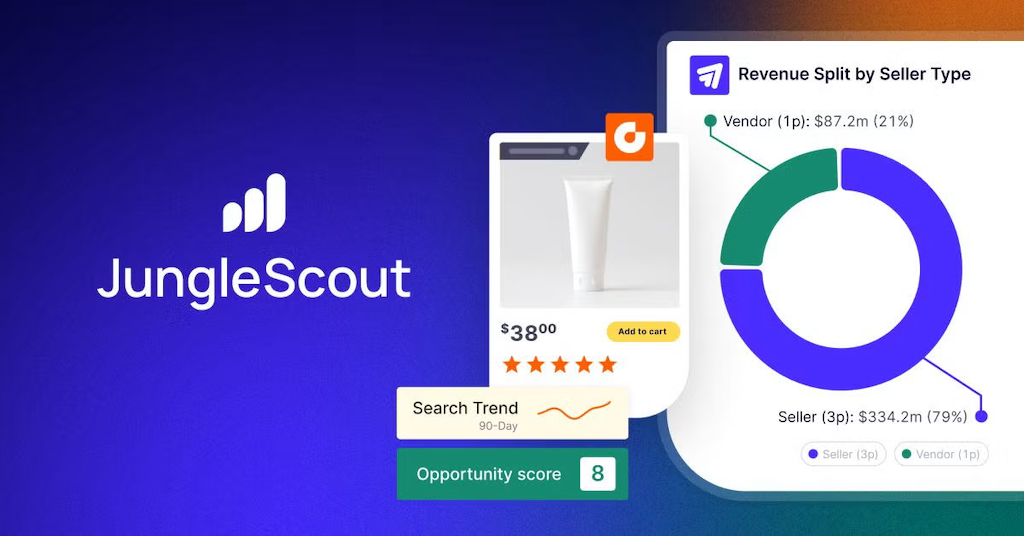
Jungle Scout fits that need because its official positioning emphasizes:
- Product research.
- Market analysis.
- Opportunity discovery.
- Sales trends.
- AI-assisted listing work.
The pricing page also splits the offering into Cobalt for sellers and Catalyst for brands and agencies. That is useful because it shows the product is thinking about different startup shapes instead of forcing everyone into one generic lane.
For a startup, that matters because the earliest Amazon decisions are expensive if they are wrong. A guided intelligence platform can prevent a lot of wasted inventory and wasted momentum.
Top Features For The Niche :
Structured Product Research –
The core strength of Jungle Scout is still product intelligence. For startups, that means easier comparisons, better opportunity evaluation, and a stronger foundation for choosing what to sell.
Brand And Agency Paths –
The Cobalt and Catalyst split is useful for startups that might begin as one-person seller operations and later grow into a brand or agency motion.
Guided Seller Workflow –
Jungle Scout feels organized rather than chaotic. That is a startup advantage because most early Amazon teams do not need 50 tabs worth of features. They need one place to make good decisions.
Pricing Framing –
The pricing page is solution-oriented rather than random. That makes it easier for startups to align the platform with the business stage they are actually in.
If you want a more guided starting point, start with Jungle Scout here and use it to evaluate one product idea from research to launch.

Real Startup Example :
Imagine a founder who wants to test one Amazon product without spending months guessing.
The startup workflow might look like this:
- Pick one product idea.
- Check demand and competition.
- Review the likely economics.
- Compare it against the next best alternative.
- Decide whether the idea is worth a small, controlled launch.
Jungle Scout is useful here because it gives the founder one clearer place to make those decisions. That is often more valuable than a giant toolbox with too many overlapping screens.
It also helps startup teams avoid one of the biggest early mistakes: treating research as if it were action. A good tool should help the founder make a decision, not keep them wandering in analysis mode forever.
Common Startup Mistakes :
Startups usually lose time when they:
- Research too many ideas at once.
- Confuse tool depth with business readiness.
- Spend too long comparing products without choosing one.
- Add more software before they have a launch plan.
Jungle Scout helps reduce that chaos because its structure nudges the founder toward decision-making instead of endless browsing.
Why The Fit Matters :
The best startup tool is not the one with the most knobs. It is the one that helps the founder make one better decision faster.
That matters because early Amazon decisions are expensive. A bad product choice can waste inventory, time, and confidence. A clearer research workflow can lower that risk quickly.
Jungle Scout does that well.
Pricing In Context :
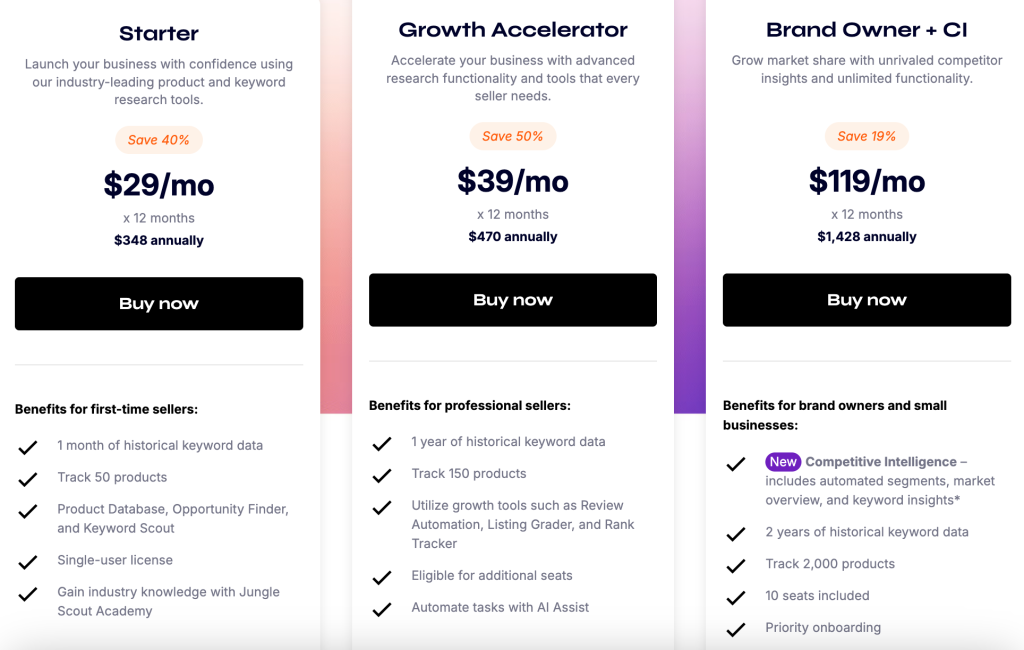
Jungle Scout’s public pricing page is built around Cobalt and Catalyst, which means the best answer is less about one cheap number and more about choosing the right seller path.
Helium 10, by contrast, shows a clearer public tier ladder with Starter, Platinum, Diamond, and Enterprise on its pricing page.
That comparison matters for startups because they often want the simplest possible path to value. In that sense, Jungle Scout can feel more guided, while Helium 10 can feel more tool-heavy.
The real question is whether your startup wants:
- A more structured Amazon intelligence home base.
- Or a broader seller tool set with more complexity.
If the first sounds closer to your working style, start with Jungle Scout here and compare it against your first product launch plan.
Alternative Tools For Startups :
Startups may also compare Jungle Scout with Helium 10 or other seller research tools.
Helium 10 can make sense if the team wants broader tool depth and is comfortable with more complexity.
Jungle Scout usually makes more sense when the startup values:
- Clearer product research.
- More guided decision support.
- A cleaner all-in-one feel.
- Less confusion at the beginning.
That is why the fit question matters more than the feature-count question.
Setup Steps For Startups
Step 1: Pick One Product Idea
Do not start by exploring everything. Start with one product you are actually willing to launch.
Step 2: Use The Research Tools
Check whether the niche has enough demand and whether the opportunity looks healthy enough to test.
Step 3: Compare Against Alternatives
Use the platform to compare products and pressure-test the economics before you commit capital.
Step 4: Keep The Workflow Small
Start with the simplest decision path that gives you clarity.
Step 5: Expand After Validation
Once the first product idea is validated, you can move toward more advanced workflows and broader seller tooling.
That gradual approach keeps the startup from wasting time on a platform before the business model has even been tested properly. It is usually better to build one repeatable decision path than to buy a complicated stack and hope clarity appears later.
If you can reduce uncertainty early, the whole launch process becomes less stressful. That is one of the underrated benefits of a clean product-intelligence workflow.
It also helps the team stay honest. Startups can get seduced by big numbers, noisy dashboards, or too many research tabs. A guided tool keeps the founder focused on the actual decision: is this product worth building, buying, and testing right now?
That is a surprisingly valuable filter.
It also creates a better conversation inside the startup. Instead of arguing about random software features, the team can discuss a much better question: does this tool help us choose better products with less waste? For an early Amazon business, that is often the only question that really matters.
That is why Jungle Scout still makes sense even if the startup is small. It can reduce the noise around the decision and help the founder move with more confidence.
That confidence is valuable because early Amazon work is often a series of small bets. When the research workflow is clear, those bets feel more deliberate and less like guesses in the dark.
It also helps the startup avoid the worst kind of drift, where the team spends more time debating software than making product decisions. A clean workflow keeps the attention on the market, not the tool.
That focus is exactly what early Amazon sellers need. For early stage sellers.
Verdict :
Jungle Scout is a strong fit for Amazon startups because it feels organized, guided, and centered on seller intelligence rather than tool sprawl.
That matters when the company is still early and wants to avoid making expensive decisions too quickly. A startup usually benefits more from a clear research home base than from a giant feature buffet.
Helium 10 may still be the better choice for sellers who want broader tooling depth, but Jungle Scout looks especially strong when the team wants clarity, structure, and a less overwhelming starting point.
If that sounds like your buying style, start with Jungle Scout here and use it to guide your first real Amazon product decision.
The best startup tool is not the one with the most knobs. It is the one that helps the founder make one better decision faster.
Jungle Scout does that well.
FAQ :
Is Jungle Scout good for Amazon startups?
Yes. Its official positioning around all-in-one Amazon intelligence, research, and growth support fits startup workflows well.
What makes Jungle Scout different from Helium 10?
Jungle Scout feels more guided and structured, while Helium 10 feels broader and more tool-heavy.
What should a startup use Jungle Scout for first?
Use it first for product research, market analysis, and deciding whether one idea is worth launching.
When should a startup choose Helium 10 instead?
Choose Helium 10 if your team wants broader seller-tool depth and is comfortable with a more complex platform.