


Quick Verdict :
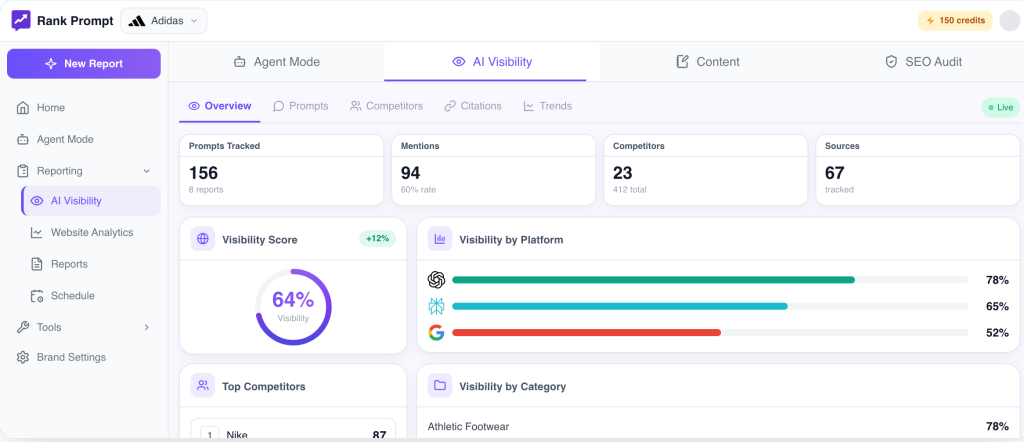
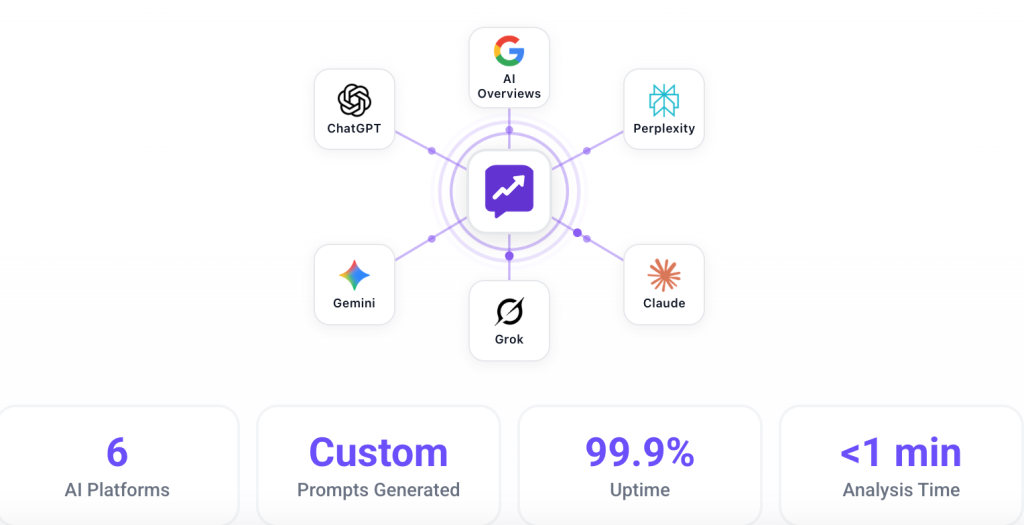
Rank Prompt is one of the more focused AI visibility tools I have looked at in 2026. The official site doesn’t try to be an all-in-one platform for every SEO task. It is specifically centered on AI visibility monitoring, prompt tracking, competitor analysis, citation analysis, and related reporting across systems like OpenAI, Perplexity, and Google.
If your main problem is understanding whether your brand actually shows up inside AI-driven answer surfaces, Rank Prompt looks genuinely useful. If you want a giant traditional SEO suite that does every classic keyword workflow, technical audit, backlink report, and rank tracker imaginable, the product may feel narrower than you expect.
My short verdict is this:
- Strong niche fit for AI visibility monitoring.
- Clear pricing ladder from startups to agencies.
- Useful competitor and brand-audit angle.
- Better for focused teams than for “do everything” expectations.
If you want to see the product while you read, start with Rank Prompt here.

Product Facts And Overview :
The official homepage frames Rank Prompt around one simple but timely question: how visible is your brand inside AI search and answer systems?
That matters because more businesses now care about whether tools like OpenAI, Perplexity, and Google AI-style results mention them, cite them, or surface their competitors instead.
Rank Prompt’s public positioning centers on:
- AI visibility monitoring.
- Prompt tracking.
- Citation analysis.
- Competitor comparison.
- Brand audits.
- AI-generated article support.
- Technical SEO audits.
That creates a product identity that feels more modern than a lot of legacy SEO tools, but also more focused. It is not trying to replace every marketing platform you already use. It is trying to become your AI-search visibility layer.
The homepage also makes it clear that the platform is meant for different business sizes, from startups to agencies.
That matters because the product’s value depends on using it for the right problem. If your team wants better visibility into AI answers, prompt citations, and competitor presence across those systems, the product’s focus is a feature. If your team wants a giant all-purpose SEO universe, the same focus may feel restrictive.
Pros And Cons :
Pros –
- Very clear positioning around AI visibility and prompt monitoring.
- Official pricing page is unusually transparent.
- Strong fit for brands that care about AI search exposure.
- Public FAQ explains credits and Agent Mode clearly.
- Good plan segmentation for startups, pros, and agencies.
Cons –
- Narrower scope than a full traditional SEO suite.
- Credit-based usage means buyers need to understand consumption patterns.
- Agent Mode budget is capped by plan and may need top-ups.
- Teams expecting a broad legacy SEO platform may misread the product at first.
Real talk: the biggest risk is not that Rank Prompt is bad. The biggest risk is that a buyer expects a totally different kind of SEO platform than the one Rank Prompt is openly trying to be.
Feature Deep Dive :
AI Visibility Monitoring
This is the heart of the product. The official homepage and pricing page both emphasize visibility monitoring across AI systems. That matters because more brands are asking whether they appear in answer engines at all, not just where they rank on a traditional search results page.
Prompt And Competitor Tracking
The official positioning also includes competitor analysis and prompt tracking. That makes the tool much more useful than a simple “your brand was mentioned” monitor. It gives teams a way to compare how often they appear versus other players in the same conversation.
Brand Audits And Citation Analysis
The pricing FAQ explains Brand Audits in concrete terms, including credit costs and how citation-page analysis works. That is useful because it shows the feature is not just decorative copy. It has a defined usage model.
Agent Mode
One of the more interesting official details is Agent Mode billing. The FAQ says it is tracked in US dollars based on model API cost, with included monthly AI budgets of:
- $5 on Starter.
- $10 on Pro.
- $15 on Agency.
That is unusually transparent and gives buyers a realistic sense of how the more advanced AI layer is controlled.
The same FAQ also explains that top-up balance carries forward separately from the monthly allowance, which is helpful because it means heavier users are not trapped in an all-or-nothing monthly limit.
If you want to test those AI visibility workflows directly, start with Rank Prompt here and compare one brand prompt set against your current reporting process.
Pricing Breakdown :
The official pricing page is one of Rank Prompt’s strongest public assets because it explains both subscription plans and credit logic clearly.
Current official prices are:
- Starter: $49 per month, or $39.17 per month billed annually at $470 per year.
- Pro: $89 per month, or $71.25 per month billed annually at $855 per year.
- Agency: $149 per month, or $119.17 per month billed annually at $1,430 per year.
The page also says all paid plans include:
- A 7-day free trial.
- 50 bonus credits.
That is a healthy buying path because it lets teams test the platform before committing.
The FAQ also gives useful credit guidance:
- 1 credit per prompt analysis.
- 10 credits per AI-generated article.
- 10 credits per Brand Audit plus 1 credit per citation page analyzed.
- 5 credits per Lighthouse or competitor audit.
- Technical SEO audits are free.
That level of detail is rare and honestly refreshing.
It also means buyers can estimate usage more realistically than they can with vague “AI credits” language. That is a real strength in a product category where billing confusion is common.
If you want to test the pricing model against your own likely workload, start with Rank Prompt here and compare your expected prompt volume, audits, and reporting needs to the plan limits.
What The Plans Mean In Practice :
The Starter plan looks like the obvious fit for a small brand or startup that wants focused AI visibility monitoring without spending heavily right away.
Pro feels like the more realistic fit for teams that plan to use the platform regularly across multiple workflows, including prompt monitoring, competitor analysis, and deeper audit use.
Agency looks clearly targeted at client-facing or multi-brand operations that need higher usage ceilings and broader monitoring depth.
That progression makes sense. Rank Prompt is not using a messy ladder with tiny feature variations. It is scaling mainly around usage intensity and business type.
That is a healthier pricing story than many AI tools offer. Buyers can understand why the plan ladder exists instead of guessing whether each tier was created only to complicate the checkout page.
It also helps agencies scope client work more confidently. If a platform explains how credits burn across audits, prompt tracking, and article generation, teams can estimate usage before they commit instead of finding out the hard way later.
That kind of transparency becomes even more useful when multiple clients or brands are involved. Predictable usage models are easier to budget around than vague “enterprise” promises with fuzzy consumption rules.
Who Should Not Use Rank Prompt :
This is a useful question because it keeps expectations realistic.
Rank Prompt is probably not the best fit for:
- Buyers who only want a classic keyword rank tracker.
- Teams that do not care about AI-search visibility yet.
- Users who want one product to replace every SEO and content platform they own.
- Organizations unwilling to think about credit consumption at all.
That does not reduce the product’s quality. It just keeps the fit honest.
How It Compares To Traditional SEO Tools
Traditional SEO platforms usually center on rankings, keywords, backlinks, audits, and content workflows in the classic web-search sense.
Rank Prompt feels different. Its value is more about:
- Prompt-level visibility.
- Citation tracking.
- Competitor comparison in AI answers.
- Brand monitoring across AI surfaces.
- AI-oriented reporting rather than only classic SERP reporting.
That means the product often works best alongside a broader SEO stack rather than replacing everything inside it.
For the right team, that is fine. Specialized visibility tools can be more useful than bloated platforms trying to do too many things at once.
It also means success should be measured differently. The question is not only whether the platform tracks classic SEO movement. The question is whether it reveals brand visibility opportunities and blind spots in AI-driven discovery that your current stack does not cover.
That is the strategic shift here. Traditional SEO tools tell you a lot about search rankings and site performance. Rank Prompt is more interesting when your team wants to know how brands are appearing inside answer engines where users may never click a classic results page in the first place.
Who Should Use Rank Prompt :
Rank Prompt makes the most sense for:
- SEO teams tracking AI answer-surface visibility.
- Agencies reporting on brand presence across AI systems.
- Startups that want to understand whether they appear in AI-generated responses.
- Content or growth teams comparing brand mentions against competitors.
It makes less sense for:
- Buyers who only want a classic rank tracker.
- Teams that do not care about AI visibility yet.
- Organizations expecting a giant all-purpose SEO platform from day one.
That keeps the buying decision grounded. The product’s clarity improves when expectations are specific.
Expert Verdict And CTA :
Rank Prompt is a strong specialized product in 2026 because it is focused, transparent, and aligned with a real shift in how people discover information. The official pricing and FAQ pages do a good job explaining not just the plans, but how credits, Agent Mode, and feature usage actually work.
That makes it easier to trust the commercial model.
It also makes the platform easier to recommend. When pricing, credits, trials, and AI budgets are all explained clearly, buyers spend less time guessing and more time evaluating actual fit.
If your biggest question is “how visible is our brand inside AI answers, prompts, and citations?” then start with Rank Prompt here and compare the tool against your current reporting stack.
If your question is “can this replace every SEO tool we use?” the answer is probably no, and that is okay. It does not need to.

That honest scope is part of why the product works. It knows the job it is trying to do.
That kind of product discipline is underrated. In AI and SEO-adjacent software, focus often creates more value than trying to promise every possible workflow at once.
It also means the right buyer can evaluate Rank Prompt much faster, because the product’s intended role is unusually clear from the official pricing, FAQ, and homepage language.
That speed of evaluation is valuable on its own. Teams exploring AI visibility often do not need another vague platform. They need a tool that helps them answer a specific business question quickly, then decide whether the category deserves deeper investment.
That makes the product especially timely in 2026. A lot of teams are still trying to decide whether AI visibility deserves its own budget line, and a focused product is easier to test seriously than a vague platform bundle.
FAQ :
How much does Rank Prompt cost?
The official pricing page lists Starter at $49 monthly, Pro at $89 monthly, and Agency at $149 monthly, with lower effective monthly pricing on annual billing.
Does Rank Prompt offer a free trial?
Yes. The official pricing page says all paid plans include a 7-day free trial with 50 bonus credits.
How do Rank Prompt credits work?
The official FAQ says prompt analysis uses 1 credit, AI-generated articles use 10 credits, Brand Audits use 10 credits plus citation-page credits, and competitor or Lighthouse audits use 5 credits.
Who is Rank Prompt best for?
It is best for brands, startups, and agencies that want to track AI visibility, citations, prompts, and competitor presence across systems like OpenAI, Perplexity, and Google.