

Who This EasyDMARC Guide Is Really For :
EasyDMARC is easiest to understand when you ask a blunt question: who actually feels the pain of DMARC, SPF, DKIM, and BIMI enough to buy a dedicated platform?
The official site answers that pretty clearly.
EasyDMARC is best for:
- Growing SMBs,
- MSPs,
- IT and security teams,
- And marketing-led organizations
That needs email authentication to be a managed process instead of a DNS side quest.
The official site and pricing pages publicly emphasize:
- DMARC.
- SPF.
- DKIM.
- BIMI.
- Managed DMARC.
- Managed BIMI.
- Business packages from Free to Enterprise and MSP.
That makes the niche fit stronger than it first looks.
If you want to inspect the official platform while you read, start with EasyDMARC here.
Why EasyDMARC Fits This Niche :
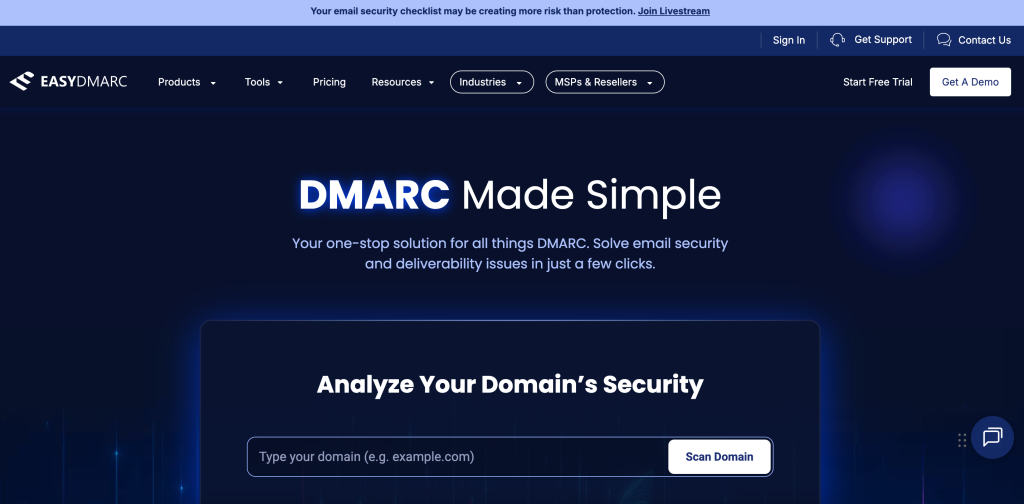
The best niche for EasyDMARC is the team that knows email authentication matters but does not want that work living as raw XML, scattered DNS notes, and stress.
That usually means one of four profiles:
- An SMB that depends on email for sales and operations.
- An MSP managing several client domains.
- An internal IT or security team with limited time.
- A marketing or deliverability owner who needs readable signals and safer policy rollout.
This fit works because EasyDMARC is not only selling a dashboard. It is selling a safer operational path through:
- Setup,
- Visibility,
- Cleanup,
- And enforcement.
That is exactly what these niche buyers need.
Top Feature For This Niche #1: Managed DMARC
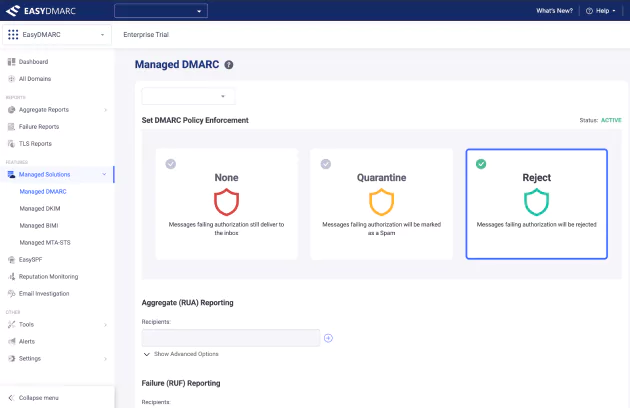
The official site openly highlights Managed DMARC, and that is the biggest reason the niche fit is strong.
Managed DMARC matters because many teams do not fail on principle. They fail on execution:
- They are unsure what the record should be,
- They are worried about enforcement,
- They do not want to parse aggregate reports manually,
- Or they do not know which sender is actually causing the problem.
EasyDMARC fits the niche because it turns all of that into a structured product motion instead of a fragile manual project.
Top Feature For This Niche #2: Full Authentication Stack Coverage
The official site also emphasizes:
- SPF,
- DKIM,
- BIMI,
- Managed MTA-STS,
- And related monitoring.
That matters because the right niche buyer usually does not need “just DMARC.” They need email authentication to work as a system.
This is especially useful for MSPs and internal IT teams because it avoids the “one more point tool” problem. The broader stack support means the platform can become the center of email-authentication management rather than just another alert feed.
If your team is tired of treating authentication like a scattered DNS maintenance chore, open EasyDMARC here and compare the managed stack approach against the way you handle it today.
Top Feature For This Niche #3: Public Pricing That Maps To Business Size
EasyDMARC’s public pricing is one of its stronger official assets.
The business packages page shows:
- Free.
- Plus at
$35.99per month billed annually. - Premium at
$71.99per month billed annually. - Enterprise.
- MSP plans.
That is useful because it maps cleanly to the niche.
An SMB can start on Free or Plus. A more serious internal IT or security workflow can move into Premium. An MSP or larger organization can look at Enterprise or MSP packaging.
That kind of ladder makes the product easier to buy because the planned structure matches real operational maturity.
Real-World Example For This Niche :
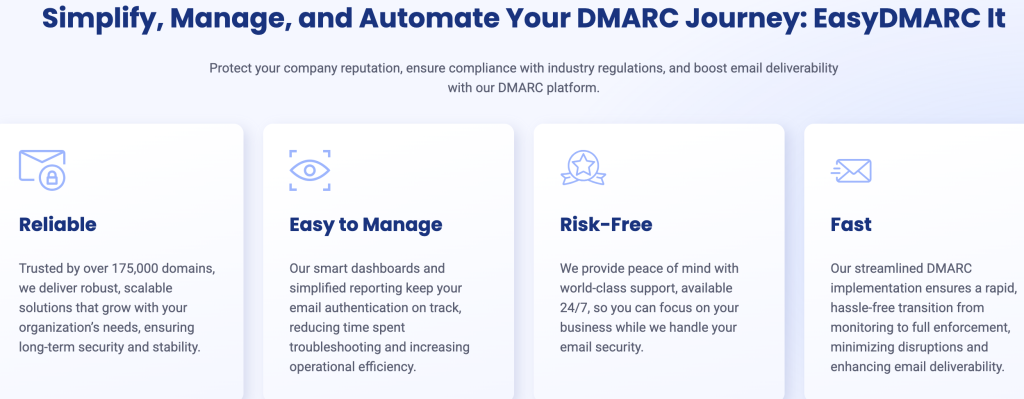
Imagine a mid-sized company that sends:
- Outbound sales emails,
- Product and lifecycle emails,
- Support notifications,
- And internal/external operational mail.
That company may not have a dedicated email-authentication specialist.
But it absolutely feels the cost of bad authentication:
- Deliverability issues,
- Spoofing risk,
- Confusing reports,
- And internal uncertainty about whether moving toward stricter policy is safe.
That is where EasyDMARC fits better than manual management. The niche buyer does not only want data. The niche buyer wants a manageable path.
Pricing In Context For This Niche :
Here is the clean pricing read:
- Free is a legitimate entry tier for visibility.
- Plus at
$35.99per month billed annually is a strong SMB tier. - Premium at
$71.99per month billed annually is the more serious managed path. - Enterprise and MSP cover larger or multi-domain operations.
This pricing makes the most sense for teams where the real cost is not the subscription. The real cost is:
- Weak deliverability,
- Manual report interpretation,
- Slower policy rollout,
- Or lack of ownership.
That is exactly why the niche matters. For the right buyer, the value is operational clarity, not just email-security theory.
Alternative Tools For This Niche :
The main alternatives are usually:
- Manual DMARC management,
- DNS-host based record editing,
- Or broader security platforms that do not specialize in this workflow.
Those alternatives are valid, but they are rarely as comfortable for the niche we are talking about.
If your team is small, busy, or managing several domains, EasyDMARC’s specialist approach can be much easier to sustain than a manual process that nobody fully owns.
Setup Steps For This Niche :
If I were setting this up for the ideal EasyDMARC buyer, I would keep the rollout simple:
- Connect the primary domain.
- Start with visibility, not enforcement.
- Review the sending sources and obvious misalignment issues.
- Clean up the sender inventory.
- Move policy forward only after the reports make sense.
That sequence matters because the right niche buyer usually wants less risk, not more speed for its own sake.
If you want to evaluate the fit that way, start with EasyDMARC here and use one real domain to judge whether the managed workflow feels calmer than your current setup.
Where The Niche Fit Becomes Strongest :
EasyDMARC becomes especially compelling when ownership of email authentication is unclear inside the company.
That sounds small, but it is usually the real operational problem. Marketing cares about deliverability. IT cares about DNS accuracy. Security cares about spoofing and enforcement. Leadership cares only when something breaks. In that kind of environment, a specialist platform can create one readable workflow where everyone can see the same picture.
That is also why EasyDMARC often fits marketing-led organizations better than people expect. Modern marketing teams depend on reliable outbound delivery across campaign, lifecycle, and transactional programs. If authentication stays messy, performance issues show up far away from the root cause. A platform that makes sender visibility and policy progression easier can protect both security posture and pipeline generation.
It also helps teams avoid one of the most common rollout failures in this category: moving too fast toward enforcement without clear sender visibility. When that happens, legitimate mail can break, internal confidence drops, and the project suddenly looks riskier than it should. A managed workflow is valuable because it gives the team a calmer path from discovery to cleanup to stronger policy.
For MSPs, the value is even more obvious. Once multiple domains and multiple clients enter the picture, consistency matters more than one-off DNS knowledge. A platform that makes repeated domain reviews, sender tracking, and policy progression easier can save real operational time.
That is why the platform’s niche is less about company size alone and more about recurring authentication responsibility. The more often the team touches this problem, the stronger the fit becomes in real operations daily.
If that sounds familiar, try EasyDMARC on a real domain here and compare how much cleaner the reporting and rollout process feels.
Verdict :
EasyDMARC is best for SMBs, MSPs, and lean IT or security teams that need email authentication to become a managed, readable, repeatable process instead of a manual DNS and reporting headache.
That is the niche where it is strongest.
If your team has strong in-house expertise and loves living inside raw email-authentication workflows, you may not need it. But for the teams that want safer rollout, better visibility, and a cleaner path to DMARC enforcement, EasyDMARC looks very well aligned.
FAQ :
What Niche Is EasyDMARC Best For In 2026?
It is best for SMBs, MSPs, and IT/security teams that need DMARC, SPF, DKIM, and BIMI to be easier to manage operationally.
Does EasyDMARC Have Public Pricing?
Yes. The official business packages page shows Free, Plus at $35.99 per month billed annually, Premium at $71.99 per month billed annually, Enterprise, and MSP options.
Why Would An MSP Use EasyDMARC?
Because the platform is clearly structured for multi-domain, managed email-authentication workflows and has an MSP plan path.
Is EasyDMARC Better Than Manual DMARC Management?
For many niche buyers, yes. It is especially strong when internal time is limited, and policy rollout needs to be safer and easier to understand.
What Is The First Thing To Do After Signing Up?
Start with visibility. Review senders, reports, and alignment first before moving toward stricter enforcement.